

 Newsletters


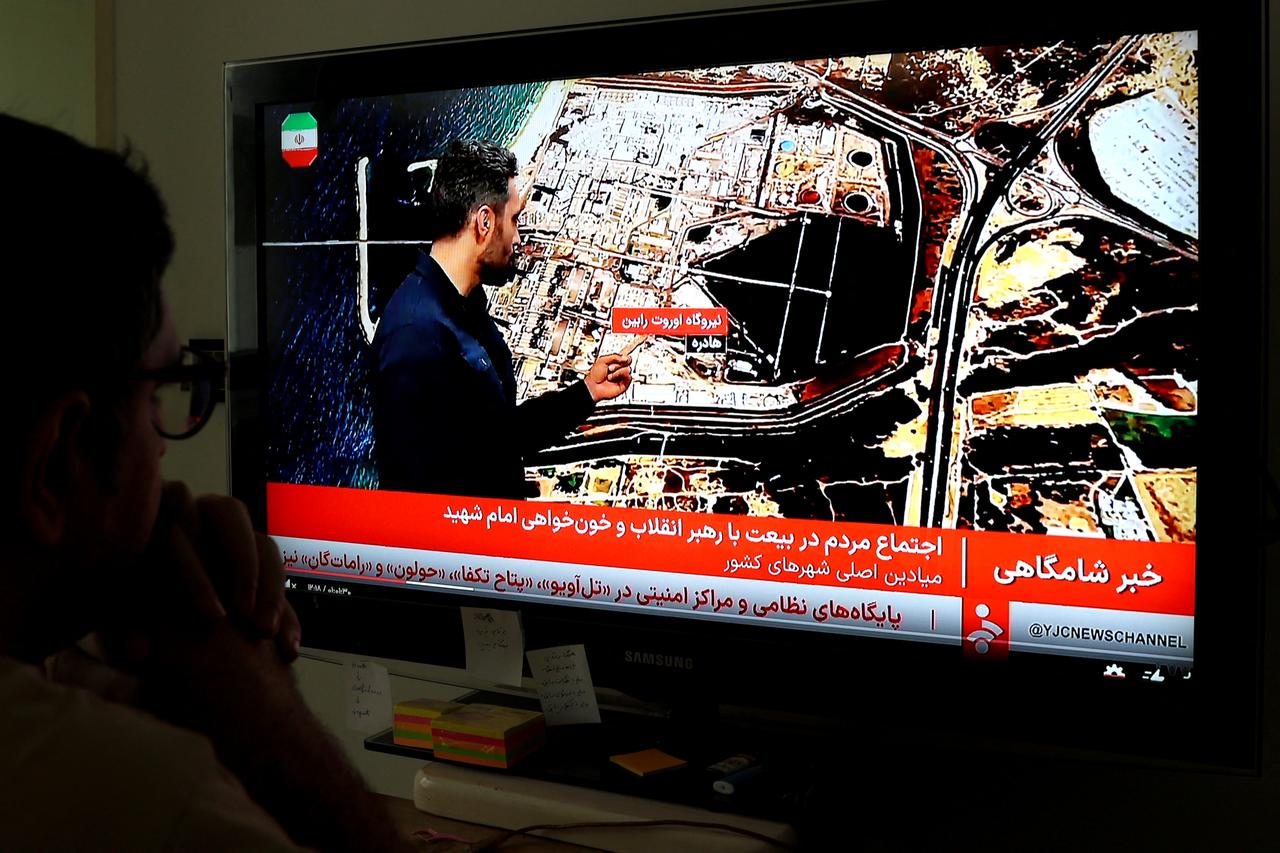


Measuring political sentiment is a trivial pursuit in the Arab world, a mythical place where public opinion remains vague, credible surveyors rarely emerge from the shadows, and genuine reality seldom pops up on social media sites muzzled by mostly unelected regimes and their algorithms.
It is time to take a broom to "Arab Street," a term that should have been retired years ago, as it is a place that no longer epitomizes the vast and quarrelsome expanse of languages, sects, and daily habits of millions of Muslim men and women into something singular.
Reality cannot correlate to the geometrical neatness of Egypt’s pyramids. What really matters is what’s said in kitchens, behind closed doors, in the unrecorded cadence of ordinary chatter.
The Islamic world is a sprawl in which little gels. Arabic-speaking, largely Sunni populations usually find themselves at odds, divided by politics, memories, and power grabs.
The Atayef vendors in Tyre and the Masmouta cooks in Basra are fond of Iran. However, Syrians despise Iran for the massacres in Aleppo, while white-collar Lebanese see it as the main reason for the country’s mismanagement, although others disagree. These large groups tend to clash repeatedly, caught in seemingly endless cycles of debate.
But some ties bind.
A shared opposition to Israel’s inhumane conduct in Palestine. A deep distrust of American military adventures in their backyards. These are not slogans. They are ingrained habits of mind, formed over years and echoed in conversation. Those sentiments converge and explode with 'Epic Fury' in the U.S.-Israeli war on Iran.
It may be premature to claim Iran will win broad sympathy across the Arab world—but it could still earn a degree of respect for its “resistance” to U.S. and Israeli pressure. Arab governments, however, may have more urgent concerns, from economic strain to vulnerable supply chains, as the conflict disrupts energy flows and regional stability.
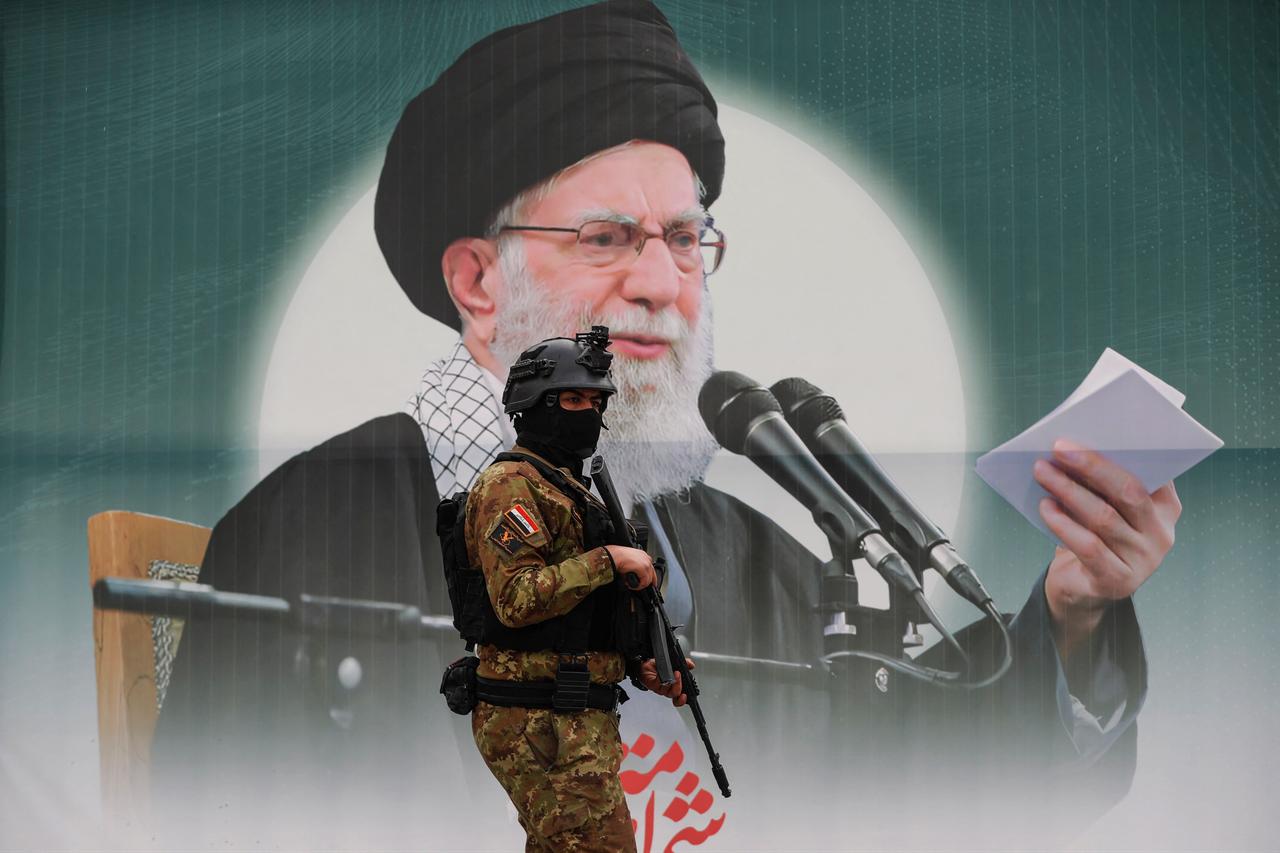
What may be dangerous for Arab rulers is the image Iran is projecting in the face of this existential attack. The Iranian leadership appears relentless. Their leaders do not flee. The supreme leader was killed in his residence on a Ramadan morning, and the de facto leader, Larijani, was killed during a family visit to his daughter.
The Iran war has already generated narratives that resonate across the Muslim world. If the war results in a situation where Israeli-U.S. air superiority is not enough to topple or disfigure an archenemy in an all-out war, then we might confront a new reality in the Middle East. Angry, alienated groups—resentful of their leaders’ inaction in the face of Israeli strikes—begin to see a new model of resistance.
This scenario is unlikely to trigger an Arab Spring 2.0, which is something that Arab autocrats fear the most. This moment has largely passed as Arab states have built up resilience to such a possibility over time.
However, if the Iranian regime emerges from the war intact, the respect it commands could become a far more consequential factor.
It could create a scenario once thought impossible: blurring the sectarian lines among the Middle East’s armed and political groups. They might exchange expertise, knowledge, and organizational methods, potentially sparking a fresh wave of radicalization across Arab lands.
Iran could become a refuge for some Sunni political groups, given the multitude of breeding grounds, and despite the iron fist of secular Arab autocrats, who may think the situation is under control with their extensive internal surveillance mechanisms purchased from Silicon Valley.
If the sectarian lines are unclear between Iran and armed or political groups in the Middle East, the impact of Iran could increase exponentially over time.
It is unknown whether the upcoming respect for Iran will have long-term effects.
Yet history has shown how the Iranian Revolution has impacted significant political change in the Middle East.
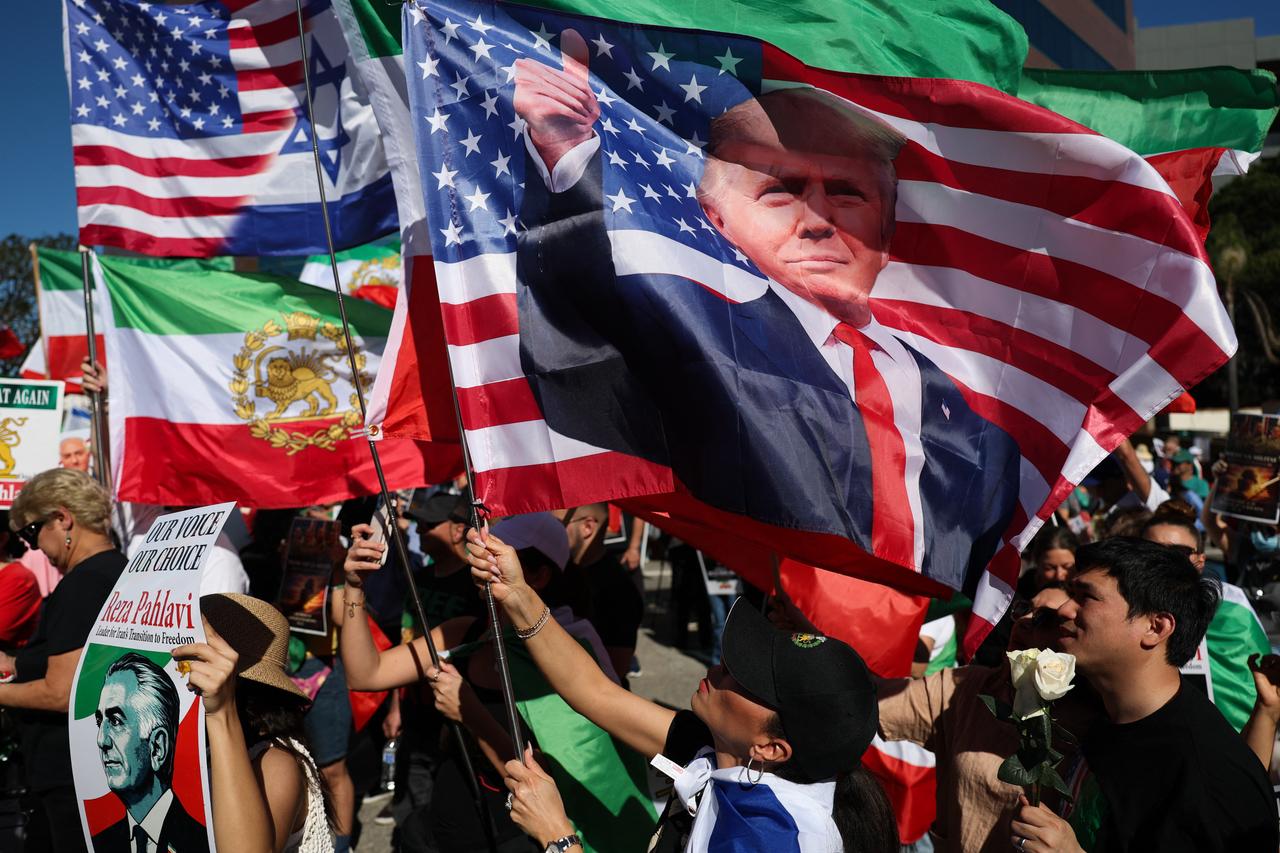
An Iran that survives a U.S.-Israeli attack with its regime intact might create long-term effects among Middle Eastern populations that are already frustrated and politically charged, and a weak, misguided U.S. strategy under a Trump administration might inadvertently make that outcome more likely.
The Iranian Revolution of 1979 transformed political Islam from a largely theoretical or oppositional force into a “successful model of governance."It demonstrated that Islamist movements could mobilize mass support and seize state power.
“After the Iranian revolution in 1979, people wanted to copy this model… one of them is Saudi Arabia… and the problem spread all over the world,” Mohammed bin Salman told The Guardian in 2017.
In response to the 1979 revolution, the Saudi state strengthened its alliance with conservative religious scholars and promoted a stricter interpretation of Islam domestically to reinforce its legitimacy and counter revolutionary ideology.
The revolution reshaped regional politics by legitimizing religion as a central force in governance.
Former Egyptian President Gamal Abdel Nasser’s stature in the Arab world was cemented less by decisive victories than by his posture against Western powers during the Suez Crisis, also known as the second Arab–Israeli war in 1956. As Fawas Gerges might agree, the power in the Middle East is as much about projection and myth as it is about material capability.
The perceived “divine victory” claimed by Hezbollah after the 2006 Lebanon War resonated widely across Sunni Arab societies, despite deep sectarian divides.
In that sense, endurance alone becomes the message itself.


 Set as preferred source
 Set as preferred source


 1 min read

 1 min read


