Newsletters




This article was originally written for Türkiye Today’s weekly newsletter, Saturday's Wrap-up, in its May 2, 2026, issue. Please make sure you subscribe to the newsletter by clicking here.
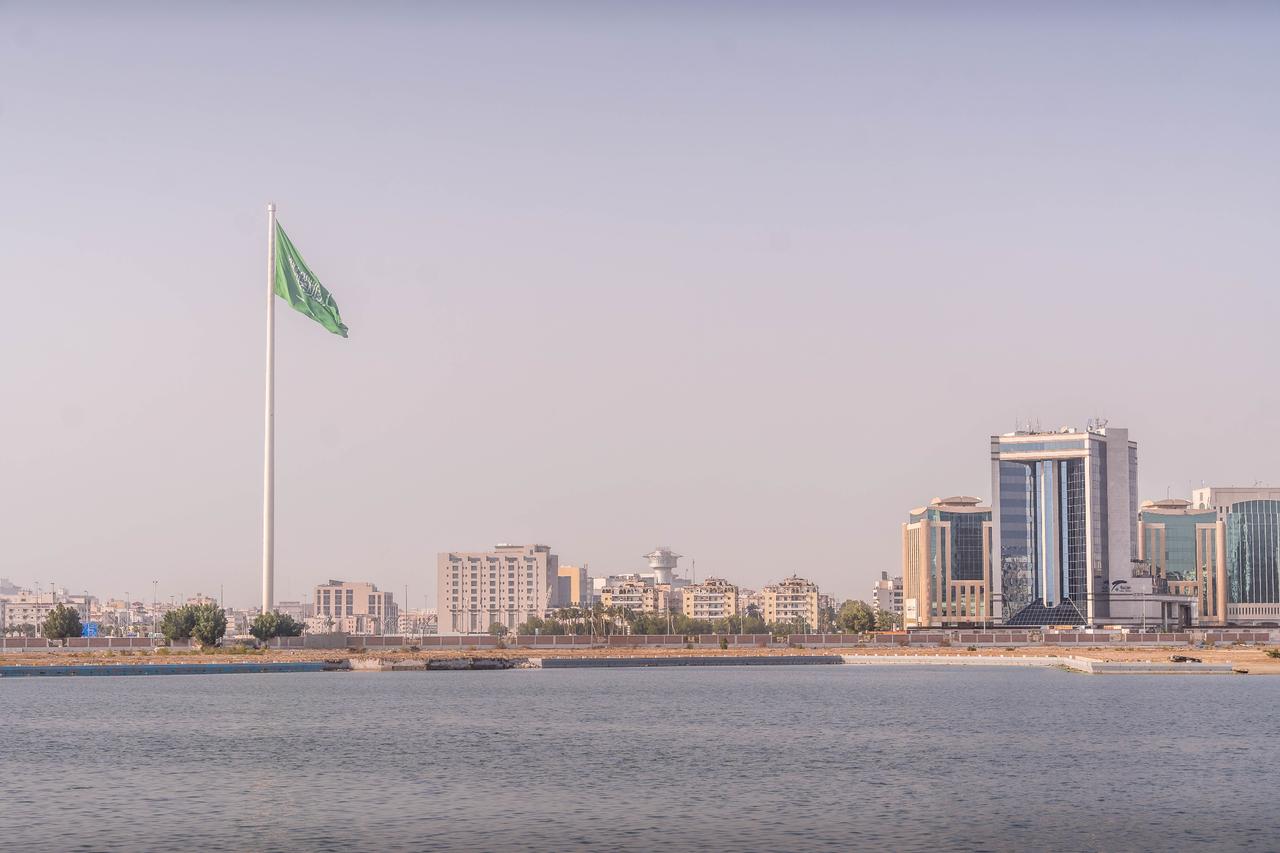
Touch down in Jeddah this week, where the Red Sea breeze carries a peculiar mix of "business as usual" and structural shift. If you’re looking for visible signs of tension regarding the recent Iranian attacks on the country, don’t bother scanning the faces of the locals. Saudis possess a legendary stoicism, where political views are kept behind an impenetrable, polite reserve.
My advice? Don’t go poking the locals for their political opinion, but go if you enjoy a nice Red Sea fish.
While the politics are hushed, some realities are hidden in plain sight. It's impossible to ignore how much has changed. It feels like it would have been catastrophic if MBS did not work on the mobilization of the Saudi youth with nationalism and sports. You can feel it on the streets—the avenues are pulsing with youthful energy, bustling with young crowds and newlyweds pushing strollers.
Yet, the friction with the Iran war is visible in the margins. The first thing that hits you at the airport is an advertisement for the F1—a race that was ultimately canceled due to the spillover of Iran’s regional maneuvers. The ripple effects go even deeper: the Kingdom is reportedly pulling its investments from LIV Golf, a major blow to the Gulf’s soft-power ambitions that signals a wave of strategic withdrawals.
Jeddah has always been the Kingdom’s more liberal lung, and under Mohammed bin Salman’s Vision 2030, it’s set to inhale even more of the West. But while the social fabric loosens, the geopolitical stance is tightening into a specific new shape.
To be in the Kingdom at this exact juncture is to witness a profound geopolitical recalibration unfold in real-time. As Türkiye Today’s Pinar Dost notes, we are witnessing Türkiye, Saudi Arabia, Egypt, and Pakistan edge toward a "New Middle East Alignment."
The four countries recently met in Antalya for their third high-level meeting in less than a month—and this was no casual handshake. Dost argues that this quartet is essentially creating a "stability axis" to counterbalance the unpredictability of both Iranian aggression and Western hesitation.
By pooling diplomatic and military weight, these four heavyweights are signaling that the region’s security architecture will no longer be dictated solely by outside powers or rogue actors. It’s a pragmatic, albeit heavy, pivot toward a multipolar Middle Eastern reality. The days when MBZ was whispering young, inexperienced MBS’ ears are over.
Turkish officials are not publicly talking about a formal bloc, which is usually the clearest sign that they are taking it very seriously. Fidan’s comments are often vague, but he’s consistent on one point: this alignment is not a sword aimed at regional neighbors.
While new alliances form, old ones are hitting the rocks. The most shocking split isn't on a celebrity tabloid, but in the energy markets. After 60 years of marriage, the UAE appears ready to walk out on OPEC.
In a special interview with Türkiye Today's Ata Ahmet Kokcu, former deputy head of BOTAS Gokhan Yardim breaks down the logic behind what is essentially a "divorce in the desert." The UAE’s move to ramp up production capacity directly clashes with the production cuts mandated by the Saudi-led cartel. It’s a fundamental disagreement over the future of the "liquid gold" that built these cities.
This potential split raises a massive geopolitical dilemma: is a fractured OPEC an American victory that breaks Saudi dominance over oil prices, or a strategic liability that could destabilize the broader Middle East? The core issue is that the UAE wants to unleash its massive, upgraded production capacity to aggressively fund its post-oil economic transition, putting Abu Dhabi on a direct collision course with Riyadh's quota-driven, price-protecting strategy.
The UAE is increasingly viewing the organization as a "relic of a previous century" that hinders its sovereign economic ambitions. If Saudi Arabia is the conservative guardian of price stability, the UAE is the restless entrepreneur ready to cash out before the energy transition leaves them behind.
The Gulf scene is being redrawn in real-time—socially liberalizing, politically consolidating, and economically fracturing all at once.


 Set as preferred source
 Set as preferred source



 4 min read