Newsletters





To understand the mind of a Turkish policy observer, consider this: faced with the sheer majesty and raw power of Niagara Falls, the immediate thought that springs to mind is not just the wonder of nature, but the legacy of Türkiye's ninth president, Suleyman Demirel.
Standing by the Niagara River’s roaring waters, it is tempting to ponder Canada-U.S. relations, given that the two nations share the gorge carved over thousands of years. Yet, the roaring waters evoke the memory of a Turkish leader obsessed with harnessing every single drop of water for hydroelectric power. Niagara also humbles you when you get closer.
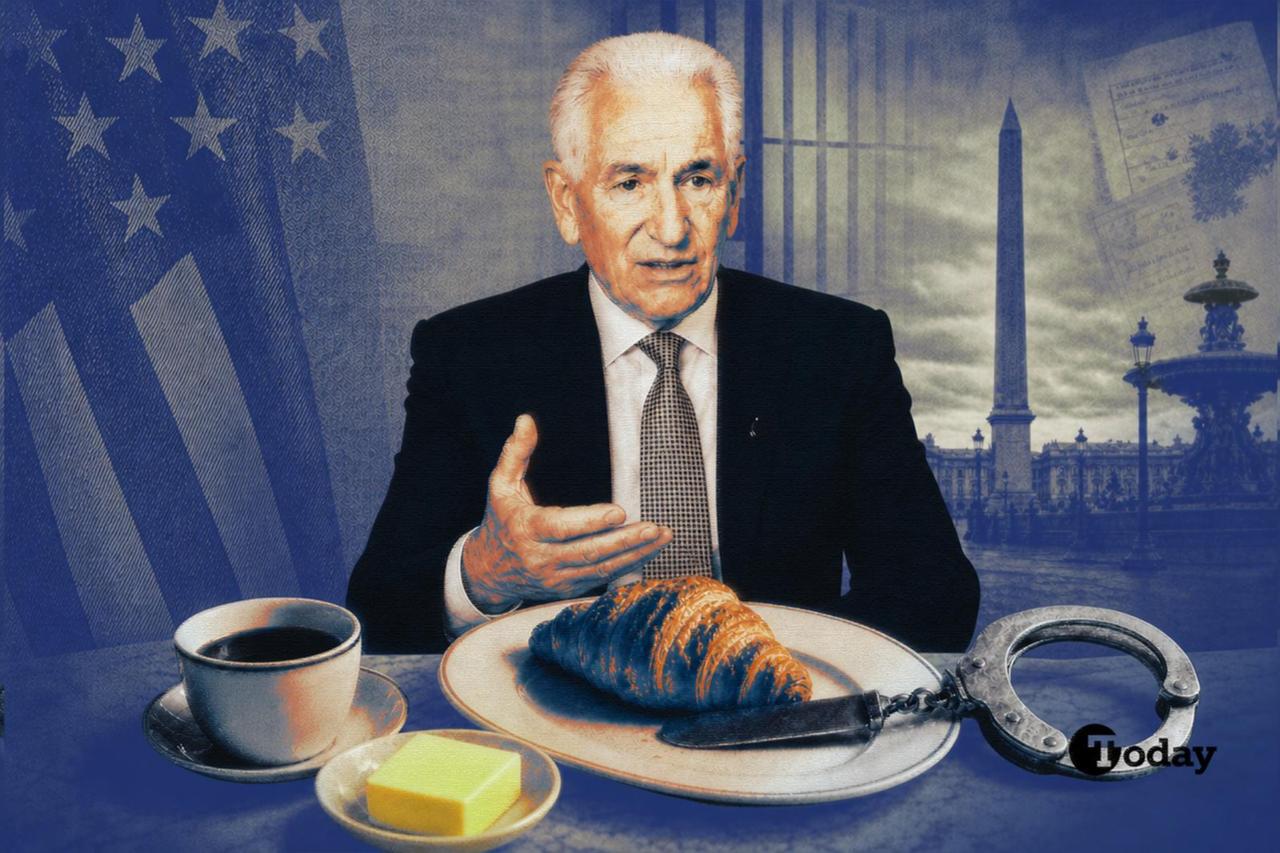
Demirel was a defining figure in Turkish politics from roughly 1965 to 2000, serving ten years as prime minister and seven as president. Though he was twice forced from office by military coups and banned from politics for seven years alongside many of his peers, his wit, his oratory, and his tolerance toward critics remain highly regarded in Türkiye today.
Demirel earned the moniker of Türkiye’s "king of hydroelectric energy." As a civil engineer who specialized in dams, his lifelong passion was taming the rivers of Anatolia to irrigate fields and electrify the nation. Having grown up in a village in southwestern Türkiye, he intimately understood the stakes. In those years, if the rains failed, the wheat fields dried up, leaving villagers and their livestock to face starvation.
For his generation, building dams meant fighting hunger and desperation—a struggle he famously described as the war between the steppes and green fields. As a top engineer for the State Hydraulic Works, Demirel was sent to the U.S. twice in the 1950s for postgraduate studies. There's no record of whether he ever visited Niagara, but the region stands as a global monument to hydroelectric power.
It is easy to imagine a young Demirel observing the immense Niagara River and envisioning how Türkiye could similarly harness the potential of its own major rivers, much as the U.S. and Canada have done for decades to generate vast amounts of electricity.
Reflecting on a 20th-century politician at a North American natural wonder highlights a broader narrative of national development. Demirel and his generation harbored a distinct dream: to build the infrastructure of a developing country.
They fought poverty by laying roads and erecting dams to ensure that even basic services reached the farthest corners of the nation. Today, Türkiye benefits from that robust infrastructure, built by successive generations of politicians, civil servants, engineers, and workers.
Now, in the second quarter of the 21st century, Türkiye must embark upon a new economic endeavor. While the defense industry has effectively filled this role over the past two decades, an economy of Türkiye’s scale requires additional dimensions. The path forward remains in the hands of experts and political authorities. It could manifest as a green energy revolution with an audacious goal of making Türkiye energy independent, a robust space program, or a drive to make the country a global semiconductor manufacturer.
Mega-projects like these serve as vital sources of inspiration and optimism, as the Apollo program did in the 1960s. Perhaps a century from now, in the year 2126, another Turkish citizen will stand before a global marvel and wonder if the visionaries of today were similarly inspired to accomplish grand dreams for their country.


 Set as preferred source
 Set as preferred source


 8 min read