Newsletters


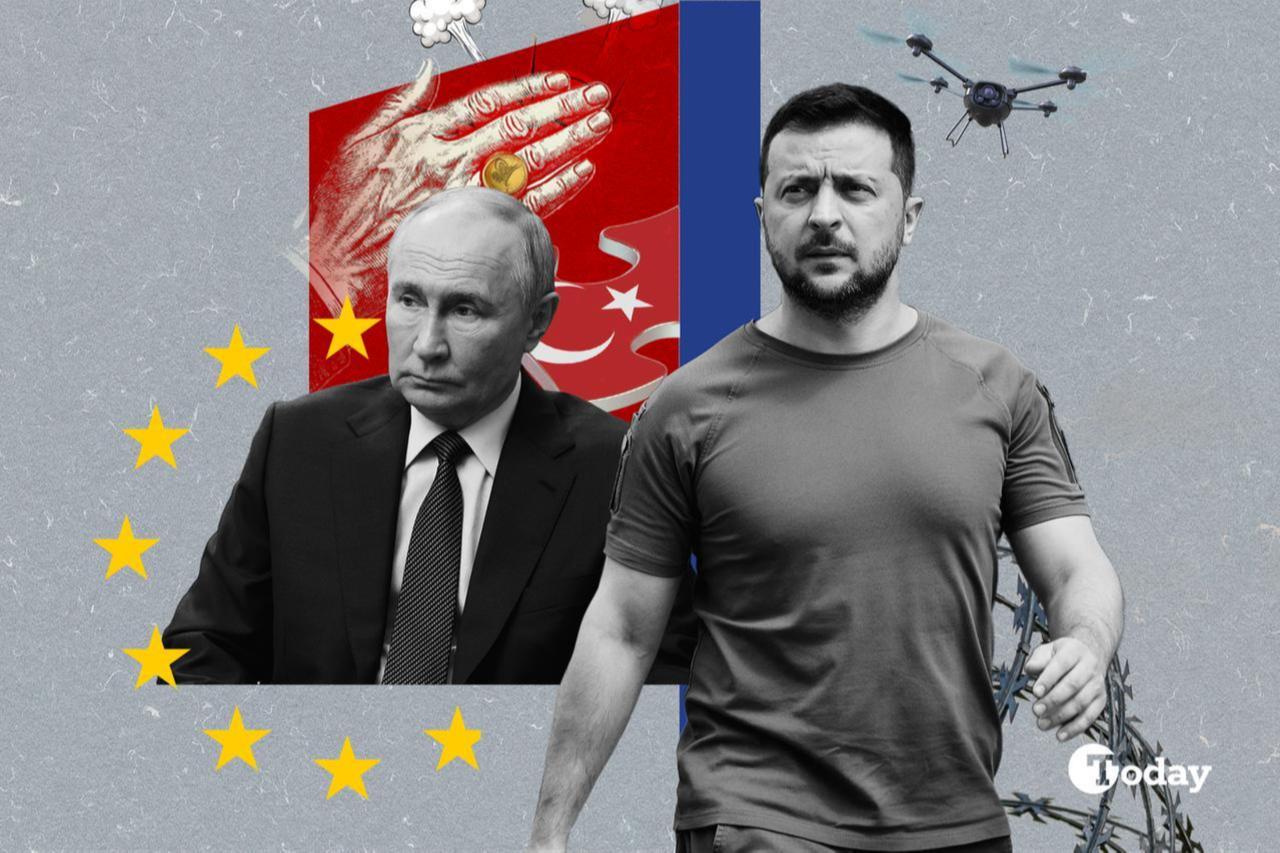


There are wars fought with artillery, wars fought with accountants, and wars waged by ghosts moving through fiber-optic arteries. Then there are the ugly old-fashioned wars—the kind fought against bullies who must be slapped into submission.
Russian President Vladimir Putin falls into that category.
The temperature shifted after Washington went full-tilt MAGA. Moscow adjusted its public posture toward America with the cold discipline of a SMERSH agent rearranging his cards after drawing four aces against 007.
Putin redirected his malevolence. Europe—financier, armorer and political lifeline to Ukraine—drifted into Moscow's sights not merely as a competitor but as a dark adversary cast in civilizational terms.
European officials hear the Russian leader’s malice in speeches polished for television and repeated by loyal voices across the machinery of state.
Beneath the diplomatic varnish lies something harder and older than rivalry. Hostility. The kind that oozes into institutions and stays there.
Deterrence is not built beneath chandeliers or assembled from conference communiqués bushy with ceremonial language. Deterrence lives or dies on one brutal principle: whether an opponent believes consequences are real.
Sweden’s defense minister, Pal Jonson, recently warned that Europe’s security ecosystem has deteriorated dramatically and that the Russian operational risk tolerance has increased.
British spymasters caution that Putin continues scaling hybrid activities across Europe.
Lithuanian authorities recently announced arrests connected to alleged sabotage and violent plots, and destabilization efforts.
Unlike Elvis Presley, Taynyy Prikaz never left the building. The Russian secret police force Tsar Alexis I created in 1654, kept updating its stage name for theatrical purposes. Okhrana, Cheka, NKVD, KGB, FSB. The old machinery never disappeared. It changed uniforms. Changed acronyms. Learned better tailoring.
Europe and America patted Putin on the back, then told themselves comforting stories about progress and joint ventures. The think-tankers smiled and hosted cocktail parties for Russian Foreign Minister Sergey Lavrov.
No longer.
Moscow today views the EU’s democratic model itself as a strategic threat—restraint instead of coercion, institutions instead of fear, political friction instead of centralized command. The concern now extends beyond influence or leverage.
But that’s always been the Kremlin gambit, dating from the days of the tsars and into the Gorbachev-Yeltsin-Putin years I spent in Russia reporting on Lenin’s heirs.
And now, across Europe’s capitals, diplomats and intelligence officials—once mollycoddled by Russian propagandists in London, Brussels and Berlin think tanks—are finally beginning to grasp what the bear hunters assured them would happen moments after Gorbachev was booted out of the Kremlin on Christmas Day, 1991.
Rail sabotage. Infrastructure interference. Navigation jamming. Assassination plots. Drone incursions. Cargo disruptions. Hybrid warfare that creeps forward not in armored columns but through uncertainty itself.
Individually, incidents appear fragmented. Collectively, they form an atmosphere. Russia has been making this kind of lethal mischief since Lenin in 1917 turned St. Petersburg’s Smolny Institute of Noble Maidens into Bolshevik headquarters.
Russia remains locked in Ukraine, bleeding manpower at staggering rates while struggling to achieve decisive battlefield gains. Western estimates suggest Russian losses continue mounting at levels difficult to sustain indefinitely without politically dangerous mobilization measures inside Russia itself.
Attrition creates pressure. Pressure creates incentives. Incentives create risk.
Rational analysis has never been a governing force in Russian history.
Old Moscow hands and blooded Ukrainian non-coms know something the poltroons and politicians bite their tongues to avoid saying plainly: "Stalemates tempt hoodlums."
So, ladies and gentlemen, let me assure you that Putin is a gangster and place your bets on the Baltics, a roulette wheel situated where geography is a synonym for vulnerability. Latvia has faced Russian threats after accusations—denied by Latvian authorities—that Ukrainian drone operations had links there.
Lithuania recently activated alarms and emergency protocols amid concerns surrounding suspected drone approaches from Belarusian territory.
“How many people in the U.S. do you think will be willing to go to war to free Estonia?" is the echoing question President Franklin D. Roosevelt asked as Soviet tanks rolled over the northernmost Baltic state during WWII.
Security officials from Sweden, Denmark, Britain, France, Poland, and elsewhere are increasingly discussing deterrence against once-remote scenarios, such as testing NATO cohesion through calibrated provocations in the Baltic and Arctic regions.
If Putin cannot redraw Ukraine’s map, could temptation emerge to test whether NATO’s guarantees are stronger on paper than under fire?
Potentially catastrophic thinking. But dangerous calculations are conceivable when Putin senses—as he does—a fractured and anaemic Europe. Political turbulence. Energy pressures. Electoral uncertainty. Populist movements arguing against continued support for Kyiv.
Persistent questions surrounding long-term American military commitments to Europe. Every tremor produces a strategic cackle inside the Kremlin.
Small nations living beside large histories cultivate hard instincts. Countries carrying a generational memory of occupation understand threats differently from countries protected by distance. They speak about deterrence with extraordinary urgency because they appreciate what happens when the curtain falls—even for a few ticks of the clock.
In November 2015, for instance, Türkiye shot down a Russian Su-24 fighter bomber after authorities said the plane violated Turkish airspace for 17 seconds. Moscow raged. Diplomatic relations deteriorated. The crisis carried genuine escalation risks, particularly as nearly half of Türkiye's energy imports flow from Russia.
But the country demonstrated something Europe increasingly debates but struggles to project: credibility.
Türkiye established a line and enforced it against a military power larger than itself. No rhetoric. No declarations. That matters, particularly as Ankara has fought a dozen wars with Moscow since 1568.
Europe continues to live inside a strategic paradox of a Russia simultaneously constrained and dangerous, limited militarily, yet potentially more unpredictable because of those limits.
As the retired Western diplomats of Stalin-era Russia instructed us at the Harriman Institute for Advanced Russian Study at Columbia University, such a volatile combination demands “vigilance without panic, strength without recklessness, and resolve without illusion.”
For the past 26 years, how to react to the perils of Putin has reverberated around whether the West has the moxie to recognize danger and act before danger recognizes opportunity and, as the Russian proverb forewarns, “steals your potatoes when you’re not looking.
The proverbial bottom line here is not complicated. Putin and his belligerent Russian forefathers have always fancied adversaries who shilly-shally before swinging back.
Might I suggest any Western leader seeking further information privately contact Turkish President Recep Tayyip Erdogan and ask him about the “Ottoman Slap.”


 Set as preferred source
 Set as preferred source


 7 min read