Newsletters


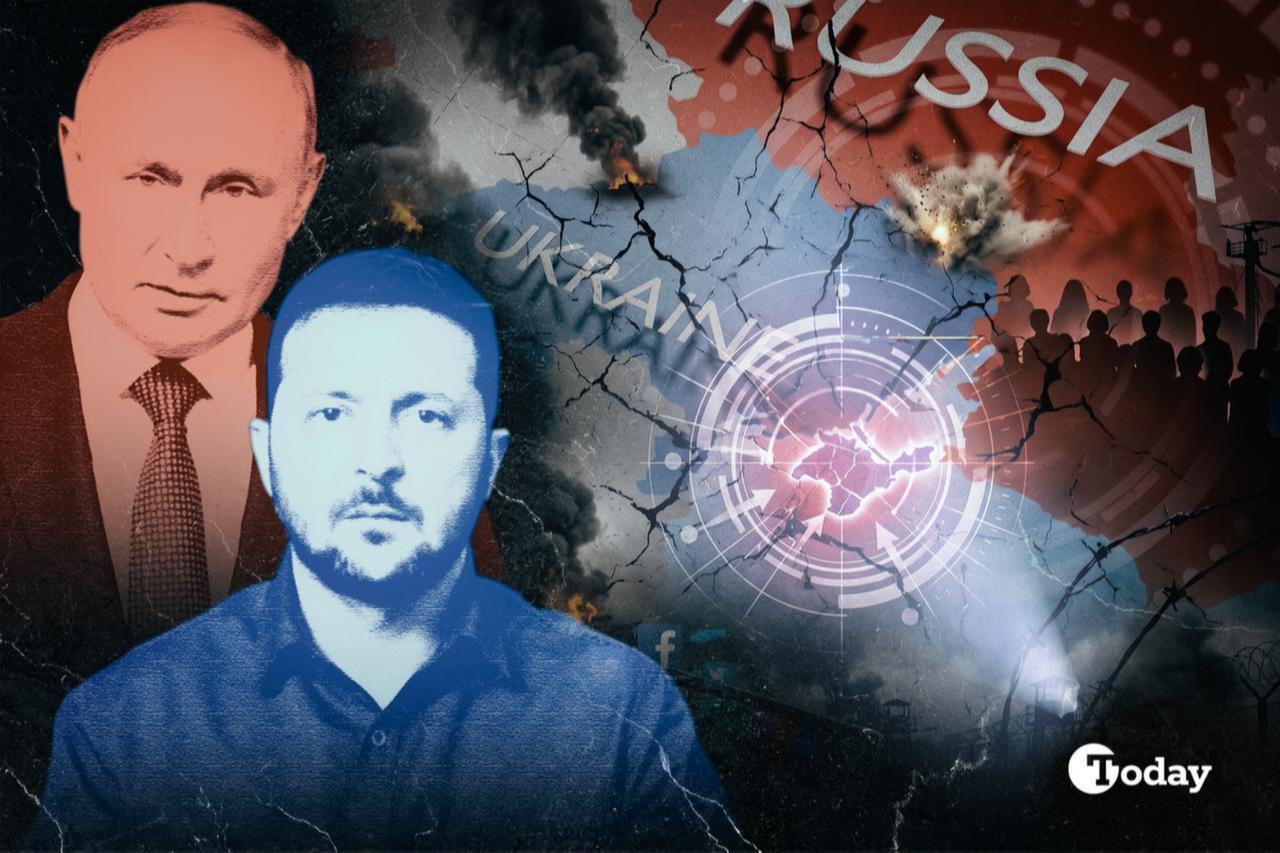


To understand Vladimir Putin’s war on Ukraine, one must look beyond the geography of tanks, missiles, and NATO maps. For Putin, Ukraine is not just a neighboring country. It is a question of history, identity and regime survival.
Putin’s view of Ukraine was shaped by the collapse of the Soviet Union, Russia’s imperial past and his years inside the security services. When he famously branded the Soviet collapse as “the greatest geopolitical catastrophe of the 20th century,” it was not an exercise in nostalgia. It revealed how he sees the post-Soviet map.
In this worldview, Ukraine is not an ordinary independent state. It is part of the Russian historical imagination, part of Orthodox civilization and part of what the Kremlin calls the “Russian world.” Losing Ukraine, therefore, is not seen in Moscow merely as a geopolitical setback. It is seen as the breaking apart of a historical whole.
This is why Putin’s Ukraine policy goes far beyond traditional security concerns. His KGB background also matters. Putin looks at the world through suspicion, conspiracy and permanent threat.
Cooperation is rarely seen as genuine. Western democracy programs, NATO enlargement or EU integration are not viewed as normal political choices. They are seen as tools used by the West to weaken Russia and undermine the Kremlin.
For Putin, Russia is not simply a nation-state. It is a civilization-state with a historical mission. In this mission, Moscow has the right—and even the duty—to protect and reunite the Russian world. Ukraine sits at the center of this idea. An independent, democratic and Western-oriented Ukraine is therefore unacceptable for the Kremlin.
Putin uses history selectively to justify this position. He moves from Kyivan Rus to the Tsarist Empire and from the Soviet Union to today’s Russia, taking what is useful and ignoring what is not. History, in his hands, is not about understanding the past. It is a political weapon.

Putin has repeatedly denied that Ukraine is a fully separate nation. His 2021 article on Ukraine made this view clear. According to his narrative, Ukrainian identity is artificial, created by outside powers and used against Russia.
This is the core of the problem. For Putin, Ukraine’s move toward the West is not only a diplomatic choice. It is a direct challenge to Russian history and Russian identity.
That is why the Kremlin does not treat Ukraine as a normal sovereign state making its own decisions. It sees Ukraine as a territory that must either return to Russia’s orbit or be prevented from becoming a successful alternative to Russia.
The Kremlin’s fear of Ukraine is not only military. It is also political.
For Putin’s regime, the greatest threat is not simply NATO troops on Russia’s border. The deeper fear is a democratic Ukraine that works. A Ukraine with competitive elections, rule of law, public accountability and closer ties with Europe could become a dangerous example for Russian society.
The question that Ukraine raises is simple: if Ukrainians can choose a different future, why not Russians?
For authoritarian rulers, that question can be more frightening than foreign armies. This is why Moscow has always treated “color revolutions” not as popular uprisings, but as Western plots. The Kremlin sees democratic movements in neighboring countries as contagious threats.
The 2014 Maidan Revolution was the turning point. The fall of Viktor Yanukovych was not only the collapse of a pro-Russian government in Kyiv. It was the collapse of Moscow’s political influence over Ukraine.
After Maidan, Ukraine began building a national identity more clearly separate from Russia and more closely linked to Europe. For Putin, this was not just a geopolitical defeat. It was an identity war.
Russia’s first major response was the annexation of Crimea.
Militarily, Crimea gave Russia a stronger position in the Black Sea. Politically, it weakened Ukraine’s sovereignty. But Crimea also had symbolic value for Putin.
In the Russian historical narrative, Crimea occupies a special place. Its annexation was therefore presented not simply as a territorial gain, but as the correction of a historical mistake. It was also an attack on Ukraine’s own national story.
Crimea showed clearly that Russia’s war was not only about land. It was about who has the right to define Ukraine’s past and future.
After Crimea came Donbas.
By supporting separatist forces in Luhansk and Donetsk, Russia opened another front against the Ukrainian state. The role of Russian security structures and figures such as Igor Girkin was central in this process.
The aim was not only to weaken Ukraine militarily. It was to divide Ukrainian society from within, create alternative centers of loyalty and prevent the country from functioning as a united state.
Donbas was not just a proxy war. It was a strategy of fragmentation.
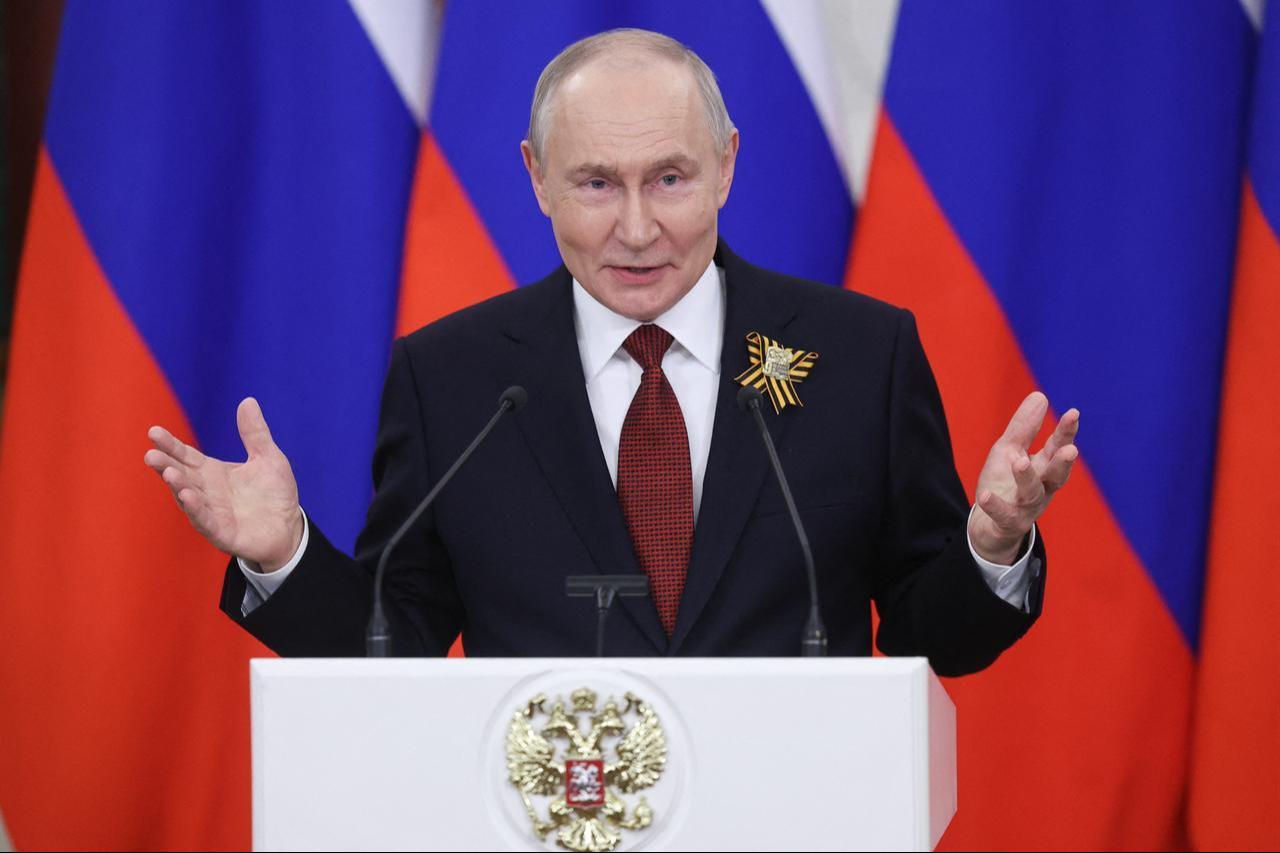
The full-scale invasion launched in 2022 marked a new stage.
At that point, Russia was no longer trying only to control Crimea or destabilize Donbas. The aim became much larger: to break the Ukrainian state itself.
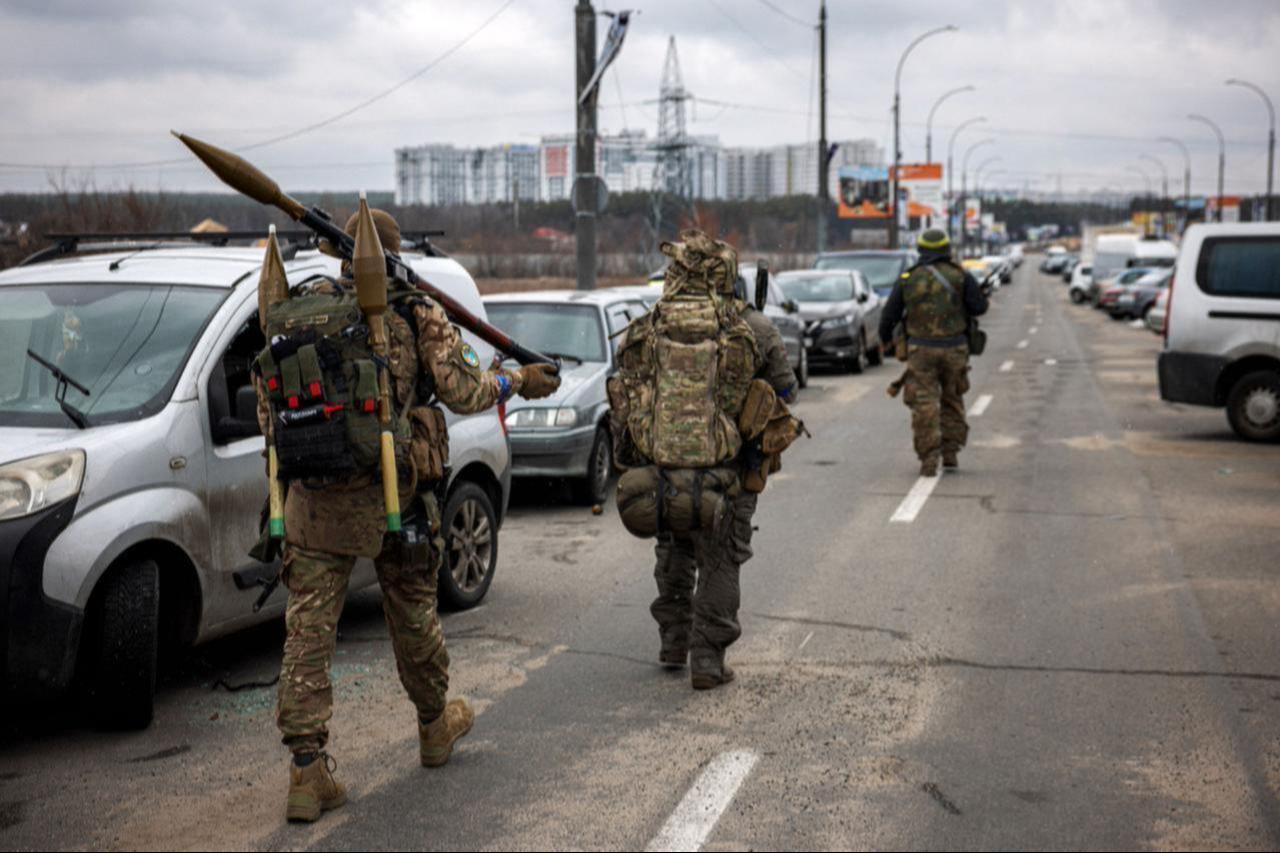
The attacks on infrastructure, forced displacement, pressure on schools, cultural repression and attempts to impose Russian narratives all show the same thing. This is not only a military occupation. It is an attempt to erase Ukrainian identity.
Moscow’s goal is to make Ukraine unable to exist as a separate political and national project.
Putin’s war against Ukraine cannot be explained only by classical geopolitics. It is driven by history, ideology, fear and regime survival.
For the Kremlin, a Western-oriented Ukraine is not just a lost buffer zone. It is a threat to Putin’s rule and to the story Russia tells about itself.
That is why Putin not only wants to defeat Ukraine militarily. He wants to transform it politically, culturally and nationally. He wants Ukraine back inside Russia’s sphere of influence—and he wants Ukrainian identity weakened to the point where it can no longer stand on its own.
This is why the war is unlikely to end as a simple territorial dispute. At its core, it is a long struggle over identity, sovereignty and Ukraine's right to exist as Ukraine.
DISCLAIMER: The views and opinions expressed in this article are those of the author and may not necessarily reflect the editorial policy of Türkiye Today.


 Set as preferred source
 Set as preferred source


 7 min read