Newsletters




Europe's military arrangements have long become part of discussions over the war in Ukraine. After this week’s contacts with American representatives, Kremlin aide Yury Ushakov said on Thursday that Moscow had restated its December 2021 security demands: limits on NATO enlargement, on weapons deployed near Russia, and a return of the alliance’s force posture to its 1997 footing. He also signaled that Moscow wants to add new proposals reflecting what the war has taught it.
A comprehensive bargain would redistribute military costs and obligations among countries that are not equally represented at the negotiating table. However, its feasibility depends on reconciling limits on deployments with Ukraine's security requirements and identifying which governments can actually implement the resulting commitments.
Russia's 2021 draft agreement proposed restricting additional military deployments by Russia and countries that belonged to NATO on May 27, 1997, in other European states.
Separate provisions sought to halt enlargement and restrict NATO members' military activities in Eastern Europe, the South Caucasus and Central Asia.
The proposal went considerably further than the 1997 NATO-Russia Founding Act. NATO's original undertaking concerning substantial combat forces depended on the security conditions of that period and emphasized reinforcement over additional permanent stationing. The document imposed no numerical ceiling based on 1997 troop levels.
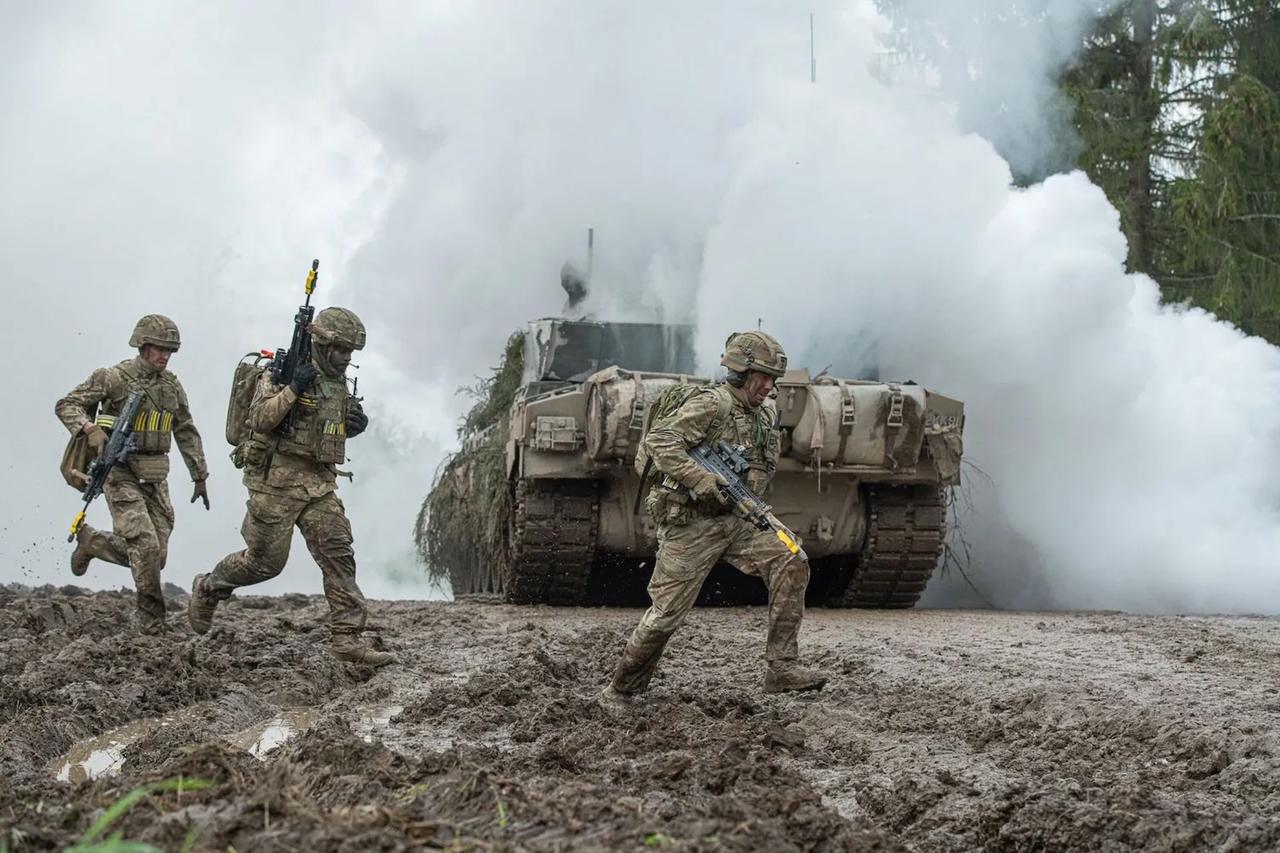
The operational consequences are evident in Latvia, which hosts a Canadian-led NATO brigade, while Lithuania plans to complete the deployment of a German brigade of around 5,000 personnel by the end of 2027. Restricting such formations would affect how quickly allied forces could respond to a crisis.
A negotiated ceiling on permanently stationed troops, however, could leave rotational forces and prepositioned equipment largely untouched. Moscow would have to decide which capabilities mattered most, while NATO governments would have to calculate the costs of losing them.
The reported possibility of Finland leaving NATO raises a different issue. The Kremlin denied reports that Moscow had sought its withdrawal, and the North Atlantic Treaty provides for departure at a member's own initiative.
Negotiating restrictions on specific deployments would be more practical than reversing an existing membership decision.

Washington can facilitate discussions with Moscow, but it cannot independently withdraw other NATO members' troops or determine the alliance's future membership.
In a statement this weekend, Jared Kushner said NATO would remain a central pillar of European security and called for European participation in the talks.
American engagement with Russia's wider security concerns therefore establishes a negotiating agenda without demonstrating acceptance of Moscow's preferred outcome.
European states also possess leverage that is easy to overlook when attention concentrates on American and Russian diplomacy. They operate the forces that would be subject to restrictions and finance substantial parts of Ukraine's defense.
The European Commission's recent €4.36 billion ($4.8 billion) disbursement illustrates the scale of those commitments. Any agreement involving deployments or European economic measures would require decisions by the governments and institutions responsible.
A reciprocal arrangement would also have to address Russian deployments in Belarus alongside allied units in the Baltic states.
Military monitors estimated around 2,200 Russian military personnel in Belarus in August. A limit based solely on foreign troop numbers could still leave substantial differences in missile reach and reinforcement capacity.
Negotiators would have to choose between broad, difficult-to-monitor principles and detailed constraints with significant operational consequences.
Kyiv wants credible guarantees capable of deterring renewed fighting, while Moscow has rejected NATO-country troop deployments on Ukrainian territory. Guarantees dependent entirely on future political decisions may carry little credibility in Kyiv.
An international deployment with an automatic military response mandate, however, would encounter Russian opposition and could become another source of confrontation.
A different arrangement might rely on a capable Ukrainian army backed by sustained financing and pre-agreed resupply commitments.
Moreover, its credibility would depend on whether promised assistance could arrive quickly enough during a renewed crisis. Moscow would meanwhile assess the same capabilities by their potential use against Russian forces. Finding acceptable limits would require bargaining over the types and operational reach of available weapons.
Disagreement over sequencing creates another obstacle. Russian Foreign Minister Sergey Lavrov rejected an immediate ceasefire without prior agreement on postwar arrangements. Zelenskyy, by contrast, prioritized ending the fighting before discussing a wider European security order.
Expanding talks to the continent's military architecture could consequently delay measures that would otherwise be easier to verify, even if both governments see value in a broader settlement.
A narrower agreement could proceed from areas already explored in previous negotiations. NATO's January 2022 proposals offered discussions on missile restrictions and military transparency. Inspected deployment limits and advance notification of exercises would provide more concrete commitments than general assurances.
Their geographic scope would also have consequences beyond Eastern Europe. Russia's earlier proposal to restrict NATO members' military activity in the South Caucasus could affect Türkiye's defense cooperation with Azerbaijan, giving Ankara a direct interest in any regional arrangement.
Since 2021, Russian forces have gained control of parts of Ukrainian territory, while Finland and Sweden have joined NATO and the alliance has reinforced its northeastern flank. Moscow's longstanding proposals now receive attention in a wider diplomatic process, but some of their military implications have become harder for other states to accept.
Progress is more likely to come from narrow, verifiable commitments linked to workable guarantees for Ukraine than from an attempt to settle Europe's entire security order at once.


 Set as preferred source
 Set as preferred source


 1 min read
 1 min read