Newsletters


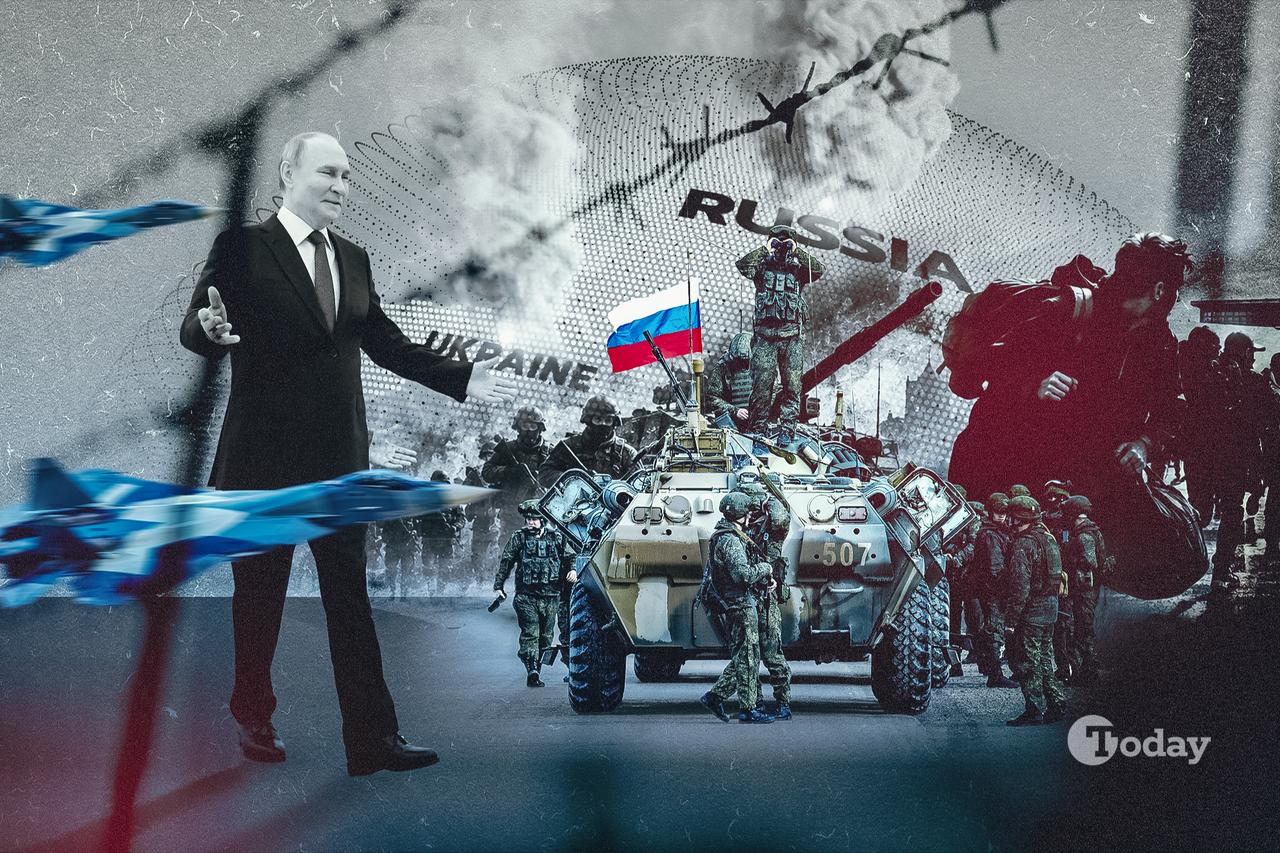


The knock is still a rumor, but in Russia every rumor carries a wisp of truth.
That’s why 36-year-old Eradzh, an entrepreneur familiar with the peculiar calculus of Vladimir Putin’s Russia, recently asked an artificial intelligence program to calculate the odds of his being dragged into the Ukrainian meat grinder.
And why not? After more than 1,651 days, Putin’s war has killed an estimated 500,000 Russian soldiers and chewed through over a million more battlefield casualties, all for territorial gains that can sometimes be measured in meters a day.
That’s why I plucked Eradzh from a terrific New York Times dispatch we were discussing on a London radio program. As a former Moscow correspondent, I recognized the old Russian reflex at once: when the Kremlin says there is nothing to worry about, start worrying.
The machine absorbed the battlefield reports, recruitment figures, and Kremlin denials, while Eradzh supplied the human variables: Have the contract soldiers run out? Probably. Has Russia captured anything worth the blood? No. Have negotiations gone anywhere? No. Will Putin dig in? Of course.
This is what passes for retirement planning among Russian men now.
Moscow, meanwhile, looks magnificent.
The sidewalks are scrubbed, the restaurants glow, the boutiques remain open, and municipal pavilions scattered along the boulevards offer free medical examinations beneath one of those slogans that could only be perfected in an authoritarian state with a manpower problem: YOUR CHOICE IS TO LIVE LONGER! Wonderful advice—all you have to do is beat the government to the airport.
For months, Moscow has been marinating in rumors that another mobilization will follow the Sept. 20 parliamentary election, and the rumors have become a kind of invisible nerve gas drifting through cafes, offices, trains, and smoking areas.
Nobody knows where it originated, but everybody has inhaled enough to start checking passport expiration dates. Putin says this is “complete nonsense.”
Which naturally scares people even more.
The Kremlin also said Russia wasn’t going to invade Ukraine before Russia invaded Ukraine. It denied that a mobilization was coming in September 2022, before hundreds of thousands of Russian men were mobilized and others stampeded toward airports and land borders. In a normal country, a government denial is information; in Putin’s Russia, it is merely another clue.
This is the mature form of the political system Putin has spent a quarter-century constructing: a gangster bureaucracy wrapped in Orthodox incense, imperial nostalgia, and television hallucinations, financed by hydrocarbons and administered by men who discovered long ago that uncertainty can be more useful than law.
Russia's information machine has spent years manufacturing this psychological fog—precisely—deception, distraction, disruption, and distrust—until objective reality begins to resemble contraband.
Putin himself has increasingly wrapped the Ukraine war in historical destiny, civilizational struggle, and the mystical restoration of a Russia that seems to exist somewhere between the czars, Stalin, and an imperial hallucination.
This is not a comforting place from which to make manpower decisions.
Military analysts can explain that Russia is nowhere near the catastrophe it faced in autumn 2022, when its army was abandoning huge stretches of Ukrainian territory and leaving equipment behind.
They can point to recruitment data suggesting Moscow may still be replacing battlefield losses with volunteers, while another mass draft would be expensive, economically destructive, and politically dangerous. All very sensible.
Except sensible men do not decide this.
Putin does. And after years of a war intended to demonstrate Russian strength but which has instead consumed mountains of money, machinery, and human beings, the Russian male eventually discovers that rational analysis leads to the same brick wall: What is going on inside the head of the man in the Kremlin? Nobody knows—possibly not even Putin.
The state has nevertheless prepared some impressive machinery should inspiration strike. The 2022 mobilization possessed an almost charming Soviet clumsiness: a man heard the news, threw clothes into a suitcase, and raced for Georgia, Kazakhstan, or the nearest airport before somebody with a clipboard found him. Crude, terrifying, inefficient.
That loophole has been undergoing digital extermination. Military summonses can now be delivered electronically, and ignoring one can ultimately restrict your ability to leave Russia, drive a car, or conduct property transactions. The old Russian nightmare was the midnight knock; now the knock downloads automatically.
Progress.
Men hoard cash, study residency rules and airline schedules, and wonder if Moscow registration offers protection. Some time for vacations before the election. Others stay up reading Telegram until fear and information blur.
This is the central accomplishment of late Putinism: not patriotism, not stability, not even obedience, but uncertainty.
An entire generation of Russian men has been trained to live provisionally. Never entirely unpack.
Build a career, buy an apartment, fall in love, and have children—but keep one eye on the departure board. Someday, Russia might need you.
Perhaps there will be no mobilization. Perhaps the Kremlin understands that another mass draft could ignite public anger, worsen the labor crisis, and remind comfortable Moscow families that the television war has a habit of climbing out of the screen and acquiring their sons. There are excellent reasons not to do it.
But Russia has no shortage of excellent reasons not to do things it eventually does.
Perhaps Eradzh will sit beside the Mediterranean drinking something expensive, watching September disappear, and discover that he fled from nothing. Maybe the election will pass, the borders will remain open, and Moscow will continue glittering beneath the autumn lights. He may even feel foolish.
But that misses the point. Eradzh didn’t flee mobilization so much as the possibility of Putin having an idea. That’s the tax young Russian men now pay for living under an aging ruler chasing immortality through history: ordinary lives held hostage to whatever vision, grievance, or imperial ghost wanders through the Kremlin at three in the morning.
And so, Moscow sparkles. Beneath the capital’s trees, cheerful municipal doctors invite Russian men inside for a free examination under the slogan "YOUR CHOICE IS TO LIVE LONGER!” For once, the propaganda may be right.
The only unanswered question is whether living longer means leaving Russia before Russia decides otherwise.


 Set as preferred source
 Set as preferred source


 2 min read
 1 min read