Newsletters




This article was originally written for Türkiye Today’s weekly newsletter, Saturday's Wrap-up, in its Jan. 10, 2025, issue. Please make sure you subscribe to the newsletter by clicking here.
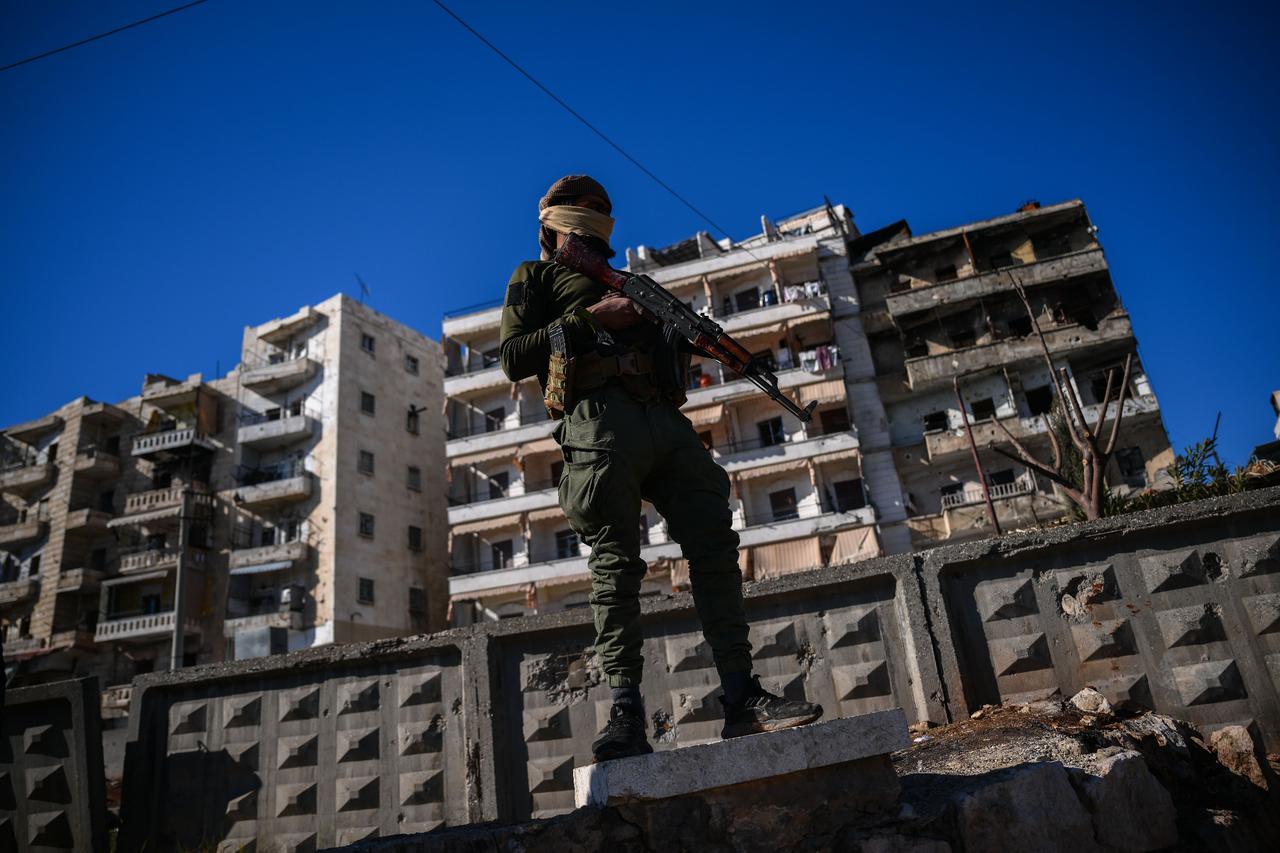
This week, we witnessed a short protest from pro-Kurdish DEM Party lawmakers in the Turkish Parliament over the Syrian army's military operation against SDF positions in northern Aleppo neighborhoods Ashrafieh and Sheikh Maqsoud. SDF had insisted on retaining control of neighborhoods in the predominantly Arab-city despite little to no public support. Although measured in tone, DEM Party lawmakers' protest showcased the possible spillover effects of SDF-Syria tension on Türkiye's peace process. During a visit to Aleppo last year, I firsthand witnessed how SDF positions inside the second-largest city create safety and logistic problems for the locals. Not hard to imagine.
Turkish Foreign Minister Hakan Fidan remains pessimistic about SDF's policies. In a televised interview with TRT, Fidan said, “SDF, which is an extension of PKK, only changes position when it is threatened by force.” Turkish security sources’ description of the Syrian Army’s advance as a “positive step” for Syria’s territorial integrity should not be treated as rhetorical filler. It reflects a recalibration that has been quietly underway for some time.
The Syrian Army had taken over SDF positions in Aleppo by Saturday morning. The announced transfer of SDF elements to east of the Euphrates with light personal weapons is being framed as an orderly withdrawal, but politically it is closer to a forced retreat under “unfavorable terms”. It is a surrender. Damascus declaring a unilateral ceasefire on Friday and opening a safe corridor only reinforces the point: the Syrian state is acting from a position of confidence, not urgency. A security official contacted by Türkiye Today on Thursday said that the Syrian army is capable of preventing such threats without Türkiye's involvement when asked whether Türkiye would consider a military intervention if SDF attempts to send reinforcements to the neighborhoods.
What should concern the SDF leadership is not the military aspect of this coordination between Türkiye and Syria, but the political consensus forming around it. Ankara’s messaging has been disciplined. On the one hand, Türkiye reiterates that its primary goal is Syria’s territorial integrity and central authority. On the other, it deliberately emphasizes that Kurds are citizens of Syria and that protecting their rights remains a priority for Türkiye. This dual emphasis mirrors Ankara’s long-standing approach: integration over autonomy, rights within the state rather than parallel structures against it. Historically, Türkiye even pressured the Assad regime to grant citizenship and provide more breathing room to the Kurdish citizens of Syria before the civil war erupted.
The humanitarian dimension further erodes the SDF’s position. The displacement of 142,000 people, civilian casualties, and accusations of using residential areas in Aleppo as shields have turned what the SDF often markets as “local governance” into a liability. Even sympathetic audiences struggle to reconcile these outcomes with claims of responsible administration. In the region, such accusations carry far more weight than Western press releases ever will.
There is also a broader international context that should not be ignored. High-level European visits to Damascus during Syria’s operation in Aleppo underline a quiet but unmistakable shift. Moral posturing has its limits, and Aleppo once again proves that power realities eventually force realism on reluctant actors. Had Russia not imposed this logic on Europe through brute geopolitics, one can safely assume the same capitals would be “extremely concerned” today due to Syria's operation in Aleppo. Instead, they are recalibrating.
At this stage, the most viable path forward remains remarkably straightforward. As Türkiye Today columnist Omer Ozkizilcik noted on X, the SDF could still opt for a face-saving exit by disowning the Aleppo units, completing their evacuation, and allowing the Syrian government to fully take over. From there, meaningful negotiations on Kurdish rights and local governance in Kurdish-majority areas could follow—within the framework of the Syrian state. This would not be a defeat; it would be a strategic correction. His comment came before the Syrian army’s total takeover of the SDF positions in Aleppo. We will see how the negotiations between SDF and Syria unfold from this point.
The alternative is far riskier. Continued maximalism, name games, or attempts to stall for time will only accelerate the erosion of whatever leverage the SDF still possesses. As I have argued in previous newsletters, Ankara’s patience is not infinite, and ambiguity is no longer being rewarded. The events in Aleppo suggest that the window for a negotiated settlement remains open—but it is narrowing fast.


 Set as preferred source
 Set as preferred source


 7 min read