Newsletters


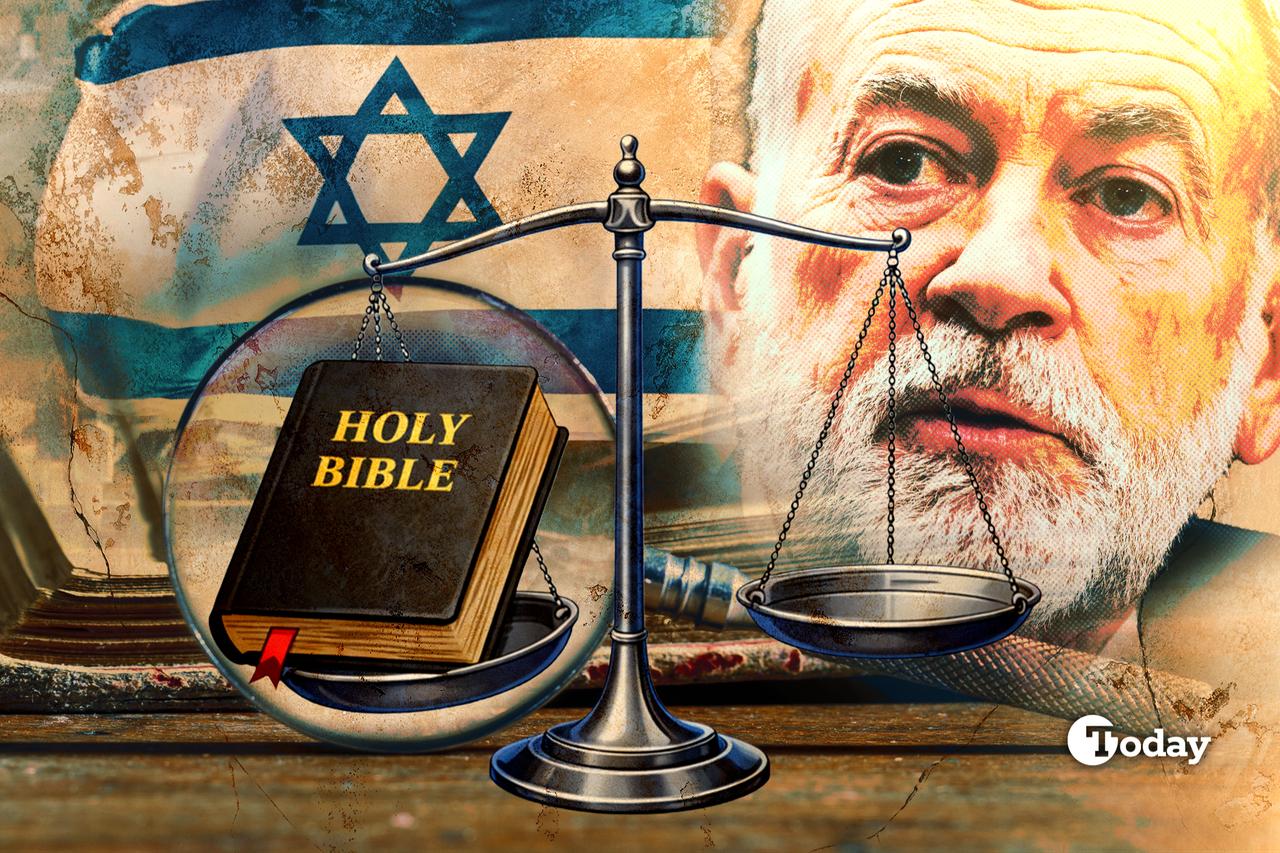


There are moments in America’s MAGA fever dream when a public official wanders onto the stage, and you can almost hear a celestial director mutter, "Send in the riverboat gambler."
Enter U.S. Ambassador to Israel Mike Huckabee, boots polished, Bible aloft, grinning like a man who has mistaken a foreign policy briefing for a tent revival in a Las Vegas strip mall.
“It would be fine if they took all of it,” Huckabee recently told the podcaster and MAGA poster boy Tucker Carlson. “They” would be Israel. “It” was the entire Middle East, or at least a whopping bite of what Huckabee described as “a big piece of land.”
Huckabee, the former governor of Arkansas (ranked as the 47th least educated state), is the sort of diplomat who seems to believe that geopolitics can be solved with a concordance and a toothy grin. He speaks of ancient covenants the way bond traders speak of Treasury yields—fixed, eternal, and immune to market correction. The land, he suggests, was deeded in perpetuity by the Almighty, notarized in Scripture, and any attempt to argue otherwise is treated like heresy in a courthouse.
Now, I have spent enough time in smoke-choked press rooms and desert motorcades to know that religion and politics have always shared a motel room in America.
But Huckabee doesn’t merely nod to the Bible. He wields it like a zoning map.
When he talks about Israeli territorial expansion, it is not in the dreary dialect of security buffers and strategic depth. No, it is Genesis as real estate law and Joshua as a surveyor general. One half expects him to unroll a parchment at the U.N. and declare the minutes of the zoning meeting divinely pre-approved.
To understand the spectacle, imagine a character sketched by Mark Twain, a man of inexhaustible certainty and limited comprehension. Not the sly trickster, but the buoyant innocent with a head full of pamphlets and a heart untroubled by doubt. Think of Colonel Sellers from “The Gilded Age,” forever promoting a silver mine that exists chiefly in his imagination. Replace the mine with a map of the Middle East and swap the pickaxe for a pulpit, and you begin to see the outline.
Huckabee’s comments on the Bible and territory carry the unmistakable tone of someone who believes history is a settled matter because he has read the final chapter. In this telling, borders are not the messy byproduct of wars, negotiations, demography, and international law; they are verses waiting to be highlighted. If bulldozers move and settlements spread, well, perhaps that is simply prophecy with a building permit.
The problem, one exhausted Foreign Service officer recently told me between sips of burnt embassy coffee, is that the modern Middle East is not a Sunday school felt board. It is a labyrinth of competing nationalisms, security dilemmas, and historical grievances stacked like unstable crates in a warehouse. You cannot simply shout “Covenant!” and expect the warehouse to reorganize itself.
But Huckabee projects a serene confidence that would make Huckleberry Finn grimace. He speaks as if the conflict were a theological misunderstanding rather than a combustible struggle between people with their own claims, fears, and memories. In this way, he resembles Twain’s well-meaning boosters: men who stride into complexity with a brochure and emerge bewildered that the world refuses to conform.
There’s something almost charming about such certainty. It relieves the speaker of ambiguity. If the Bible is the ultimate land registry, then diplomacy becomes a matter of patience. Let’s wait for reality to catch up with Revelation. Negotiations, concessions, and compromise: these are the fidgeting habits of those who lack faith.
Yet policy forged in that furnace risks turning sacred text into a blunt instrument. When territory is framed as a divine entitlement, disagreement morphs into sacrilege. Opponents are no longer interlocutors but obstacles to destiny. And in a region where symbolism can ignite faster than dry brush, that rhetorical alchemy is not merely colorful. It’s dangerous.
Twain understood the American talent for grandiose certainty. He populated his pages with men who mistook bravado for wisdom and tub-thumping for progress. They were not villains so much as enthusiasts untethered from consequences. Huckabee’s public musings sometimes carry that same buoyancy: the sense that conviction itself is evidence enough.
But foreign policy is a blood sport played with maps and memories. It demands fluency in the language of trade-offs, not just testaments. When an ambassador appears to ground his strategic outlook in ancient scripture more than contemporary realities, seasoned observers reach for antacids.
For those new to the drama, it helps to see Huckabee not as a rogue theocrat, nor as a master strategist playing three-dimensional chess, but as a figure out of American satire: earnest, emphatic, and supremely confident that Providence doubles as a cartographer. His comments on religion and territorial expansion are less a detailed blueprint than a revival sermon delivered over a disputed hillside.
In another century, Twain would have had a field day with the ambassador striding through Jerusalem like Colonel Sellers, pitching the Promised Land as if it were a speculative railroad. “Gentlemen,” he might say, “the dividends are eternal.”
The rest of us are left squinting at the fine print, aware that eternity has a way of colliding with the morning news.


 Set as preferred source
 Set as preferred source


 7 min read