Newsletters


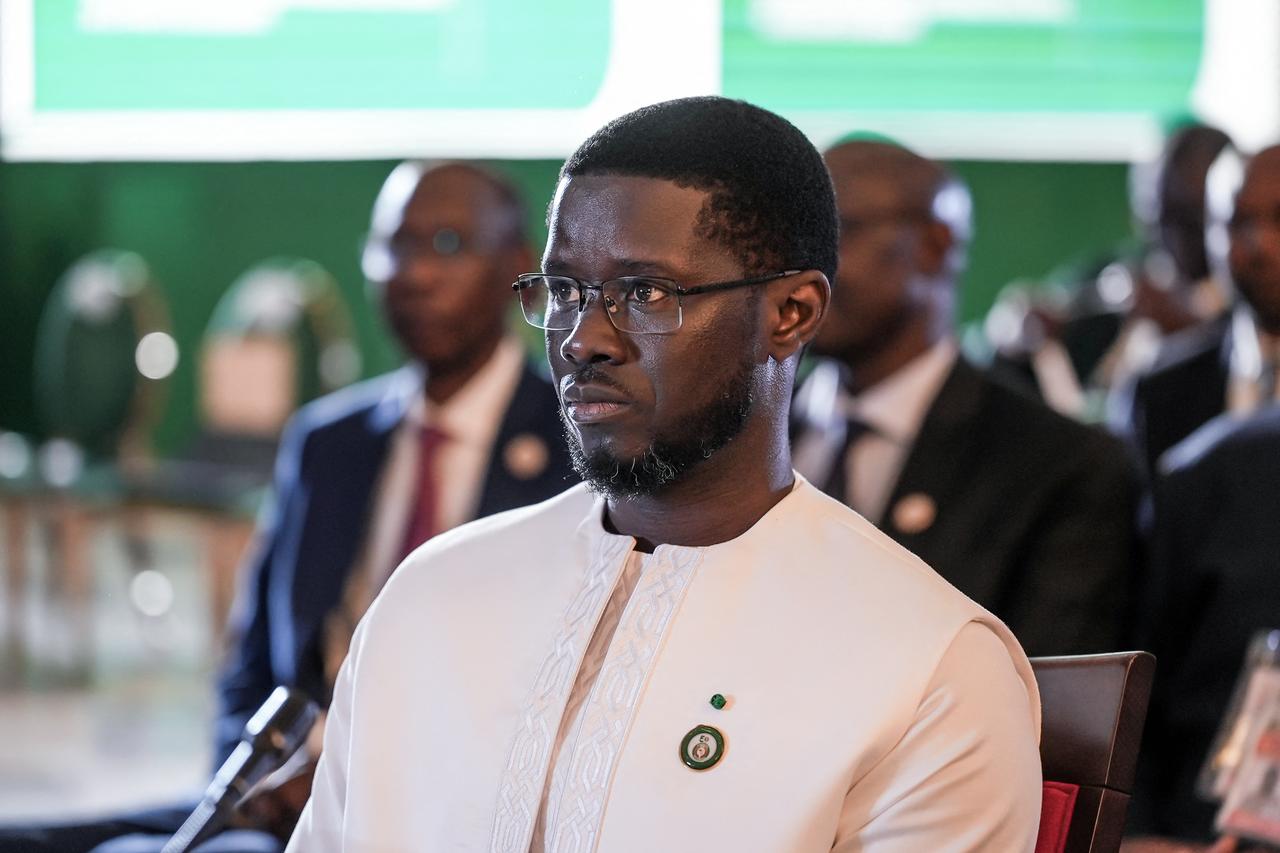


Senegal, long regarded as one of West Africa’s most stable democracies, is entering a delicate and potentially defining moment.
Behind the image of continuity and institutional calm, a growing political tension is unfolding at the very top of the state between a president seeking gradual change and a prime minister pushed forward by a more radical popular mandate.
The rise of President Bassirou Diomaye Faye marked a historic shift in Senegalese politics, raising hopes for greater sovereignty and a recalibration of relations with France.
Yet only months into his presidency, an internal struggle has begun to surface, one that threatens not only the cohesion of the ruling camp but also the balance of Senegal’s political system itself.
Two figures dominate Senegal’s political scene today: President Bassirou Diomaye Faye and Prime Minister Ousmane Sonko.
Both belong to the PASTEF party, which successfully ended the era of former president Macky Sall and campaigned on a platform openly critical of France’s long-standing influence in Senegal.
While the two men share a political background, their approaches differ markedly.
Faye has adopted a cautious and pragmatic strategy. He has not hidden his desire to reduce French dominance, but he has also sought to avoid a confrontation that could plunge an already financially strained country into instability.
Sonko, by contrast, has consistently taken a far more confrontational tone. Even before becoming prime minister, he openly questioned the presence of French military bases, the benefits of existing economic agreements and the legitimacy of long-standing political and commercial arrangements. It was precisely this radical posture that led the previous administration to block his presidential candidacy through politicized judicial measures.
Faye, aware of the high stakes, has tried to navigate a middle path. He understands that France would not disengage quietly or without consequences and that a sudden rupture could inflict serious economic and institutional damage on Senegal. He argues that the country may not be able to absorb such damage.
The president also faces pressures on several fronts: wary Western capitals closely monitoring his experiment, regional actors uneasy about Senegal’s political direction, and powerful domestic lobbies historically tied to French interests.
Yet the most serious challenge has emerged from within his own camp. Over recent months, Sonko’s determination to impose his more radical vision has become increasingly visible.
His supporters argue that voters endorsed a program of confrontation and rupture, not cautious compromise. From their perspective, Faye’s acceptance of political “realities,” including the suspension of legal proceedings against former president Macky Sall and the absence of accountability for corruption and repression, amounts to a betrayal of the PASTEF project.
It is worth recalling that Sonko was the central figure of the movement. His endorsement of Faye as the party’s candidate was decisive in persuading voters to rally behind a relatively lesser-known figure when Sonko himself was barred from running.
Many of Sonko’s supporters now view the prime minister’s position as insufficient for his political weight. Even if Sonko accepted it out of humility or tactical restraint, they believe the president must ultimately align with his vision and leadership.
The radical wing backing Sonko openly expresses frustration with Faye’s governance. They argue that little has changed, accusing the president of excessive concern for French interests.
The debate now revolves around two fundamental questions. First, has Faye been right to adopt a cautious approach, given the difference between being an activist and being a president responsible for millions of citizens? Second, how can Senegal formulate coherent domestic and foreign policies when its leadership embodies two fundamentally divergent visions?
Sonko has, for example, called for dismantling regional structures he sees as extensions of French influence and for abandoning the CFA franc. Faye, however, remains opposed to such revolutionary steps, resisting calls for abrupt alignment with more confrontational regional agendas.
The president has attempted to maintain balanced relations, hoping to position Senegal as a mediator and stabilizing force. Yet, these efforts have yielded little success. Instead, both sides increasingly perceive him as a leader unwilling—or unable—to clearly choose a camp.
This ambiguity cannot last indefinitely. Either the two leaders will converge on a shared vision for governing the country, or one will eventually attempt to marginalize the other.
Sonko could rely on his strong popular base and political legacy, while Faye holds electoral legitimacy and institutional authority.
The emergence of the “Faye for President” alliance may signal the beginning of a gradual separation between the two men. By appointing a different figure to lead this new structure—designed primarily to prepare for a second term—Faye appears to be laying the groundwork for an independent political path.
Many of Sonko’s supporters had believed that Faye’s presidency would be transitional, paving the way for Sonko once legal obstacles were removed. That expectation now seems increasingly uncertain.
Faye shows clear signs of wanting to retain power.
His moderate posture, combined with regional and international fears of Sonko’s radical ascent, may encourage external actors—particularly France—to view him as a more acceptable partner, especially if he distances himself further from what they label “extremist voices.”
Using his authority, Faye could theoretically move to sideline Sonko, including by reinforcing existing judicial rulings that bar him from running for president. But such steps would not come without cost.
Any attempt to neutralize Sonko through the courts would almost certainly provoke strong reactions from his supporters, risking unrest and potentially plunging Senegal into a cycle of instability and violence.


 Set as preferred source
 Set as preferred source


 7 min read