Newsletters


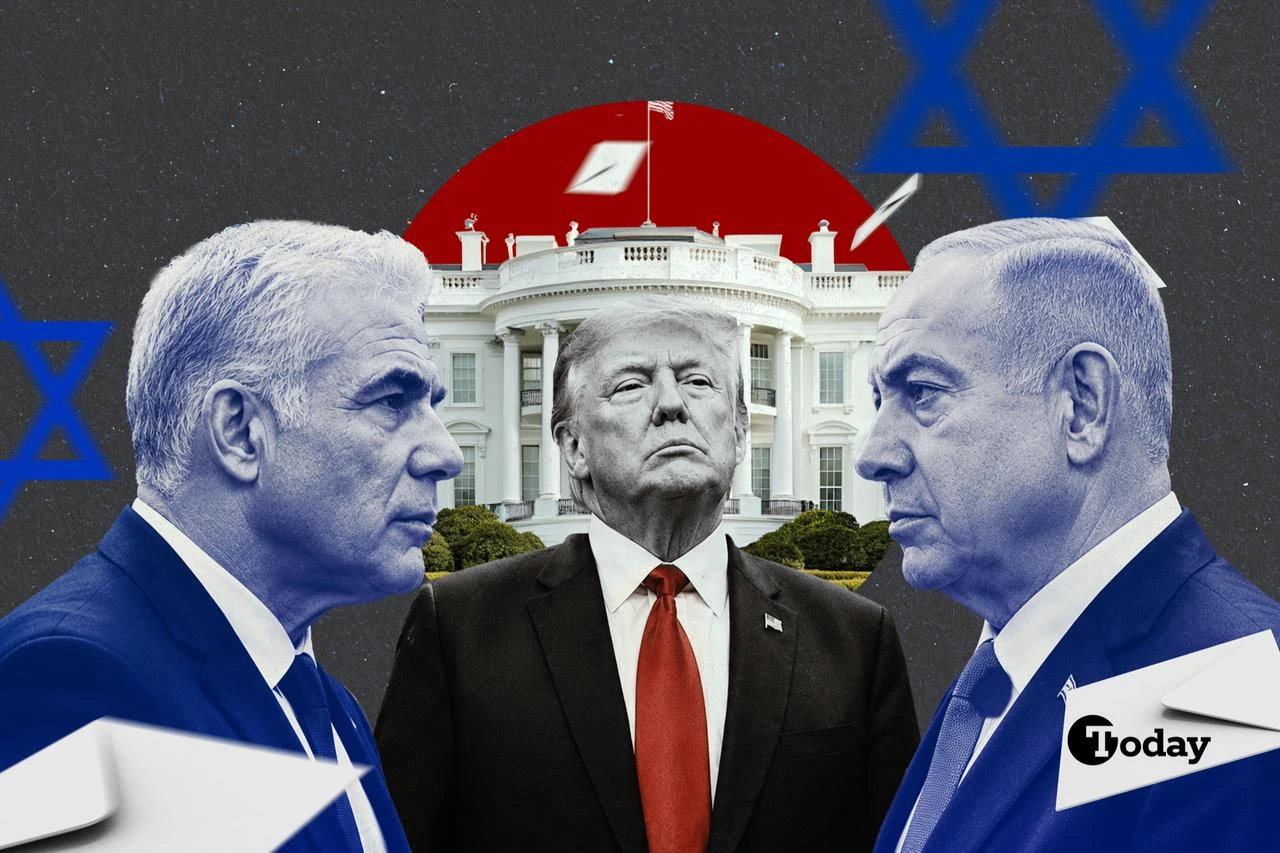


It all unfolded in a mere 48 hours. As the week kicked off on Monday, Washington, D.C., hosted both Israeli Prime Minister Benjamin Netanyahu and opposition leader Yair Lapid. Before Netanyahu finally got his long-awaited White House meeting with Trump on Tuesday, Lapid took the stage at the Atlantic Council to outline the foreign policy vision for his wing of the opposition.
That very same day, Gadi Eisenkot—former chief of the general staff of Israel and leader of the Yashar Party, the only bloc currently rivaling Likud in numerous polls—was speaking at the Institute for National Security Studies (INSS), one of Israel’s premier think tanks.
Even the sequence of questions fielded by both Lapid and Eisenkot was remarkably similar: the situation in the West Bank, the conflict with Iran and Lebanon, the future of Gaza and Palestine broadly, relations with regional neighbors, and Haredi military exemptions.
Naturally, any nation's elections are largely driven by domestic affairs. Yet almost every solution put forward by the opposition leaders was somehow tied to Israel’s shifting, damaged global image. Should that image ever turn around, part of that transformation will hinge on how the country handles its relationships with its neighbors.
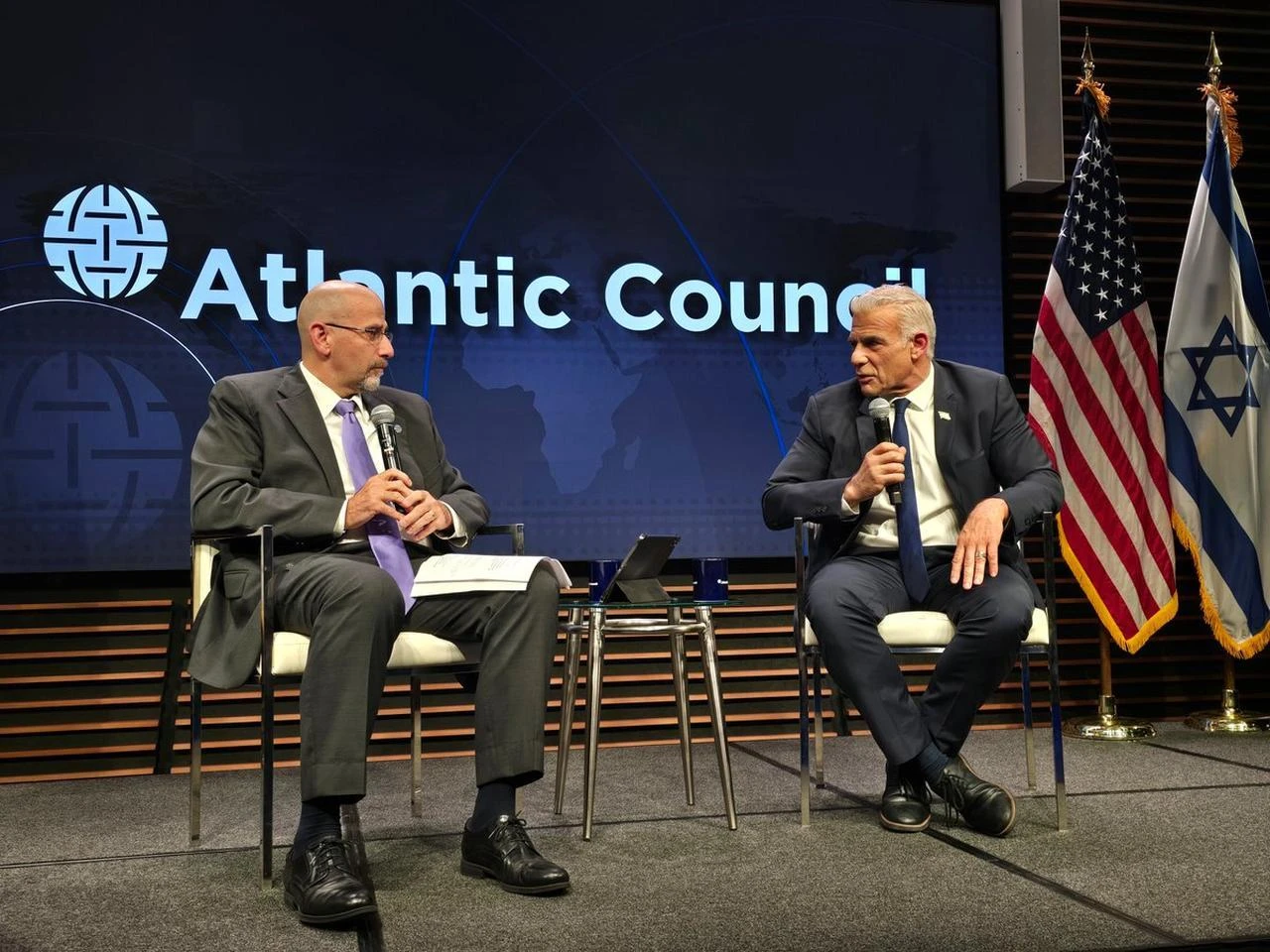

Drawing a parallel to how the United States’ tarnished image was restored following its foreign wars through Obama’s election, Lapid argued that political change can accelerate diplomatic results.
Experts broadly agree on that baseline: an opposition-led government would maintain strategic continuity regarding core national security threats while executing a fundamental course correction in diplomatic style and regional engagement. This "diplomatic reset" framing characterizes the opposition’s vision as one where diplomacy serves as an indispensable complement to military power, rather than a nuisance to be avoided.
When it comes to actually resolving these crises, however, the opposition—despite its internal diversity—shares a common pitfall: its proposed solutions offer interim answers that leave the structural root of the problems untouched.
For instance, Lapid branded the rampant violence in the West Bank as anarchy and a disgrace. Similarly, Eisenkot characterized it as being on the verge of anarchy due to the current government's dismantling of traditional security structures. He emphasized that while the military and Shin Bet are doing their best, they lack proper political backing. Yet, he also recently stated that he does "very much believe in settlement in Judea and Samaria."
The distinct campaigns are based on a shared consensus that a crisis exists, yet both frame it as an administrative failure rather than a structural issue.
The sheer volume of hype generated around "change" might create enough momentum to mask the absence of real, long-term solutions. Conversely, if that hype fades and a potential coalition struggles with instability, it may end up putting a harsher spotlight on the very problems it promised to fix.

"I don’t want to discuss problems, I want to discuss possibilities." In his address, Lapid praised his "great friend," UAE leader Mohamed bin Zayed, for invoking this mindset during a wartime visit to Abu Dhabi, pointing to the Abraham Accords as a solid foundation to build upon.
This anecdote alone illustrates that Israel’s regional diplomacy extends far beyond the situation in Gaza. For the Emiratis, the presence of Israeli troops in southern Syria is hardly a pressing bilateral issue; yet for a new Israeli government, its posture there will serve as a major indicator for its relations with Syria and Türkiye.
That is not to say Gaza is irrelevant to the wider region. As Yale University historian Arash Azizi noted, "Saudi Arabia will not give up on Palestine. The sooner Israel acknowledges that, the better for itself." While ties were severely strained by the prolonged war in Gaza and inflammatory rhetoric from far-right ministers like Itamar Ben-Gvir and Bezalel Smotrich, any Israeli government that refrains from hostile signaling toward Riyadh and respects its strategic weight should be able to find common ground.
Hence, removing ultra-nationalist elements from key cabinet posts would instantly lower the temperature with regional powers, even where core disagreements over military policy persist. Naturally, this shift will also depend on whether figures like Naftali Bennett dial back their own rhetoric toward neighboring states.
When it comes to immediate neighbors like Jordan and Egypt, however, the criteria for repair look quite different. By focusing on border security, economic pacts, energy cooperation, and the joint management of humanitarian corridors, experts anticipate an opposition government would prioritize stabilizing relations with Amman and Cairo, bringing them back from the historical lows reached during recent escalations.
"An existential threat is not a PR threat," says Lapid, a politician who inherits key aspects of Diplomatic Zionism's political legacy by prioritizing international legitimacy over unilateral action.
This does not imply he is indifferent to image problems; rather, it underscores a broad consensus in Israeli politics that strategic continuity will prevail on issues deemed vital to national security. For both Lapid and Eisenkot, neutralizing the threat from Iran—with the help of the US—remains an absolute priority.
According to Lapid, any withdrawal of troops from Lebanon remains strictly contingent on ensuring that Hezbollah does not simply move back in the very next day. While these statements are far more articulate than the messaging coming from the current government, their underlying premise is identical: even if Israel’s international standing fails to recover, and even if friction with regional neighbors persists, a change in government will not alter core security policy, though the rhetoric framing it almost certainly will.


 Set as preferred source
 Set as preferred source



 7 min read