Newsletters




This article was originally written for Türkiye Today’s weekly newsletter, Saturday's Wrap-up, in its Nov. 7, 2026 issue. Please make sure you subscribe to the newsletter by clicking here.
The Obama presidency began as a hopeful era in 2009, yet it was fraught with question marks for Türkiye. It was supposed to be a post-war period; it seemed the American war machine was finally cooling down. He arrived on the global stage like a rock star—he spoke eloquently, his unpopular middle name sounded like a conservative Turkish uncle, and one of his very first overseas visits as president was to Türkiye in April 2009. For many, it felt like a blank slate.
Yet the young, peaceful president who liked to preach to everybody about everything soon evolved into a drone supermaster. The chronic issues plaguing U.S.-Türkiye relations were effectively cemented during this era. As the not-so-famous saying goes, once you get addicted to drones, nothing else satisfies you quite as much. When Donald Trump arrived for his first term, things didn't work out seamlessly for Ankara either. And for the Biden era, I don't know what to say.
Now, following the 2026 U.S. midterm elections, new faces are emerging in Washington. They are young, they are Democrats, and they are poised to shape the political landscape for the next few decades. We may see some of them around as my older colleagues saw Mitch McConnell and Nancy Pelosi. We might very well be witnessing the birth of a golden generation of Democrats—assuming, of course, that Trump does not trigger a nuclear conflict that wipes the board clean before they can even get started.
History, however, offers a sobering lesson about shifting political tides. In 2007, despite his party having lost control of Congress over the floundering war in Iraq, then-President George W. Bush ordered 30,000 additional U.S. troops into that country to try to tamp down a civil war, as noted by Daniel R. DePetris.

Today, with the war in Iran dragging on, there is a real possibility that the next Democratic president, armed with a "Blue tsunami" majority in both chambers, could begin their tenure by raining bombs on whatever Trump started out with. Countless scenarios may concern policymakers in Ankara regarding the future of the region. And the new Democratic president may be as unpredictable and concerning for Türkiye as Obama was.
Yet, perhaps the most critical development for Türkiye is the emergence of a fierce public debate in the U.S. regarding its relations with Israel. The fear barrier has been broken. The "special relationship,” the very alliance that risks dragging the U.S. into deeper war, chaos, tears, and soaring gasoline prices—is now a matter of widespread public scrutiny.
As Türkiye Today’s Levent Kemal pointed out this week, we shouldn't necessarily expect a drastic pivot in U.S.-Türkiye relations, but we are seeing a genuine shift in the Washington-Tel Aviv dynamic.
"Democratic candidates in their victory speeches took direct aim at the pro-Israel lobby, which had supported the Republicans against them. Recall the wave of left-wing mobilization that started on university campuses, motivated by opposition to the treatment of refugees and the genocide in Gaza, and that gradually transformed into an electoral movement. And the people who were against it were not so much Trump supporters as the Israeli lobby and corporations," he notes.
How is Ankara digesting this shifting landscape? President Recep Tayyip Erdogan is playing it safe, noting that it is simply too early to judge the midterms' definitive impact.
"Turkish-American relations are deep-rooted and based on solid foundations," he stated, adding that amid a "turbulent process" of ongoing regional conflicts and oppression, Türkiye's primary desire is for the region to find peace as soon as possible.
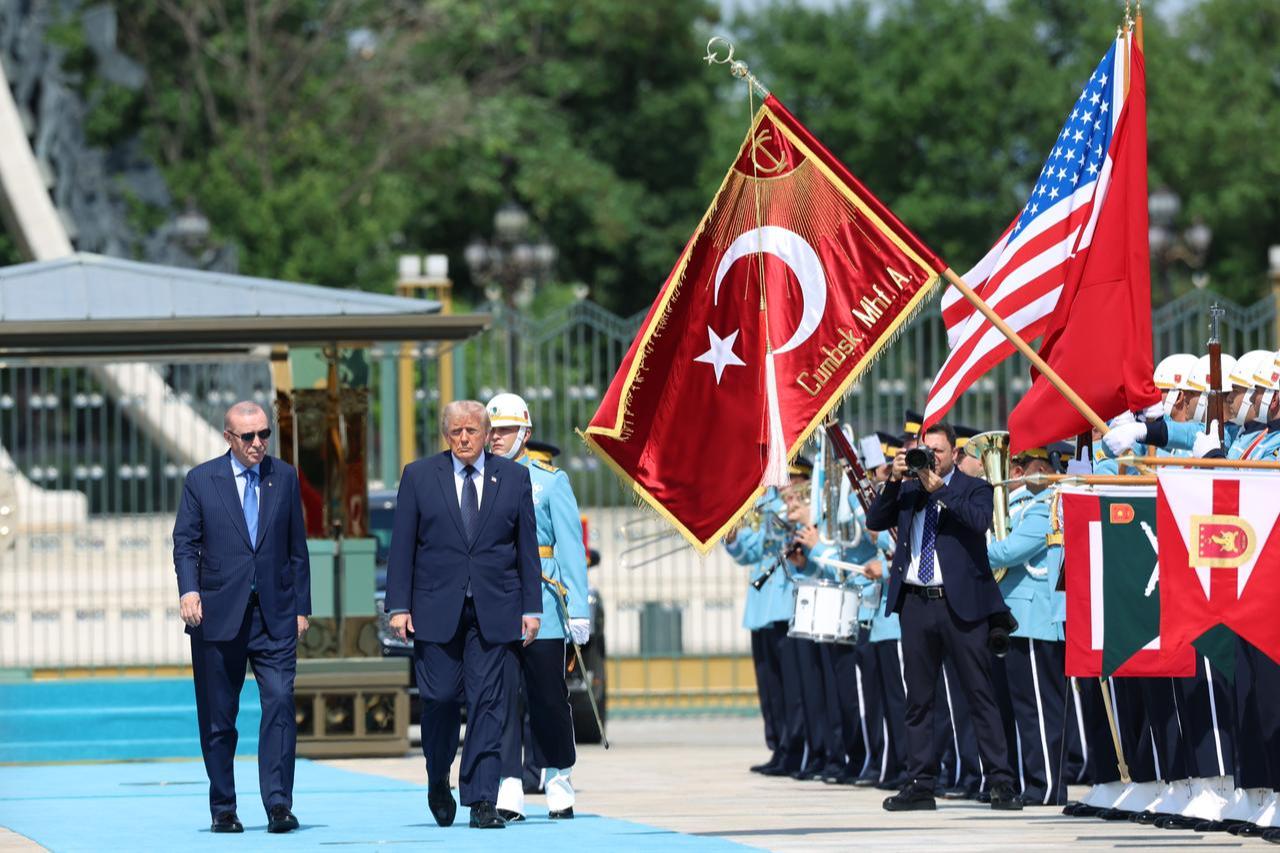
Talking to Türkiye Today, Zafer Sirakaya, Deputy Chairman and Head of Foreign Affairs for the Justice and Development Party (AK Party), emphasized that the strong leader-to-leader diplomacy between Erdogan and Trump remains highly important for Ankara-Washington relations. He also stressed the ongoing importance of maintaining an active dialogue with both the U.S. administration and members of Congress, noting that parliamentary diplomacy serves as a vital channel for fostering mutual understanding and exchanging views.
Beneath the diplomatic rhetoric, however, the mechanics of how Ankara speaks to Washington are undergoing a massive overhaul. As our DC correspondent Enes Kilic detailed in his latest piece, Ankara used to have Trump on speed dial; now, a newly empowered Congress is screening its calls.
Asli Aydintasbas, director of the Türkiye Project at the Brookings Institution, told Türkiye Today she found the president's remarks after the midterms fairly balanced and considered his stress on Congress especially important.
"The election results have fundamentally shifted the balance of power in Washington," she said. "Trump is still president, but he will no longer be able to maneuver as comfortably as before."
Ankara, she added, "needs to adapt to this new reality and invest in the future."
Warm presidential relations have not translated into broader progress in Congress, and questions remain over how much Türkiye actually benefited from them.
But it "created a perception in domestic public opinion as if it were an advantage," which suited the Turkish government.
The diagnosis comes with a warning: "The single biggest risk would be alienating the Democrats due to the close personal friendship between Erdogan and Trump, as happened at the end of Trump's first term," Aydintasbas said. "We paid the price for this during the first Trump administration."
If Ankara hopes to play it safe and adapt to the new political realities in DC, it may need to hang up the presidential speed dial and start building genuine bridges on Capitol Hill.


 Set as preferred source
 Set as preferred source


 2 min read
 1 min read