Newsletters




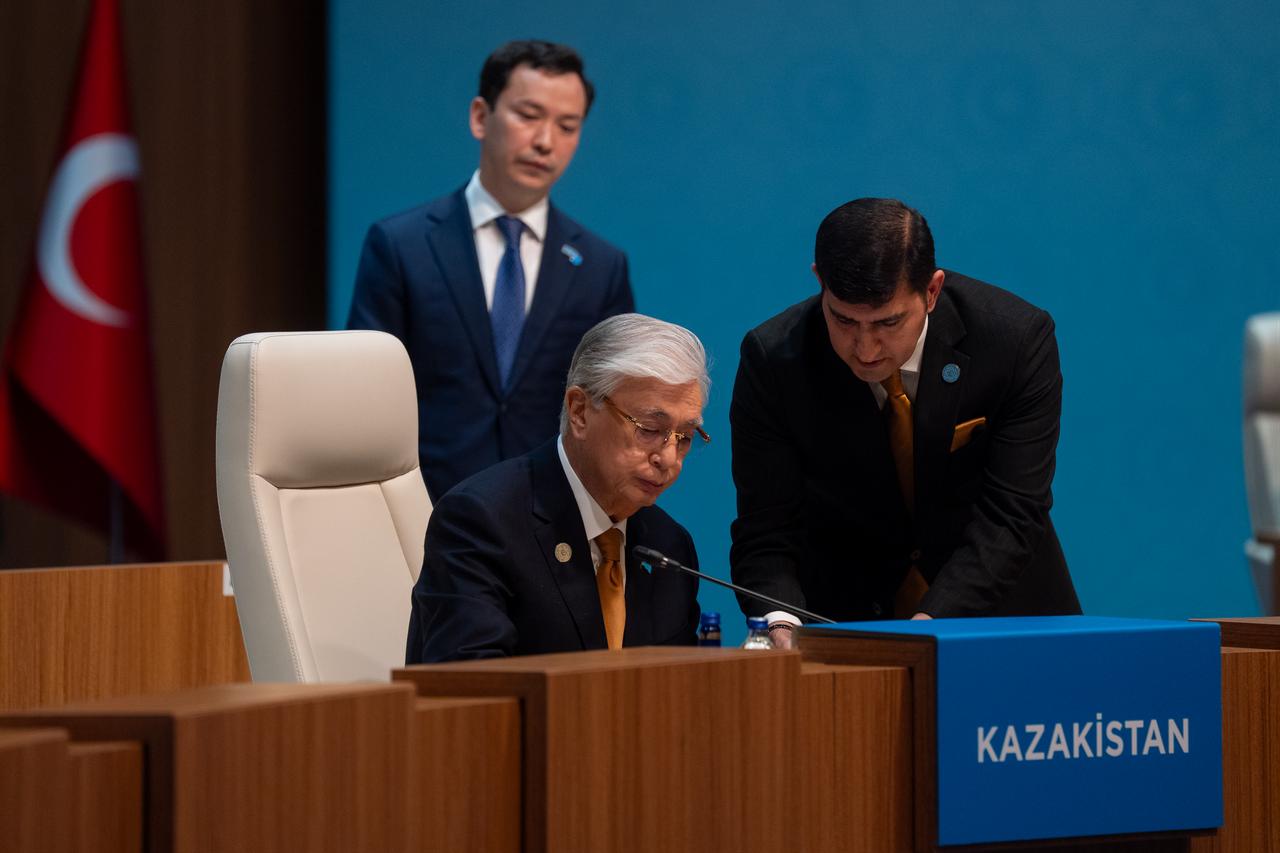
While Azerbaijani President Ilham Aliyev’s absence dominated corridor talk at the Organization of Turkic States (OTS) summit, the most consequential development in Ankara was Kazakhstan’s proposal to bring Russia into engagement with the bloc.
At the Oct. 30 meeting of leaders, President Kassym-Jomart Tokayev said it would be both appropriate and fair to “welcome Russia’s intention” and invite it to join the format or participate in OTS activities as an observer.
The proposal immediately drew criticism. The OTS consists of Türkiye, Azerbaijan, Kazakhstan, Uzbekistan and Kyrgyzstan and brings together countries that share Turkic linguistic, historical and cultural ties. Under rules adopted in 2021, observer states must recognize a Turkic or related language as an official nationwide language, a criterion Russia does not meet.
The caution toward their northern neighbor is understandable. A previous Central Asian grouping, the Central Asian Cooperation Organization, was quickly absorbed into the Moscow-led Eurasian Economic Community after Russia joined in 2004.
But before dismissing Tokayev’s move as capitulation to Moscow, it is worth asking what Kazakhstan hopes to achieve.
At the informal OTS summit he hosted in Turkistan in May, Tokayev noted that the OTS is “not a geopolitical project and not a military organization.”
At the Ankara summit, Tokayev reiterated that the OTS must never become a military alliance. “This is Kazakhstan’s position,” he said firmly.
There are various reasons for this stance. According to a source with knowledge of the deliberations, Kazakhstan wants the OTS to remain an “open, balanced and economically-focused” organization.
In practical economic terms, Astana believes engaging with Russia could create opportunities to better connect major transport routes, including the Middle Corridor and the North–South Corridor, making regional connectivity more efficient and mutually beneficial.
“This is a pragmatic and forward-looking approach,” the source told this author.
A career diplomat who once served as deputy secretary-general of the United Nations, Tokayev is no Viktor Orban. He is not given to ideological grandstanding, and his proposal appears to be part of a carefully considered strategy with a larger objective in mind.
One possibility is that this gesture toward Moscow is intended to create diplomatic space for an initiative Russia may find less appealing. What if Tokayev is laying the groundwork for a renewed appeal to freeze the Ukraine war, potentially at December’s G20 summit in Miami?
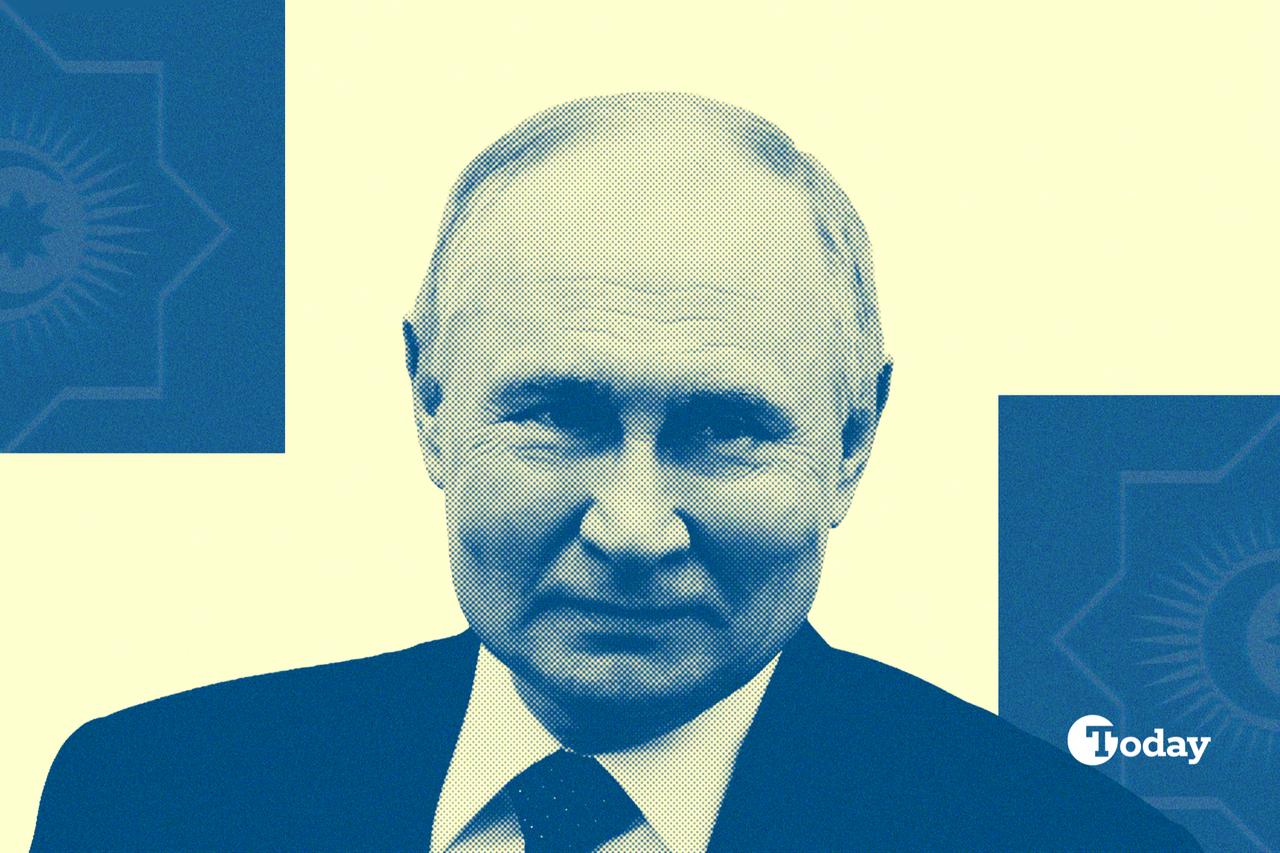
Tokayev has already made such a proposal directly to Russian President Vladimir Putin. On July 25, Tokayev traveled north across Kazakhstan’s long border with Russia to Omsk, the Siberian city just beyond the Kazakh steppe.
He had come to attend the annual Russia-Kazakhstan Interregional Cooperation Forum, devoted that year to developing a global logistics ecosystem. But the war in Ukraine loomed over the gathering. Drone attacks linked to the conflict had disrupted Kazakhstan’s oil exports through the Caspian Pipeline Consortium (CPC), underscoring the country’s growing exposure to a conflict not of its making.
“I will not hide the fact that I am receiving many signals,” Tokayev told Putin, referring to communications from Europe and the U.S. concerning the war.
After praising Putin’s diplomatic flexibility during his August 2025 meeting with President Donald Trump in Alaska, Tokayev arrived at his point.
“Perhaps it is time to freeze this conflict and return to the Istanbul Formula 2.0.”
It was a striking intervention by the leader of a country that maintains close relations with Moscow but has refused to recognize Russia’s annexations of Ukrainian territory.

Kazakhstan has a pressing national interest in ending a war whose economic consequences increasingly spill across its borders. Roughly 80% of Kazakhstan’s crude oil exports move through the CPC, which crosses Russian territory before reaching the Black Sea.
Astana is trying to diversify. One option is to build a trans-Caspian oil pipeline to Azerbaijan, where existing infrastructure through Azerbaijan and Georgia could carry crude onward to European markets.
Notably, Astana has shown little interest in substantially expanding an existing oil pipeline to China. Its preference is to develop westward connections across the Caspian rather than exchange dependence on Russia for dependence on China.
The OTS does not need to become a geopolitical bloc to acquire geopolitical significance. Its members sit astride the transport and energy corridors linking China, Central Asia and Europe.
At the Ankara summit, Uzbekistan’s President Shavkat Mirziyoyev proposed a jointly managed network of logistics hubs among OTS members. The initiative is primarily economic, but greater coordination could strengthen the group’s collective leverage without turning it into an anti-Russian or anti-Chinese alliance.
The mounted archers of the Eurasian steppe maintained their balance atop galloping horses by shifting their weight through their thighs and knees, freeing their arms to shoot an arrow. Central Asian leaders are practicing a similar balancing act. I call it “equilibrium in motion.”
This is a more sophisticated form of multi-vector foreign policy, and a more dynamic approach than static “nonalignment.” It requires constant adjustment to preserve independence as the balance of power among competing states shifts.
But equilibrium in motion is not without risks. A tactical concession intended to preserve independence can become a source of dependence if the terms are poorly chosen. Tokayev’s overture to Moscow could expand Kazakhstan’s diplomatic room for maneuver. It could also allow Russia to weaken the OTS.
For Washington, the lesson is not to dismiss every outreach to Moscow as capitulation. Kazakhstan’s effort to preserve strategic flexibility serves American interests by helping prevent any single power from dominating the Eurasian heartland.
For centuries, Turkic peoples survived on the Eurasian steppe not by imposing ideology on their neighbors but by adapting to changing circumstances with flexibility. The goal is not to choose between great powers but to retain the ability to make choices of their own.
That is equilibrium in motion.


 Set as preferred source
 Set as preferred source


 7 min read