Newsletters




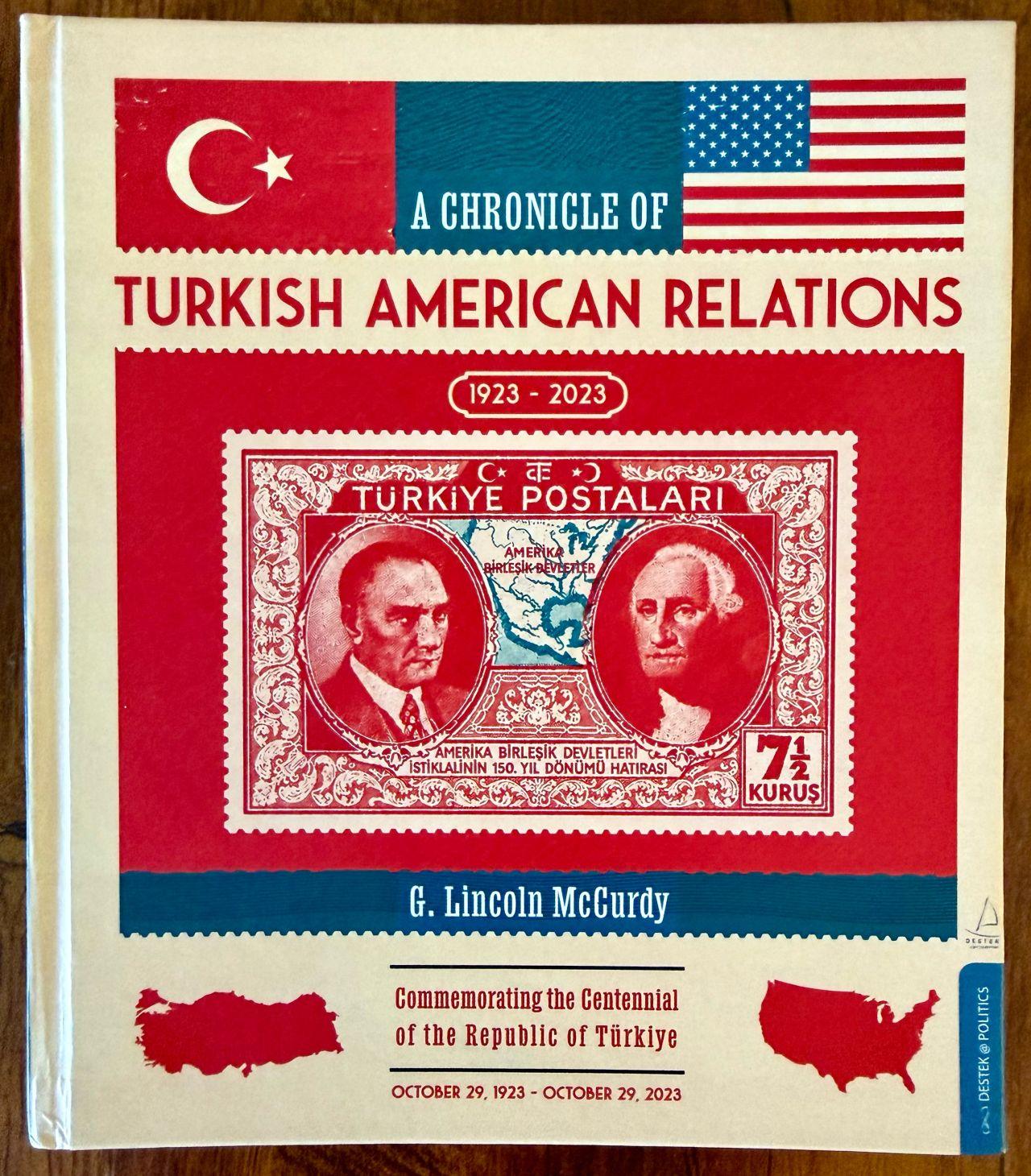
George Washington and Mustafa Kemal Ataturk never met and never could have. Washington died in 1799, eight decades before Ataturk was born in 1881, with an ocean and several revolutions between them.
Yet this week, in New York, the two men appeared on the same pages of an old stamp.
Their portraits were among roughly 30 photographs displayed during a panel on the eve of the centennial of diplomatic relations between Türkiye and the United States. One founded a republic after a war of independence and then surrendered power rather than turning victory into a personal throne. The other dismantled an imperial order and built a republic in its place.
Both men are the answer to the same question their nations still ask today. What do you do with independence once you've actually won it?
That question has a way of surviving the people who first answered it.
At the Turkish House in Manhattan, amid the traffic of the 81st United Nations General Assembly, the photographs offered a visual version of a relationship that is usually told through treaties, summits and crises.
The timing was deliberate. The full-color Chronicle, a book tracing a century of Türkiye-U.S. partnership and shared history, was announced for release in the same week that the century-old story was being written into several new pages at once: inside a series of panels in the rooms where diplomats and ambassadors argued over the future of the alliance, at a gala attended by President Recep Tayyip Erdogan and U.S. officials, at a gathering that brought Turkish business leaders to New York, and around a new official agreement on small modular nuclear reactors.
Taken together, the events suggest why this week may occupy a prominent page in the future chronicle of the relationship. UNGA 2026, in that sense, gave the Türkiye-U.S. relationship a different kind of significance.

While formal U.S.-Türkiye diplomatic relations began in 1927, Turkish presidential adviser for security Cagri Erhan pointed back to the 1830s during a panel hosted by Türkiye’s Directorate of Communications in New York to illustrate the deeper roots of the partnership.
He traced the relationship to maritime trade, the use of Ottoman ports and the growing presence of American merchants in the eastern Mediterranean. He also highlighted the role played by the United States in the reconstruction of the Ottoman navy during the period, including the construction of warships for the Ottoman government. Nowadays, Turkish shipbuilders are among the candidates competing for U.S. Navy frigate contracts.
Erhan also highlighted a key historical footnote: although the U.S. entered World War I in 1917 and declared war on Germany, it never formally declared war on the Ottoman Empire.
Top Turkish policymakers attending UNGA-81 made clear in their statements that they want to deepen the broader institutional relationship beyond personal chemistry between President Erdogan and President Donald Trump.
Burhanettin Duran, the head of the Directorate of Communications, framed 2027 as a turning point. The centennial, he argued, arrives while the international system itself is being reshaped, requiring both countries to redefine their roles rather than simply preserve an inherited alliance structure.
That is a less sentimental way of approaching a centennial.
Duran argued that the relationship needs what he called “functional adaptability.” The phrase captures a problem familiar to old alliances: institutions can survive for decades while the strategic environment that originally created them shifts beneath them.
The centennial therefore has a practical purpose beyond commemoration.
Duran described three tasks for the anniversary year: preserving the memory of the past, strengthening the connections between the two societies in the present, and preparing the generation that will carry the relationship into its second century.
That last part is where the chronicle becomes more than a book.
 1 min read
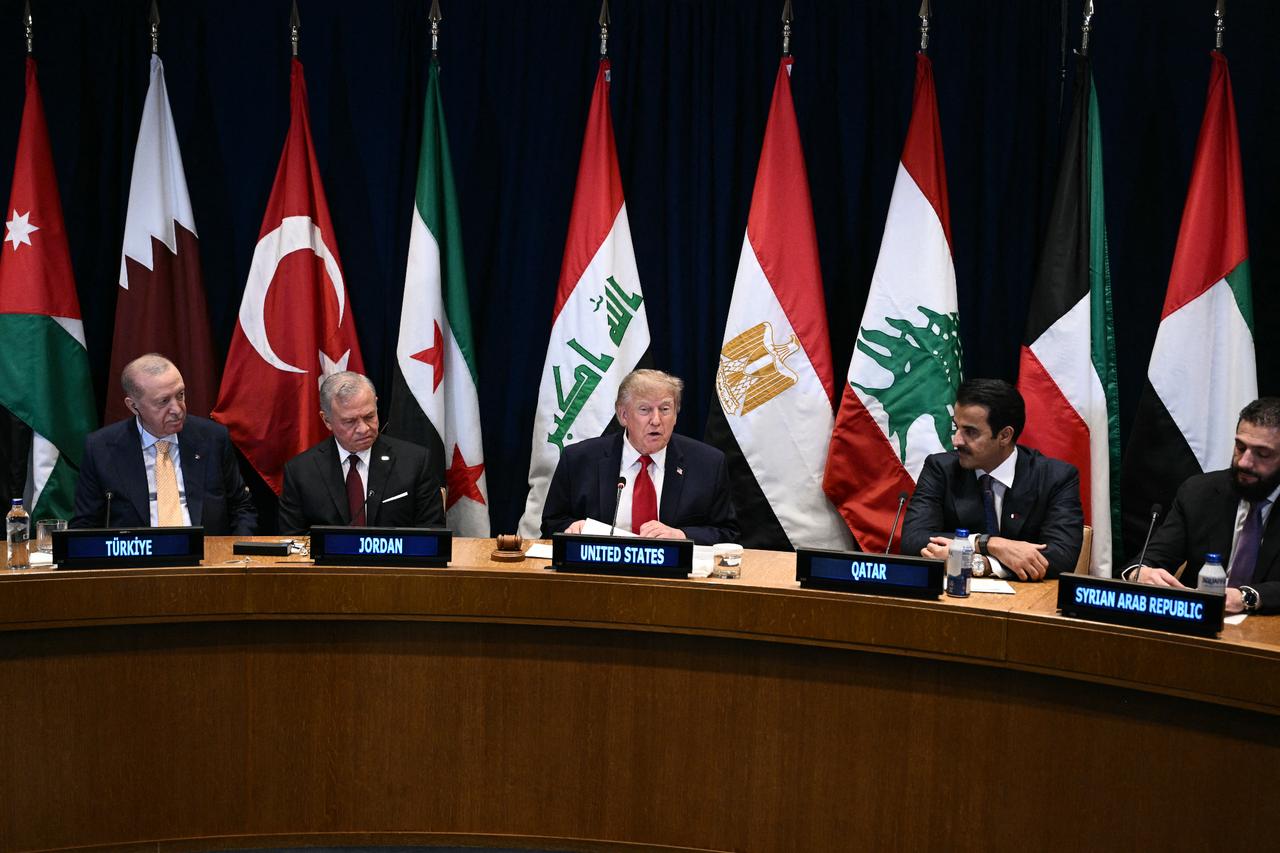
The most visible change in the relationship this week was that it was not confined to foreign ministries.
Major business advocacy groups, including the Foreign Economic Relations Board of Türkiye (DEIK) and the U.S.-Türkiye Business Council (TAIK), brought top Turkish executives to New York for the 19th Türkiye Investment Conference. Turkish corporations also served as primary sponsors for several high-profile UNGA side events.
The symbolism matters because the economic relationship is increasingly being discussed in terms that would have sounded ambitious a decade ago.
At the centennial event in New York, President Erdogan said Türkiye and the United States had made progress in multiple areas through his “sincere and exceptional dialogue” with President Donald Trump. He also said the two countries should gain new momentum by removing barriers to cooperation, pointing specifically to defense, nuclear energy, LNG, civil aviation and high technology.
The bilateral trade target is another part of that agenda. Erdogan has described the goal of reaching $100 billion in trade as realistic, while both governments have continued to discuss ways of reducing obstacles to economic exchange.
The political relationship between Erdogan and Trump is certainly part of the current picture, but it does not explain all of it.
The more consequential story is what happens beneath the presidential level. Business councils are expanding contacts, Turkish companies are appearing more prominently in the American market, and technical agreements are being developed in areas that require ministries, regulators and companies to keep working long after a presidential meeting ends.
That is how a relationship becomes institutional.
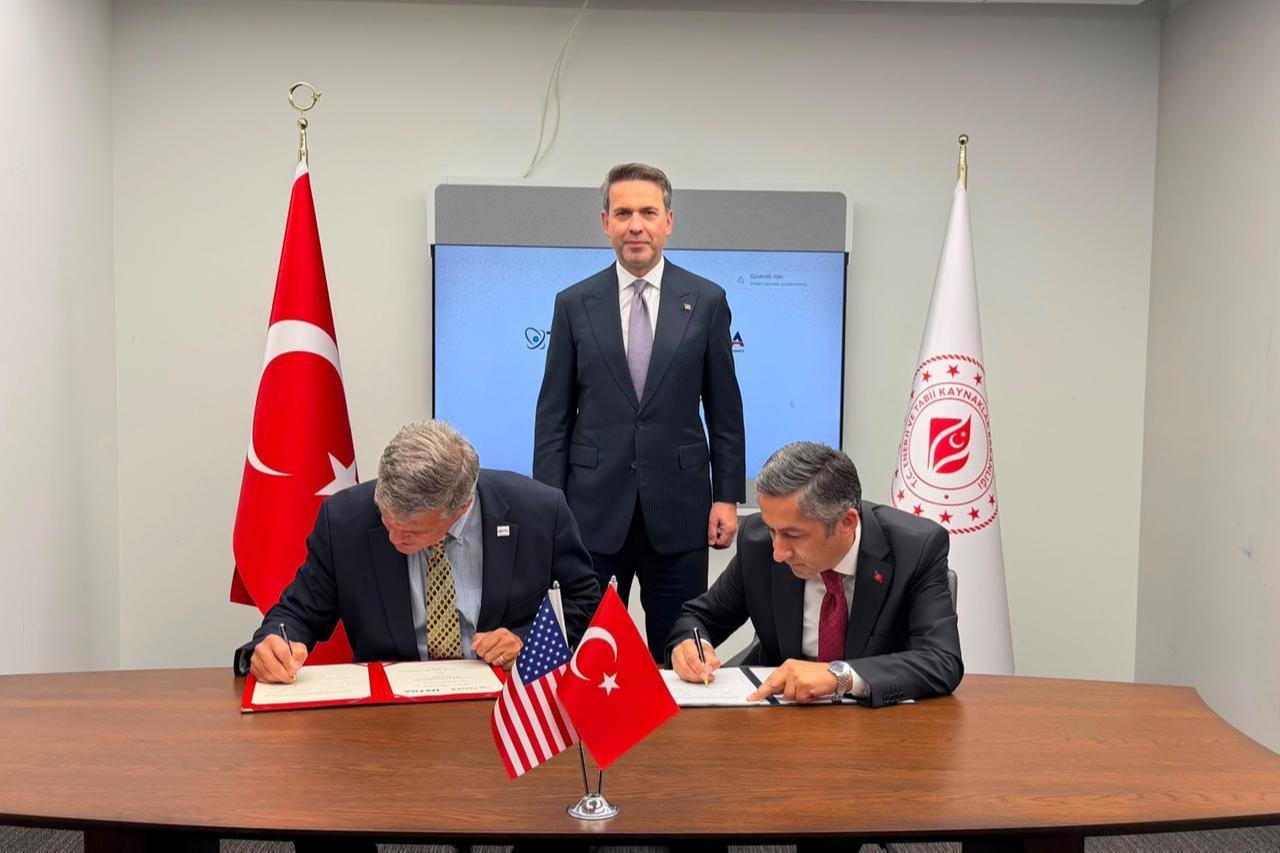
The clearest example arrived in the nuclear sector. During UNGA 2026, the U.S. Trade and Development Agency signed an agreement with Türkiye’s state nuclear energy company to provide technical assistance for the regulatory, institutional and financial roadmap needed to deploy small modular reactors (SMRs) in Türkiye.
SMRs are not the sort of subject that usually makes for a memorable diplomatic photograph. They are, however, the sort of subject that can tell you where a relationship is heading.
The agreement is aimed at creating conditions for Turkish private-sector companies to deploy American nuclear technology. It links energy security in Türkiye with commercial opportunities for U.S. companies and creates a framework in which the relationship extends beyond traditional defense cooperation.
That matters because the future bilateral agenda is increasingly being built around technologies and industries that did not exist when the original postwar alliance was taking shape. Nuclear power is one example. Artificial intelligence, critical minerals, advanced manufacturing and civil aviation sit in the same broader category.
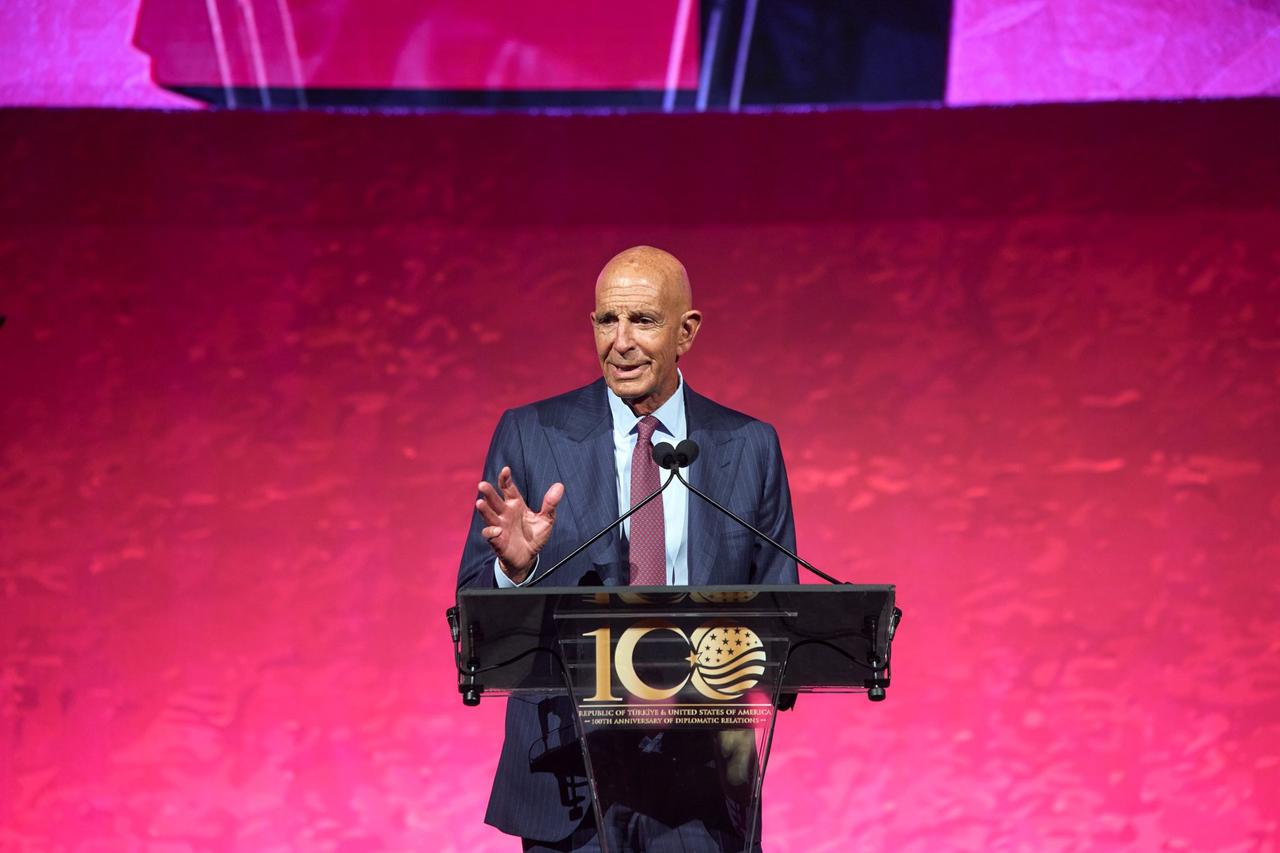
The centennial celebrations provided the most obvious visual shorthand for the week.
Erdogan and Barrack joined U.S. and Turkish figures at the New York event marking 100 years of diplomatic relations. The gathering was hosted by Hamdi Ulukaya, the owner of one of the biggest yoghurt companies in the U.S., and organized with the U.S. Chamber of Commerce and the U.S.-Türkiye Business Council, bringing together senior officials, business leaders and members of the Turkish-American community.
Barrack later described the evening as a celebration of a century of partnership and friendship, pointing to cooperation in NATO, regional security and trade.
The setting also placed business alongside diplomacy. Senator Chris Coons, who attended the event, described the relationship as a partnership whose ties had been strengthened by business and entrepreneurship.
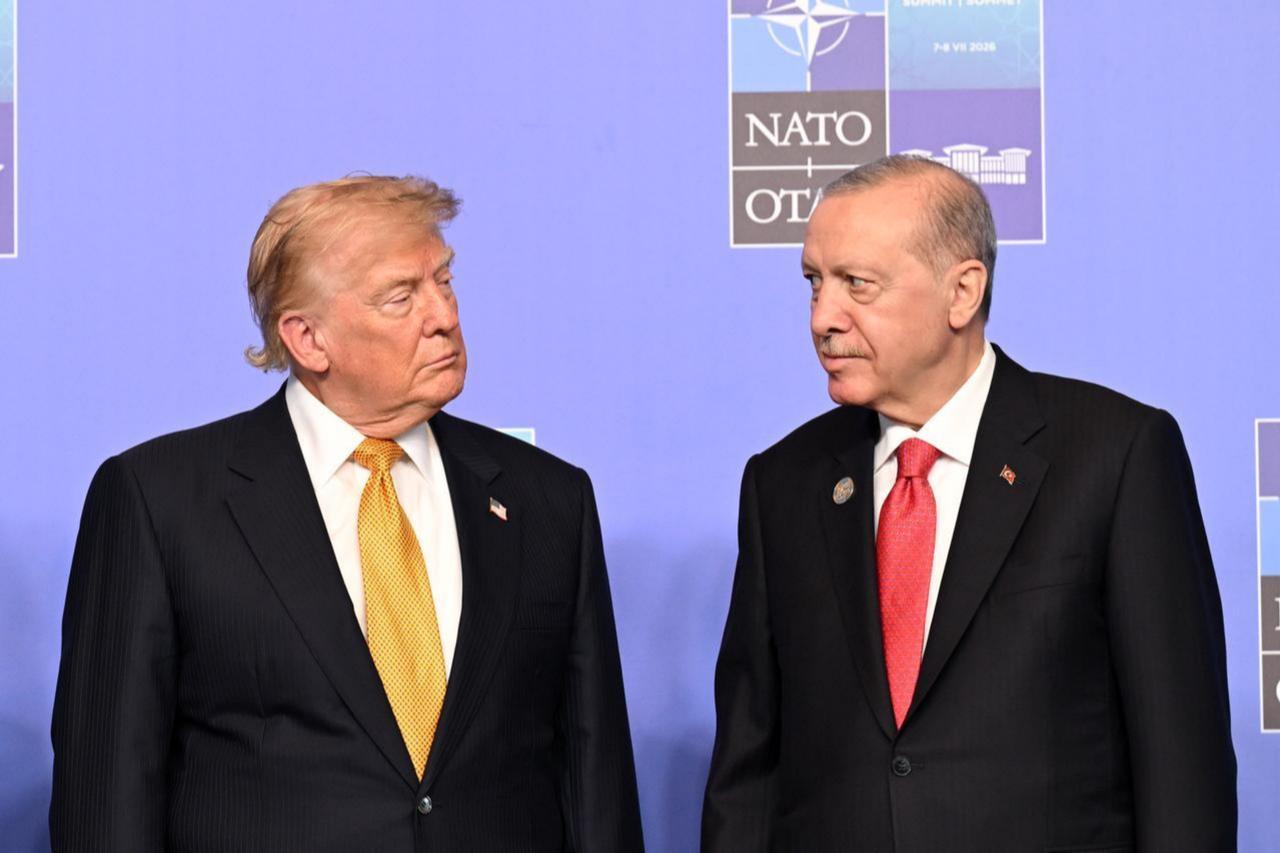
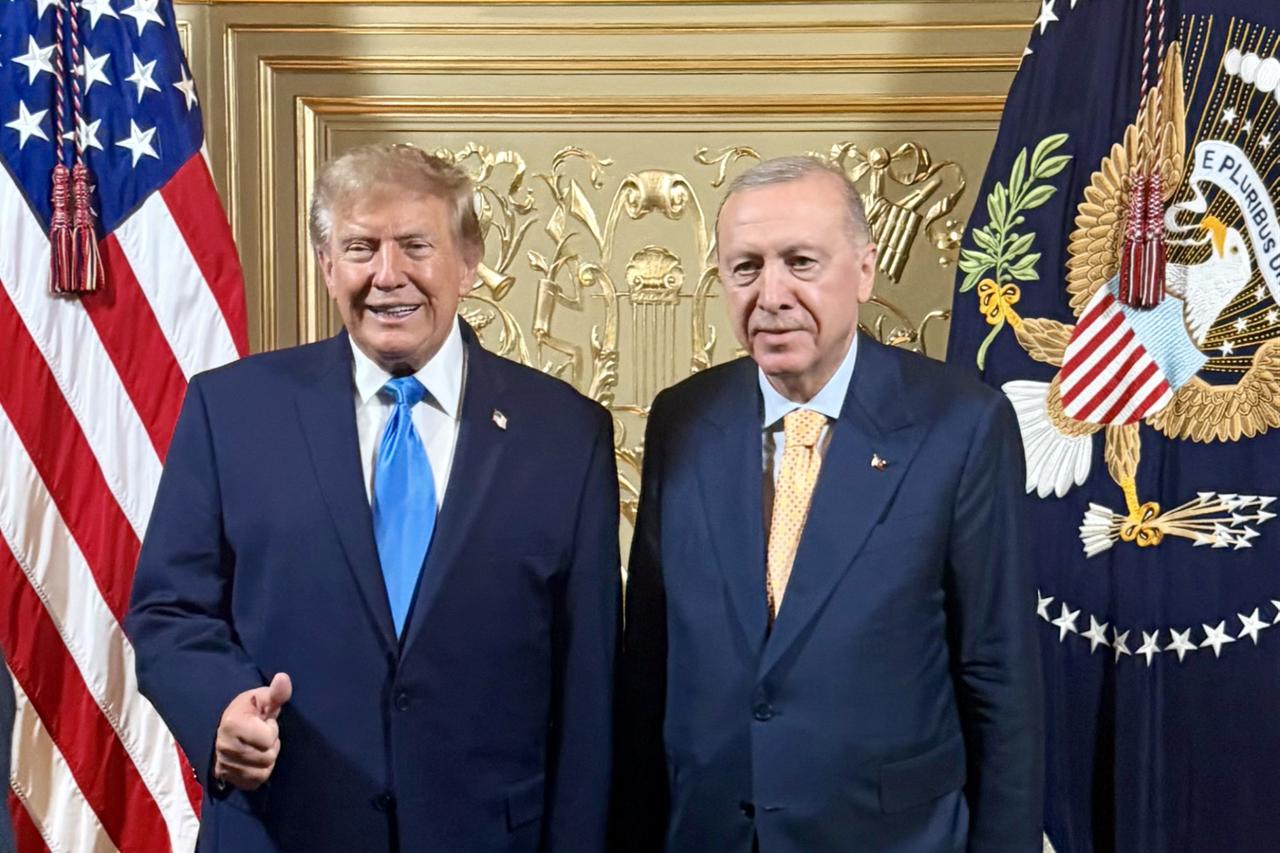
Erdogan also attended a reception hosted by Trump for heads of state and government attending the U.N. General Assembly. The closed-door gathering at the Lotte New York Palace Hotel was one of several points of contact between the two governments during the week.
None of these moments, taken individually, transforms a bilateral relationship. Together, they show the range of places in which it is now being managed.
Now, as that map changes again, the question is no longer how to preserve the old chronicle. It is what deserves to be written into the new one.


 Set as preferred source
 Set as preferred source


 1 min read