Newsletters


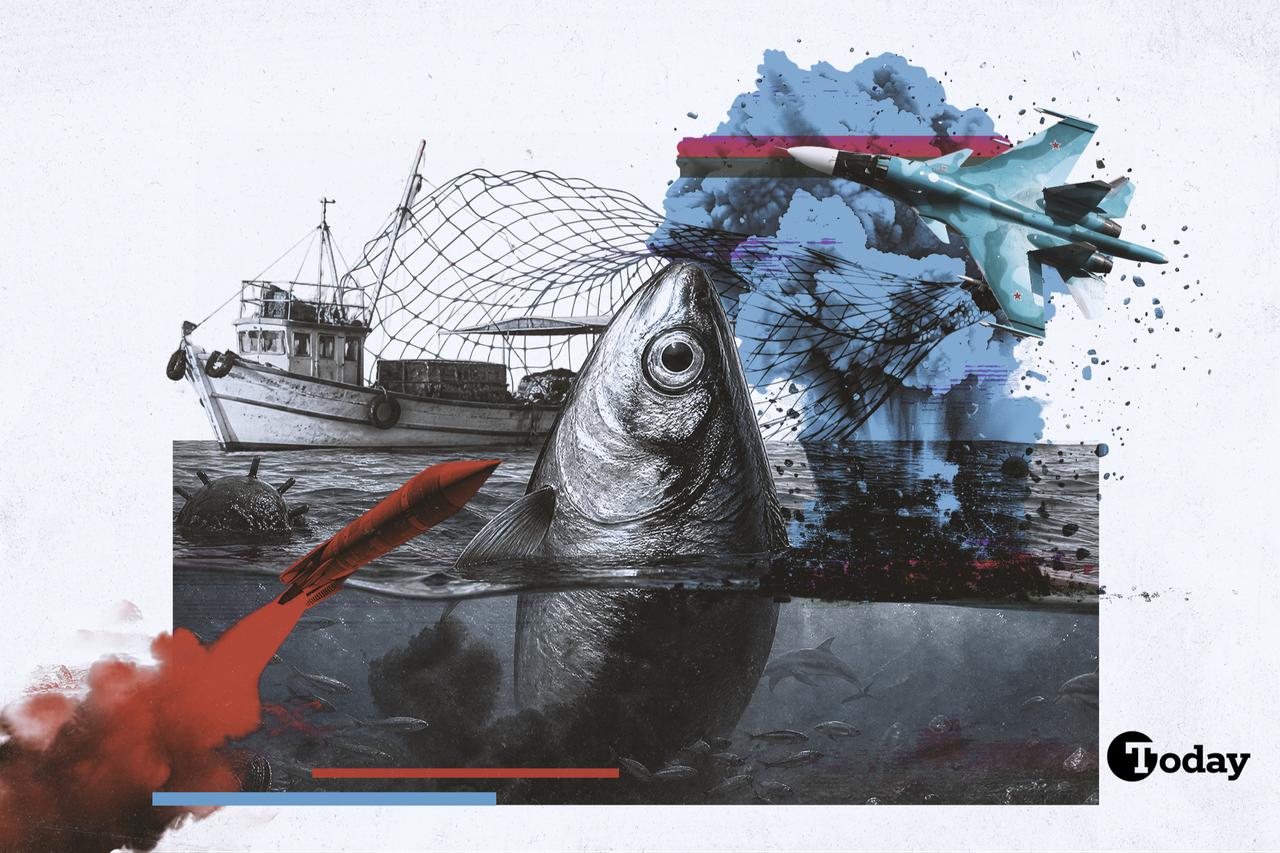


“Haul!”—this is how fishermen in Türkiye started shouting again as Sept. 1 marked the end of the fishing ban. But wait. Some fish, especially those in the Black Sea, which accounts for around 75% of Türkiye’s marine fishing, have reasons to be “afraid.”
This is what Ozgur Ozel, the leader of Türkiye’s main opposition party, said while speaking to fishermen in the Black Sea coastal city of Sinop, where fishing is a major source of livelihood.
According to Ozel, fish in the Black Sea are "scared" by the tests and sounds of ballistic missiles and leave their spawning grounds when Roketsan, Türkiye’s major state-owned weapons manufacturer, conducts military tests at its facility in Sinop.
The ruling Justice and Development Party (AK Party), of course, did not miss the golden chance and teased the main opposition leader's statement at every turn.
We don't know whether Ozel knows how to fish or even enjoys fishing. Yet, if what he said is true, Black Sea fish are more frightened than ever, as the Ukraine-Russia conflict is now more active in the Black Sea than at any point before.
This summer has seen a significant increase in attacks on merchant ships in the Black Sea. In July alone, 35 merchant vessels were attacked, resulting in the deaths of 23 seafarers, in what was reportedly the deadliest month for merchant mariners since the outbreak of the Russia-Ukraine war.
Since last year, Turkish merchant vessels have repeatedly come under Russian attack, particularly near Ukrainian ports. In response, Ukraine has launched a series of sea-drone attacks against Russia’s shadow fleet of oil tankers in the Black Sea.
This summer, Ukraine has also targeted Russian vessels in an effort to disrupt logistics for Moscow’s military and isolate Russian-annexed Crimea. This summer marked the first reported instances of strikes involving grain carriers serving Russian ports in the Black Sea.
Both countries are targeting commercial vessels in the Black Sea, and the rising number of attacks on Turkish-operated vessels or vessels carrying Turkish crews is also becoming a serious concern for Turkish authorities.
Last week, after a Turkish-operated vessel and another vessel that had gone to its assistance were struck off the coast of the Russian port city of Tuapse, Ukraine’s ambassador to Ankara was summoned to the Turkish Foreign Ministry.
"We have prepared a plan, and we are in contact with both sides regarding this plan," Turkish foreign minister Hakan Fidan said on Aug. 31. "If the necessary conditions emerge, we are working in particular to achieve another agreement similar to the grain deal."
Since last year, Turkish officials have raised the issue with both Russian and Ukrainian officials whenever possible, both publicly and in private meetings, while seeking ways to bring the situation under control.
Earlier this month, Fidan called on both Russia and Ukraine to agree to a moratorium on military operations in the Black Sea, but Russia rejected the proposal.
As the war continues to disrupt life and activity in the Black Sea, fishermen and merchant mariners face growing risks, while the marine ecosystems and species that depend on these waters are coming under increasing pressure.
The question is not simply whether something “fishy” is happening in the Black Sea, but how much more pressure the sea and the communities whose livelihoods depend on it can endure before the damage becomes irreversible.
The Turkish government's criticism of the main opposition party leader's statement on Black Sea fish was, to some extent, fair. At best, it was a naive statement that doesn't reflect the reality of a war engulfing the region, while Türkiye remains the last stable place because of its formidable defense industry.
His statement certainly deserves to be teased for political purposes, but the Ukraine-Russia war in the Black Sea has reached a level where its environmental impact can no longer be ignored.
According to a 2025 European Commission report, the Russia-Ukraine war has further strained the already vulnerable Black Sea ecosystem. It has caused environmental damage through naval mines and explosions, oil spills, the release of toxic substances and plastics, the destruction of ports and vessels, and pollution carried by rivers.
According to the European Commission, there is clear evidence that these impacts are adversely affecting fish stocks, marine species, and critical habitats.
The report also underlines that the destruction of the Kakhovka Dam, located in the Russian-occupied Kherson Oblast, in June 2023 caused a sudden release of enormous quantities of freshwater and accumulated pollutants.
This further increased pollution in the Black Sea region and triggered a major algae bloom, resulting in the death of many organisms and damage to habitats, including a large proportion of a Black Sea mussel population. This was considered one of the greatest ecological catastrophes caused by the war. The war has also severely affected the Black Sea’s marine mammal population, which comprises three main species: the bottlenose dolphin, the short-beaked common dolphin and the harbor porpoise.
The concentration of the war in and around Crimea has also had adverse effects on marine ecosystems, especially on dolphin and porpoise populations in the region. Fuel oil spills in the Kerch Strait, a strategically important waterway separating Crimea from Russia, together with the construction of the Crimean Bridge, have posed significant risks to these species, which use the area as a migration route, as well as to goby, anchovy, and mullet species on which they depend for food.
While there is no comprehensive study on the impact of the war on Türkiye’s marine ecosystem and fisheries, naval mines drifting through the Black Sea toward Turkish waters have led to restrictions on fishing activity, particularly around Kiyikoy and Igneada in Thrace. It is worth noting thatTürkiye, Romania and Bulgaria established the “Black Sea Mine Countermeasure Task Group” in January 2024 and, by July 2026, had neutralized more than 150 stray naval mines floating in the Black Sea.
It is also important to note that the ongoing war makes it difficult to adequately monitor and accurately assess its impact on fish populations.
Meanwhile, the effects of the war at sea are becoming increasingly pronounced, making this summer particularly challenging not only for fish but also for commercial shipping and merchant mariners.


 Set as preferred source
 Set as preferred source


 7 min read