Newsletters




The road from confidence to catastrophe is paved not with bad intentions but with elegant theories and too little restraint.
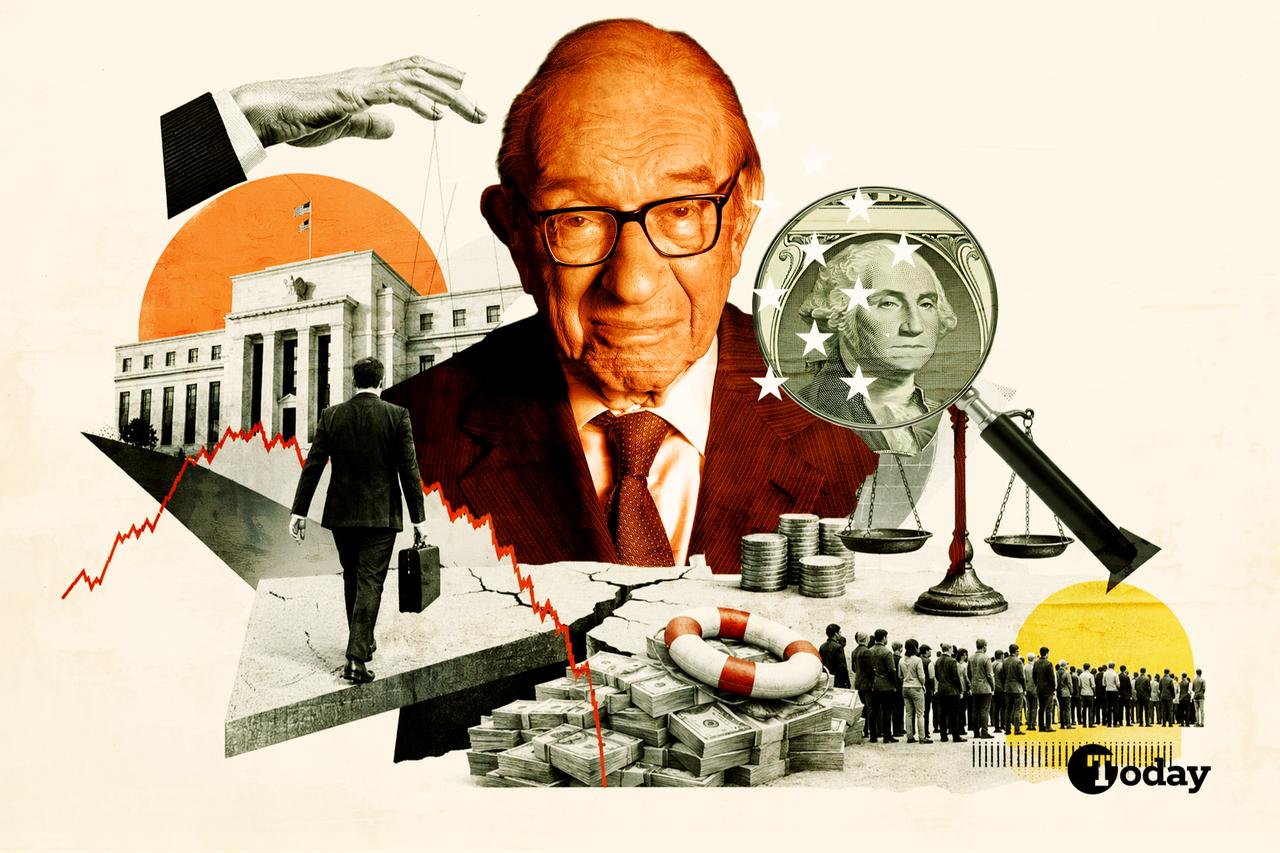
Alan Greenspan learned that the hard way. A man of wealth and taste, the former chairman of the U.S. Federal Reserve died on June 22 at 100, taking with him what’s likely the most consequential and contradictory legacies in modern economic history.
Greenspan was hailed as a wizard, denounced as a draftsman of disaster, and somehow became the closest thing central banking ever produced to Mick Jagger.
Like the narrator of “Sympathy for the Devil,” Greenspan spent decades navigating history's upheavals as a figure both admired and blamed, depending on who was tallying the profits and losses.
Yet whatever else he should be remembered for, he deserves recognition for what is surely the rarest virtue among public officials: admitting error.
When Greenspan appeared before Congress on Oct. 23, 2008, the American financial system was sprawled across the pavement like roadkill.
Bear Stearns and Lehman Brothers had collapsed, banks were on life support from the government, and millions of Americans were drowning in mortgage debt. The high priest of free-market orthodoxy stood before lawmakers and confessed that the intellectual machinery he had trusted for decades had failed.
That moment matters more today than any celebration of the prosperity of the 1990s. The real story of Greenspan's life is not that he was wrong. It is that he discovered, after decades at the summit of power, that even brilliant people can become prisoners of their own theories.
Greenspan was not a fool, a crook, or a corporate lackey. He was something more dangerous: an intelligent man who trusted an elegant idea too much. For years, he believed self-interest, sophisticated risk models and lightly regulated markets would police themselves. Then reality arrived with a crowbar and smashed the whole intellectual edifice into fragments.
The lesson was not that markets are evil. The lesson was that every institution eventually falls in love with its own abstractions.
Greenspan's Fed became bewitched by computer models and statistical likelihoods while a mortgage mania spread through the economy like a chemical fire. Brokers handed loans to people without documented income, speculators posed as homebuyers, and regulators stared into their screens searching for reassurance in a formula.
When the crash came, the same authorities who could not recognize the bubble suddenly discovered extraordinary powers to clean up the wreckage. Interest rates were slashed, institutions rescued, and trillions mobilized. The pattern was familiar: ignore excess while it grows, then intervene frantically after the explosion.
Now consider another group of experts operating from conference halls and international agencies far removed from the daily concerns of ordinary citizens. The United Nations' International Maritime Organization and International Civil Aviation Organization are advancing plans to impose global levies on shipping and aviation in pursuit of climate goals. Their intentions may be sincere, but the atmosphere surrounding the project carries the familiar odor of overconfidence that once enveloped Greenspan's Fed.
Shipping carries more than 80% of world trade. Aviation connects people, goods, and services across continents. Raise costs on those systems, and the effect ripples outward through supply chains, consumer prices and household budgets. The tax collector may stand at a port or airport, but the bill eventually lands on kitchen tables.
The common thread linking these stories is simple: power exercised through models by folks insulated from the consequences of being wrong. Greenspan trusted mathematical frameworks that promised stability. Today's international regulators trust emissions frameworks that promise orderly decarbonization. In both cases, confidence emerges not from certainty but from the comforting elegance of theory.
The realities of arithmetic are stubborn.
Alternative maritime fuels remain expensive and technologically constrained. Sustainable aviation fuel accounts for only a sliver of global consumption. Hydrogen dazzles conference presentations but collides with hard facts about storage, safety, and energy density.
Yet policies continue marching forward because institutions rarely abandon a grand narrative once it has taken hold.
History suggests unintended consequences arrive with a vengeance. Higher compliance costs favor giant corporations over smaller competitors. Market concentration increases, consumers pay more, and gray markets emerge to bypass restrictions. The more elaborate the framework, the greater the temptation to route around it.
Meanwhile, the democratic question lurks beneath the surface, a submerged reef, largely ignored until something expensive tears itself apart on impact.
Citizens of democratic societies expect taxation to flow from institutions they can influence, challenge, or remove. Once international bodies establish the precedent of collecting revenue directly from vast sectors of economic activity, the debate ceases to be merely environmental and becomes constitutional.
None of this means every climate policy is wrong, any more than Greenspan's confession proved markets themselves were wrong. The danger lies in the recurring nature of the game: mistaking expertise for infallibility, forecasts for facts, and administrative authority for wisdom.
The world today is burdened by debt, inflation anxiety, geopolitical rivalry, and growing distrust of institutions. Into that volatile mix comes an expanding architecture of international regulation backed by experts certain they can calibrate human behavior on a planetary scale.
But if the past quarter-century—and over 50 cover versions of "Sympathy for the Devil"—teach anything, it is that the most dangerous words in economics are not "market failure" or "government failure."
They are the quiet, reassuring promise that everything is under control. The graveyard of modern finance is littered with people who believed they had mastered risk when they were really “in need of some restraint.”


 Set as preferred source
 Set as preferred source


 7 min read