Newsletters


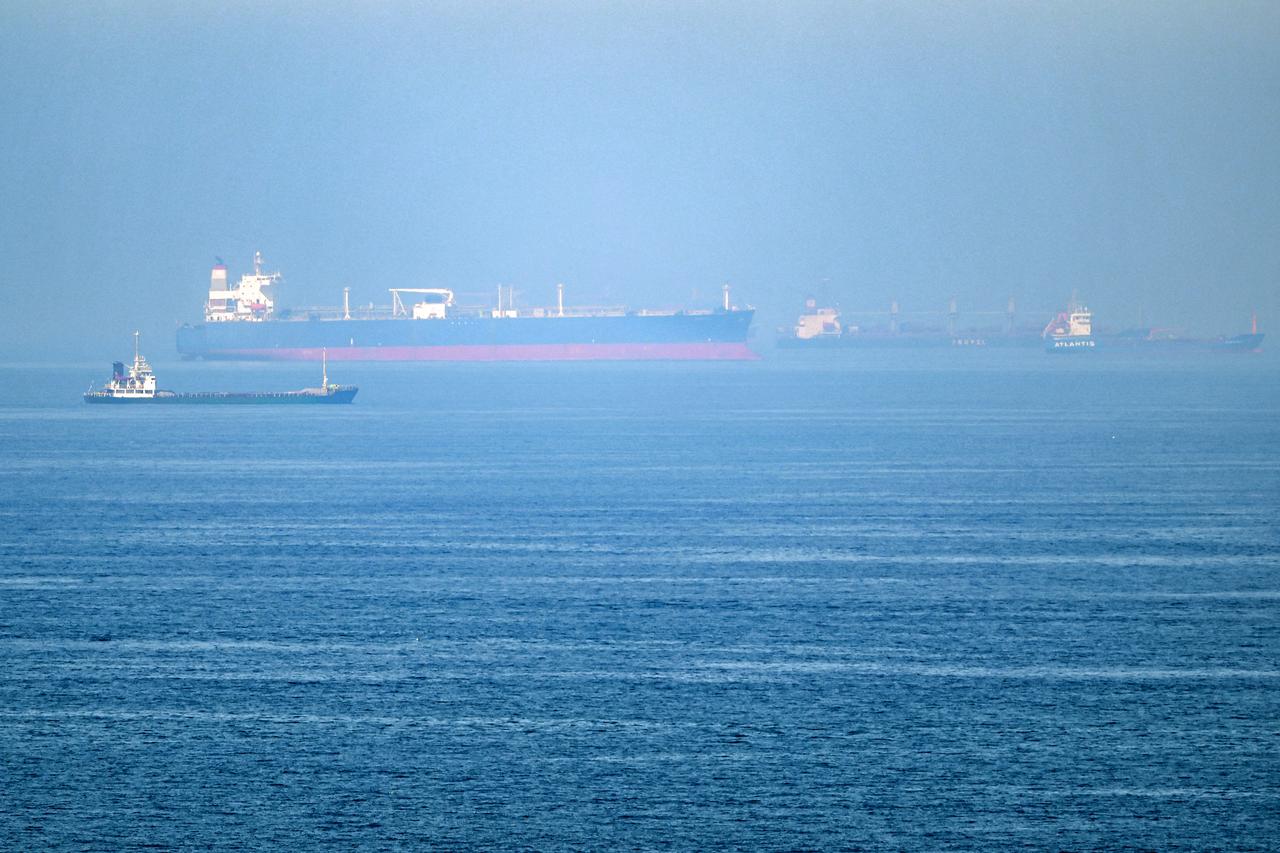


When Iran and the United States signed the Islamabad Memorandum of Understanding on June 17–18, much of the commentary treated the Strait of Hormuz clause as a turning point in who controls the world's most important oil corridor. Iranian officials and pro-Iran regime analysts implied that the strait will be controlled and run by Iran.
Read against the actual text and the law of the sea, the situation seems different. The MoU calls for the reopening of the Strait of Hormuz to commercial shipping. Article 5 of the MoU is dedicated to the situation involving the strait. The wording frames Iran as being in control of the strait and will make its best effort to open it upon signing the MoU.
According to the published text, “Upon the signing of this MOU … traffic of commercial vessels will immediately start." The MoU says that the passage will be free for 60 days and that Iran will complete the demining process within 30 days. This implies that following this period, charges might be applied. Naturally, this raises critical questions: who would impose these charges, for what specific services, and under which legal framework?
The article gives a hint by suggesting that the charges would be imposed by Iran to ensure the safe passage of ships and to meet the technical needs to do so. From this reading, one would understand that Iran would control the Strait of Hormuz, impose tolls, and formalize and normalize this practice under international law. However, the second part of the article is clear and does not support the given thesis that Iran will control the strait and impose tolls.
The second part of the article reads, “The Islamic Republic of Iran will conduct a dialogue with the Sultanate of Oman to define the future administration and maritime services in the Strait of Hormuz in discussion with other Persian Gulf littoral states in line with the applicable international law and the sovereign rights of coastal states of the Strait of Hormuz.”
Nothing in that sequence transfers ownership of the strait to Iran, because no state has absolute ownership over an international strait in the first place. The paragraph also clearly indicates that the fate of the strait will depend on a dialogue among Iran, Oman, and the Arab Gulf states. If this is the case, it is unquestionable that the Arab Gulf states will oppose any Iranian attempts to control the Strait or impose tolls. One possible outcome is the establishment of an institution to provide services to passing ships under international law, accompanied by symbolic tolls, and Oman would likely waive its right to collect such fees. This is the best-case scenario for Iran, as I do not see any other alternative in which the GCC states would agree to Iran’s control of Hormuz.
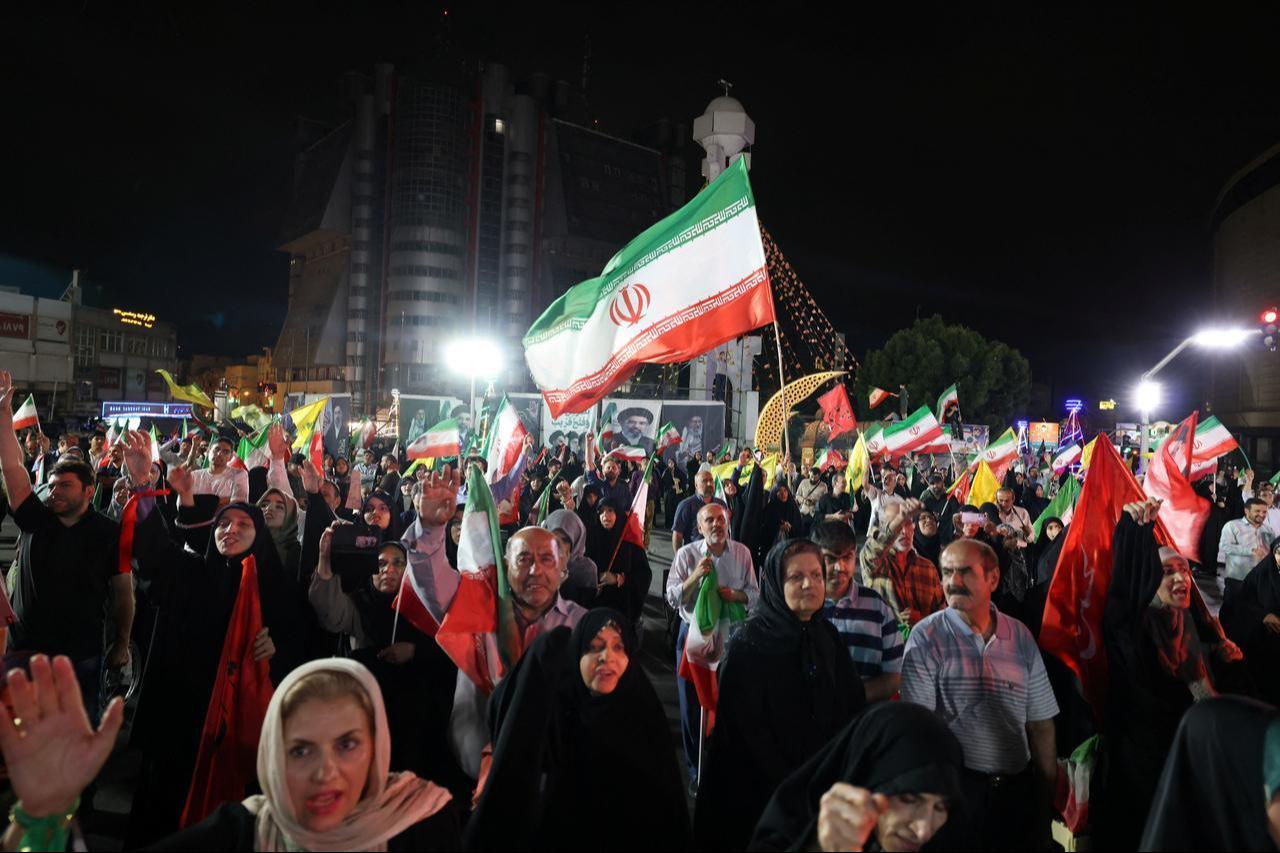

In plain terms, the document buys 60 free days, makes Iran clean up its own mines, and hands the real negotiation to a later table that must obey the law of the sea. The free passage is not a concession Iran is generously granting; it is simply the legal baseline restored after a wartime closure. That baseline is the whole story, because the law it points to is far more constraining than the MoU's open-ended language suggests.
The strait is roughly 21 nautical miles wide at its narrowest, with its waters divided between Iran in the north and Oman in the south. Since it joins the Gulf to the open sea at both ends, it is an international strait, and the governing rule is "transit passage" under the U.N. Convention on the Law of the Sea (UNCLOS). This is a stronger right than the ordinary innocent passage that applies in territorial waters, and that strength decides everything.
Articles 26, 38, and 44 mean a bordering state cannot suspend, block, or impede passage, or charge for the passage itself. Article 26 in particular forbids levying any charge on foreign ships merely for passing through. A coastal state may organize traffic lanes, but only through the International Maritime Organization under Article 41, and it may write safety, pollution, and customs rules under Article 42, provided those rules neither discriminate nor have the practical effect of obstructing passage.
This is where the commonly cited reading of the deal is both right and incomplete. It is correct that fees are possible, but only as genuine payment for a specific service actually rendered, and such services are largely optional rather than a condition of entry. It is also correct, in spirit, that a service charge cannot quietly swell into a profit toll, even if the convention sets no specific financial ceiling.
What ultimately blunts Iran's ambition is not American objection but geography and Oman. The MoU makes the entire future arrangement conditional on Iranian dialogue with Oman, and that is the quiet ceiling on what Tehran can achieve. Any scheme would require the cooperation of Oman, whose territorial waters border Iran's, and the deep outbound lane runs through Omani waters.
Oman, unlike Iran, is a party to the convention and has every reason to keep the strait free and undisturbed, as do the wider Gulf States whose economies depend on it for survival. The consultations are therefore real, but they constrain Iran more than they empower it.
The sharpest observation in the original reading is also the most revealing. For Iran to draw real authority from the convention, it would first have to ratify it. Yet neither Iran nor the United States has ratified UNCLOS, and both have objected to transit passage as binding. Ratification would lock Iran into the very no-toll, no-suspension rules it resents, so Tehran will likely avoid that door and lean instead on vaguer claims of sovereign rights and a side arrangement with Oman. The result is that its legal footing for charging is thinner without the treaty, not thicker.
What will emerge, then, is a thin and cooperative traffic-management scheme: agreed lanes and reporting handled through the International Maritime Organization, perhaps some optional pilotage or vessel tracking, presented jointly by Iran and Oman. Iran will sell this domestically as control of Hormuz; the United States and the Gulf will describe the identical facts as freedom of navigation preserved.


 Set as preferred source
 Set as preferred source


 3 min read
 1 min read