Newsletters


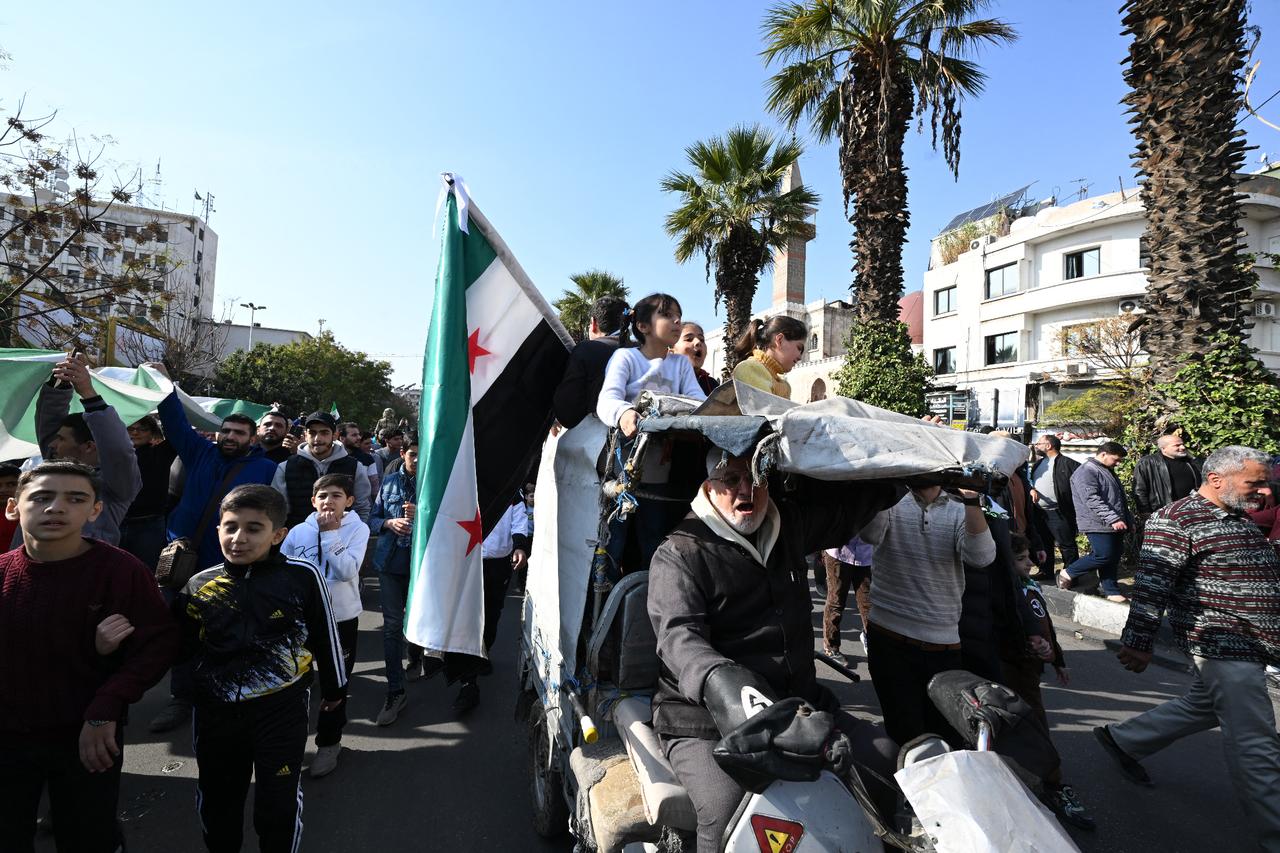


As Syria's President Ahmed al-Sharaa marked the fall of the former regime on November 28, he pledged a better future for all Syrians. The conflict that lasted more than a decade has now hopefully come to an end and is giving way to a complex rebuilding process that should ultimately restore citizens’ everyday lives. Since the 2011 uprising against Assad, at least 230,000 civilians have been killed, and more than 13 million Syrians have been forced to flee their homes - around seven million internally displaced and millions more living as refugees abroad - leaving the country in a state of deep humanitarian and institutional collapse with today’s GDP estimated at less than half its 2010 level. While confronting the immediate threats to the country’s unity, the new government also seeks to reverse Syria’s disastrous trajectory, as it faces the dual challenge of stabilizing the political landscape while laying the groundwork for long-term both economic and humanitarian recovery and reconciliation.
Building a safe homeland for all internally and externally displaced Syrians, and restoring a stable political climate, will largely hinge on economic and financial revitalization, an objective that regional and international actors are now pursuing with growing urgency. After an International Monetary Fund (IMF) delegation led by Ron van Rooden paid a visit to Damascus, a press statement was released noting early signs of recovery and meaningful improvement in both consumer activity and investments. The statement also called for the swift adoption of a new tax regulation and the implementation of a tight and well-anchored monetary policy. Sharing the IMF’s cautious optimism, the World Bank projects a notable growth rate of 1%, albeit amid lingering security threats.
Along with the promising outlook envisaged by both the IMF and the World Bank, the sanctions regime over the country began to ease, potentially allowing investment flows that could bolster welfare and broader prosperity in Syria. On May 28, the European Union rolled back almost all sectoral economic sanctions on Syria, lifting measures tied to banking and finance, energy, transport, and multiple import-export controls, while retaining targeted restrictions on arms, surveillance technologies, and individuals linked to the former regime. As European counterparts relaxed their restrictions, the United States also moved to ease its economic measures under the Caesar Act. In force since 2019 and intended to protect civilians through targeted financial pressure, the act is now being partially suspended following al-Sharaa’s historic visit to the White House. Taken together, these steps suggest a gradual international pivot away from punitive measures and toward reengagement with Syria’s economic recovery, as well as a broader recognition internationally of the new government’s legitimacy.
Stepping back from the evolving stance of the international community toward Syria, the key question now is what these shifts will mean for the investment climate needed to rekindle economic growth. Through the United Nations Development Programme’s (UNDP) aid framework, Qatar and Saudi Arabia have pledged up to $89 million in funding, alongside more than $6,4 billion in planned investment from Riyadh. Together with Gulf partners, Türkiye remains one of the leading actors in Syria’s re-engagement with the region, with bilateral trade rising significantly compared with last year. A new $4-billion construction consortium bringing together Turkish, American, and Qatari firms, has been established to modernize Damascus International Airport, opening a promising market for Turkish construction giants and contributing to job creation in Syria.
A senior Syrian economist has also noted a growing trend of foreign companies, including Turkish enterprises, setting up local operations in Syria, drawn by the availability of low-cost labor. On the other hand, he also described the current landscape as a “competitiveness crisis” for Syrian enterprises, noting that roughly 90 percent of the country’s economy is composed of small and medium-sized businesses (SMEs), many concentrated in manufacturing around Aleppo as well as in the services sector. As trade liberalization accelerates and the domestic market becomes increasingly saturated with cheaper and more competitive foreign goods, these firms are now under severe pressure, particularly on the production side. Recently imposed steep increases in power and electricity tariffs also pose an immediate threat to the production capacity and cost structure of local businesses.
Syria’s reintegration into the international economic system, as a post-conflict emerging market, has progressed more than anticipated. As the market economy has experienced a notable uptick since last year, the accompanying risks should also be acknowledged, and the necessary safeguards put in place to protect SMEs and local businesses from the pressures of rapid liberalization. Without such measures, domestic firms risk losing competitiveness, facing rising costs, and being crowded out by larger foreign actors entering the market. Yet with cautiously calibrated policy, strategic investment, and targeted support, this transition also holds the potential to broaden Syria’s productive base, strengthen its private sector, and set the economy on a more resilient path of long-term growth.


 Set as preferred source
 Set as preferred source



 4 min read