Newsletters




Imperiums have always had an interesting relationship with consequences.
At the height of their confidence, empires regard rules as furniture and wreckage as an accounting problem.
Move the first out of the way, put enough money against the second, and history can presumably be persuaded to behave.
Washington, September 2026, with the midterms coming fast and the capital acquiring its familiar pre-election delirium, appears determined to test the scheme.
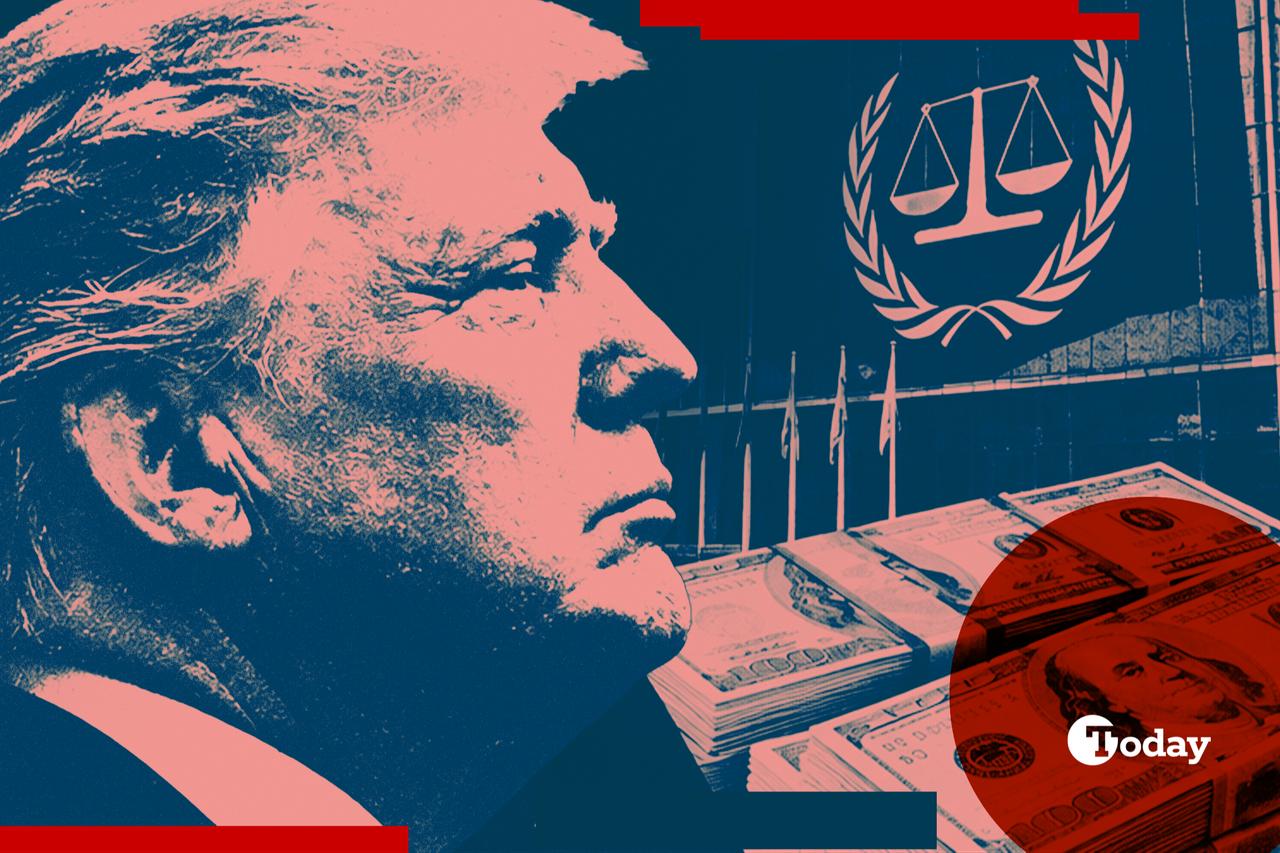
On one desk in the Trump administration sits a plan to cripple the International Criminal Court in The Hague.
On another sits a proposal to put $5 billion of American money into rebuilding energy infrastructure battered during seven months of war with Iran.
At first glance, the two schemes have little in common. One concerns judges in Europe, the other oil installations in the Middle East. One is an assault on an institution; the other is an attempt at reconstruction.
Kindly look again.
Together they reveal two systemic dangers in the foreign policy emerging from Washington: the conviction that rules obstructing American power can be punished into submission and the more intoxicating notion that the consequences of exercising that power can afterward be bought, built, or engineered away.
The first operation is the cleaner one, at least on paper.
Secretary of State Marco Rubio has promised to dismantle the ICC “brick by brick.”
The administration is preparing sanctions against the institution itself, potentially forbidding most transactions with the court and effectively severing it from the dollar-based financial system.
This is how an institution can be strangled in the 21st century without anybody kicking down the door. No tanks are required outside The Hague.
Make the bank transfers radioactive, frighten the lawyers, accountants, and vendors, and let global finance do the rest.
The squabble itself is not new. Washington never joined the ICC, and American objections to allowing an international tribunal jurisdiction over nationals of countries outside the Rome Statute have a long pedigree.
Rubio argues that the court threatens American sovereignty and could eventually turn its prosecutors toward American soldiers and officials.
It is an intriguing objection from a country that has spent decades extending the extraterritorial application of U.S. law—and the reach of its sanctions—far beyond its own borders.
Any questions? Ask the folks at Halkbank.
Then comes 2022.
Senator Rubio co-sponsored a resolution urging the ICC to investigate Russian war crimes in Ukraine, although Russia, like Israel and the United States, is not an ICC member.
The court subsequently issued a warrant for Vladimir Putin.
Washington’s present confrontation accelerated after the court issued warrants for Israeli Prime Minister Benjamin Netanyahu and former Defense Minister Yoav Gallant, who deny the allegations against them.
So the principle begins to acquire the consistency of warm chewing gum: international justice when it reaches Moscow; intolerable extraterritoriality when it reaches an ally.
An American jurist saw the trap coming over 80 years ago. Opening the Nuremberg trials, Supreme Court Justice Robert H. Jackson warned that “the record on which we judge these defendants today is the record on which history will judge us tomorrow.”
Then came the harder line: “To pass these defendants a poisoned chalice is to put it to our own lips as well.”
The chalice is the point. International law becomes considerably less international if its jurisdiction is welcomed when the accused is an enemy and attacked when the accused is a friend.
The modern international legal order rests on a peculiar bargain among sovereign states: governments accept limits on what they may do because they want other governments limited too.
The arrangement has always contained hypocrisy.
Great powers have been demanding rules for other people since the first king discovered a border. But hypocrisy at least pays tribute to the existence of a rule.
Something more serious happens when exemption itself becomes doctrine—when national power is turned against the institution charged with enforcing the rule.
Sanctioning individual officials is pressure. Attempting to sever an international court from the financial system is something larger. It says that financial dominance can be deployed not merely against hostile governments, oligarchs, or terrorist organizations, but against institutions whose judgments Washington finds intolerable.
Then the story leaves The Hague and heads 3,000 miles southeast, where the abstractions of power acquire a repair bill.
Trump is proposing another $5 billion, this time as seed capital for something called the Partnership for Allied Trust and Construction-Pact, because Washington has never encountered a geopolitical problem that could not be improved by an acronym.
Eight Middle Eastern governments would be asked to match the American contribution, producing a $10 billion fund to rebuild energy infrastructure damaged during the Iran war and develop alternative export routes bypassing the Strait of Hormuz.
The strategic logic is more than a century old. When Winston Churchill was converting the Royal Navy from coal to imported oil, he distilled energy security into a sentence: “Safety and certainty in oil lie in variety and variety alone.”
Pact is Churchill’s dictum with a $10 billion price tag.
Hormuz has demonstrated the danger of dependence with brutal efficiency. Iranian attacks have damaged Gulf energy facilities. Tanker capacity has been strained. Refineries and export terminals have been hit. The repair bill runs into the tens of billions.
And here the second proposition gets interesting.
War destroys infrastructure. Washington helps finance reconstruction. New routes circumvent vulnerabilities exposed by the war.
Yet without a durable political settlement, whatever gets rebuilt can be destroyed again.
This is the seductive doctrine of the repairable world: the belief that military action and its consequences occupy separate ledgers. Strategy makes the mess; capital cleans it up.
Put the ICC sanctions beside the pact, and the common denominator comes into focus. In The Hague, power seeks freedom from institutional restraint. In the Gulf, it seeks freedom from the lasting consequences of force.
The threat in the first is a world in which rules increasingly depend upon who is standing in the dock.
The peril in the second is a world in which force becomes easier to employ because its aftermath is imagined as a technical problem—ugly, expensive, but ultimately fixable.
These may look like separate impulses. They are really two halves of the same temptation: power without restraint and consequences without permanence.
American power can punish the court. American money can repair what war destroys.
Neither can repeal the consequences.


 Set as preferred source
 Set as preferred source


 6 min read