Newsletters




Every September, the United Nations General Assembly (UNGA) becomes diplomacy's biggest stage—and its busiest back room. Between the speeches and photo ops, the real business happens on the sidelines, in the quiet handshakes and closed-door meetings that rarely make headlines but often matter more than the ones that do.
This year, all eyes are on whether the American and Turkish presidents will find time for one of those meetings, given how much is riding on it for both capitals. The U.S. needs continued Turkish regional support on Syria, Gaza, Russia and Ukraine—to name a few of the big ones—and Türkiye has a good list of its own asks from the Trump administration.
However, it is impossible at this moment to ignore the wider question of America's declining global influence.
Machiavelli famously wrote that it is "better for a prince to be feared than loved," but in the absence of strong, strategic governance—backed up by a sufficiently mighty iron fist, currently looking a bit wobbly in Iran—a state risks becoming neither loved nor feared, but merely hated. And this contempt without fear of consequence is what a superpower should most want to avoid.
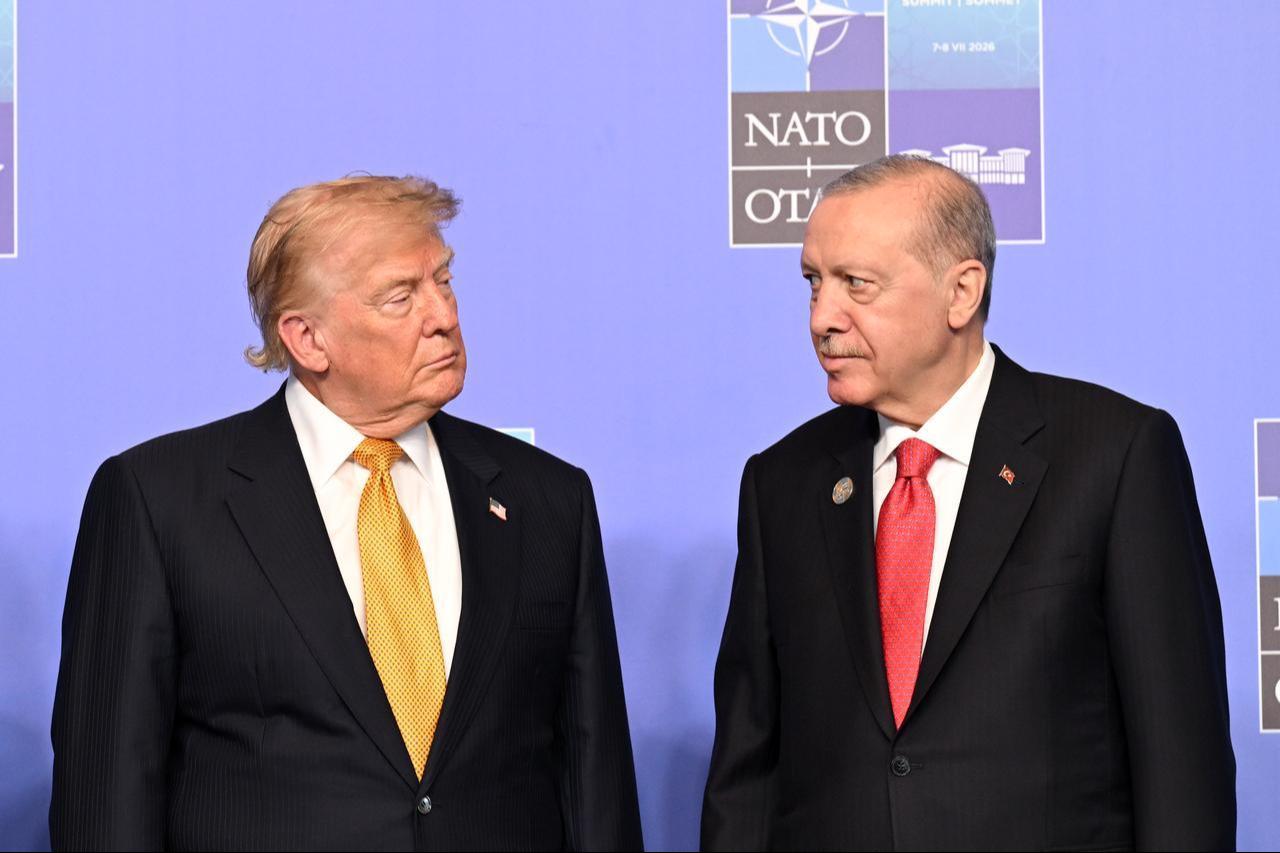
Personal chemistry, the recent upbeat NATO summit, and shared mutual interests have kept the relationship between the two leaders mostly positive, and where Türkiye and the U.S. are in real disagreement, both sides have seemed to table their misgivings in favor of the greater good.
The current state of the American empire looks unsteady at best, and in its worst moments seems more like a late night in a Las Vegas casino: a little worn out, a little cheap, a little depressing.
The current administration seems intent on running its diplomatic and economic policies with little beyond a very crude transactional logic, forcing even longstanding allies to adjust their expectations accordingly.
The stakes are high for both sides at the moment.
The Americans need their allies in the region more than ever, especially as the area drifts closer to a situation of multiple simultaneous, protracted conflicts in Gaza, Iran and Yemen.
Yet many points of divergence remain. The U.S. maintains a near-sacrosanct security alliance with Israel, whereas Türkiye holds a consistently critical posture toward Israeli military action and policies in Gaza and Syria. Ankara has historically maintained friendly ties with the Muslim Brotherhood and pushed for explicit recognition of a self-governing Palestinian state—positions that clash directly with U.S. foreign policy objectives in the region, creating tensions amid broader Middle Eastern diplomatic initiatives.
Differing perspectives on local security partners along the Turkish-Syrian border also linger. For years, the Americans supported the Syrian Democratic Forces (SDF) and its primary armed unit, the YPG, as the key paramilitary force against Daesh. Türkiye considers the YPG to be an extension of the PKK (a designated terrorist organization targeted by both Ankara and Washington) and views a heavily armed PKK-linked entity on its southern border as a direct national security threat. While recent political shifts in Syria have begun altering these dynamics, aligning anti-Daesh operations with regional security forces remains a sensitive juggling act.
There are also American worries about Türkiye's foreign policy of strategic autonomy, particularly its maintenance of friendly diplomatic and economic ties with Moscow. Ankara's acquisition of the Russian S-400 missile defense system triggered CAATSA (Countering America's Adversaries Through Sanctions Act) restrictions from Washington and Türkiye's removal from the F-35 fighter jet program.
Although Ankara supports Ukrainian sovereignty and restricts military naval access to the Black Sea, its hesitance to join Western economic sanctions against Russia remains a point of contention among many policy players in Washington.

Major defense agreements, joint production programs, and military procurement packages remain a strong anchor for positive relations between Türkiye and the U.S. The $23 billion defense agreement inked following Ankara's ratification of Sweden's NATO accession gave bilateral relations a strong boost. The deal encompasses 40 new F-16 fighter jets, along with a large number of modernization kits to upgrade Türkiye's existing fleet, as well as associated ammunition and advanced missile and support systems.
Both sides also benefit from Incirlik air base, joint defense agreements, and shared use of the Kurecik radar station, a key part of NATO's ballistic missile defense system in the area. And then, of course, there is NATO itself: recent turbulence with European allies has not crept into the relationship between Ankara and Washington. Under the broader NATO defense industry framework, the U.S. and Türkiye continue to cooperate robustly on joint defense manufacturing, vital artillery supply, unmanned drones and air defense capabilities.
All of these strong positive points form the bedrock of a solid bilateral relationship. Yet there remains the unavoidable problem of the wider U.S. political context. By this point, it isn't unreasonable to characterize the current Trump administration as openly corrupt: his family has made billions from cryptocurrency deals while he has been in office, his son-in-law and a real estate developer acquaintance handle diplomacy at the highest levels, and a Russian oligarch with close ties to the Kremlin recently paid for his son's lavish wedding party—sadly, the list goes on. Surely any deals agreed with such people require a note of caution.
So what real results would any potential UNGA sideline talks bring?
President Trump seems eager to deliver on dropping the CAATSA sanctions for Türkiye, but currently lacks the support in Congress to push it through—a situation that will presumably only worsen after the upcoming midterm elections. The Turkish political class is known for its pragmatic attitude toward transactional diplomacy, and politicians on all sides have exhibited great flexibility when working in Türkiye's wider national interest. Put simply, the goal should be to keep the Americans on side while making significant progress on Türkiye's own military and defense needs.
Türkiye's leaders will want to keep the relationship with the Trump administration warm, without getting too close to the flames. Transactionalism as a political strategy can bring some advantages to both parties, but it does not seem a sustainable philosophy over time; it is simply too shallow to pass the necessary tests of global politics, and too short-sighted to be sufficiently durable. So Türkiye can expect to make some gains with the Americans in the coming months and years, but should continue to hold its cards close in the medium and longer term.


 Set as preferred source
 Set as preferred source


 2 min read

 1 min read