Newsletters




The popularity of Türkiye’s dizis is well documented. They are as diverse as they are popular, ranging from Shakespearean tales of Ottoman intrigue to heart-rending love stories. Every year, the industry grows to new heights, with its reach surprising even the most die-hard aficionados.
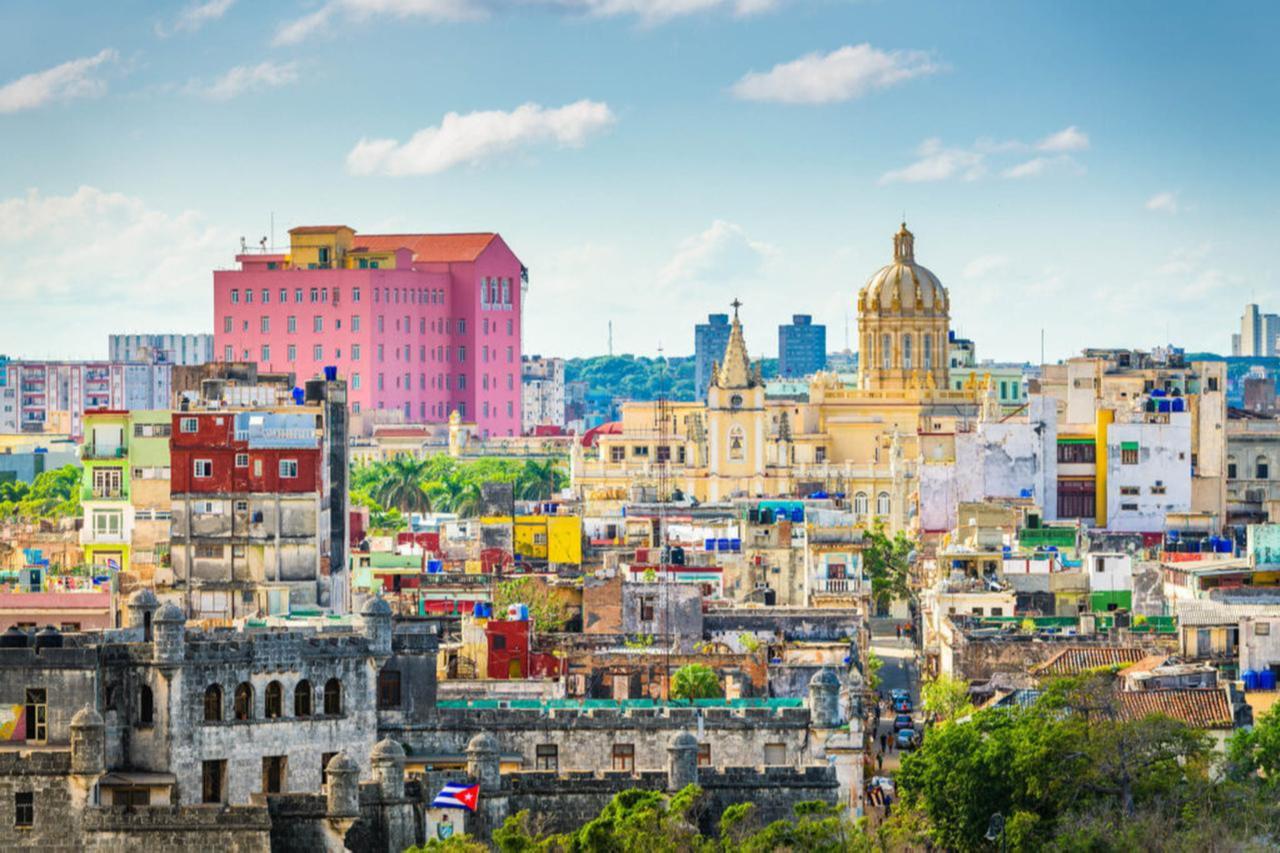
A friend of mine recently returned from a research trip to Santiago, Cuba. Talking to a cluster of Cuban grandmothers, she offhandedly mentioned her trip to Istanbul. The ladies began to fawn in adoration and yearning.
They asked questions like if Turkish men were truly so handsome and if their houses were really so grand. Later, when asked where they would travel first if they could, one of the interviewees replied “First, Turkey. I love it!”—a common answer among the group.
My friend’s story came as a surprise to me. Türkiye and Cuba are separated by two oceans and thousands of miles, and the latter is home to a repressive media environment.
Yet, as I came to learn many Cubans are devoted dizi fans, often accessing them through the “El Paquete Semanal’,” a weekly hard-drive media bundle that circulates across the country.
Perhaps then Türkiye and Cuba are not as far as I first thought. Connections between the two can be traced back to the Ottoman Empire when many migrants from Ottoman territories settled in the island nation towards the end of the nineteenth century.
Those who embarked on the voyage and their descendants are still referred to as “El Turco” in the region. The two countries developed another connection during the Cuban Missile Crisis: once the brinkmanship was over, Soviet Premier Nikita Khrushchev agreed to acquiesce on the specific condition that the Americans would remove their Jupiter nuclear missiles from Türkiye.


In more recent years, Cuban-Turkish relations have undergone a renaissance. In 2015, President Recep Tayyip Erdoğan visited Cuba, marking the first visit of its kind. Nearly a decade later, President Miguel Díaz-Canel Bermúdez repaid the favor, visiting Türkiye.
Both countries pledged to strengthen their bilateral relationship, particularly on trade, which crossed $50 million mark in 2019. This is reinforced by frequent extensions of Turkish humanitarian aid to Cuba, such as during the aftermath of Hurricane Melissa.
These are welcome steps, but structural limits dictate a relationship that will likely remain limited at best. Yet, the jarring realities of politics and geography do little to slow the Cuban affinity for Turkish dizis and the escape they offer.
This escapism is essential in Cuba which has seen an unprecedented economic downturn. The long shadow of the U.S. embargo looms large, and the decapitation of the Maduro regime in Venezuela has brought energy imports to a standstill. Blackouts reaching upwards of twenty hours are common and hard currency has become exceedingly rare.
Under these circumstances, scenes ordinary to most can evoke strong feelings in Cuban audiences. Referring to a particular scene, one of the interviewees recalls, “A woman who lives next door was watching a Turkish soap opera for the first time.” “At some point there was a table full of food, and they cleared the table to throw the food away. She screamed, ‘Please, no!’”

Perhaps here we begin to see the limits of long-distance cultural and informational exchange. Unknown to most Cubans, Türkiye has also been going through its own economic challenges, admittedly, differing greatly in severity. The country saw inflation highs of 85%, peaking in 2022.
A recent ING THINK report found much of this inflation is driven by food prices, serving as a large contributor to overall figures. Going back to the dizi scene, it is quite likely that financially pressured Turks were also dismayed at the wanton waste, further compounded by cultural mores that frown on food waste generally.
These challenges may even stretch to undermine the dizi link itself. As the Financial Times’ John Rathbone reports, Türkiye’s soaring prices are undermining the risk-taking business model that made the telenovelas so diverse and popular in the first place—a cruel irony for its also struggling Cuban fans, and a situation hopefully that will not come to pass.
So I pay tribute to Turkish dizis and the unlikely cultural bridges they build, stretching as far as Havana living rooms. Despite the industry’s recent challenges, the series still do the admirable work of broadcasting Turkish glamour and spectacle across the globe and into the unlikeliest of places.
Be that as it may, beneath the veneer, many Turks and Cubans are painfully reminded that reality is often far more nuanced than melodramatic plots and storybook romances allow.


 Set as preferred source
 Set as preferred source



 7 min read