Sign in
 Newsletters




There was a gentler time when the principal danger of attending an American football game during the final, calorically ambitious weeks of the year was indigestion.
Folks ate a hot dog of uncertain zoological origin, drank a beer that tasted like the water the hot dog was boiled in, and went home disappointed in their team. Civilization had its compensations.
Now the hazards are less gastrointestinal than geopolitical.
At a recent college football game between Wake Forest and Georgia Tech, two American universities whose educational missions include the development of enormous young men capable of colliding with one another, the television cameras discovered something more interesting than the game: a young couple having an argument.
For those unacquainted with the peculiar rituals of the land where the buffalo roam, American football is a sport in which 11 men attempt to advance an oddly shaped ball 10 yards while several million spectators advance their cholesterol levels.
The game was hopelessly one-sided. So ESPN, the American sports television network, turned its attention to Tallulah Wall and Braden Flournoy, two students experiencing what they subsequently described as a minor romantic misunderstanding.
Commentator Jesse Palmer, who also hosts "The Bachelor," a television program devoted to the scientific impossibility of finding a suitable spouse among several dozen attractive people in evening wear, began analyzing the couple's body language with the electronic equipment normally reserved for explaining football tactics.
The couple eventually kissed. Unfortunately, by then, the internet had convened a grand jury, appointed marriage counselors and established an international commission of inquiry.
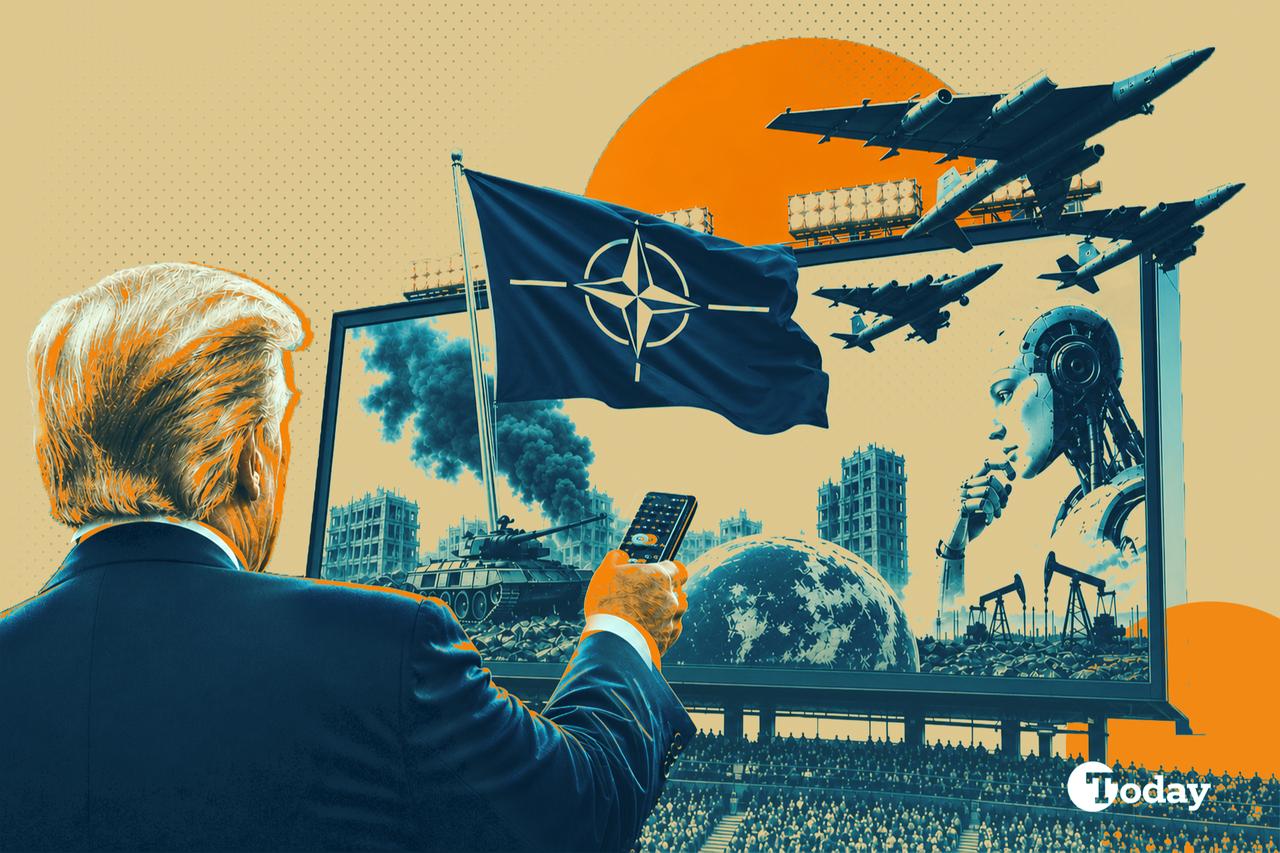
Perhaps the perfect metaphor for the current state of international relations? Except that the couple settled their differences and disappeared from the Jumbotron. Donald Trump has another two years on the big screen.
The American midterm elections, in which voters get to express their dissatisfaction with the president without actually getting rid of him, produced substantial Democratic gains and an audible sigh of relief from Brussels to Tokyo.
It was rather like discovering that the pilot of your airplane has been drinking but that the airline has finally confiscated his duty-free whisky. Encouraging, certainly. Although he is still flying the airplane.
America's allies are now engaged in what diplomats call “de-risking.” This is an expensive postgraduate word for not lending your brother-in-law the car again.
Europe is wondering whether America will defend it. Japan is wondering whether America will remember where Japan is. Canada would probably settle for America remembering that Canada is a foreign country.
And Denmark has had the novel experience of belonging to a military alliance with a country whose president has expressed an interest in acquiring part of its territory.
NATO used to be a mutual defense organization. Under Trump, it occasionally sounds like a homeowners' association meeting conducted by a property developer who wants to buy everybody's garden.
Europeans must embrace the entertainment format.
Consider the Istanbul football derby between Galatasaray and Fenerbahce, an occasion on which two groups of Turkish citizens who otherwise share a language, a nationality and an admirable appreciation of grilled meat temporarily discover that coexistence is impossible.
Or consider England's Premier League and its video assistant referee system, known as VAR. A goal is scored, thousands of people experience spontaneous happiness, and then a committee examines television footage to determine whether happiness was technically permissible.
International diplomacy increasingly operates on similar principles, except that nobody appears to know the offside rule.
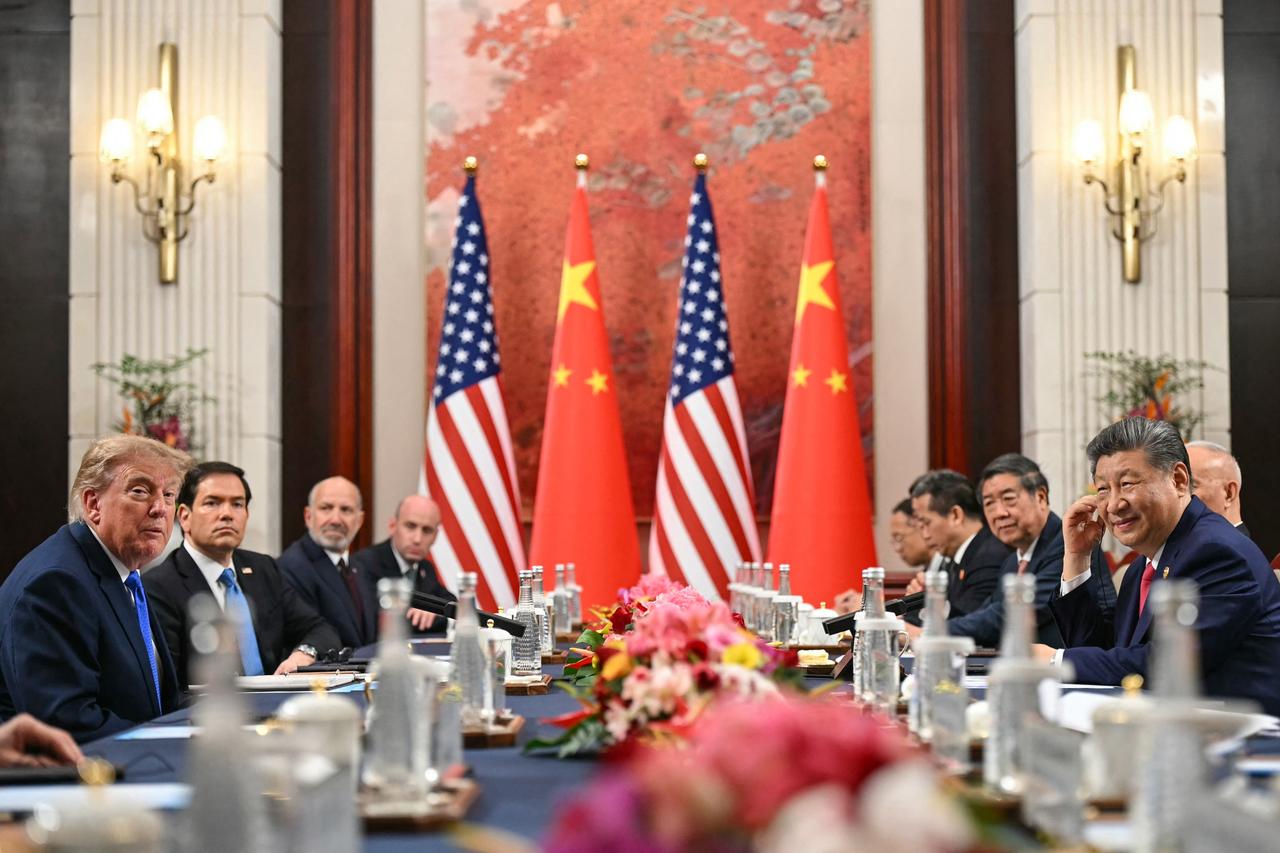
Trump's recent collisions with Vladimir Putin and Xi Jinping have the quality of celebrity appearances on a stadium's giant television screen. Everybody smiles. Everybody waves. Everybody wonders what the relationship really is.
Ukraine is still fighting for its existence, the Strait of Hormuz remains a geopolitical ulcer, artificial intelligence threatens to make several professions redundant, and the planet is getting warmer despite the considerable cooling of relations between Washington and its traditional friends.
The trouble with our age is that we have confused visibility with importance, attention with achievement and entertainment with government.
The Georgia Tech couple became famous because television needed something to show. Trump became a political phenomenon partly because television could never resist showing him.
The distinction is that the couple wanted their privacy back. Trump would probably regard privacy as a catastrophic decline in audience share.
Yet there are grounds for optimism.
America's alliances have survived Vietnam, the Cuban missile crisis, Charles de Gaulle's monumental French sulk and decades of Americans visiting Europe in shorts.
They may survive Trump.
The midterms suggest that American democracy retains some of its capacity for self-correction. And the enduring military, economic and cultural connections between democratic countries are considerably more substantial than the president's latest social media tantrum.
The West is not a television audience. It is an imperfect association of nations that have discovered, through several centuries of extremely expensive experimentation, that cooperation is preferable to killing one another.
What it needs now is less spectacle, more adulthood and perhaps the good sense demonstrated by those two Georgia Tech students.
They had a disagreement. They talked. They made up.
If two American undergraduates can accomplish this during a football game, surely there is hope for NATO.
Although I wouldn't put it on the Jumbotron.


 Set as preferred source
 Set as preferred source


 6 min read