Newsletters




For the century after Columbus, the Atlantic became the door behind which adventurers, second sons, religious refugees, debtors, and dreamers believed they could find what was denied to them at home: land, fortune, freedom of belief, a fresh start.
The Americas were not just territory. They were a stage on which the European could begin again. Every history of the modern West is, in some sense, a history of that crossing.
There was another crossing in those same years, and almost no one tells it. While Iberian galleons turned west, another people stood at the edge of another sea and turned outward too.
Their sea was narrower and their ships were smaller. The Turks of the Aegean, of the Mediterranean coast, of the Balkans and the islands, sailors whose tradition did not reach into the deep ocean, looked south instead.
They had no Atlantic. They had the inner sea, the Mediterranean, and beyond Egypt a long, thinly populated coast running west toward the pillars of Hercules. That coast, what is now Libya, Tunisia, and Algeria, became their America.
Historians know this story in pieces, but they rarely tell it whole, and almost never as a story of migration. The usual narration makes it a chapter of imperial administration, a tale of pashas and provinces, a southern front in the long fight with Habsburg Spain.
But underneath the diplomacy, there was a popular movement. Young men from Midilli, from the Morea, from the harbors of the Aegean and Rumelia, crossed the sea for something other than the slow life of the village.
They went for money, for a name, for the freedom the open sea has always offered to people with little to lose. Many never came home. Many of those who did returned as someone else.
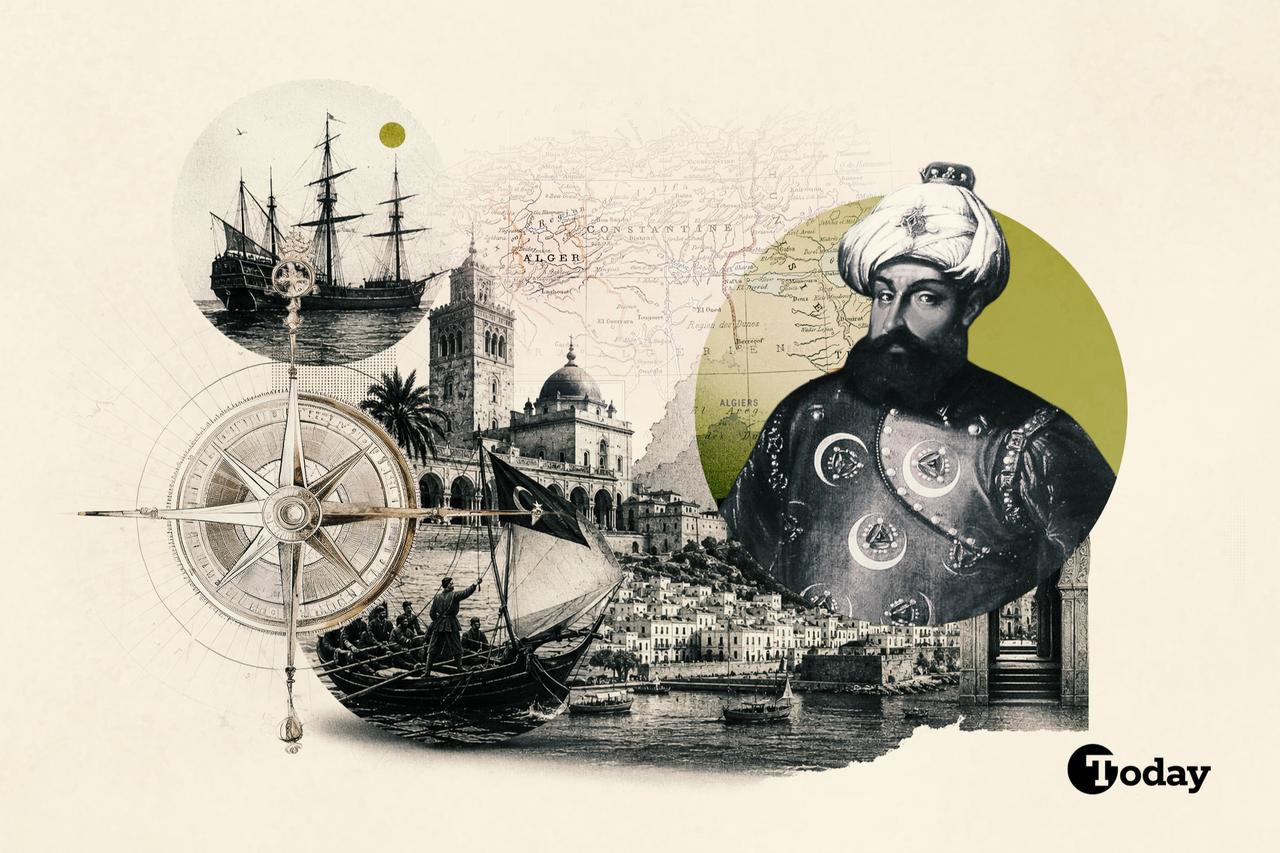
The brothers Europe called Barbarossa came from Midilli, the island the Greeks call Lesbos. Oruc and Hizir, the second remembered as Hayreddin, were not pashas by birth, and no sultan sent them to Africa.
They went on their own, with their own ships, and they built, by sword and by patience, a state that Istanbul eventually had to recognize. Their Algiers became the capital of a new Turkish frontier: half republic, half Ottoman regency, fully its own thing.
After them came the Turgut Reis, who took Tripoli in 1551, and Uluc Ali, an Italian convert who eventually commanded the entire Ottoman fleet. Around these men gathered tens of thousands of Turks from Anatolia and Rumelia, looking for what the Castilians sought in Mexico and the Portuguese in Brazil.
The ships were different; the galiot in place of the galleon, the ransom market in place of the silver mines, but the underlying social engine was the same.

The parallel is not perfect, and history rarely rewards those who insist on perfect parallels.
The Americas were a hemisphere; North Africa was a coastline. The Iberians displaced and destroyed dense native civilizations; the Turks moved into a coast whose interior belonged to nomadic Arab and Berber tribes and whose port towns had thinned out over centuries of disorder.
But the human shape of the two movements is similar. In both cases, men from the maritime edge of a continent crossed a sea, founded cities, mixed with local people, ran their own laws, grew rich by trade and force of arms, and over generations produced a hybrid society that saw itself as different from the homeland and yet bound to it by language, religion, and memory.
What they built on the southern coast was not really an imperial province in the usual Ottoman sense. It was something stranger, and more interesting. Later historians have sometimes called these places the Janissary republics of the Mediterranean. The term is a little anachronistic, but it captures something real.
In Algiers, Tunis, and Tripoli, the local Janissary corps became the heart of political life. The Dey of Algiers was not appointed from Istanbul. He was elected by the corps' divan, often after his predecessor had been violently removed, and his authority lasted only as long as the soldiers and captains who had raised him kept backing him.
These states minted their own money, signed their own treaties with European powers, declared their own wars, and made their own peace. A British, French, or, later, American consul in 18th-century Algiers negotiated with the Dey the way one negotiates with the head of a sovereign republic, not the way one talks to the deputy of a distant sultan.
The young United States, in its first decades, signed treaties with these regencies as it would with any other foreign power. For the men who had crossed the sea from the Aegean, all this made perfect sense.
They had gone south for the freedom the open frontier always offers to those who can hold it, and they had built institutions to protect that freedom from imperial reach.
The comparison with the self-governing English colonies of North America, where town meetings and provincial assemblies built similar habits of local sovereignty inside a nominally imperial frame, is not exact, but it is not absurd either. Frontier conditions, in both places, produced republican habits.
The wealth of these republics rested partly on the corsair economy, and there is no use being sentimental about it. The Barbary corsairs raided European shipping, took captives, ransomed them, and sometimes hit the coasts of Italy and Spain, reaching as far as Iceland in the famous raid of 1627.
This was the age in which every maritime power did this kind of thing. The English called their version privateering and knighted the men who did it well. The Spanish silver fleet sailed under the protection of what was, in honest terms, the largest privateering operation in the Atlantic. What matters for the argument here is not the morality of the corsair age but its sociology.
It produced wealth, drew settlers, and built cities. Algiers in the 16th century was one of the great cosmopolitan ports of the Mediterranean: mosques and madrasas, Janissaries and merchants, a population that included Andalusians expelled from Spain, Anatolians, Rumelians, sub-Saharan Africans, Berbers, and the Kouloughlis, the children of Turkish fathers and local mothers, who would form a distinct urban class for centuries.
This is why, even now, if you walk through the older quarters of Algiers, Tunis, or Tripoli, and ask people about their family histories, you find a surprising number whose ancestors came from somewhere in the Turkish homeland.
The Turkish presence on this coast was never a thin garrison. It was a settlement, a demographic deposit, a layer of urban life laid down over three centuries and still visible in the cross-section.
And then it ended. Or rather, it was ended. In 1830, the French landed in Algeria. By the end of the century, Tunisia had become a French protectorate, Libya fell to Italy in 1911, and Morocco, which had never been Ottoman, was divided between France and Spain.
The new colonial order set itself an open task: to dismantle the Turkish layer of North African society. The Ottoman administrative class was expelled or pushed to the margins. The Janissary corps that had carried the political tradition of the regencies was disbanded.
The Turkish language was driven out of schools and courts. The Kouloughli communities were stripped of estates that had been built up over generations. Within two generations, an entire cultural stratum was made invisible.
French replaced Ottoman Turkish as the language of administration, and in time French replaced even classical Arabic in many parts of public life. The Turks' new world was buried under the Frenchman's empire, and Türkiye itself, busy with its own collapse and rebirth, lost both the means and, for a long time, the memory of the connection.
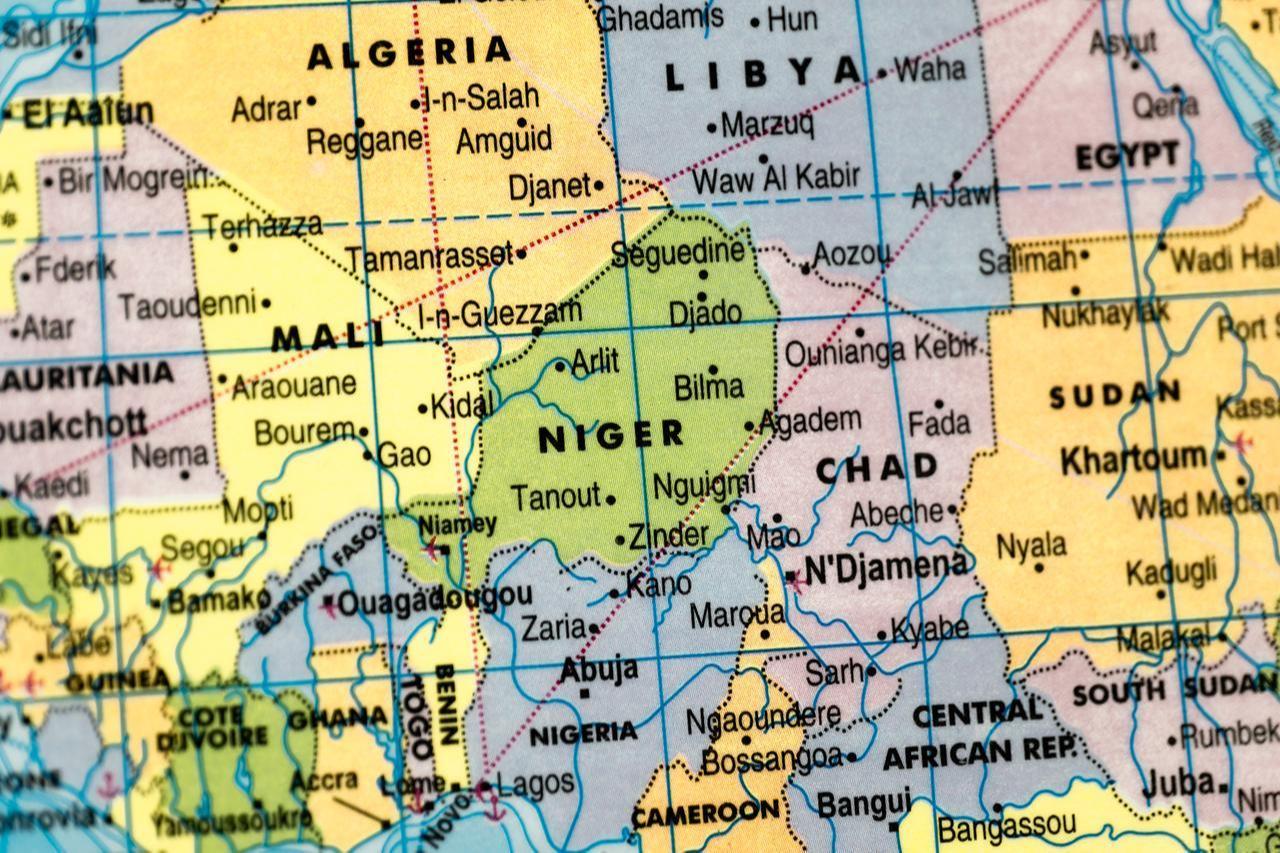
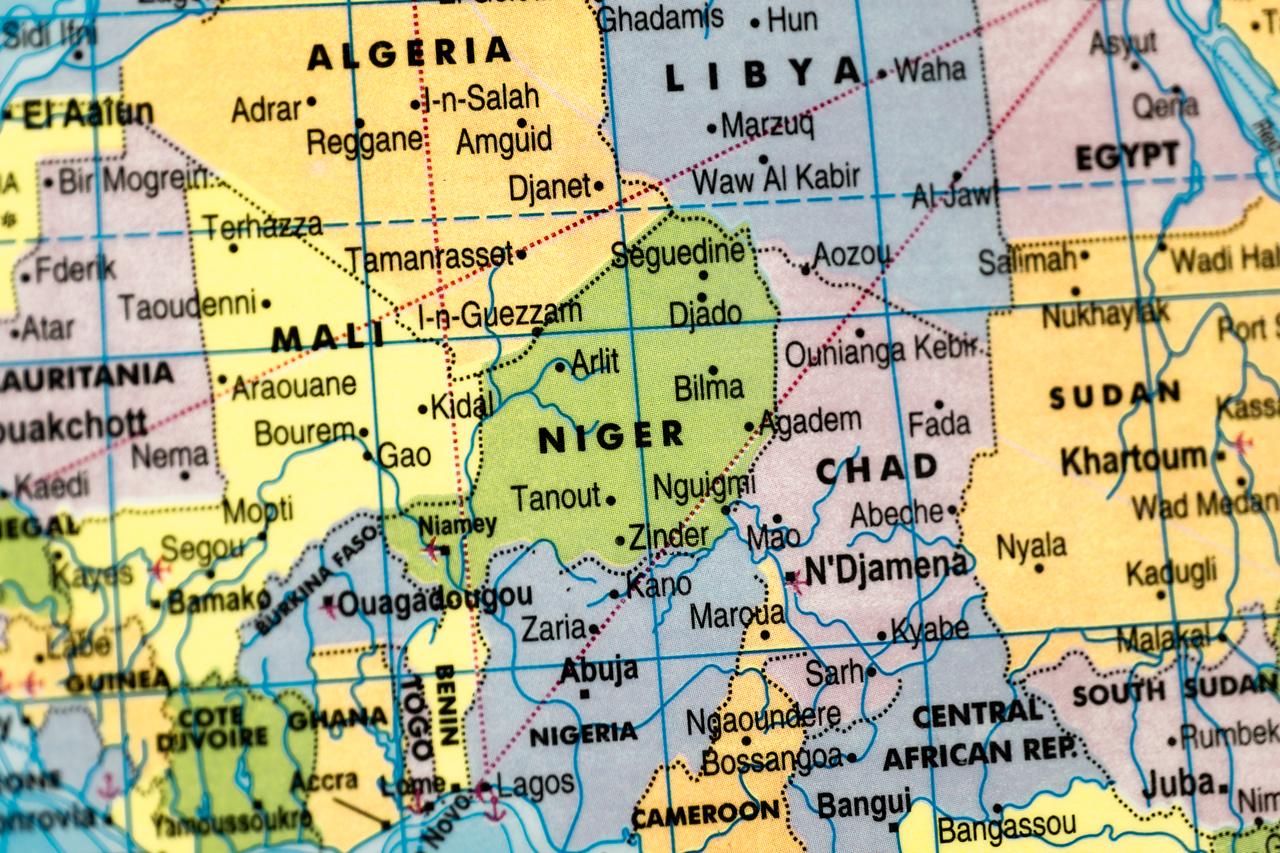
A century has passed since that loss, and the ground is shifting again. The French era in the Sahel and the Maghreb is visibly closing. Paris has been asked to leave Mali, then Burkina Faso, then Niger.
Its standing in Algeria has been hostile for years. Its position in Tunisia has weakened. Its leverage in Libya has been minimal since Gaddafi fell. Whatever one thinks of the forces filling the vacuum, the vacuum is real, and history does not leave vacuums alone for long.
Meanwhile, Türkiye has emerged, over two decades that no observer of the 1990s would have predicted, as a country with the population, the industry, the diplomatic reach, and increasingly the cultural confidence to play a serious role across the southern Mediterranean. The signs are everywhere if you look. Turkish construction firms have rebuilt airports and highways from Algiers to Misrata.
Turkish television series, dubbed into a softened pan-Arabic, fill evening hours in households from Casablanca to Cairo. Turkish universities educate growing numbers of North African students who go home fluent in a second language that is not French.
The Yunus Emre Institute, with TIKA beside it, does the patient cultural and developmental work that the Alliance Française did, in the opposite direction, for a century.
What all of this means is that Türkiye now has, for the first time since the early 20th century, both the chance and the duty to think of North Africa not as a region for opportunistic engagement but as a frontier with deep historical meaning.
This is the land that absorbed the energies of the Turkish maritime population in the same centuries Spain and Portugal were settling the Americas. This is where Turkish surnames are still carried by families who do not speak Turkish, but who know, in some half-remembered way, where they came from.
To treat this region as just a market, or just a stage for great power competition, is to miss what it actually is: the southern echo of Anatolia and Rumelia.
What follows from this is not a slogan but a habit of mind, and habits of mind take longer to build than slogans do. To recover the Turks' new world, Türkiye will need to think in generations rather than fiscal quarters, and to treat the southern coast not as a market but as a memory worth tending.
The Turks who crossed that sea five hundred years ago never called what they were doing a new world, because they did not need to. They simply went where their lives could grow.
Their descendants, on both shores, deserve a politics that recognizes what they once made together, and a future in which the work, broken in the 19th century, is taken up again in the twenty-first.


 Set as preferred source
 Set as preferred source


 2 min read
 1 min read