Newsletters


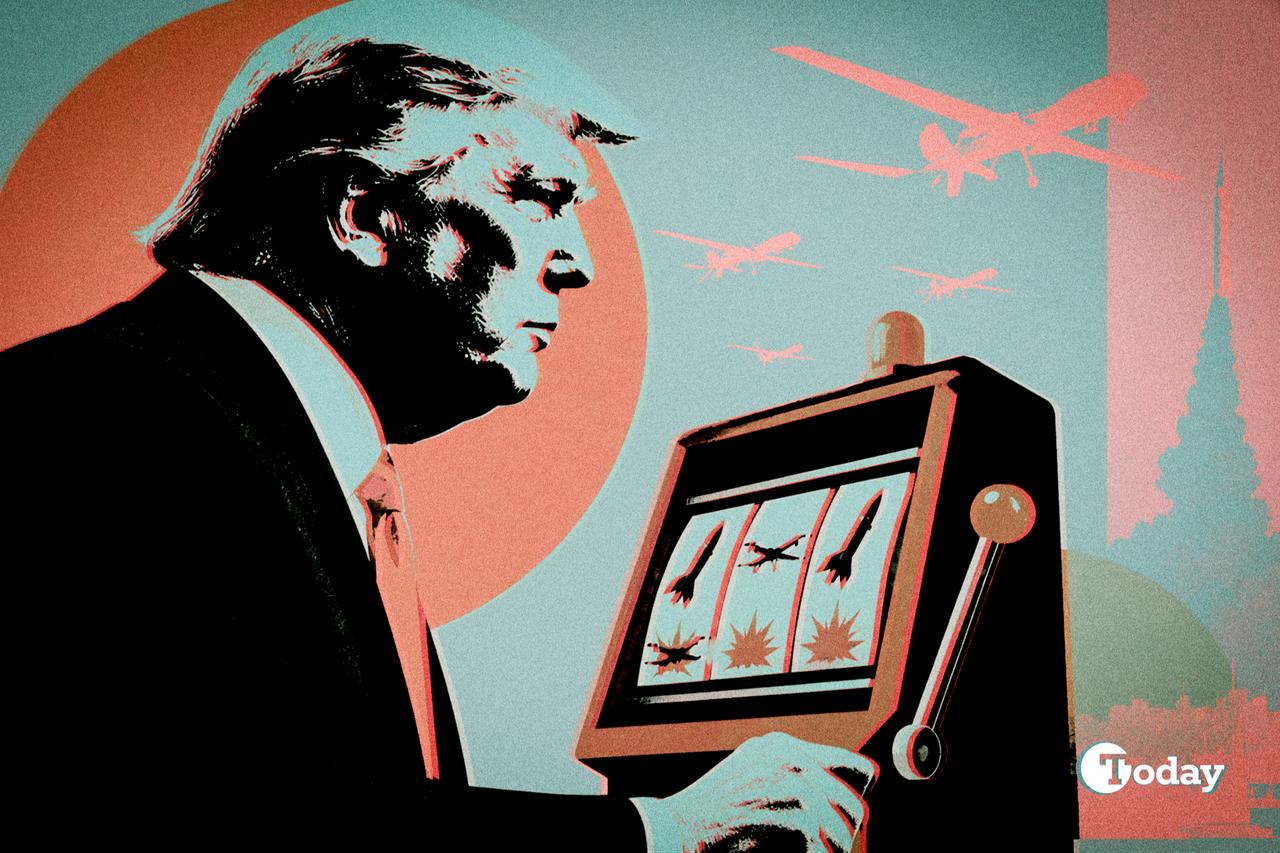


Donald Trump slumped outside the White House Saturday and announced that Iran made him an offer—the sort of proposition that ordinarily ends with somebody discovering it would be healthier to accept.
This time the offer wasn’t one he couldn’t. Trump refused anyway. Call it the Trump Doctrine, a double negative in search of a foreign policy. And when two negatives don’t make a positive, add another.
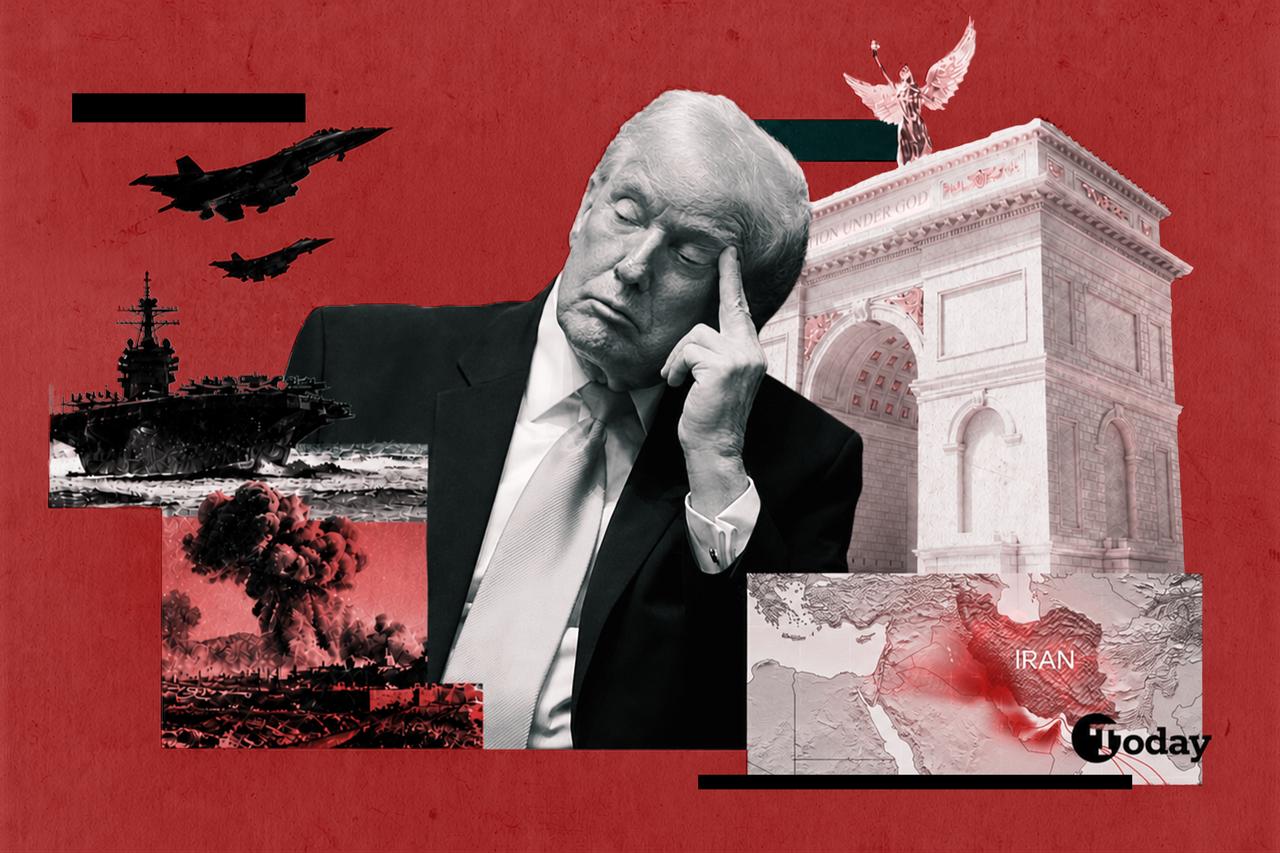
Iran had proposed reopening the Strait of Hormuz, restarting nuclear negotiations, and moving toward a ceasefire in return for American concessions, including relief from the naval blockade and oil sanctions.
Trump’s explanation was vintage Trump: Iran wanted a deal because it was “losing so badly.”
According to David Perdue, the U.S. ambassador to China, Trump has asked Chinese leader Xi Jinping whether he would like to buy American weapons.
“President Trump continues to say, ‘Hey, we sell arms to other people around the world,’” Perdue said on “Fox News Sunday” while discussing the state visit by Xi to Washington last week. “He actually asked President Xi if he would like to buy some at one point.”
A hell of a pitch. Except for one inconvenient detail: selling China American weapons is illegal.
Trump's world is a Mobius circuit of madness, menace, contradiction, and self-congratulation. It’s a ruinous loop of threat, boast, contradiction, and repeat.
Yet beyond Trump’s crooked geometry, from Moscow and Kyiv to Tehran and Pyongyang, war has broken out of his orbit.
And into an English hamlet.
British counterterrorism police arrested five men near RAF Fairford in Gloucestershire on Sunday after suspicious vehicles were spotted apparently heading toward the airbase. Bomb-disposal teams were called, nearby homes evacuated, and the men detained on suspicion of preparing a terrorist act and explosives offenses.
Fairford hosts U.S. forces and has been used by American bombers in operations against Iran. After B-1s flew from the base in July, Iran’s Revolutionary Guards warned that British bases used for attacks on Iran could become “legitimate targets.”
There is no official attribution. An Iran-linked motive is reportedly a leading line of inquiry, while investigators are also examining possible Russian sabotage and an Islamist plot.
And there is another glimpse of how war has changed. Nobody needs to declare it anymore.
Maybe World War III does not begin with armies pouring across borders or ambassadors delivering declarations. Maybe it looks like Ukraine and Russia trading thousands of drones, Iran threatening an American-used base in Britain, unexplained drones appearing over NATO installations, and five ghouls in vans outside an airfield in Gloucestershire.
War and peace are harder to tell apart.
And war itself is mutating faster than the men trying to manage it: drones into swarms, factories into fortresses, civilians into air defense, cheap machines into hunters of million-dollar weapons, leaving Trump to manage geopolitics like one of his failed Atlantic City casinos: squeeze the other guy, make him sweat, threaten to walk, then wait for him to crawl back to the table.
The new war is becoming a brutal exercise in arithmetic. Not merely whose missile flies farther or whose fighter is stealthier, but who can manufacture 5,000 cheap flying machines while the other fellow owns 500 exquisite missiles for shooting them down.
“Large salvos of missiles and drones define modern war,” Center for Strategic and International Studies analysts Benjamin Jensen and Tobias Oestreich wrote recently. Their point is brutally simple: military power depends on whether the attacker can manufacture threats faster than the defender can manufacture interceptors.
This is warfare by Costco.
Buy in bulk. Send everything.
Iran has validated the principle with waves of drones and missiles. North Korea is experimenting with the integration of unmanned systems, rockets, and missiles. Russia and Ukraine are turning the skies into a laboratory where technology is invented, copied, modified, and rendered obsolete at a speed that would make a Silicon Valley venture capitalist dizzy. Ukraine recently sent more than 1,000 drones toward Russian territory in a single operation.
And then war makes the private sector an offer they can’t refuse, and the state loses its battlefield monopoly.
In Russia, defending the homeland is increasingly becoming another line item on the corporate expense account. Ukrainian drones are reaching deep enough into Russian territory that Moscow has authorized postal employees to use anti-drone equipment, while commercial procurement of counter-drone systems has soared. The Kremlin has also threatened temporary state control of critical facilities judged inadequately protected.
Think about that. The forklift driver may now be part of the air-defense network. The intern who changes the toner cartridges is watching the sky.
The warehouse needs steel netting. The factory needs electronic warfare. The corporate risk manager needs to understand incoming drones. The insurance agent has to calculate the actuarial probability of something with explosives crashing through the roof.
War has escaped the barracks.
The U.S. Constitution enshrined the right “to keep and bear arms"; modern war is turning it into a business model. When the state can no longer guarantee your security, the answer is the same one America has argued over for two centuries: get a gun.
The Second Amendment has gone airborne.
Except the intruder is no longer coming through the kitchen window. It is coming over the horizon at 200 miles an hour carrying a warhead.
Forget the gun rack. You’re going to need radar.
Russian dictator Vladimir Putin, having nuclear weapons, submarines, bombers, tanks, and one of the largest militaries on Earth, is nevertheless telling businesses and civilian institutions, in effect: Protect yourselves.
That is not merely a Russian curiosity. It is a warning about the changing distribution of military power.
Cheap autonomous weapons favor dispersal. They reward improvisation. They turn factories into fortresses, software companies into defense contractors, and civilians into nodes of national air defense. Geography itself changes meaning: Russia’s enormous territory, once strategic depth against Napoleon and Hitler, now creates an immense volume of sky that somebody has to watch.
And Trump’s predicament is that his political vocabulary remains stubbornly 20th-century. Pressure. Bombing. Deal. Victory. Losing.
These are satisfying nouns. They fit on television.
 1 min read
But saturation warfare is less theatrical and more industrial. You cannot intimidate a production curve or insult a drone swarm. A $3 million interceptor does not become cheaper because the president declares the $30,000 target is losing badly. That is the trap.
Trump rejected Tehran’s proposal while saying he wanted a deal, just not this one. Meanwhile, the military logic spreading from Ukraine to the Middle East and Korean Peninsula is moving in the opposite direction from presidential grandeur: downward, outward, everywhere.
IKEA opens an electronic warfare department. The night manager at Walmart learns to jam drones. Ralph Lauren unveils his first surface-to-air collection.
Machines that once stuffed Twinkies now churn out cheap flying contraptions that hunt weapons costing millions. It is an industrial ecosystem against an industrial ecosystem.
Why call up an army when politicians can draft the entire economy? Assembly line against assembly line. Algorithm against algorithm. The logic of the slot machine applied to mass destruction: keep feeding it money, metal, and bodies until somebody hits zero.
Trump still needs a patsy across the table. Of course he does. The men who start wars always find a comfortable chair. But the slot machine now has millions of seats.
Come on down, folks.
Everybody plays.
And Trump is the only one still waiting for someone else to sweat.


 Set as preferred source
 Set as preferred source


 1 min read