Newsletters


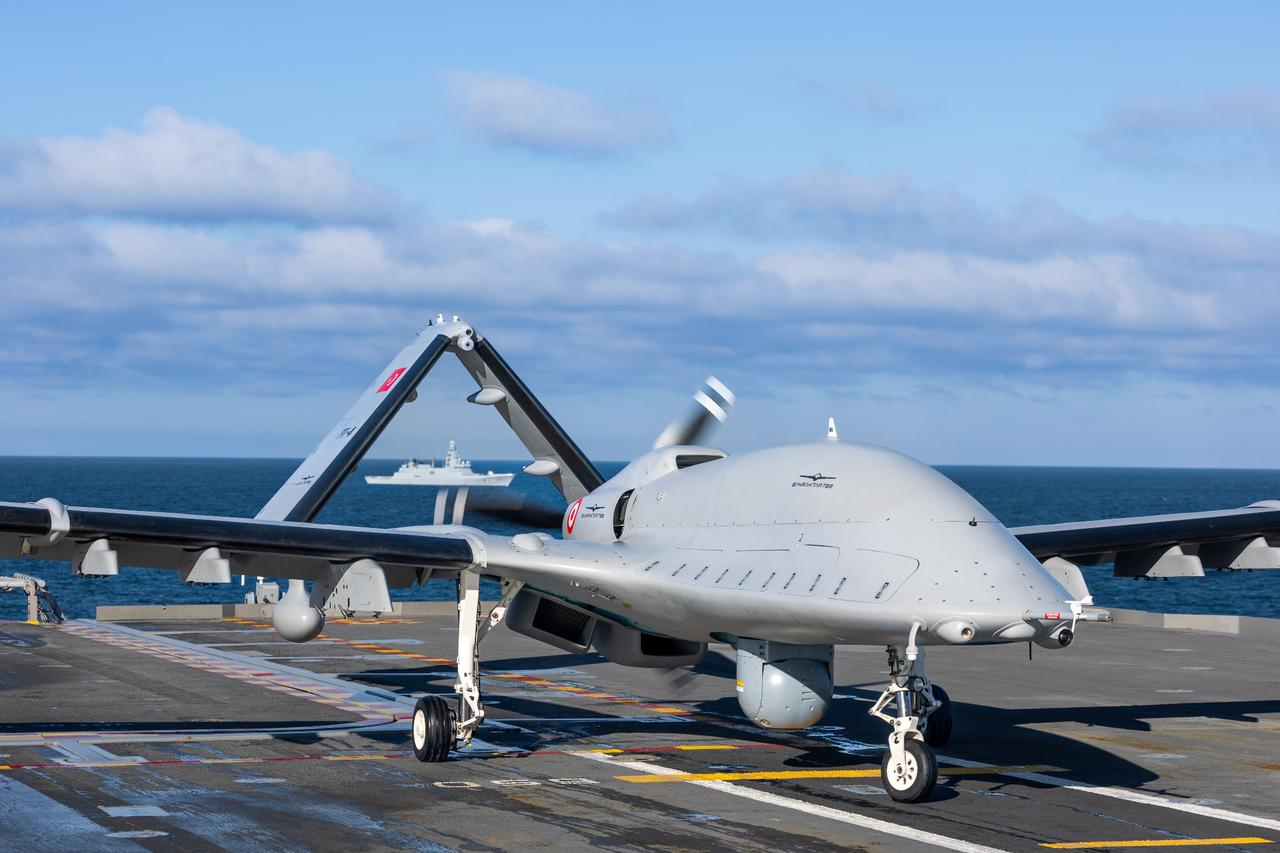


Forget everything you knew about amphibious landings. In the freezing waters of the Baltic, Türkiye just rewrote the NATO playbook.
By launching precision strikes from the TCG Anadolu using the Bayraktar TB3, the Turkish Naval Forces have moved beyond testing and into a new reality of "unmanned power projection."
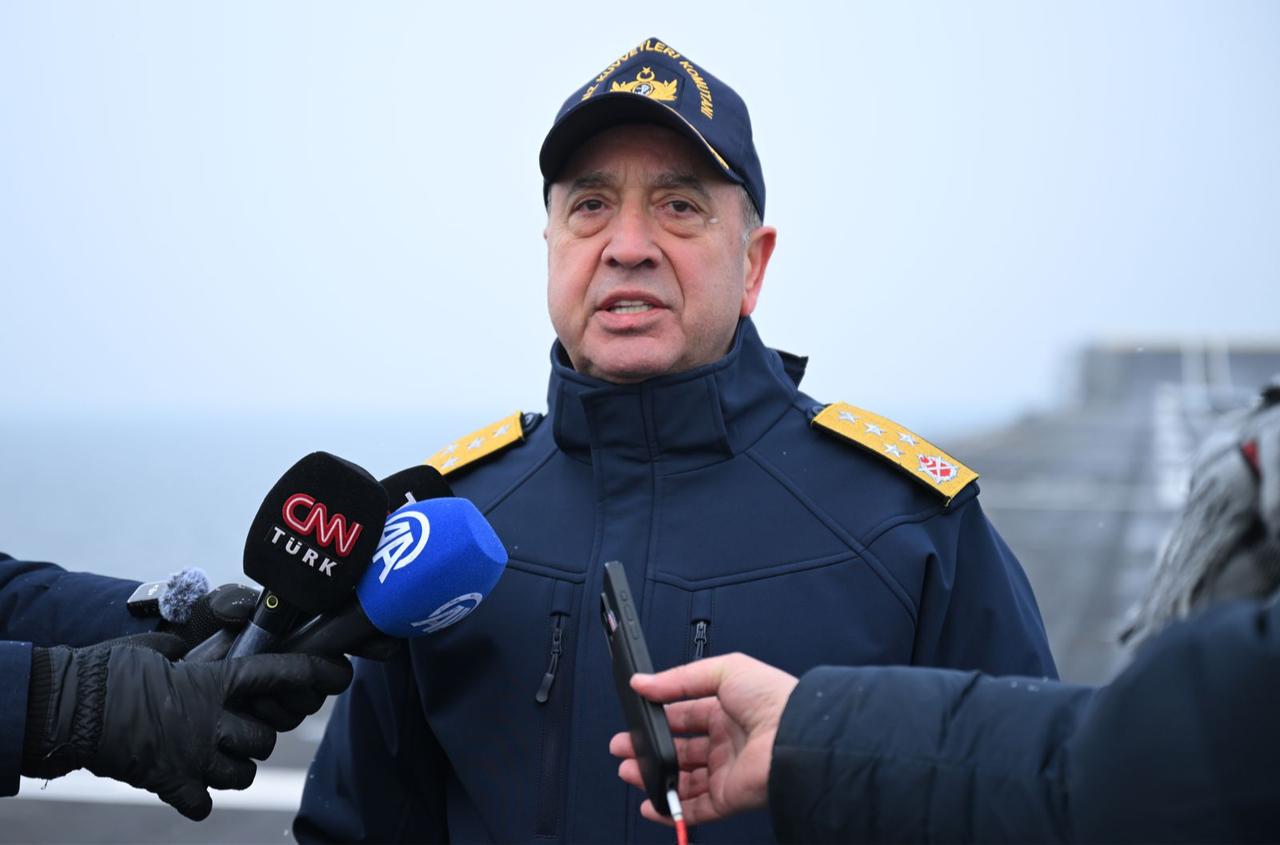
“We are deploying TB3s in a NATO exercise for the first time, as well as in an amphibious operation,” said Turkish Naval Forces Commander Admiral Ercument Tatlioglu. “This represents a new doctrine for NATO. It is also the first amphibious operation within NATO to utilize UAVs.”
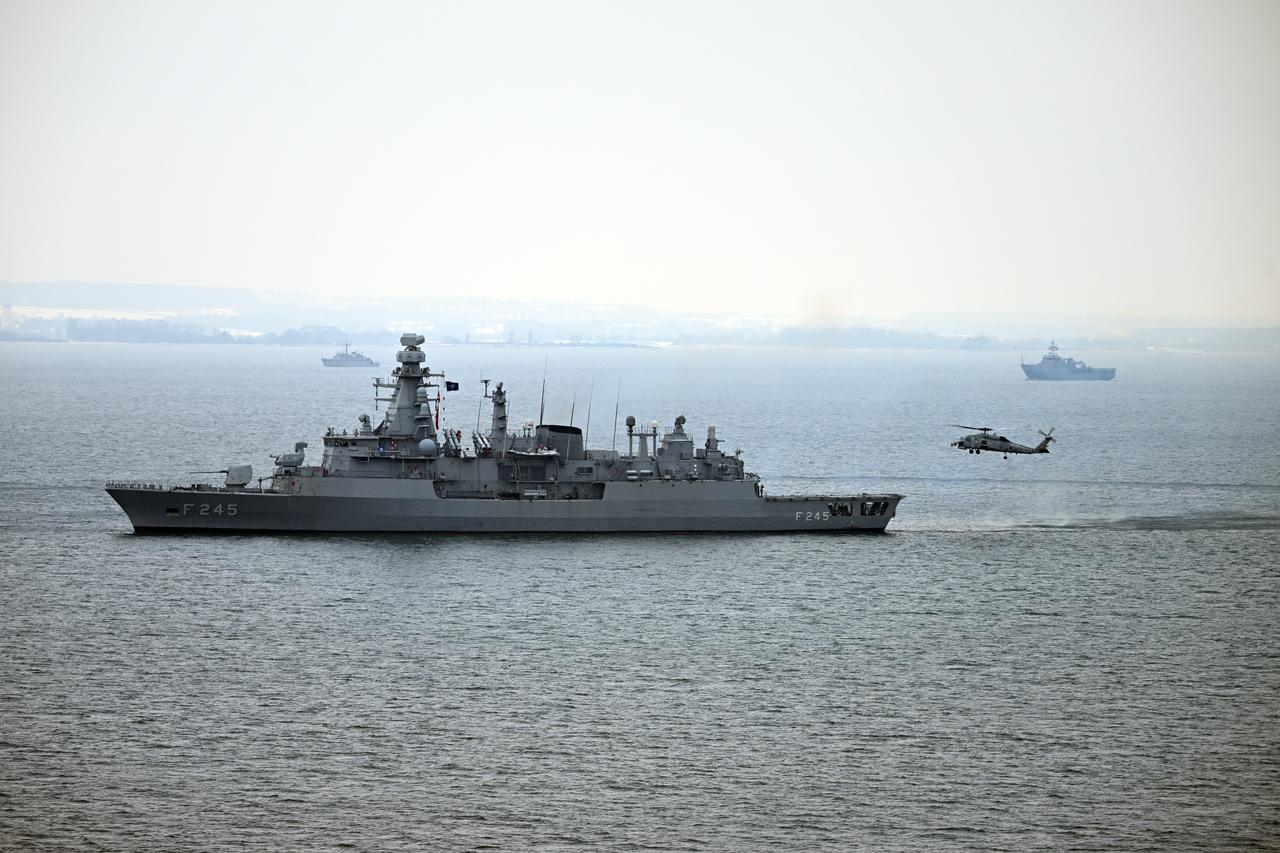
Baykar’s Bayraktar TB3 has become the first unmanned combat aerial vehicle (UCAV) to conduct live strikes from a ship during a NATO exercise. Operating from Türkiye’s multi-purpose amphibious assault ship and drone carrier, TCG Anadolu, the TB3 launched precision munitions in the Baltic Sea as part of Steadfast Dart 2026.
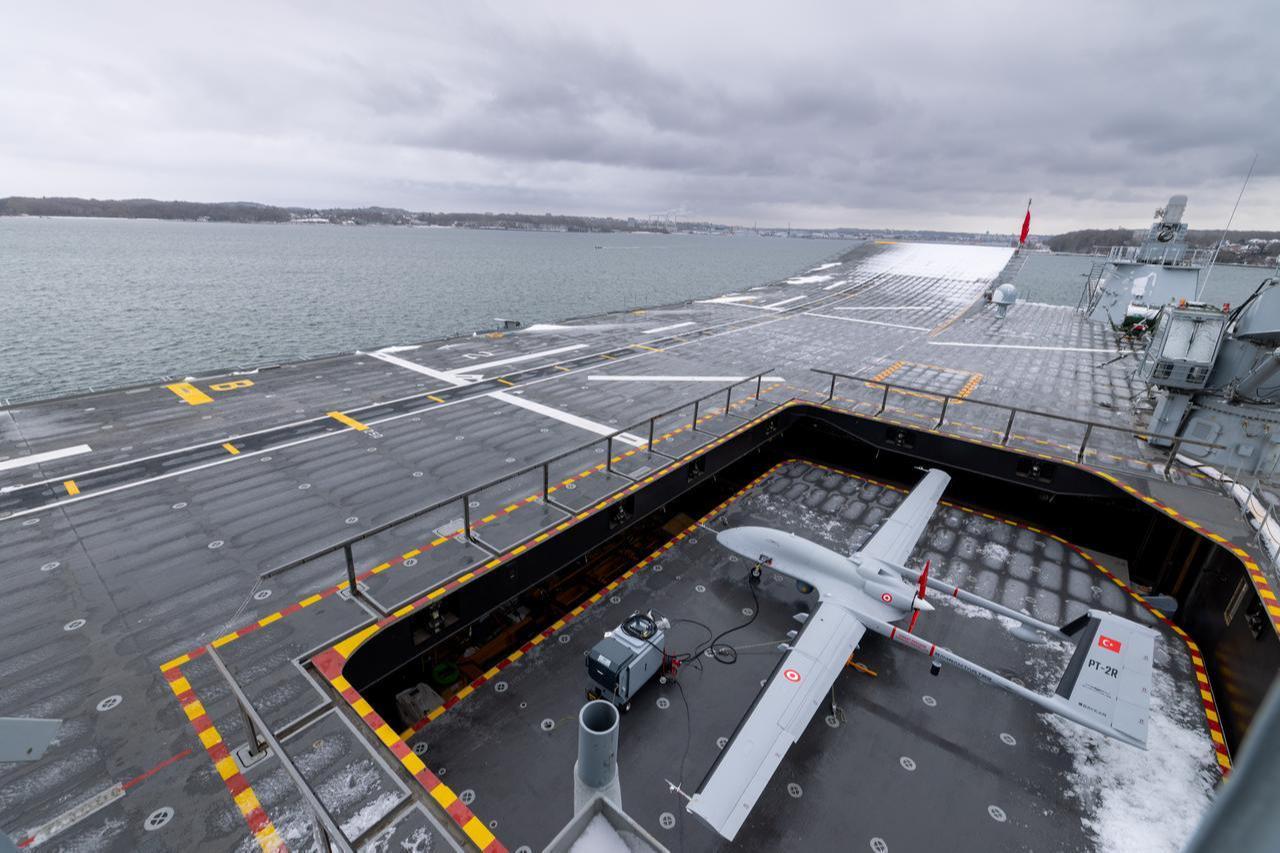

Tatlioglu identified two critical aspects of Türkiye's participation. First, the Turkish Naval Forces demonstrated power projection at an unprecedented scale within the allied framework.
"For the first time in an amphibious operation, we are using our UCAVs to soften the landing zone," Tatlioglu stated.
"Within the framework of a NATO exercise, we are using our UAVs in amphibious operations for the first time. As you know, we are quite good at unmanned systems. We have different UAVs and unmanned naval vehicles. We are trying to share all our experience in this field with NATO allied countries, and this is also a first," he added.
The second milestone was equally historic. "We are using TB3s in a NATO exercise for the first time. We are also using TB3s in an amphibious operation for the first time. This is a new doctrine for NATO as well. This is the first amphibious operation within NATO using UAVs," Tatlioglu said.
That last sentence deserves emphasis. The admiral did not describe this as a test or a demonstration. He called it a new doctrine. Türkiye is integrating its pioneering role in unmanned aerial vehicles into NATO, becoming a defining country in alliance doctrine.
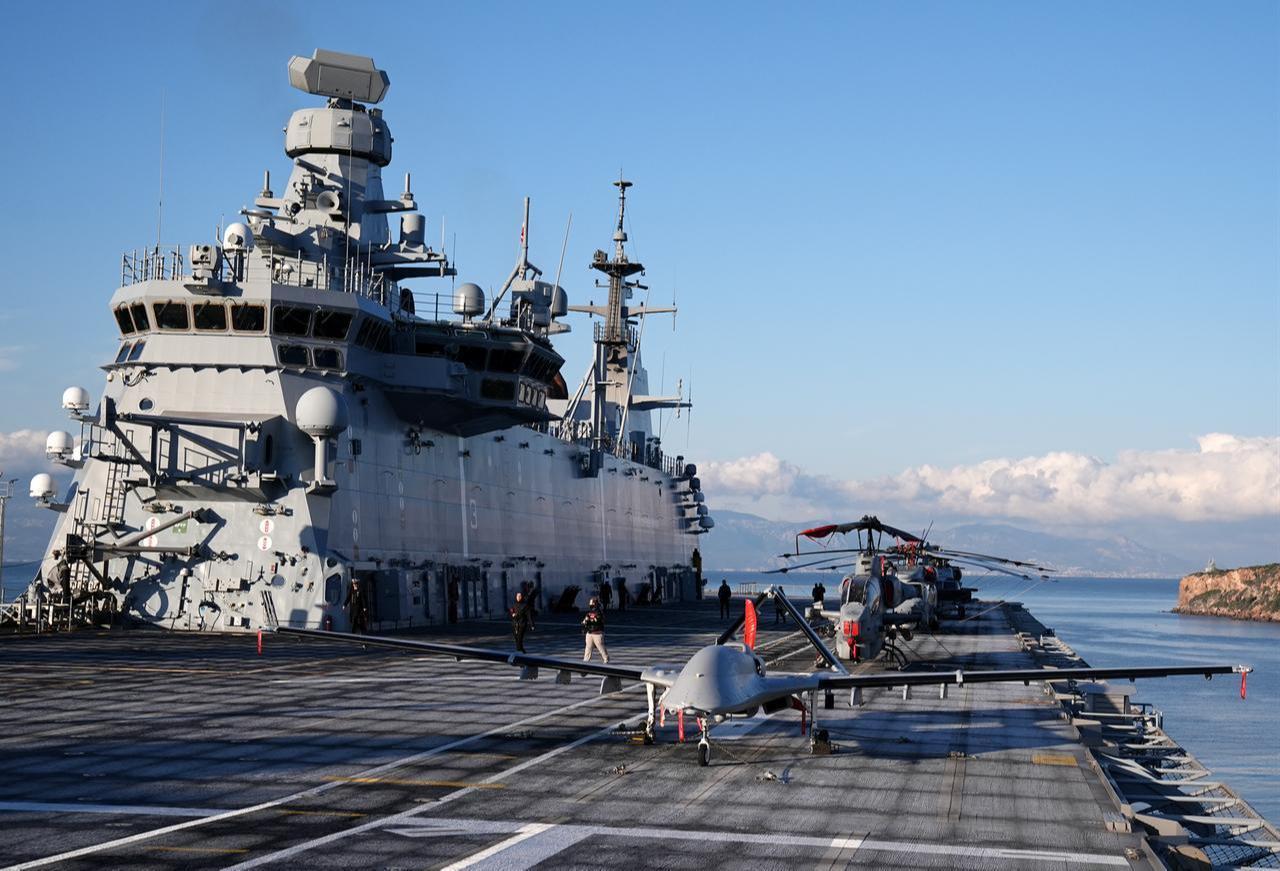
The Bayraktar TB3, developed by Baykar as the world's first UCAV capable of conducting operations by taking off and landing from short-runway ships, made its first operational demonstration in an overseas theater during Steadfast Dart 2026.
The TB3 was the only aircraft to conduct a flight demonstration under the harsh Baltic conditions, a fact that speaks volumes about resilience.
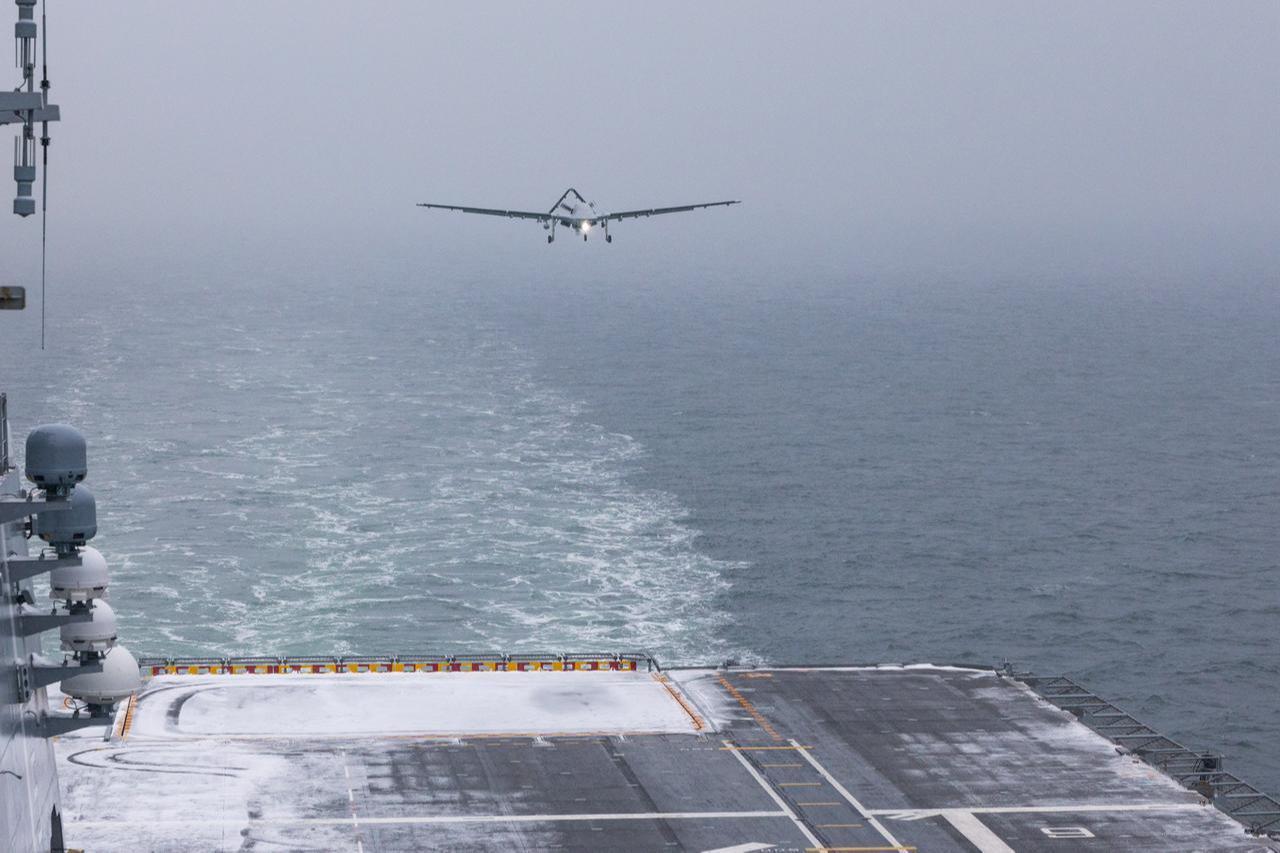
The UCAV executed a live-fire mission during one of NATO's most disciplined operations, under extremely harsh meteorological conditions characterized by cold temperatures, high winds, and heavy seas, then safely landed autonomously on TCG Anadolu upon completion.
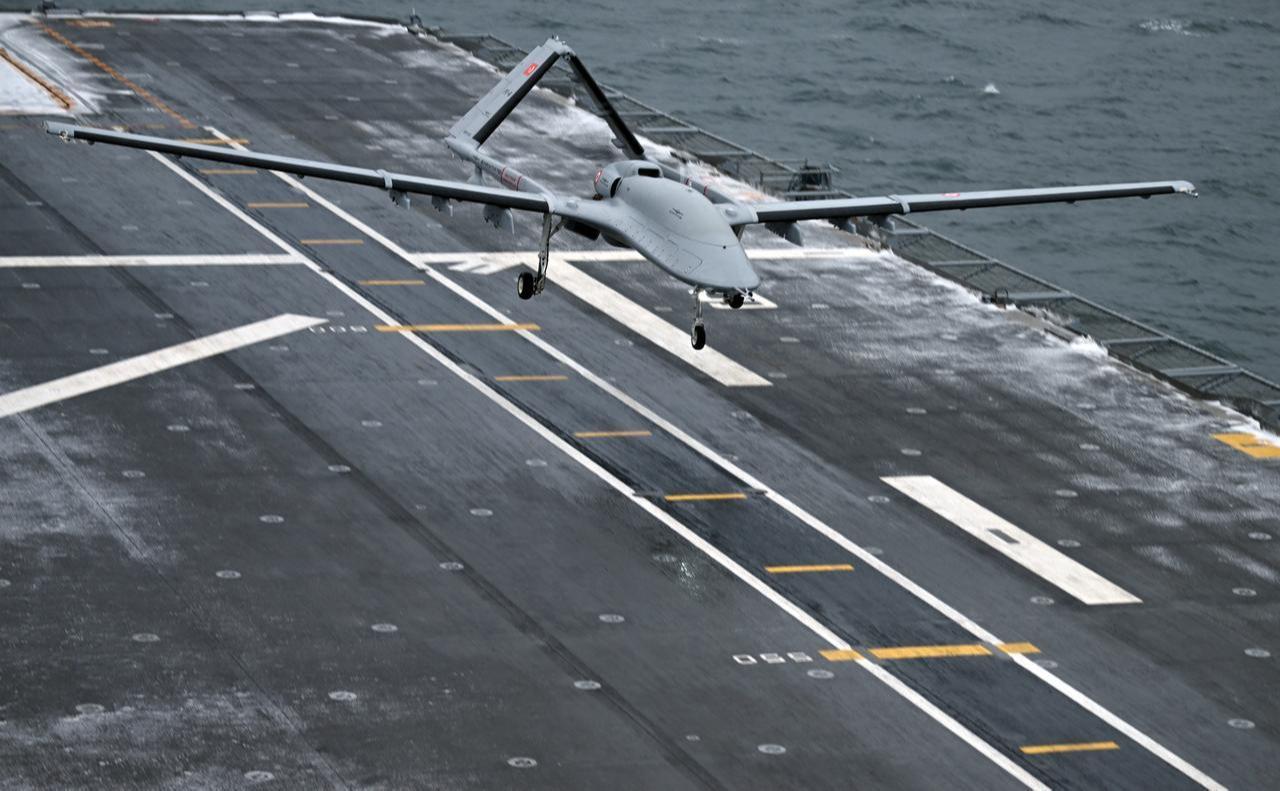
Baykar CEO Haluk Bayraktar highlighted the achievement, saying, "Bayraktar TB3 achieves full autonomous landing on TCG Anadolu in the Baltic Sea—harsh winter, minus 5°C, heavy snow & winds! Powered by 5 different AI-based redundant systems for all-weather & EW-resilient ops."
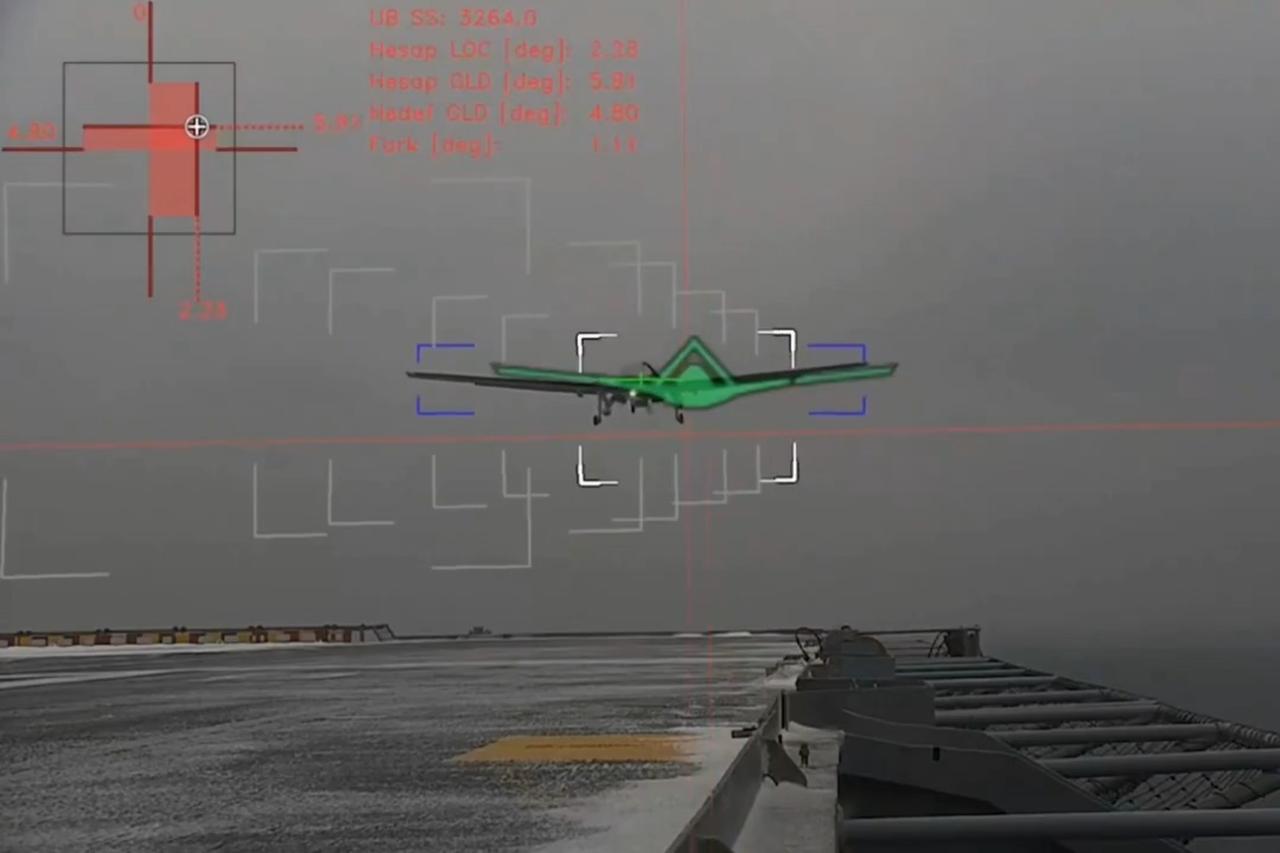
The automatic landing system uses communications and image processing to guide the TB3 onto TCG Anadolu's deck.
Baykar shared detailed footage of the system's interfaces during Steadfast Dart 2026, demonstrating how Turkish engineers developed a virtual-corridor landing-support system that enabled autonomous touchdowns on icy runways in sub-zero temperatures and strong winds.
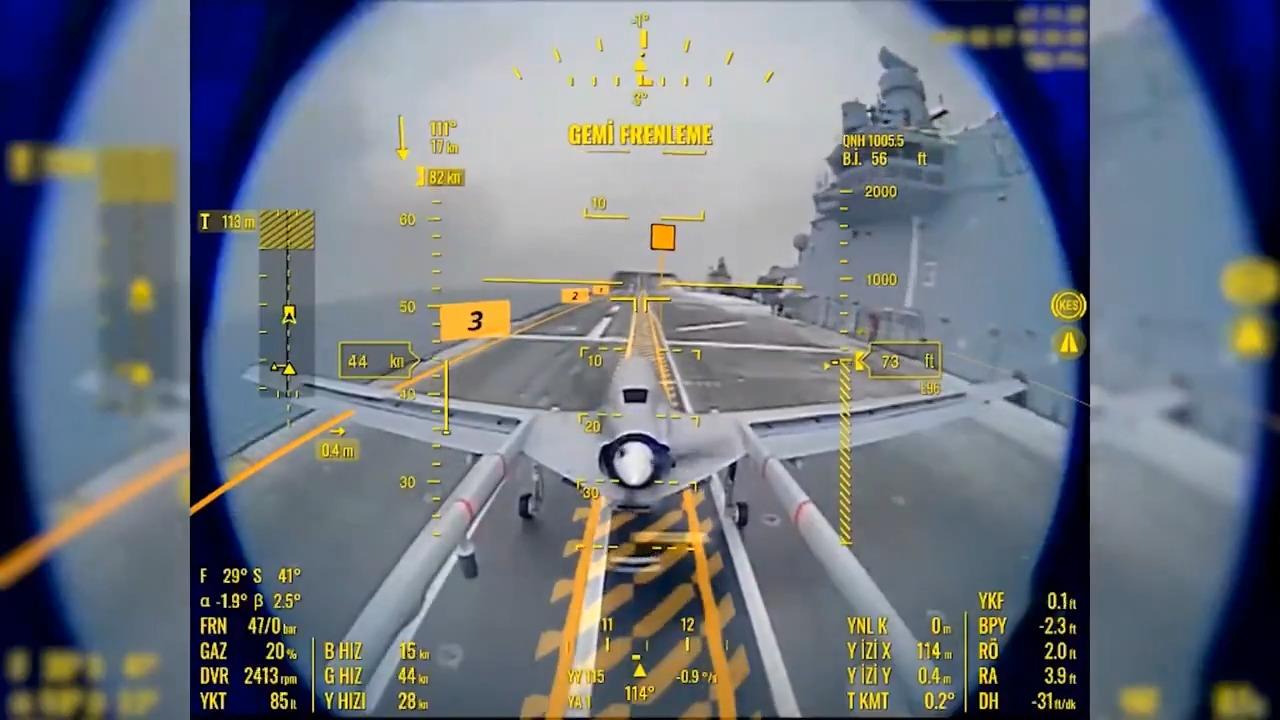
Unlike conventional carrier aircraft, which require catapult assistance or arrestor gear, the TB3 conducts short takeoffs and landings using autonomous flight control systems. Precision navigation relies on satellite positioning combined with shipboard data inputs, allowing automated deck alignment even under reduced visibility.
During the exercise, TB3s conducted joint training with Eurofighter Typhoons over the Baltic Sea, logging eight hours of flight time and covering 1,700 kilometers.
Naval Forces personnel have begun flying the TB3, a transition that signals institutional maturity. This year might bring joint exercises between Turkish Air Force (TurAF) Eurofighters and the TB3s over the Aegean and Eastern Mediterranean.
Turkish defense giant Aselsan's ASELFLIR-500 electro-optical reconnaissance system is seen delivering crystal-clear imagery throughout operations.
The TB3's NATO activity should not be interpreted as a mere demonstration flight.
The Bayraktar TB3 performing a live-fire mission in Steadfast Dart 2026 and landing on TCG Anadolu represents the debut of a new naval warfare concept rather than just a platform test.
The combination of TCG Anadolu and TB3 alters the regional maritime security landscape.
Carrier-based UCAVs can extend surveillance and strike envelopes hundreds of nautical miles from a task group, providing persistent intelligence, surveillance, and reconnaissance (ISR) coverage while retaining the option to prosecute targets directly.
Earlier iterations of SeaWolf 2025 validated deck takeoffs and live weapon releases, and the massed participation across three seas during recent drills indicates that Türkiye has started to institutionalize tactics, techniques, and procedures for integrated manned and unmanned aviation within distributed maritime operations.
Earlier iterations of SeaWolf 2025 validated deck takeoffs and live weapon releases. The massed participation across three seas during recent drills indicates that Türkiye has begun institutionalizing tactics, techniques, and procedures (TTPs) for integrated manned and unmanned aviation within distributed maritime operations (DMO).
Cem Devrim Yaylali, a defense industry analyst and correspondent for Warships IFR, Jane's, Defence News, and Defence Turkey, offered a measured assessment in an interview to Türkiye Today.
On whether the live-fire strike represents a full shift from platform testing to operational integration, Yaylali noted the TB3's current organizational status: "The TB-3 that took part in the live-fire exercise during Steadfast Dart 2026 is not currently in the inventory of the Turkish Naval Forces. At present, the TB-3 is operated by the Turkish Land Forces. As the TB-3 has not yet officially entered naval service, it would be premature to conclude that the live-firing conducted during Steadfast Dart 2026 represents a full shift from platform testing to operational naval UCAV integration within NATO exercises."
Asked whether TB3's ship-based operations could influence future allied doctrines for short-deck amphibious platforms, Yaylali said, "The United States Navy and the Royal Navy have previously operated unmanned aerial vehicles from aircraft carriers and amphibious ships. However, those UAVs were primarily used for intelligence, surveillance, and reconnaissance (ISR) missions and were not designed to conduct precision strike missions."
"In this regard, the TB-3 represents a significant development, as it combines carrier-based operation with precision strike capability. This could influence future allied doctrine by demonstrating that short-deck amphibious assault ships and landing helicopter docks (LHDs) can serve as cost-effective unmanned aviation platforms," he noted.
"This approach may allow navies without large aircraft carriers to develop sea-based strike capabilities using unmanned systems," Yaylali added.
Asked how TB‑3’s demonstrated capabilities might shape NATO allies’ future naval aviation force planning or procurement priorities, the defense analyst stated that, "A NATO member, Portugal, has contracted Damen Shipyards Group to design and construct the NRP D. João II, a new multi-purpose support ship. The vessel is designed to support unmanned systems operations, including aerial, surface, and underwater drones, as well as surveillance and naval missions."
"Portugal does not plan to operate manned aircraft from this ship, reflecting a growing emphasis on unmanned naval aviation," he noted, adding that, "Portugal and other NATO members will likely closely monitor exercises such as Steadfast Dart 2026 to assess the operational feasibility of ship-based strike UCAVs."
"Any NATO country seeking to develop long-range maritime strike capabilities without investing in conventional aircraft carriers may consider platforms such as the TB-3 or similar systems," Yaylali stated.
On the question of shared NATO procurement, Yaylali concluded: "The answer to this question depends on whether any potential TB-3 procurement by NATO allies would be conducted individually by each country or as part of a NATO-owned procurement program. It is too early to make a definitive assessment, in my opinion."
What happened in the Baltic Sea was not merely a technological showcase; it was a signal of doctrinal change and a statement by Ankara.
Türkiye has shown NATO that unmanned combat aviation from short-deck ships can operate under the harshest conditions and fundamentally change what navies without aircraft carriers can achieve.
The question is no longer whether drone-based amphibious warfare is viable, but how rapidly the rest of the alliance can adapt to this fundamentally redefined landscape of modern naval combat.


 Set as preferred source
 Set as preferred source


 1 min read

 1 min read