Newsletters


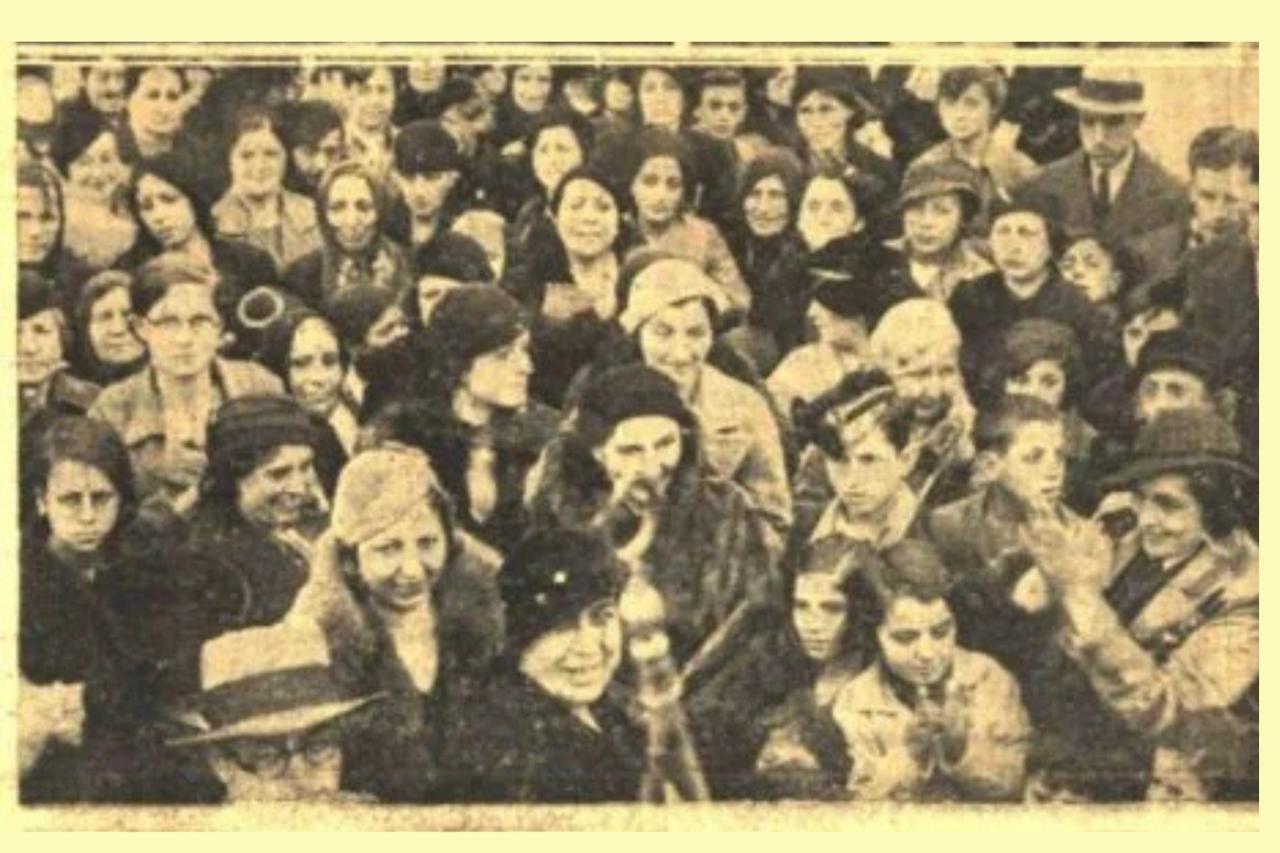


On Dec. 5, Turkish women celebrate the day they gained full political rights in 1934, a turning point that reflects both the vision of the early republic and the determination of women who had been active in politics for decades.
While the reform is often remembered for its broader national impact, it was also shaped by women who founded associations, published journals, and pursued political representation from the final years of the Ottoman Empire into the first decade of Türkiye.
The reform placed Türkiye ahead of several major European countries, coming about a decade before France and Italy and nearly four decades before Switzerland.
Their organizing made political rights a public issue and ensured that the reform of 1934 did not emerge suddenly.
As a result, the anniversary speaks not only to the direction set by the new republic but also to the women whose activism shaped the path toward legal recognition.


Women’s political rights in Türkiye did not originate with the establishment of the Republic in 1923 but developed from a long period of organizing that reached back into the final decades of the Ottoman Empire.
Women were active in cultural and intellectual life, and they used journals, associations, and informal political gatherings to argue for education, public visibility, and eventually political representation.
Influenced in part by global debates on suffrage, they followed movements in Europe and the United States while developing their own arguments in local contexts.
These early networks created a shared language around rights and helped shape a generation of women who saw political participation as essential to social progress.
This foundation was strengthened by women writers and activists who treated political rights as part of a broader struggle for equality. They contributed to a growing print culture, published essays, and debated the nature of citizenship in changing political conditions.
Their involvement in public life expanded during the years surrounding the First World War and the War of Independence, when women took on visible roles in both civic and national initiatives.
By the time the republic was established, women had already built a sustained conversation about political participation and had introduced these demands into public discourse.
The emergence of this early women's rights movement meant that the call for voting rights did not appear abruptly in the 1920s but was rooted in decades of work carried out by women who insisted on being present in political life.

The most visible figure to emerge from this early movement was Nezihe Muhiddin, whose life reflected the intellectual and political environment that had shaped women’s activism in the late Ottoman period.
Raised in a household where women’s rights were discussed openly, she entered public life through education, writing, and involvement in women’s associations.
Her encounters with leading intellectuals of the period, as well as her work as a teacher and inspector in girls’ schools, positioned her within a network of women who viewed political rights as central to social progress.
Muhiddin understood that expanding education, improving professional opportunities, and securing legal reforms were inseparable from women’s ability to participate in political life.
Her leadership became increasingly visible after the First World War, when debates on rights intensified and women’s organizations gained wider public attention. Muhiddin wrote extensively on education, public morality, and legal reform, but she treated political participation as the core issue around which other demands revolved.
Her approach combined public advocacy with practical steps toward institutional organization, and she viewed citizenship as a status that required equal political rights rather than symbolic recognition. By the early 1920s, she had become one of the central voices insisting that the transformation of Türkiye would remain incomplete without women’s full representation.
In this environment, Muhiddin’s effort to bring women together under a political structure marked a significant shift.
Her insistence on political agency would define the most ambitious initiative of the period: the attempt to found a women’s political party before the Republic was even fully established.

Nezihe Muhiddin’s most ambitious initiative was the establishment of Women's People Party (Kadinlar Halk Firkasi) in June 1923, an effort that took place before the Republic or its ruling party had formally taken shape.
The group of women who joined her saw themselves as political actors in their own right and drafted a statute that has been described as one of the early feminist manifestos of the period.
In this document, they asserted that women’s political rights were essential for the success of the new social order and placed demands such as participation in local elections, expanded access to education, reform of family law, and even the possibility of women serving in national defense.
Their program made clear that they did not intend to wait for political rights to be granted at an unspecified future moment but sought recognition as active participants in shaping Türkiye’s emerging political landscape.
The response from the authorities and parts of the press revealed the limits of the political environment in which these women operated. Newspapers questioned their intentions, suggesting that women’s primary aim was to enter parliament, while commentaries ridiculed the idea of female political presence in a period marked by major national challenges.
After eight months, the party’s application was rejected on the grounds that the existing electoral law did not allow women to engage in political representation. Officials argued that some elements of the party program made the initiative incompatible with the legal framework of the time, effectively blocking the formation of what would have been Türkiye’s first political party led entirely by women.

By the early 1930s, Türkiye had already introduced several major reforms that transformed daily life and expanded women’s legal autonomy.
The 1926 Civil Code, the adoption of secular legal structures, and regulations affecting education and public life created an environment in which women’s status was increasingly shaped by national legislation.
In 1930, women obtained the right to vote and run in municipal elections, a change that brought renewed activity within Women's People Party.
Public events, including the large meeting in Sultanahmet in April 1930, demonstrated that women’s political presence had become a visible part of national discussion, even if political participation remained tightly controlled.
Within this environment, the question of full political rights continued to surface. Women’s long-standing activism, combined with the importance attributed to their contributions during the War of Independence, helped frame the idea that their participation was consistent with the direction of the Republic.
In December 1934, Parliament voted unanimously to grant women full voting and election rights. The first national election in which women could participate took place in February 1935, resulting in the election of 18 women to Parliament.
Understanding this period also requires acknowledging the broader political environment of the early Republic. Türkiye was emerging from war, territorial reorganization, and extensive social reforms, and the leadership saw national cohesion as essential to the success of the new state.
Centralizing political authority became part of this approach, and the limits placed on civil society, including women’s organizations, reflected a belief that too many competing voices might complicate the consolidation of a fragile political system.
Recognizing this context does not diminish the effort carried out by women or the obstacles they faced. Instead, it helps explain why the 1934 reform was presented through the framework of state-led modernization at a moment when unity was treated as a political priority.

The introduction of full political rights in 1934 was followed by large public celebrations that reflected the official framing of the reform.
On Dec. 7, Women's People Party organized a major rally in Istanbul, beginning in Beyazit and continuing as a march to Taksim. The event drew a significant crowd, and speeches by figures such as Saadet Rifat, Nakiye Hanum, and Iffet H. Oruz emphasized women’s contributions to national life and placed the reform within the broader narrative of building the new Republic.
The ceremony opened with the national anthem, and the march included the performance of the 10th Year March, linking the celebration to the achievements attributed to the first decade of the state.
Throughout the event, Mustafa Kemal Ataturk’s role in the reform was prominently acknowledged. Women's People Party issued a public call describing him as the leader who had recognized women’s rights, and telegrams of gratitude were sent to Mustafa Ataturk, Ismet Inonu, and Kazim Ozalp after the march.
Ataturk’s response, which expressed confidence in women’s ability to carry out significant responsibilities in public life, reinforced the framing of the reform as a step aligned with the state’s modernization agenda.
Press coverage noted the enthusiasm surrounding the rally but also observed that the number of male participants exceeded the number of women in the crowd.

Despite her central role in shaping women’s political activism, Nezihe Muhiddin’s position in public life weakened sharply after the late 1920s.
Accusations directed at her during the internal disputes within Turk Kadinlar Birligi, combined with growing political pressure from the early republic’s leadership, led to her removal from organizational roles and restricted her ability to participate in public debate.
Although she rejected the claims made against her, the consequences were significant: she was cut off from the movement she had helped build, and the political environment of the time allowed little space for independent figures who continued to push for rights beyond the limits set by the state.
As her political profile diminished, Muhiddin turned toward writing, producing novels and essays that often addressed women’s struggles in modern life. Her literary work remained visible, but her earlier activism gradually disappeared from mainstream accounts of Türkiye’s early political history. Her eventual death in the late 1950s passed with minimal public attention, and even the details surrounding her final years remain unclear.
It was only after the 1980s, when scholars began examining the history of women’s movements in the Ottoman and early Republican periods, that Muhiddin’s political role was rediscovered.
Researchers have emphasized the importance of her attempt to establish the Women's People Party, her leadership within it, and her insistence that political rights were essential to the republic's success.
This renewed attention has restored her to a place in the historical record and demonstrated the extent to which women’s activism had shaped the conditions that made the 1934 reform possible.

Ninety-one years after the reform, Dec. 5 is marked in Türkiye as World Women’s Rights Day, a reminder of both the scale of the 1934 decision and the long movement that preceded it.
The anniversary highlights the fact that political rights did not appear suddenly but were shaped by decades of organizing carried out by women from the late Ottoman period through the first decade of the Republic.
Their work ensured that political participation had already become a public demand by the time the reform was introduced.
Today, discussions surrounding December 5 often return to the same tension visible in the 1930s: the gap between formal political rights and the realities of representation.
Women remain underrepresented in party structures and public office, showing that the legal framework created in 1934 did not eliminate the practical barriers to political participation. This does not diminish the significance of the reform but reminds us of its incomplete legacy.


 Set as preferred source
 Set as preferred source



 7 min read