Newsletters




This article was originally written for Türkiye Today’s weekly economy newsletter, Turkish Economy in Brief, in its June 22 issue. Please make sure you are subscribed to the newsletter by clicking here.The improving atmosphere in the Middle East is becoming more tangible, as developments that could positively affect the Turkish economy continue to unfold.
The process aimed at resolving disputes between the U.S. and Iran has reached its final stage with talks underway in Switzerland, raising expectations for a comprehensive agreement.
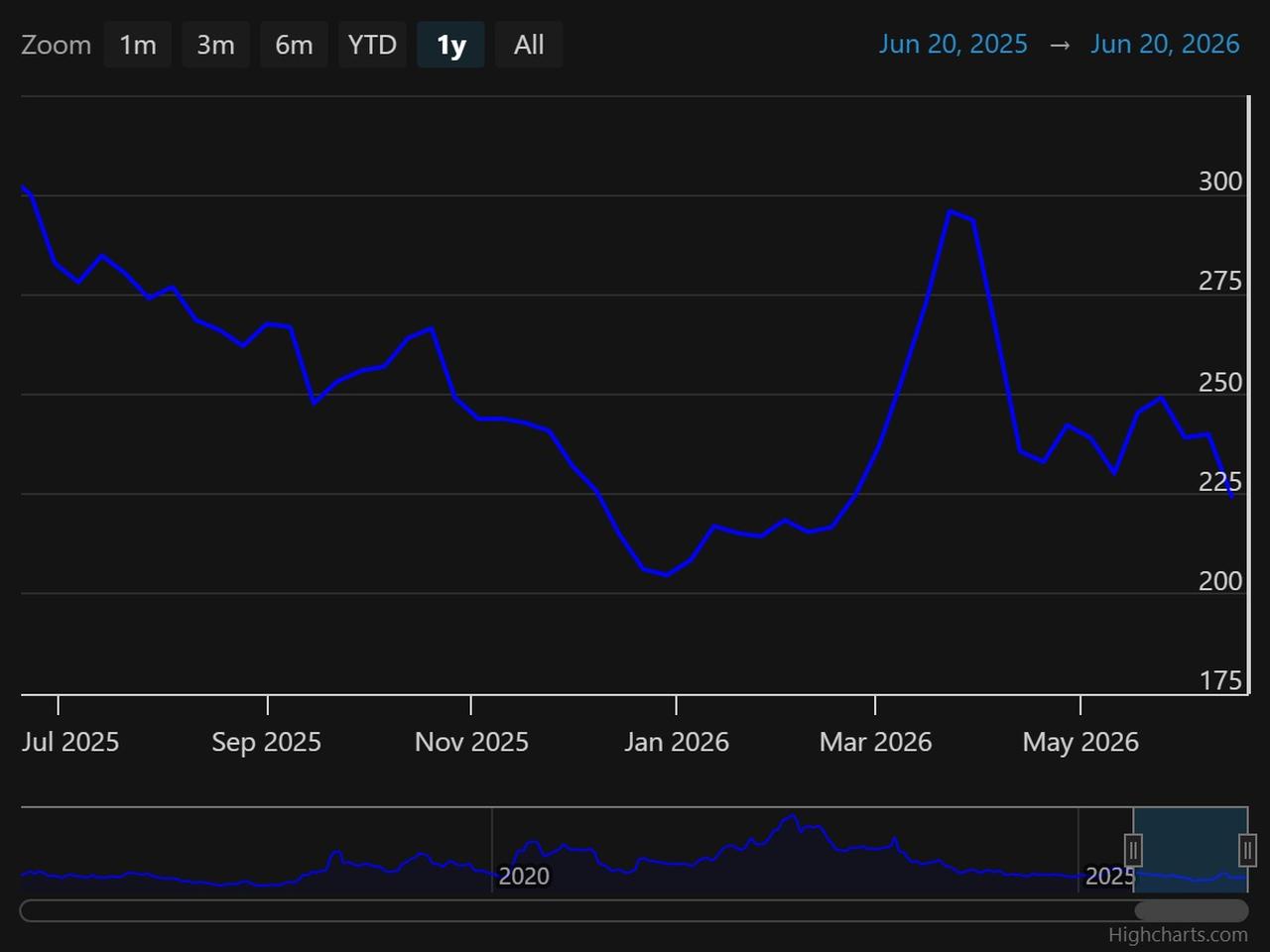
Looking at the key indicators for Türkiye’s macroeconomic outlook:
Even with the reopening of Hormuz, the world has seen that it cannot remain dependent on this strategic waterway. Located at the heart of the Middle Corridor, Türkiye has already demonstrated its role as a reliable energy transit hub through the natural gas it has transported from Asia to Europe via TANAP for years.
The recent conflict in the Middle East once again highlighted Türkiye’s strategic importance. In this context, the NATO summit scheduled to take place in Ankara on July 7-8 is generating considerable market interest, as it could produce more significant outcomes than previous gatherings.
These developments, which could have positive implications for inflation, interest rates and the current account balance, have been reflected in the stock market. The BIST 100 index gained 5.71% on a weekly basis and closed at 14,734.
During the week, the index reached as high as 14,876, coming close to the record level of 15,204 set in May.
If further progress is achieved in the Middle East and oil prices settle below $80 per barrel, the CBRT could gradually lower its effective funding rate from the upper end of the interest-rate corridor to the policy rate (from 40% to 37%), while the stock market could move toward record highs.
The decline in Türkiye’s CDS premium carries another important implication. Every movement in the country’s risk premium is directly reflected in external borrowing costs.
For five-year U.S. dollar-denominated borrowing, a 100-basis-point increase or decrease in CDS levels typically translates into roughly a 1 percentage point change in borrowing rates. Lower CDS levels reduce the interest costs paid by both the Treasury and the private sector when issuing Eurobonds and other foreign-currency debt instruments abroad.
A lower risk premium also supports foreign capital inflows. Increased foreign-currency supply helps reduce exchange-rate volatility and eases inflationary pressure stemming from imported goods.
Conversely, a rise in the CDS premium reverses these dynamics and increases borrowing costs. From this perspective, the nearly 100-basis-point decline in Türkiye’s CDS premium from the peak reached at the beginning of the Middle East conflict becomes even more significant.
Another critical development for Türkiye was the dismissal of the case against state-owned lender Halkbank in the United States, which had been ongoing since 2019. The case was dropped during a hearing held in New York on June 17.
Halkbank General Manager Recep Suleyman Ozdil said the bank now expects improved access to international financing.
Indeed, a related development followed immediately. On June 18, 2026, Halkbank applied to Türkiye’s Capital Markets Board (CMB) for approval to issue debt instruments abroad with a total value of up to $5 billion.
Both the decline in CDS levels and the dismissal of the case have created a much more favorable environment for Halkbank.
Another important development last week was the U.S. Federal Reserve’s decision to leave interest rates unchanged, in line with expectations, and the forward guidance reflected in its projections.
According to these projections, the Fed may implement one rate hike this year, while rate cuts could follow over the next two years.
Markets, however, initially focused on the near term. The yield on the two-year U.S. Treasury note climbed to around 4.18%, approaching its highest level in 16 months.
This currently appears to be the biggest challenge facing emerging markets, including Türkiye. For the time being, markets are likely to closely monitor both U.S. inflation data and Treasury yields.


 Set as preferred source
 Set as preferred source



 4 min read