Newsletters




Global energy markets are facing one of the most critical challenges in history as the Strait of Hormuz becomes a geopolitical chokepoint.
The closure of this narrow waterway, through which approximately 20% of global oil trade, one-fifth of liquefied natural gas (LNG) trade and one-third of LPG trade passes, would spell a “supply apocalypse” for the world economy.
The country hardest hit by this crisis is Iraq, whose economy is 90% dependent on oil revenues.
With maritime exports from Basra having come to a complete standstill and the Baghdad government having been forced to reduce production at Rumeyle—its largest oil field—to a minimum, it now faces the risk of an existential economic collapse.
Against this bleak backdrop, Iraq’s move to bypass the Kurdistan Regional Government (KRG) and export Kirkuk’s oil directly to the world via Türkiye is a strategic manoeuvre that is shifting the regional balance of power.

The strategic bottleneck at the Strait of Hormuz has forced the Baghdad administration to break out of its current stalemate and develop urgent alternative export routes by reducing Iraq’s daily production capacity of 4.4 million barrels to a range of 1.3 million-1.6 million barrels.
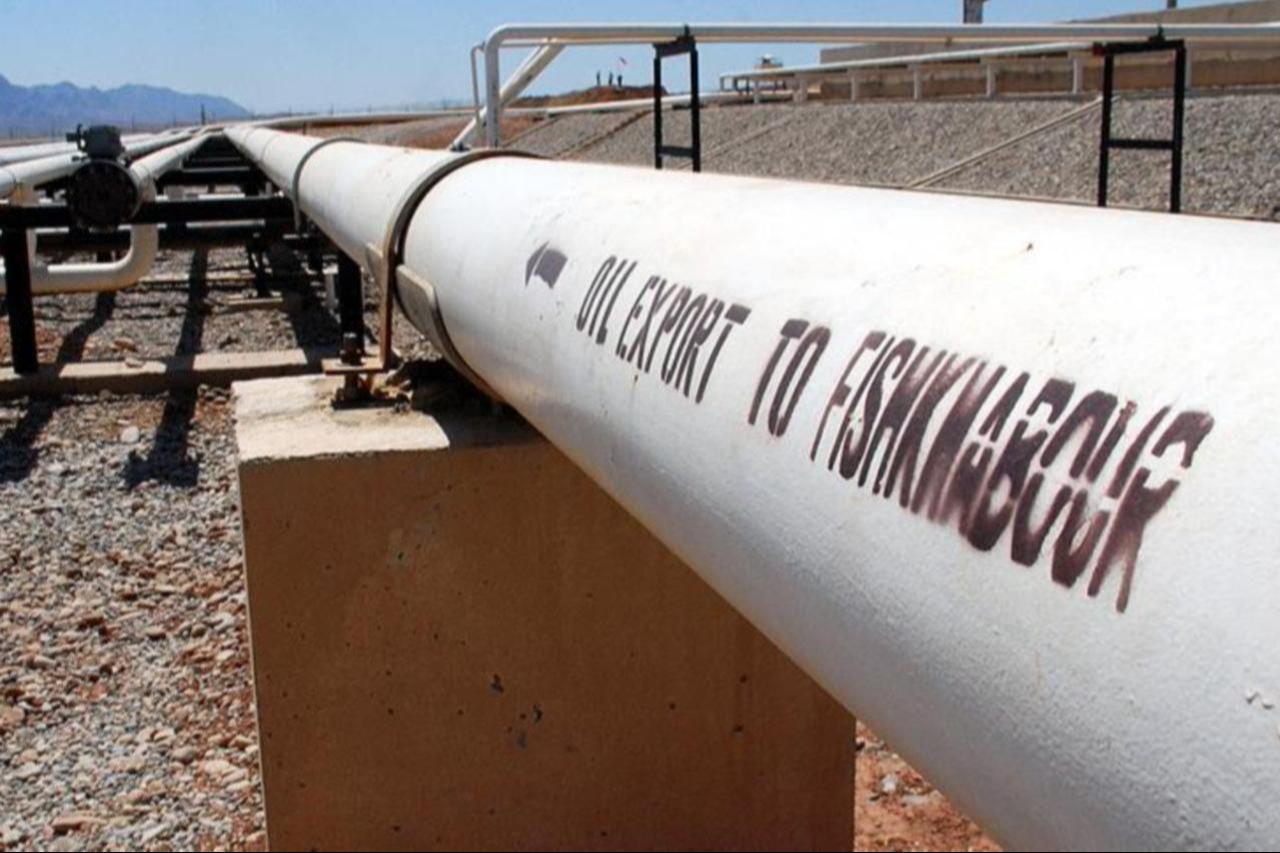
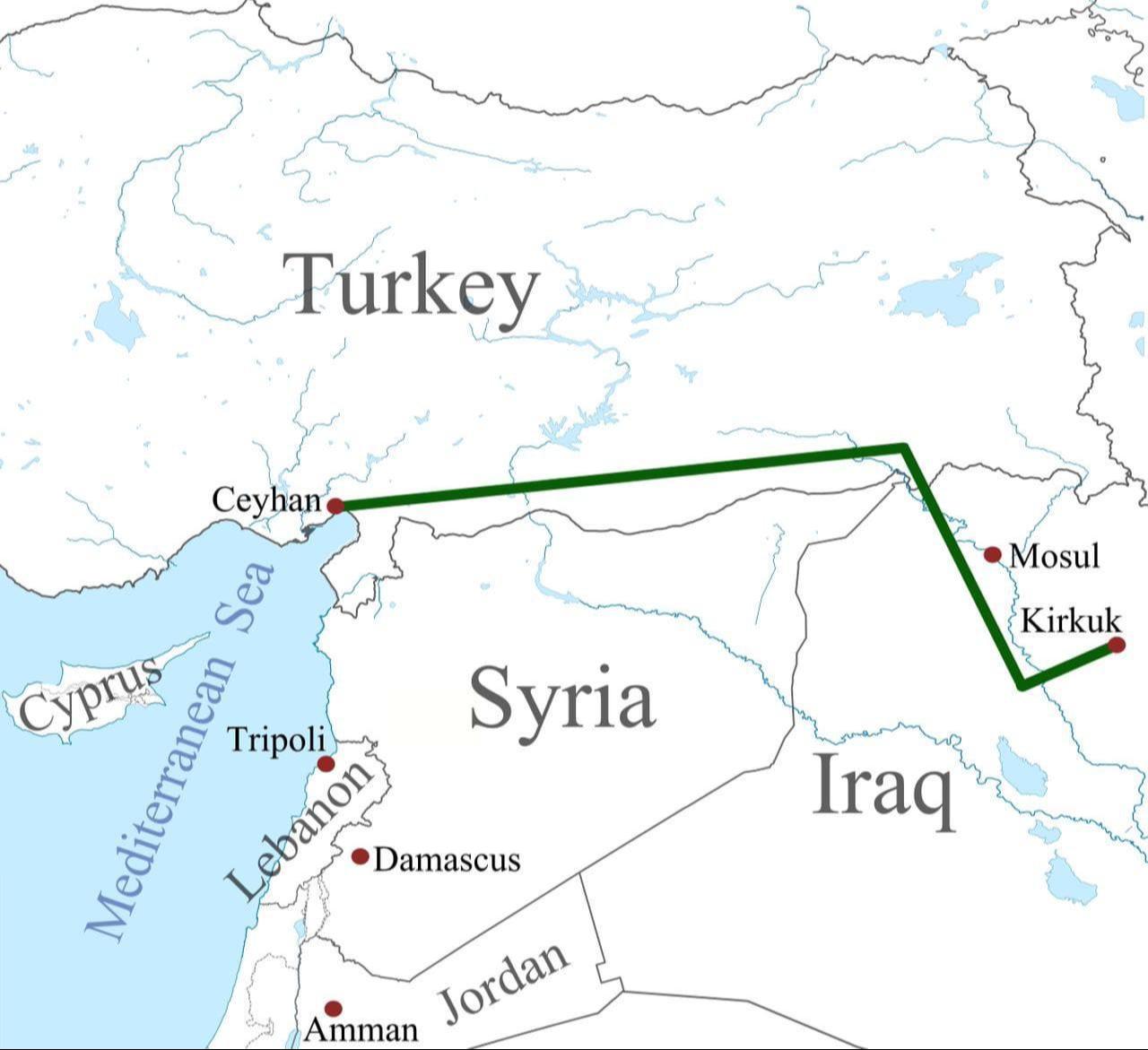
Restoring and reopening the Kirkuk-Ceyhan pipeline after 12 years of inactivity is a major move that reflects the institutional resolve to stabilize the economy in response to the macroeconomic shock. It’s the most practical step the state has taken since the line was shut down by Daesh in 2014.
On-the-ground engineering work demonstrates the government's capacity to effectively secure its infrastructure. The successful completion of the 8-bar air pressure test on the pipeline’s first 350-kilometre section and the subsequent hydrostatic pressure test on the 250-kilometre section marks a critical milestone.
Once the final 100-kilometer stretch is repaired, the pipeline will add 200,000 to 250,000 barrels to daily production. While this is only a fraction of the total export loss, it still provides the government with a much-needed strategic advantage. This flow will enable the Ceyhan Terminal to once again become a decisive center in the global oil pricing mechanisms (benchmarks) of the Mediterranean basin.
From Türkiye’s perspective, however, the situation presents a far more strategic opportunity. The Iraq-Türkiye Crude Oil Pipeline (ITP) Agreement, signed in 1973 and serving as the first and largest main artery connecting Iraqi oil to world markets, has been the foundational document shaping the energy geopolitics of both countries for half a century.
The fact that the term of this historic agreement is set to expire on July 27 presents Ankara with an opportunity to reshape the regional energy equation from the ground up. Türkiye aims to move beyond its current role as merely a “transit route” provider in the renewed agreement and become a value-adding actor.
The biggest hurdle to be overcome at this stage is the legal crisis that occurred in the recent past. As is well known, in 2023, the Paris-based International Chamber of Commerce (ICC) Arbitration Court ruled in favor of compensation against Türkiye due to the KRG’s independent oil sales via Ceyhan without Baghdad’s (SOMO) approval; this led to a complete halt in oil flows through the pipeline and caused a frosty legal impasse in bilateral relations.
However, the supply shock caused by the Hormuz crisis and the economic straitjacket into which Iraq has fallen have now pushed this 2023 legal impasse into the background, replacing it with a pragmatic and urgent necessity. Baghdad has realized that it has no time to waste by hiding behind court rulings, as doing so would result in economic collapse.
Ankara, however, is assessing the new geopolitical direction dictated by the crisis; it is not limiting bilateral cooperation to crude oil transportation alone, but is building its strategy on multi-dimensional integration.
The ultimate goal is to transform Ceyhan into an “energy, trade and industrial hub” linking the Middle East with Europe, encompassing natural gas transmission, petrochemical investments and cross-border electricity trade.
The decision to exclude the KRG from Iraq’s oil exports is an expression of Baghdad’s determination to reinforce the principles of a “marketing union” and “federal sovereignty”. In the long-standing strategic energy equation, Baghdad has, for the first time, taken the initiative in such a decisive manner.
Although the Erbil side attempts to explain the halt in production to its own domestic audience by citing reasons such as “threats to the fields from militias funded by Baghdad” or the financial embargo imposed via “ASYCUDA” (Automated System for Customs Data), the real breaking point is the crisis of transparency.
Baghdad’s imposition of ASYCUDA is an attempt to bring Erbil’s parallel economy, conducted behind closed doors, into the official record. Indeed, the federal government’s categorical rejection of Erbil’s official export offer of 300,000 barrels per day via Ceyhan, because “there is no oil left to export,” is the clearest evidence of how Iraq’s national wealth has been sacrificed to opaque internal political power struggles.
However, by reviving that old federal pipeline stretching directly from the Kirkuk fields to the Ovakoy line on the Turkish border, Baghdad has effectively neutralized the “transit veto” authority that Erbil has used as a lever of pressure for years, thereby seizing the initiative on the geopolitical stage.
Indeed, this uncompromising strategy and the severe economic threat posed by the Strait of Hormuz crisis have finally borne fruit; recognising the seriousness of alternative routes, Erbil was forced to take a pragmatic step back in a statement issued on the evening of March 17.
The KRG’s latest statement of compromise regarding the resumption of oil flows under the central government’s conditions marks a critical milestone in Baghdad’s long-standing efforts to resolve this transit bottleneck.
Viewed from a broader strategic perspective, this operation to sideline the Kirkuk front and the diplomatic victory it has brought about serves as a dress rehearsal for the “Development Corridor” project, which is the overarching vision shared by Ankara and Baghdad.
This massive logistics corridor, stretching from the Grand Faw Port in the Persian Gulf through Türkiye to Europe, is the sole guarantor of regional stability, as the Hormuz crisis has demonstrated to the entire world.
Given the security vulnerabilities in the Red Sea and the bottlenecks in the Strait of Hormuz, the Development Corridor is becoming an indispensable alternative for global supply chains.
Moreover, for Iraq, this series of projects has ceased to be merely a matter of vision and has become an urgent structural security issue.
The World Bank’s stern warning that “we will not recognise the federal budget within the international system unless non-oil revenues are increased to 26 per cent” is exerting significant macroeconomic pressure on the Baghdad administration.
The Development Corridor represents Iraq’s most critical opportunity to break free from this economic stranglehold, industrialise, and transform from a rent-seeking state reliant solely on oil revenues into a transit and trade hub.
Ultimately, the resumption of Kirkuk’s oil flowing directly to Türkiye via the currently idle federal pipelines represents a vital economic lifeline for Baghdad and the validation of Ankara’s vision for an energy hub.
One thing is certain: the signatures to be placed in Ankara in 2026 will not merely extend an expired pipeline agreement; they will lay the foundation for an architecture that will redraw the economic destiny, geopolitical axis and balance of power across the entire Middle East.


 Set as preferred source
 Set as preferred source


 1 min read

 1 min read