Newsletters




The Black Sea has spent three years rewriting the rules of naval warfare. Ukraine, without a functioning surface navy, used low-cost unmanned vessels to pin down and destroy a conventional Russian fleet—demonstrating that attritable, expendable platforms can do what warships cannot.
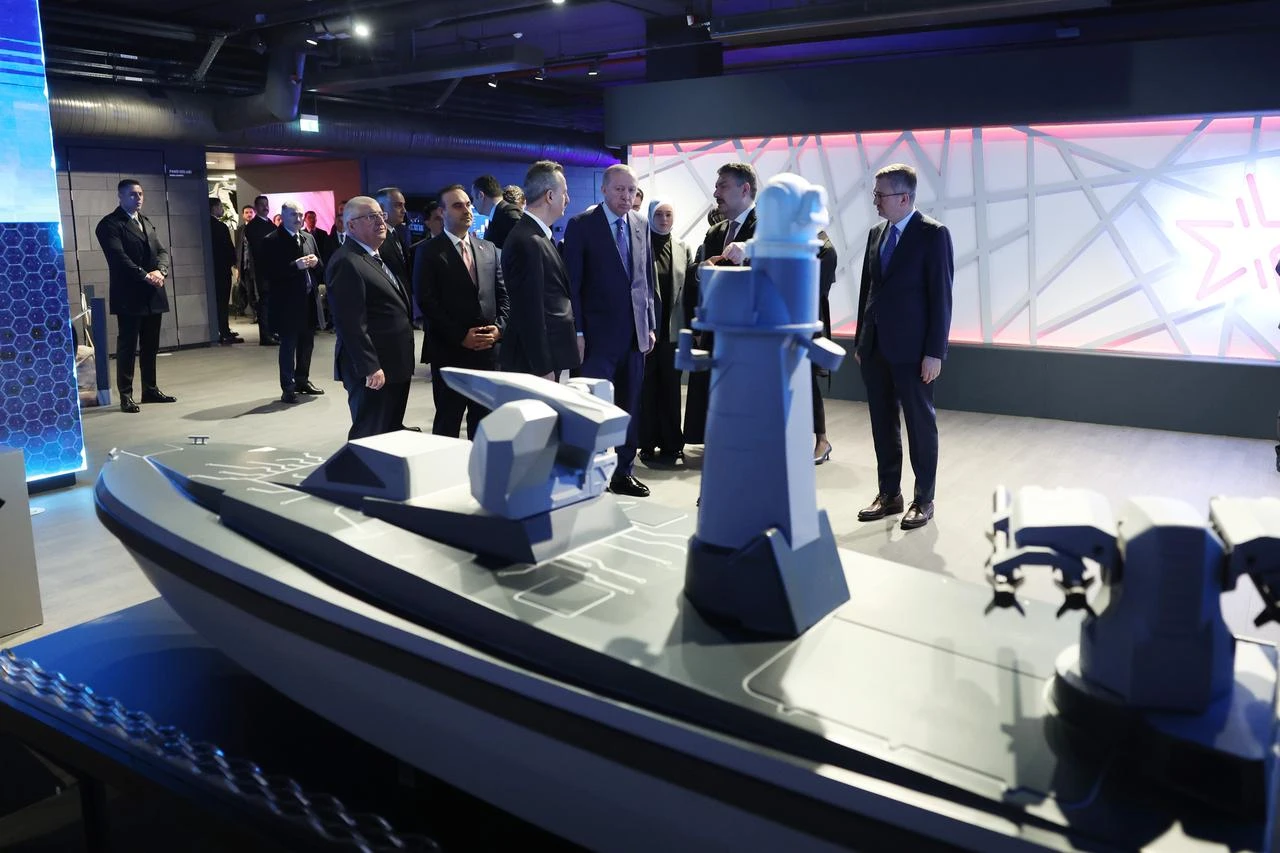
Türkiye was watching. In February 2026, the Defense Industry Executive Committee approved the acquisition of 100 expendable unmanned surface vessels for the Turkish Navy.
Production is divided among three partnerships: Aselsan with Ares Shipyard delivering 40 Tufan units; STM with Yonca Shipyard and Havelsan with Sefine Shipyard each delivering 32 units of their own designs. Sea trials are scheduled for this summer and fleet deliveries follow in 2027.
The decision should be read against two parallel developments: the maturation of Türkiye's own unmanned maritime programs, which predate the war, and the operational evidence now emerging from Ukraine's maritime campaign.
Ukraine conducted that campaign with domestically produced platforms. The Magura V5—one of its primary weapons—has a reported range of up to 800 kilometers (497 miles), carries a payload of around 300 kilograms (661.3 pounds), and costs an estimated $250,000 to $300,000 per unit.
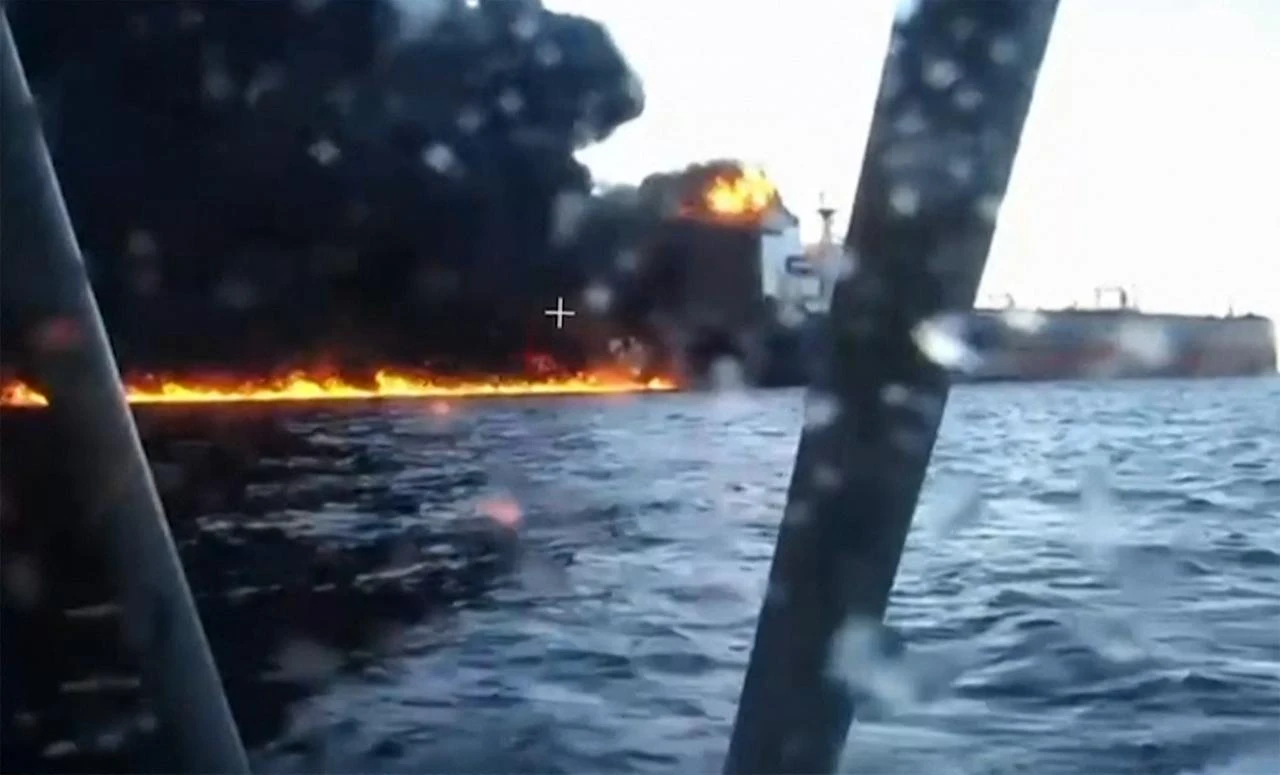
Within the first year of its operational use, this single platform type was reported to have destroyed eight Russian warships and damaged six more, causing losses estimated at over half a billion dollars. It also recorded the first sinking of a warship by naval drones in combat—the destruction of the missile corvette Ivanovets in February 2024.
Cumulative assessments place total Russian losses in the theater at approximately 26 warships and support vessels sunk, damaged, or destroyed, and the principal surface units of the Black Sea Fleet have been withdrawn from Sevastopol to Novorossiysk and the Sea of Azov, where their contribution to the war has been reduced to a marginal level.
Kyiv has stated it can manufacture up to 50 such vessels per month if required. That figure identifies the decisive variable in this competition — not platform sophistication, but the capacity of national industry to generate and regenerate numbers under wartime conditions.
From 2024 onward, Russian forces employed helicopters, fixed-wing aircraft, and electronic warfare (EW) against the drones with growing effect, and Ukraine responded by arming its vessels with repurposed air-to-air missiles, a step that produced the destruction of two Mi-8 helicopters in December 2024 and of two Su-30SM aircraft, each valued at approximately $50 million, in May 2025.
The lesson embedded in this cycle is that unmanned naval competition is not a static asymmetry but a continuous contest of measure and countermeasure, in which advantage accrues to the side whose industry can iterate designs faster than the opponent can field responses.
It is this requirement, rather than any single platform attribute, that gives procurement architecture its central importance.
It should be underlined that Türkiye's engagement with this concept did not begin with the observation of the Ukrainian campaign.
Under the Presidency of Defense Industries' swarm demonstration project, Aselsan's Albatros-S platforms were first demonstrated as a four-vehicle swarm in 2021. An eight-vehicle swarm followed two years later. That same year, Türkiye announced what it described as the world's first combined swarm attack integrating unmanned surface and aerial systems. The Marlin also became the first armed unmanned surface vessel to take part in a NATO operation.
The February 2026 decision, therefore, represents the transition of a domestically mature concept from demonstration to serial acquisition rather than the adoption of a doctrine validated elsewhere.

The design priorities of the program follow directly from this operational experience. The Tufan is reported at 8.5 meters in length with a speed of approximately 90 kilometers per hour, a range of around 370 kilometers, and a 250-kilogram payload comparable in effect to an Mk 82 bomb, while the Yaktu is a 5.8-meter, 1.7-ton vessel configured for missions extending from port protection to open-sea strikes.
Both feature low-profile hulls intended to reduce detectability, support line-of-sight and satellite communications, and operate within swarm architectures in which vehicles share data in real time and allocate tasks autonomously, on the basis of a doctrine reportedly built around four-vehicle formations.
The industrial structure of the order answers the adaptation problem identified above.
Spreading production across three partnerships rather than one vendor creates redundant supply chains, sustained competition, and three independent design teams capable of iterating against future countermeasures—something the Black Sea has shown matters as much as the weapons themselves.
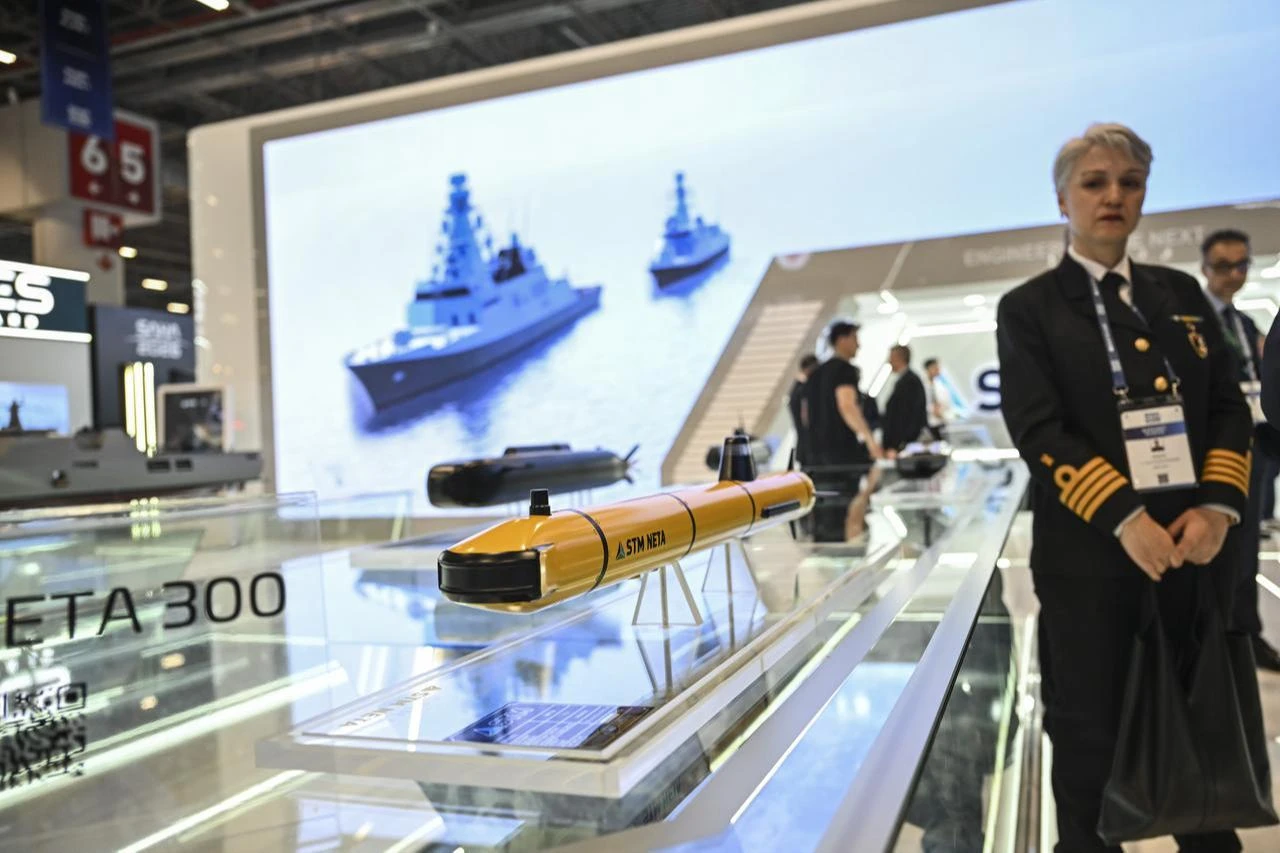
These platforms enter service within a broader unmanned architecture: the Kilic autonomous underwater strike vehicles unveiled this year, the TCG Anadolu as a drone carrier, and the 60,000-ton MUGEM carrier under construction since 2026, due in 2032 with up to 52 aircraft. The 100-unit order is the attritable strike layer of that force—complementing the conventional fleet, not replacing it.
An assessment of Türkiye's position in this field should therefore rest on elements that can be verified rather than on declared ambition, and the comparative picture provides the appropriate measure.
The United States has pursued attritable autonomous systems through its Replicator initiative and has moved to accelerate its inventory partly through arrangements for the production of Ukrainian designs by American firms.
NATO has been experimenting with unmanned surface vessels for the surveillance of critical maritime infrastructure in the Baltic, and most European navies remain at the stage of defining requirements in this category.
Türkiye enters the same competition with platforms of national design and national production, integrated directly into an existing fleet architecture, supported by an unmanned aviation industry whose products, such as STM's Kargu loitering munition, are already operationally deployed in fifteen countries across four continents, and backed by a record of swarm experimentation reaching 2021.
The framework announced by President Erdogan at the Ankara Summit on July 8 reinforces both sides of this position, since the commitment to reach the alliance's 5% spending target by 2030, five years ahead of the agreed deadline, secures the resource base of programs of this kind, while the bid for NATO accreditation of Türkiye's newly established Center of Excellence for Counter-Unmanned Systems indicates an intention to institutionalize expertise on the countermeasure side of the very adaptation cycle described above.
Delivery performance and the results of the sea trials now beginning will determine how far this position translates into export contracts and allied interoperability.
On the evidence currently available, however, Türkiye stands among the very few states in which conceptual development, industrial capacity, and fleet integration in unmanned naval warfare have advanced together, and it is this alignment, rather than any individual platform, that is likely to determine relative naval weight in the decade ahead.


 Set as preferred source
 Set as preferred source



 7 min read