Newsletters


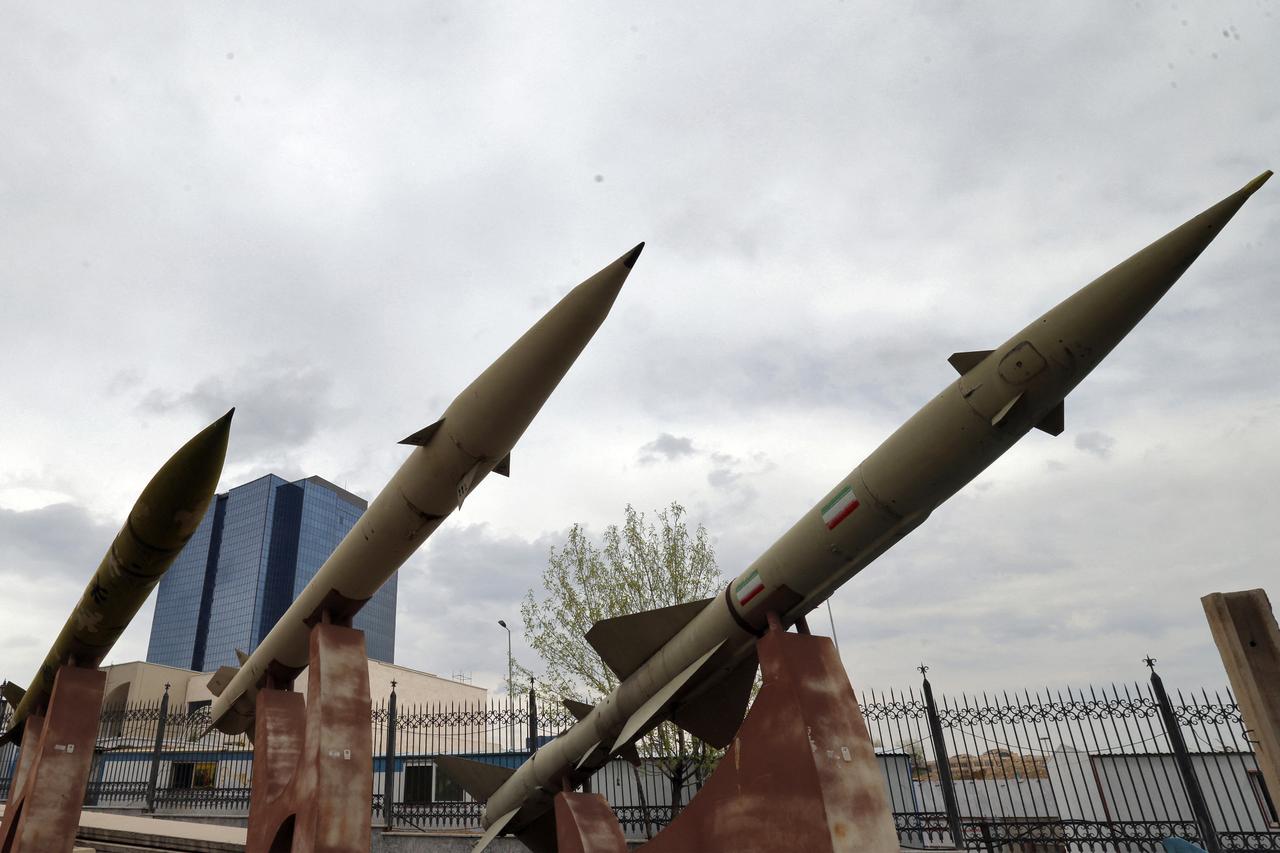


When the U.S. and Israel launched strikes on Iran, the debate quickly turned to military capabilities, target lists and retaliation scenarios.
Charts, figures, and maps were all over. But the most important dimension of this war is not what happened. It’s what didn’t happen.
Because in conflicts like this one, what matters most is not geography, but how fast and how far the war spreads.
At first, many in U.S. and Israeli intelligence circles seemed to expect internal fragmentation inside Iran. It’s a country with deep ethnic, sectarian and geopolitical fault lines.
The assumption was simple: external pressure would trigger internal cracks. That’s why, from the early days, there was constant talk about the potential role of Kurdish groups inside Iran. But none of that materialized.
There was no significant movement in Iran’s northwest. Iraqi Kurdistan did not become a logistical rear base. The PKK/PJAK line did not turn into an active front. And most importantly, there was no new security pressure building toward Türkiye’s border.
This is not a coincidence. It points to a new regional balance.
You cannot understand this shift by looking at separate statements. However, when you examine the positions of the KDP and the PUK together, the picture becomes clear.
The Kurdish actors in the region are choosing to remain on the sidelines of the conflict. They are not forced to do so but rather view it as a strategic necessity.
The real question is why.
In the past, these same actors were far more flexible. At times, they were even open to aligning with external intervention scenarios. Today, that space has clearly narrowed.
And the main reason is the new security architecture shaped by Türkiye’s terror-free country process. Its impact is direct and layered.
A quick snapback to the past… Devlet Bahceli, chairman of the Nationalist Movement Party (MHP) and a close ally of President Erdogan, declared in October 2024 that if the PKK leader were to call on his organization to disarm, he should be allowed to do so from the Turkish Parliament, hinting that Ocalan could be released from prison.
Bahceli’s cited Israel’s plan to extend its borders and spread terror in wider geographies in the Middle East in later speeches to justify his step.
This 'shocking statement' led to the “terror-free Türkiye” process, which extended beyond PKK activities inside Türkiye to include the organization’s factions and headquarters in other regions. Bahceli had previously been a fierce opponent of the failed “peace process” with the terrorist group from 2012 to 2015.
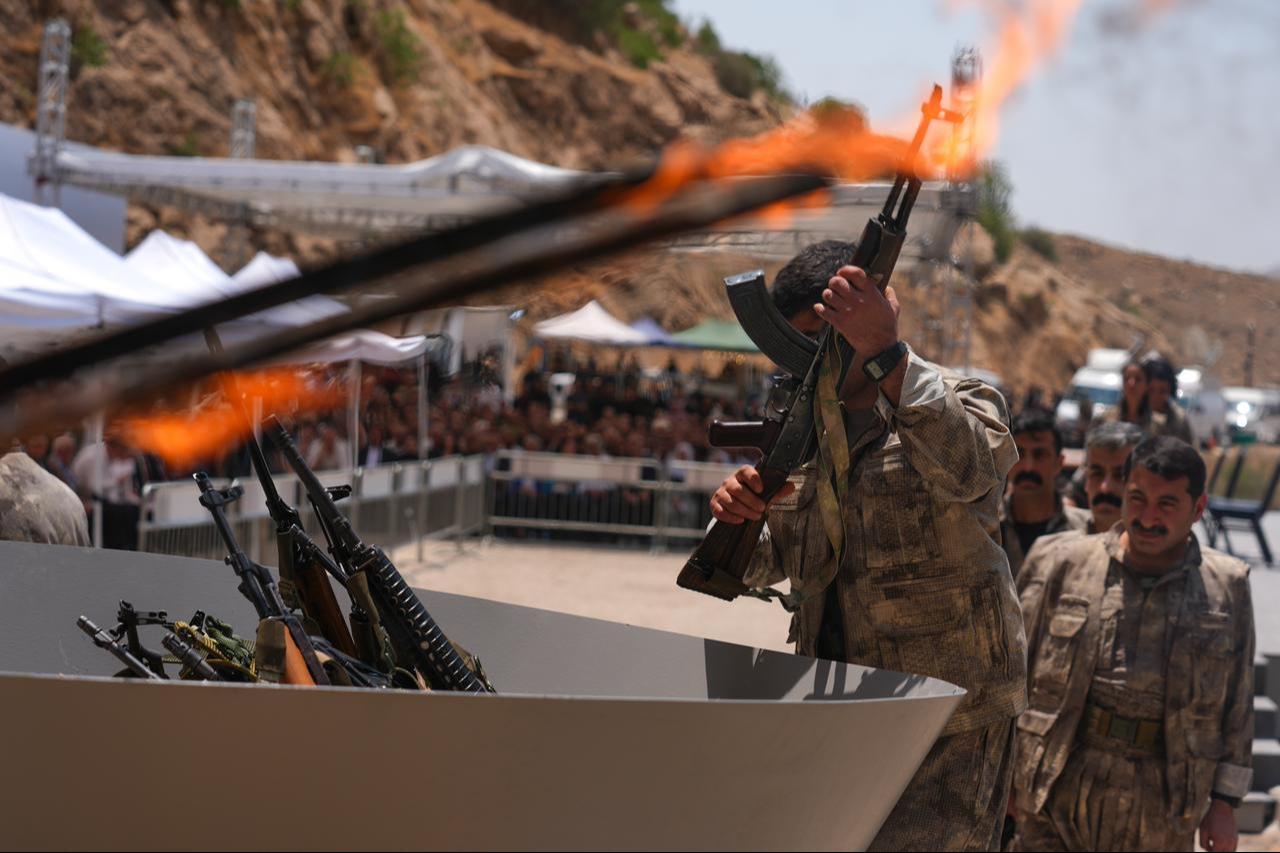

First, armed groups have far less operational room. The PKK and affiliated structures have been pulled into a different dynamic, one that reduces their usefulness as external tools.
Second, the risk calculus in Iraqi Kurdistan has changed. For the KRG, the priority is no longer just internal stability. It’s also about not jeopardizing the new balance with Türkiye. Turning the region into a staging ground for external operations would now mean losing hard-earned gains.
Third, the proxy model itself is wearing out. The limitations of the YPG-based model in Syria have shown how fragile and constrained these structures are. Replicating a similar model in Iran is far less viable today.
When we put all this together, one conclusion stands out: the region’s capacity to instigate proxy wars has weakened significantly. That is precisely why this war has not spread in the way many people expected. The real issue here is not what the war has done, but what it has failed to do.
In that sense, the Iran war is a kind of test. The expected chain reaction never came. This says less about Iran’s internal resilience and more about a regional system that no longer allows that kind of expansion.
And in that system, Türkiye plays a different role now. Not just as a border security actor, but as a stabilizing force that limits the spread of conflict.
A simple counterfactual makes this clearer. Without the “Terror-Free Türkiye” process, this war likely would not have stayed contained. Iraqi Kurdistan could have turned into a logistics hub.
Kurdish groups inside Iran might have mobilized more aggressively. And the pressure line could have extended toward Türkiye’s border.
That would have meant a very different reality for Türkiye. Not just a foreign policy challenge, but a multi-layered security crisis with rising terror threats and a destabilized southern frontier.
None of that happened. And that tells us something important.
The ‘slowdowns’ or ‘frictions’ frequently mentioned in this peace process should be assessed from a different perspective.
At first glance, these may appear to be a sign of weakness. However, they reflect the fact that the actors are constantly readjusting their positions within a high-risk environment.
The actors are establishing relationships with multiple centers of power simultaneously, without being fully tied to a single axis. This is not fragility, but flexibility.
In the end, the Iran war is the first real field test of this new framework. And the outcome suggests it is working better than expected.
To put it plainly, without this process, we would be talking about a very different Iran war today. Likely one spilling into Türkiye’s southern border, bringing new conflict lines and a renewed wave of instability.
Instead, what we see is a more contained, more controlled conflict with limited spillover capacity.
This is not a military success. It’s a system success. And that system now has a name: the “Terror-Free Türkiye” process.


 Set as preferred source
 Set as preferred source


 3 min read

 1 min read