

 Newsletters


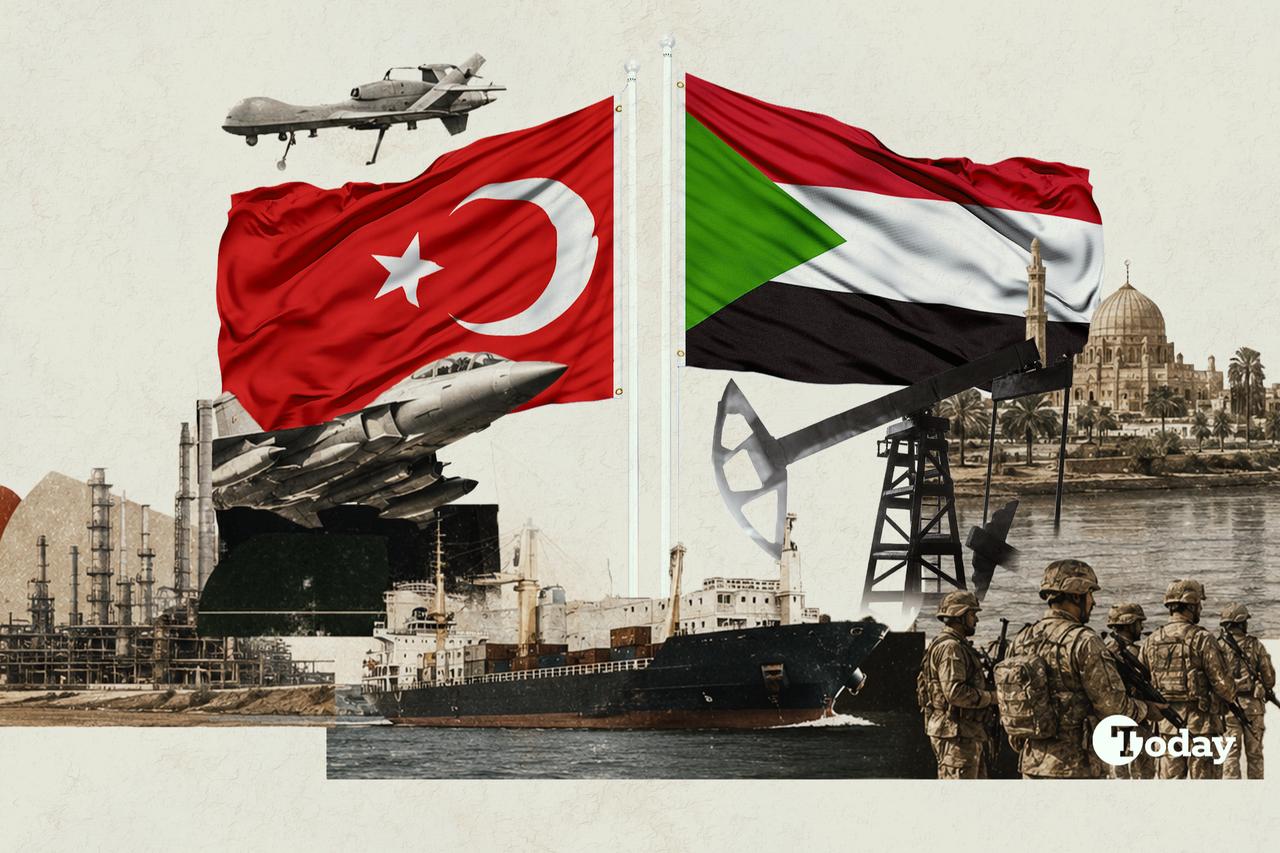


A Sudanese general stepped off a plane in Ankara and was met with a military band.
That's not unusual for a state visit. What's unusual is who he was—the chief of staff of an army fighting for its survival, in a war most of the world has stopped watching—and that he was the fifth senior Sudanese official to make that same trip in under a year. Before him came the foreign minister, the prime minister, and twice, the head of state himself.
Something is being built here beyond a courtesy call.
Türkiye is taking a more hands-on role in Sudan’s conflict, cementing its position as one of the Sudanese military’s most crucial foreign allies.
Beyond supplying defense hardware to help stem the tide against the UAE-backed Rapid Support Forces (RSF), Ankara is expanding its battlefield presence through technology transfers and troop training.
This is no longer a statement of goodwill but a plain reading of the picture on the ground. Ankara has risen to become the most visible backer of the Sudanese Armed Forces, which are fighting the RSF militia, a force enjoying the limitless support of the UAE above all, along with Ethiopia, Chad and Libya.
According to the Turkish journalist Yahya Bostan, Türkiye is preparing to replicate its Somalia military model in Sudan as well.
This detail matters, because it reveals the nature of the relationship: not an arm's-length defense industry partnership, but an engagement that involves technology transfer, the training of people, and a direct hand in the course of the war.
Many countries sell weapons; few partners build competence on the battlefield.
In Sudan, Türkiye belongs to the second category.
The clearest evidence of how far this relationship has come is the past year's traffic of diplomatic visits.
Almost the entire upper echelon of the Sudanese state has, one after another, taken the road to Ankara.
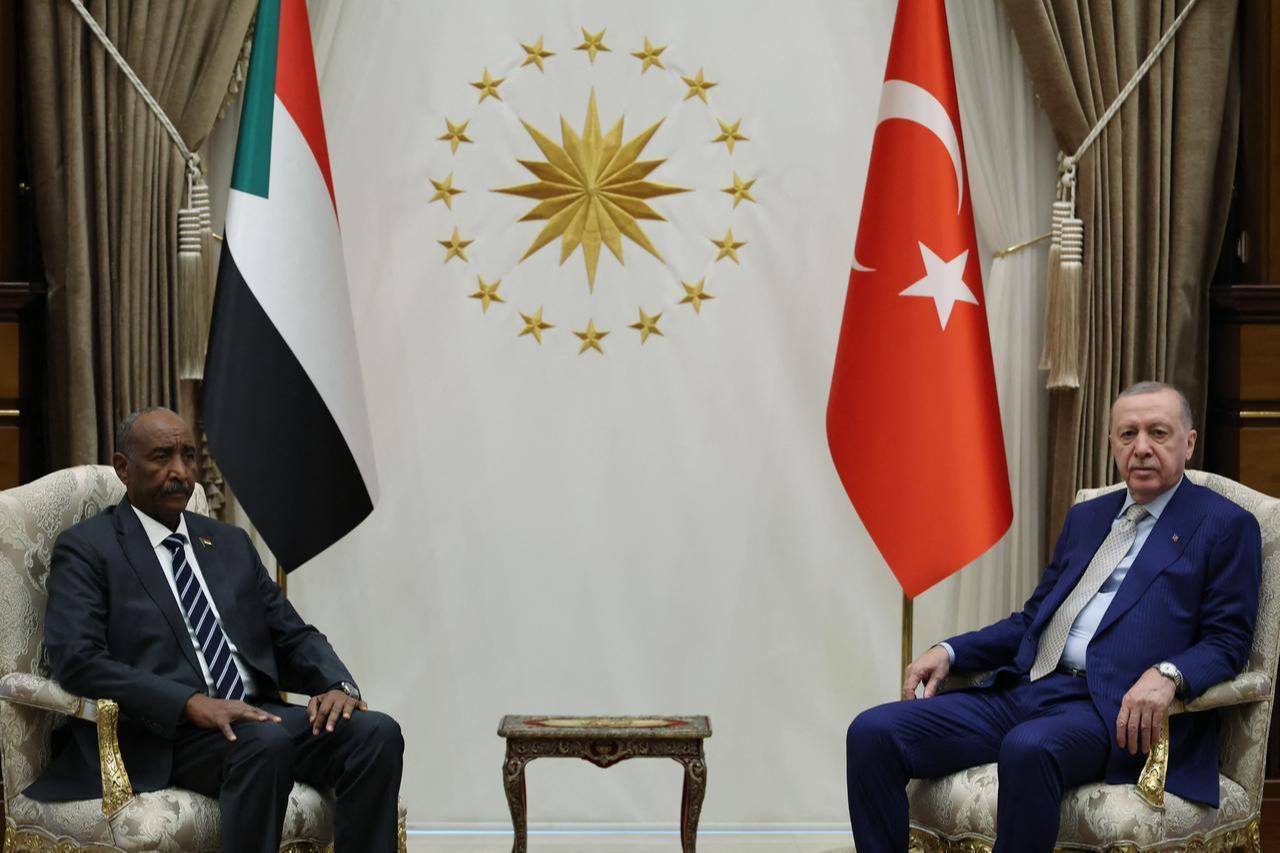
Sovereignty Council Chairman Abdel Fattah al-Burhan visited Türkiye in December 2025 and met President Erdogan in Türkiye again in early June 2026.
Prime Minister Kamil Idris was received at the Presidential Complex on May 20, 2026; the 16th Session of the Türkiye-Sudan Joint Economic Commission was held during his visit.
Foreign Minister Mohieddin Salem first attended the Fifth Antalya Diplomacy Forum in April 2026, then returned to Türkiye for an official visit on July 28-29, 2026, during which the signing of a memorandum of understanding between the two countries’ diplomatic training institutions was also placed on the agenda.
The final and perhaps most meaningful link in the chain came from the military wing: Chief of General Staff General Yasser Abdelrahman Hassan al-Atta arrived in Ankara on August 17, 2026, as the official guest of General Selcuk Bayraktaroglu, was welcomed with a military ceremony at the General Staff Headquarters, and was also received by National Defense Minister Yasar Guler.

Energy and Natural Resources Minister Alparslan Bayraktar met with Sudan's minister of minerals and minister of Energy and Petroleum.
The talks covered cooperation opportunities in mining, the electricity sector, and oil exploration and production, and Sudanese officials issued an open call for Turkish investors to return.
In July 2026, a delegation headed by Sudan’s Minister of Investment and Industry Omar Ali Saleh visited the Port of Mersin and the Mersin Organized Industrial Zone.
Sudan’s ambassador in Ankara announced that Turkish businesspeople would no longer be required to obtain visas to enter Sudan.
The Turkish side’s engagement with Sudan, under war conditions, has run largely through the field: since the summer of 2024, Türkiye has sent eight ships carrying roughly 12,000 tons of relief supplies and 30,000 tents to Sudan, and the Ministry of Health delivered 64 tons of medical supplies in July 2025 to help fight the cholera outbreak.
Nor is the institutional foundation of this traffic new: during President Erdogan’s historic visit to Sudan in 2017, the two countries established the High-Level Strategic Cooperation Council and today’s intensity is proof that the foundation laid that day has remained standing even under the conditions of war.
What this picture tells us is clear: the president, the prime minister, the foreign minister, the chief of general staff, and the ministers of energy, minerals and investment every floor of a state’s decision-making architecture turned toward the same capital within 10 months.
Visit traffic of this intensity and this variety is seen only in relationships at the level of strategic partnership. Erdogan’s description of Burhan, in his remarks to Al Jazeera, as “truly worthy of leading Sudan” is the political endorsement that sits atop this traffic: Ankara is giving Sudan’s current leadership not only de facto but open and personal backing.
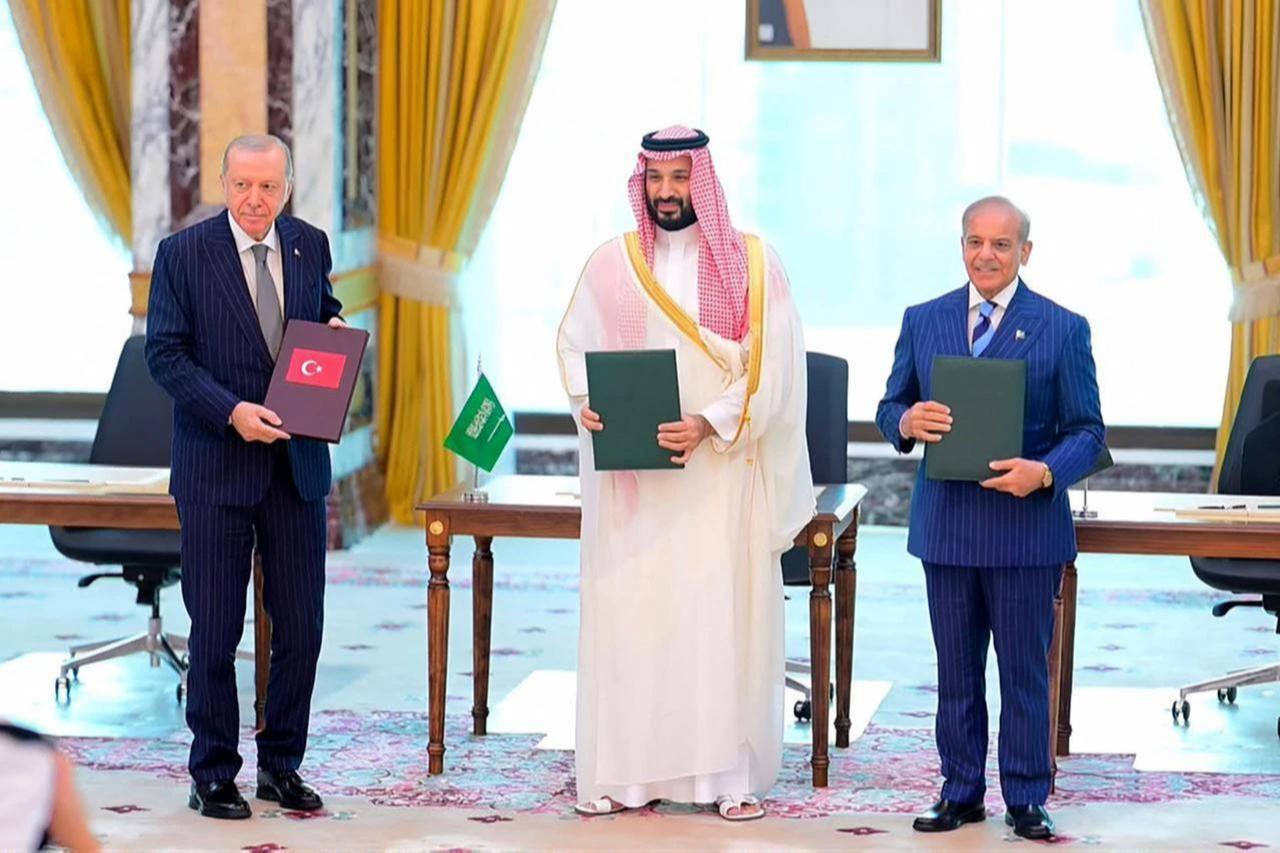
This bilateral rapprochement is, at the same time, embedded within a wider regional architecture. The Mecca Joint Defense Agreement signed in August by Türkiye, Saudi Arabia and Pakistan was interpreted by experts as a measure against the security vacuum left by the weakening of the U.S.-led Middle East order, and as a step toward limiting Israel’s freedom of action in the region.
The Sudanese government stands at the very center of this new camp: strong cooperation with the Turkish defense industry, Saudi financing in its coffers, Pakistani weapons in its depots. A government whose survival depends on Ankara, Riyadh and Islamabad has neither reason nor room for maneuver to draw closer to Israel.
Türkiye’s weight in Sudan has ceased to be a conjunctural preference and has turned into a relationship of structural dependence and structural dependencies are not easily reversed.
The economic data point in the same direction: despite the ongoing fighting, trade volume between the two countries reached roughly 390 million dollars in 2025, and this figure is expected to multiply during the post-war reconstruction period.
The Red Sea dimension completes the picture: Sudan sits on the western shore of one of the main arteries of world trade, and the deep relationship Türkiye has built with the Sudanese army gives Ankara a presence on that shore that is as strategic as it is commercial.
Türkiye-Sudan relationship is a multi-layered strategic partnership in which military supply and field training, a diplomatic traffic crowned by five top-level visits in ten months, personal trust between leaders, reconstruction and energy commitments, and a regional alliance architecture all intersect at the same point.
There is no other period in the history of the two countries in which all of these pillars stood at once and with this intensity. When the war ends and the table for Sudan’s reconstruction is set, who will occupy the head seat at that table is already clear today.


 Set as preferred source
 Set as preferred source


 2 min read
 1 min read



