Newsletters


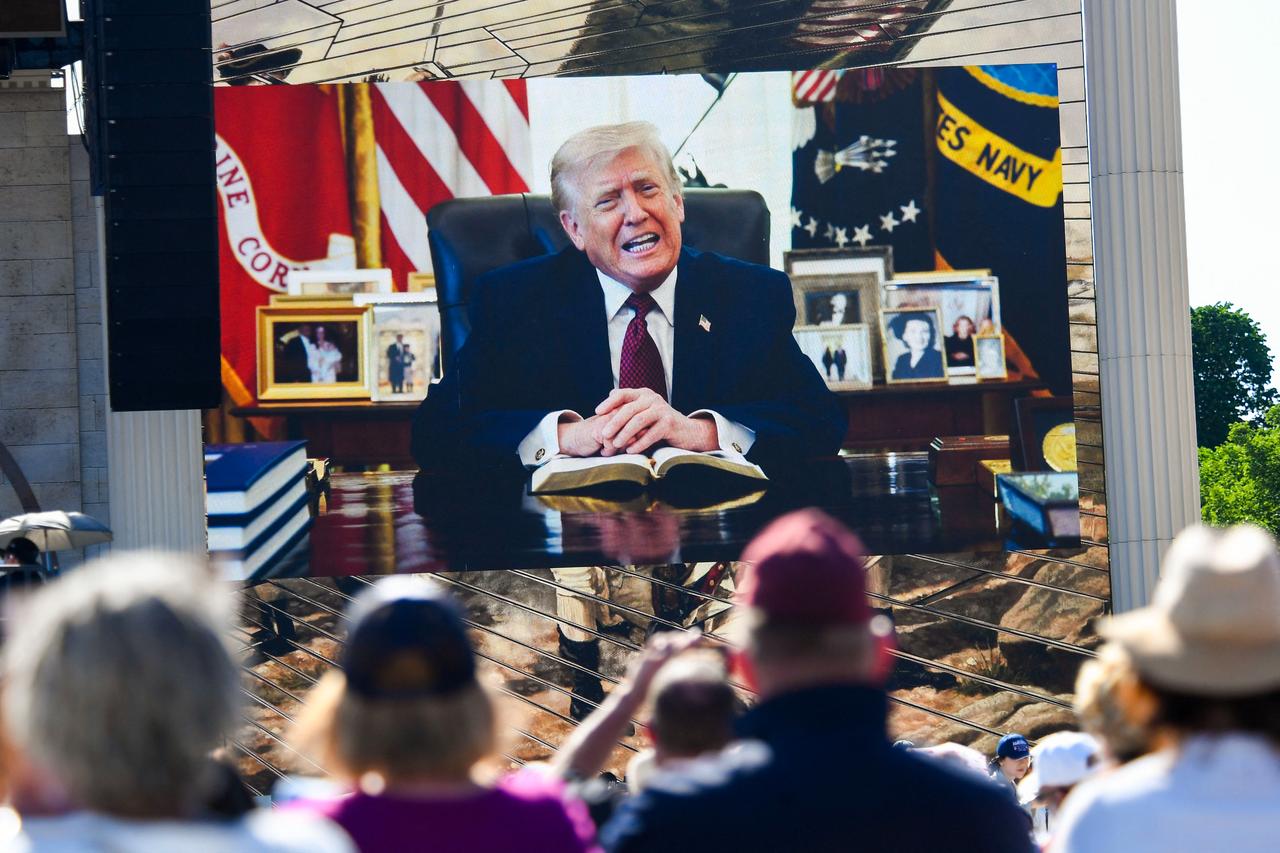


On May 17, the National Mall in Washington, D.C., functioned simultaneously as a revival ground and a constitutional battleground. Where civil rights marches once echoed with demands for democratic inclusion, worship music now rolled across the grass, and "Appeal to Heaven" flags rippled beneath the shadow of the Washington Monument.
Tens of thousands gathered for "Rededicate 250: A National Jubilee of Prayer, Praise, and Thanksgiving," a nine-hour event backed by the White House and organized by Freedom 250, a public-private entity created by executive order on Jan. 29, 2025.
The White House "America Prays" initiative, hosted on the official domain, invokes George Washington’s Farewell Address, which says: "Of all the dispositions and habits which lead to political prosperity, religion and morality are indispensable supports."
As the United States approaches its 250th anniversary on July 4, the commemoration itself has fractured into two competing visions of what it means to be American, rather than producing a single national birthday. More interestingly, both sides have their own take on the same historical figures.
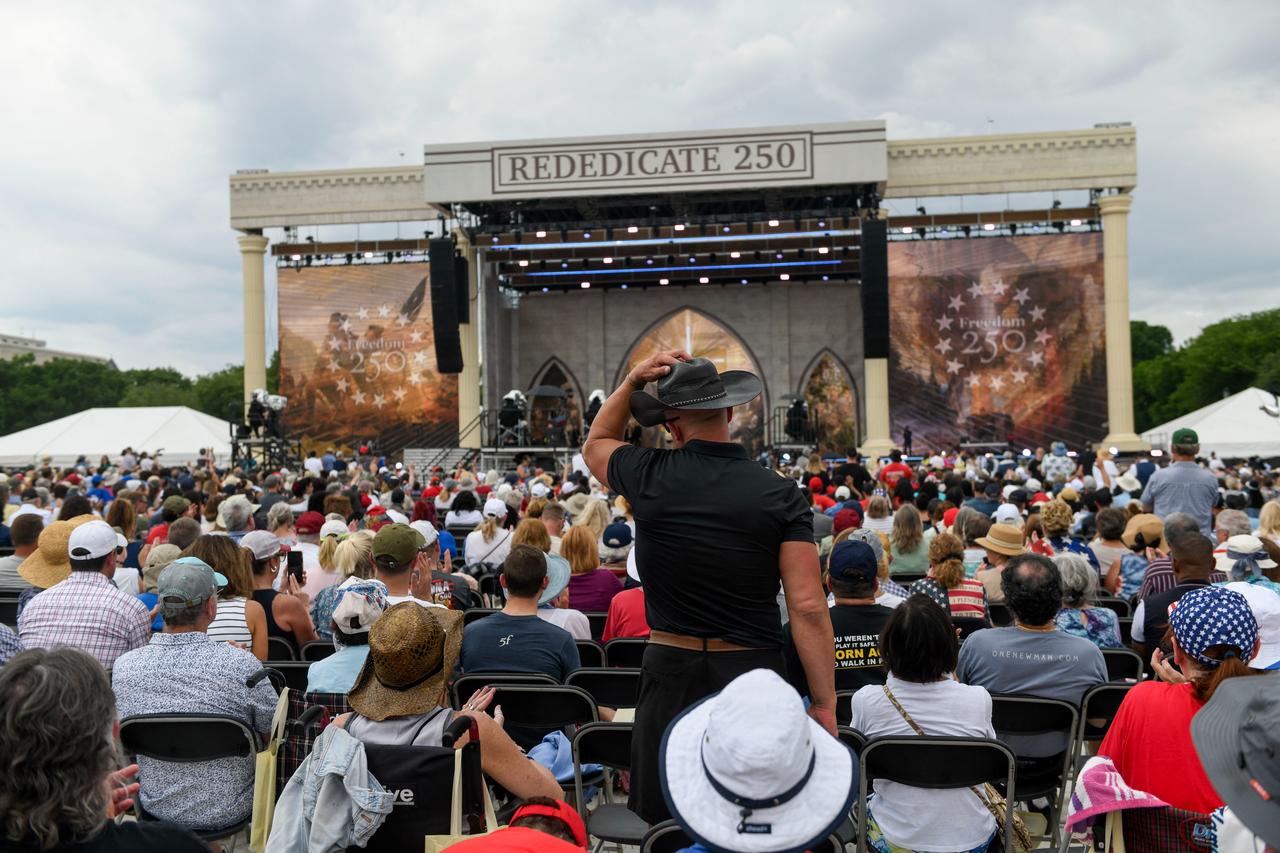

The organizers of Rededicate 250 selected May 17 with deliberate precision. Exactly 250 years earlier, the Continental Congress had declared May 17, 1776, a National Day of Fasting and Prayer.
By anchoring a contemporary political-religious spectacle to that specific colonial moment, organizers aimed to do something more consequential than commemorate: they sought to legitimate a theological claim about the origins of American governance.
That claim is not new. What is new is its institutional reach. The White House "America Prays" initiative, hosted on the official White House domain, frames the anniversary as an "Invitation to Prayer and Rededication of the United States as One Nation Under God."
Invoking a quote from President Trump delivered last year—"So important, if we bring religion back stronger, you're going to see everything get better and better"—the page calls on 1 million Americans to dedicate one hour per week to prayer, and invites citizens to form local groups of at least 10.
This is not a private religious initiative. It is administered by the White House Faith Office, an executive branch entity that scholar Matthew D. Taylor, writing in his Substack Reckonings, describes it as "closely tied not just to evangelicalism broadly, but specifically to the Independent Charismatic sector."
The Faith Office organized Rededicate 250's speaker roster, which included Secretary of State Marco Rubio, Secretary of Defense Pete Hegseth, Speaker of the House Mike Johnson, Franklin Graham, and Cardinal Timothy Dolan—a lineup that, as Taylor notes, maps the intersection of executive power and evangelical mobilization with unusual precision.
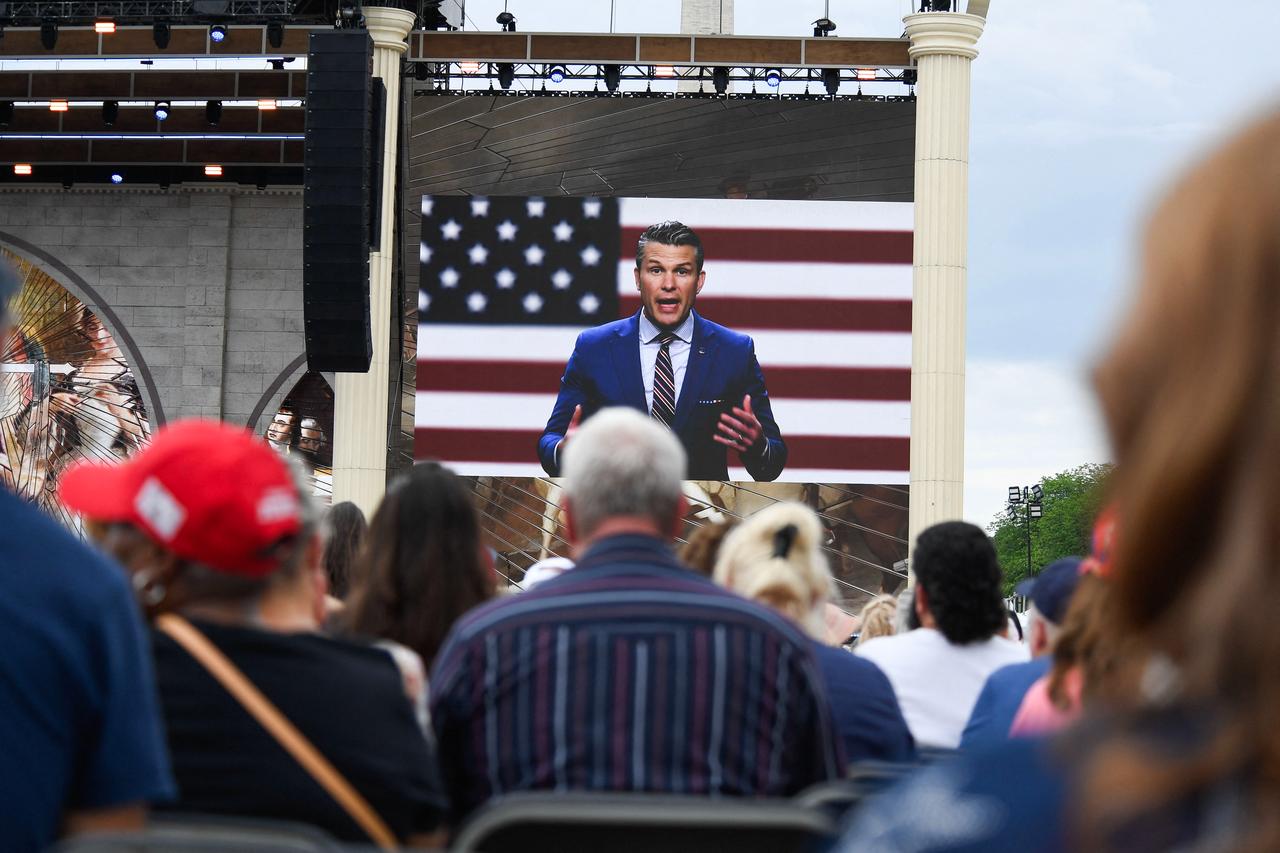
The event's aesthetic was an argument in itself. The organizers had surrounded the stage with stained-glass-style depictions of the Founding Fathers alongside a large white cross, and speakers "repeatedly emphasized Christianity's role in shaping the nation." That message was reinforced from the highest level: President Trump appeared via prerecorded video reading from 2 Chronicles, with a passage frequently invoked by conservative evangelicals who argue that national repentance unlocks divine restoration.
The claim that the United States was founded as an explicitly Christian nation is popular among conservative evangelicals and contested among constitutional scholars, historians, and many religious leaders. Taylor identifies the pseudo-historian David Barton of WallBuilders as a key intellectual architect of this narrative, noting that while Barton was not a listed speaker, "his fingerprints are all over Rededicate 250."
A private evangelical Christian university, Liberty University's involvement further illustrated the institutional depth of the mobilization. The university’s Chancellor Jonathan Falwell was among the featured speakers, while the Liberty Worship Collective and LU Praise performed in the afternoon.
Historically, this framing sits in tension with the actual record of the founding era. As legal scholar Michael W. McConnell observes, the First Amendment itself emerged from Enlightenment philosophy and from the founders' familiarity with the destructive legacy of established churches in Europe.
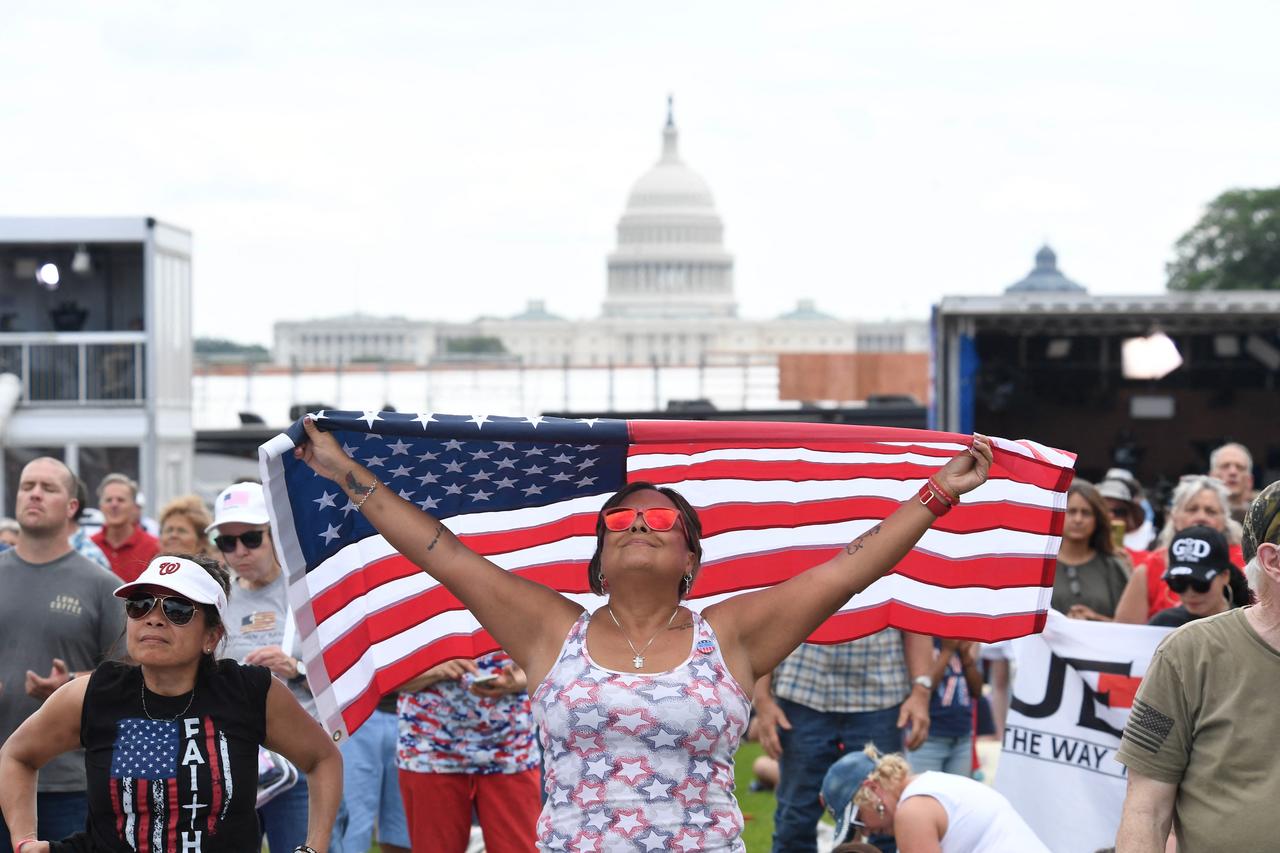
The institutional vehicle for this commemoration has generated a separate and parallel controversy over its structure and fundraising practices.
According to Wikipedia's documentation of Task Force 250, the organization "utilizes opaque corporate structures" and is technically a limited liability company housed inside the National Park Foundation. This arrangement is distinct from the congressionally authorized, bipartisan America250 Commission—a body whose funding has, critics allege, been quietly diverted.
By the end of 2025, $10 million appropriated for America250 had been redirected toward Freedom 250's "Freedom Trucks" traveling exhibits. Representative Bonnie Watson Coleman stated in early 2026 that America250 had received only $25 million of its congressionally appropriated $150 million.
Democratic senators launched a formal probe into Freedom 250's funding practices in February 2026, with Representative Jared Huffman accusing the administration of using the entity to "sell access, hide donors, and rewrite history."
The fundraising structure is explicitly transaction-based, codifying an access-for-donation model. Donors contributing $500,000 receive VIP access at all Freedom 250 events, while a $1 million check secures a private reception with Trump. For $2.5 million or more, donors are promised speaking roles at the upcoming July 4 celebration in Washington, D.C. As political scientist John J. Pitney bluntly characterized the arrangement, these events are little more than "an opportunity for people to curry Trump's favor."
Ironically, Freedom 250’s programming anchored its "Founder’s Museum" exhibit in a partnership with PragerU, a platform built on the premise that America’s foundational framework rests specifically on "Judeo-Christian values" rather than Christian ones.
Running parallel to this high-decibel commemoration is a quieter, deliberately undramatic alternative.
Civic Spirit, a nonpartisan organization led by Rabbi Charles E. Savenor, has launched what it calls the "Declaration Project"—an initiative inviting individuals, families, schools, and religious communities to gather over the July 3–4 weekend and read the Declaration of Independence aloud together.
The Declaration Project is replicable, non-hierarchical, and designed to be repeatable in contrast to the conservative project. It does not require government backing, seven-figure donations, or a stage on the National Mall. Its logic is also distinct: where Rededicate 250 answers the question of the founding by asserting a specific theological claim, the Declaration Project treats the founding as an open question—one that requires citizens to argue with one another rather than simply to affirm.
This approach reflects a broader diagnostic, articulated by the American Association for State and Local History in its 2019 report to the President, which framed the 250th as a "once-in-a-generation opportunity to present history that is inclusive and relevant."
Roughly 37% of Americans do not identify as Christian. Many Christians who do identify as such—across mainline Protestant, progressive evangelical, Catholic, and other traditions—have explicitly dissociated themselves from the event's framing.
What makes the 2026 moment structurally significant is the convergence of symbolic and institutional power in a single direction. The executive branch has, for the first time in the modern era, used federal infrastructure to stage what scholar Taylor characterizes as "a symbolic baptism of the American state."
Two hundred and fifty years after the Declaration, the question of what America is asked to become at its anniversary has not been resolved. It is being actively contested—on the National Mall, in congressional hearings, in the language of fundraising prospectuses, and in the less visible spaces where communities gather to read old documents together without cameras. The outcome of that contest will say something durable about what the state believes it owes its citizens, and which citizens it believes itself to serve.


 Set as preferred source
 Set as preferred source



 7 min read