Newsletters


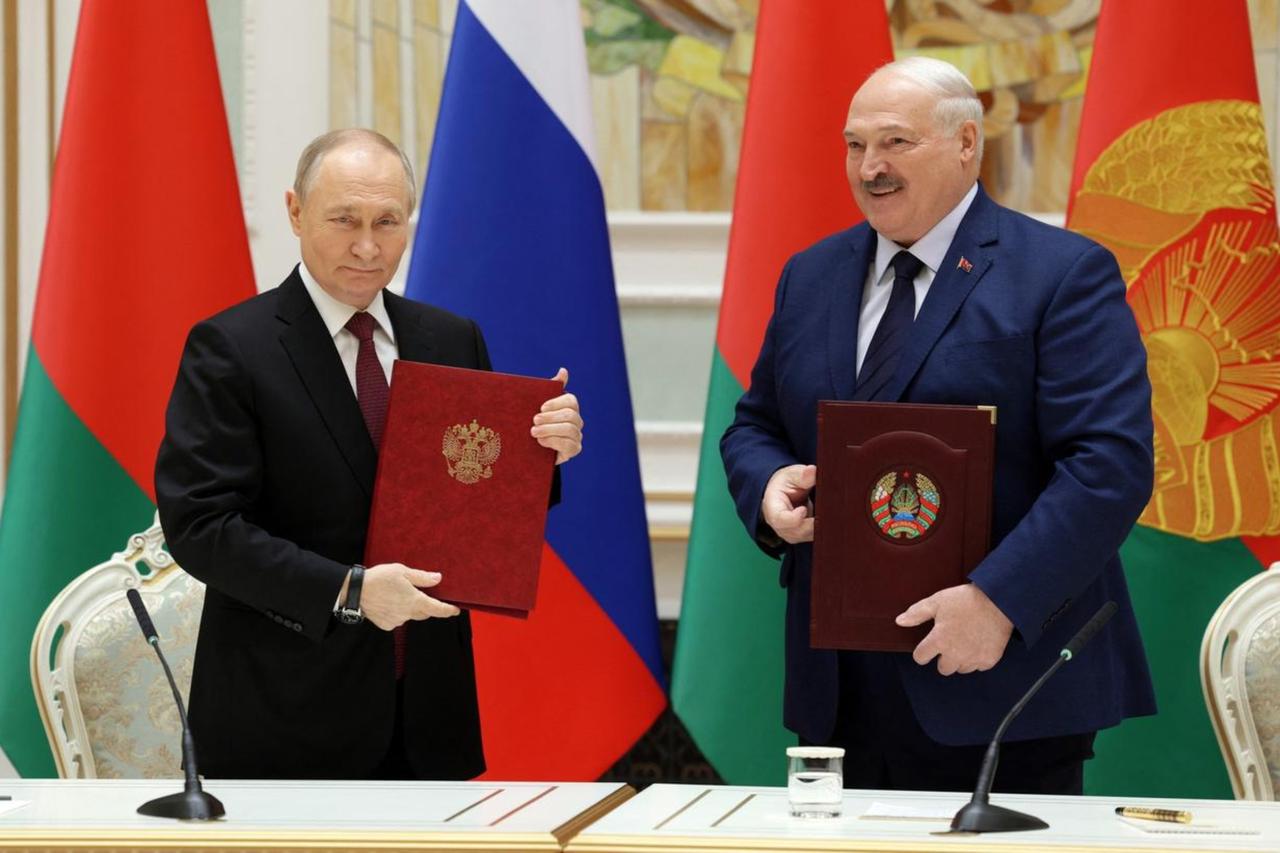


As military exercises resume in Belarus and security tensions continue to rise along Ukraine’s northern border, Kyiv is closely monitoring developments that increasingly resemble the early warning signs observed before Russia’s full-scale invasion in February 2022.
Ukraine’s leadership has repeatedly stressed that the country will not ignore any military build-up near its borders.
President Volodymyr Zelenskyy recently warned that Russia is attempting to draw Belarus deeper into the war and potentially use Belarusian territory for new offensive operations against Ukraine or even against NATO’s eastern flank.
Ukrainian authorities have already strengthened defensive measures in the Chernihiv and Kyiv directions while expanding fortifications and military preparedness along the northern frontier.
For Kyiv, the lessons of 2022 remain clear.
Russian forces used Belarusian territory as one of the main launching grounds for the invasion of Ukraine, creating a direct threat to Kyiv and the northern regions of the country. Ukrainian officials have repeatedly emphasized that any repetition of such scenarios would trigger an immediate and proportionate response based on Ukraine’s internationally recognized right to self-defense under Article 51 of the United Nations Charter.
Against the backdrop of renewed Russian-Belarusian military cooperation, joint exercises and ongoing security concerns in Eastern Europe, Ukraine is signaling that it is fully prepared to respond not only to a direct attack but also to military actions that may indicate preparations for aggression.
The question is no longer whether Ukraine has the legal right to defend itself but how this right may be exercised if new threats emerge from Belarusian territory.
Russia has been waging an unprovoked full-scale war against Ukraine for more than four years, pursuing the destruction of Ukrainian statehood. The Kremlin has shown no intention of returning to the principles of international law.
On the contrary, Moscow continues to seek ways to expand the geography of the conflict and draw Belarus deeper into the war.
The authoritarian regime of President of Belarus Alexander Lukashenko has effectively traded Belarusian sovereignty for guarantees of political survival.
Today, the country’s military infrastructure, airspace, and significant parts of its economy are heavily dependent on Moscow, turning Belarus into a de facto accomplice in Russia’s aggression against Ukraine.
As Russia struggles to achieve its strategic objectives on the battlefield, the Kremlin has a clear interest in opening additional fronts to force the Ukrainian Armed Forces to divert troops and resources from the south and east.
Despite Lukashenko’s long-standing efforts to avoid direct involvement in combat operations, Moscow continues to exert pressure on Minsk, pushing it toward a decision that could prove disastrous for the future of the Belarusian state.
Recent actions by the Belarusian regime indicate a significant increase in security risks. Lukashenko’s announcement of a so-called “targeted mobilization” of military units, combined with preparations for combat readiness, raises serious concerns.
Equally alarming is the deployment of Russian missile systems and joint exercises involving the potential use of tactical nuclear weapons on Belarusian territory. Such developments represent an unprecedented challenge to European security.
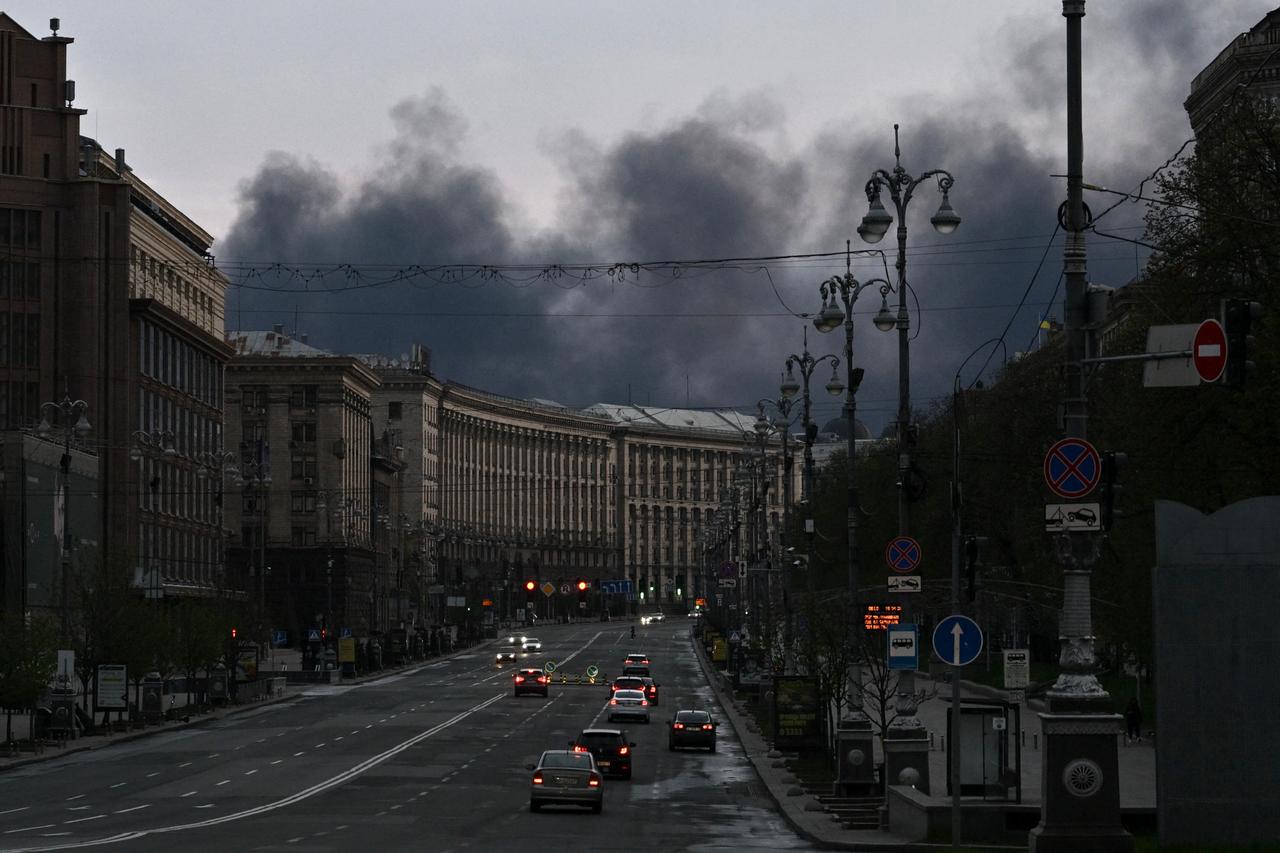

Military intelligence assessments and international experts, including analysts from the Institute for the Study of War (ISW), have repeatedly warned that Russia views Belarus as a potential staging ground for military operations against western regions of Ukraine.
One of the primary objectives of any northern offensive would be to disrupt key logistical routes used to transport military and humanitarian assistance from Ukraine’s Western partners.
At the same time, Lukashenko continues to justify the militarization of Belarus through claims of an alleged threat from Ukraine and NATO countries.
By promoting narratives about a non-existent attack against Belarus and threatening to use “the full arsenal” together with Russia, he seeks to legitimize military preparations before a domestic audience. In reality, the greatest threat facing the Belarusian people comes from the policies of their own regime.
Ukraine will not remain passive in the face of emerging threats from Belarus. Kyiv’s actions are guided exclusively by international law, including Article 51 of the United Nations Charter, which recognizes the inherent right of individual and collective self-defense in response to armed attack.
Ukraine’s political and military leadership has repeatedly made clear that any unlawful crossing of the state border or large-scale attacks launched from Belarusian territory would trigger an immediate response.
The country has significantly strengthened defenses along its northern frontier through the construction of fortified defensive lines, engineering barriers, minefields, and the deployment of additional military units.
These measures are purely defensive in nature. Ukraine has never had aggressive intentions toward Belarus. However, Kyiv has been forced to invest substantial resources into protecting its northern border because Minsk has transformed itself into an increasingly unpredictable security challenge.
It is important to distinguish between the Belarusian people and the actions of the Lukashenko regime. The aggressive rhetoric and military posturing emanating from Minsk reflect the decisions of an authoritarian leadership rather than the will of Belarusian society.
Many Belarusians have consistently demonstrated that they do not seek conflict with Ukraine and have become hostages to decisions made without democratic legitimacy.
The constant escalation rhetoric coming from both Russian President Vladimir Putin and Alexander poses broader risks for Europe. The possibility of miscalculation, accident, or deliberate provocation carries the danger of expanding the conflict beyond Ukraine and creating a wider European security crisis.
In this context, the European Union should consider additional measures aimed at deterring further escalation.
Strengthening sanctions against Belarus and restricting transit routes that generate economic benefits for the regime could become effective tools of pressure on Minsk.
Ultimately, the fastest way to prevent aggression is to demonstrate that any attack would be strategically doomed from the outset.
Western partners should remove remaining restrictions on military assistance and provide Ukraine with additional long-range capabilities, air-defense systems and drones.
If Moscow and Minsk clearly understand that Ukraine possesses the means to inflict severe damage on military infrastructure used for aggression, the incentives for escalation will diminish significantly.
History has repeatedly shown that deterrence remains the most effective language understood by authoritarian regimes.


 Set as preferred source
 Set as preferred source


 7 min read