Newsletters




“A screaming comes across the sky.”
Thomas Pynchon called it decades early, a prophet with a typewriter, and now here we are, watching the sequel in high definition. Sleeker rockets, cleaner lines, and the same ancient itch dressed up in progress and fired off toward Iran and Lebanon with bureaucratic precision.
But before the fire, before the sky splits: Nothing. Silence. A dead, airless calm. Target memos shuffled like takeout menus. Refueling logs stamped with the enthusiasm of mid-level clerks chasing a pension. Mobilization charts so sterile they could pass a surgical inspection.
No blood. No dread. No sense of the abyss. Just “planning,” they said—just procedure. Run war through a car wash until it gleams.
“It has happened before,” Pynchon, cool and detached, admitted in 1973, “but there is nothing to compare to it now.”
No surprise the storyline in Pynchon’s celebrated war novel “Gravity’s Rainbow” grinds on, quiet as a tumor.
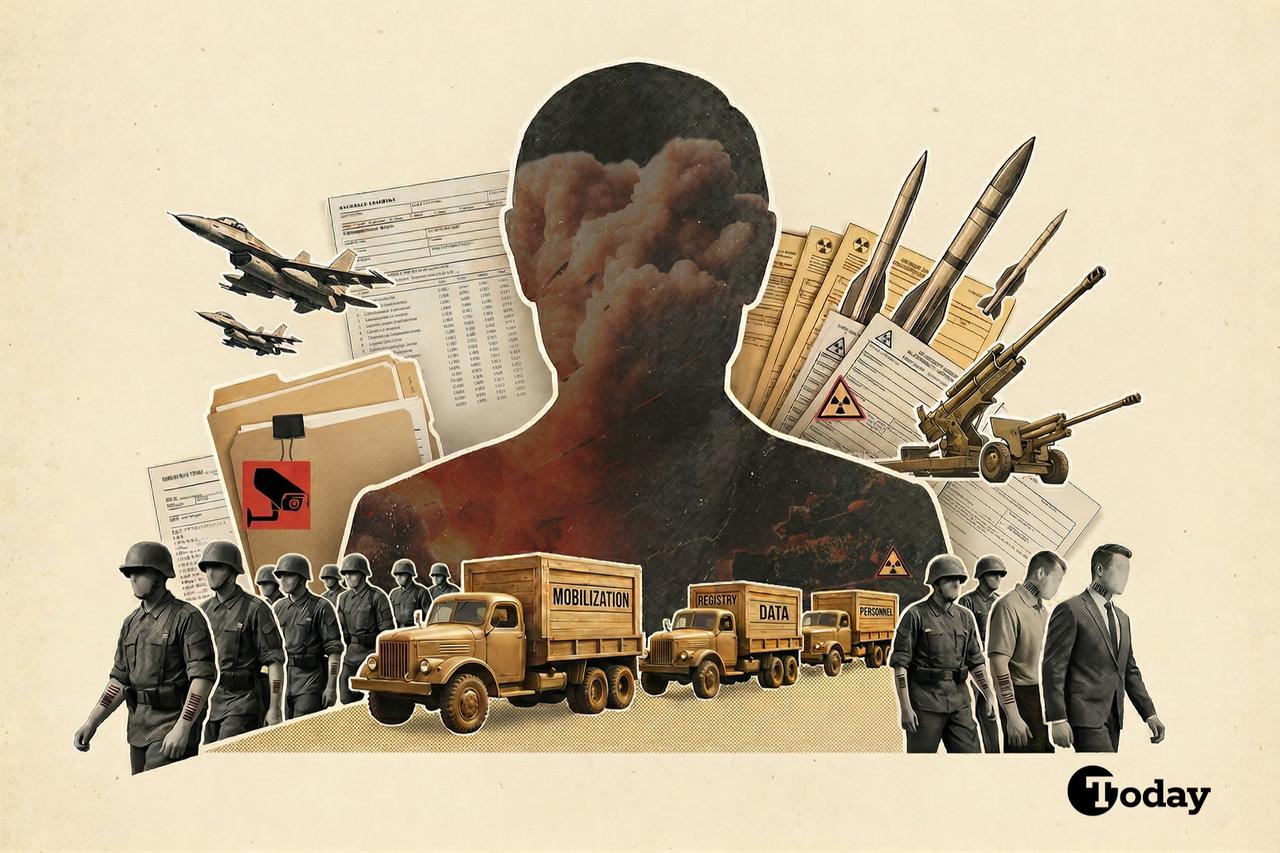
Start with the American President Donald Trump, the grand impresario, conducting war like a subscription service. No messy conscription, no mobs in the street. Just a curated force of volunteers, specialists, and career fighters in crisp uniforms, a boutique warrior cast.
The draft, still there but sealed behind glass, dusty and theatrical, like an emergency axe on the wall. "Break in Case of End Times."
And now, Trump is quietly rewiring the system. Automatic registration for Selective Service is slated for late 2026. No more pretending it’s a civic choice. No more illusion of participation. You don’t sign up. The system signs you, but don’t try applying that algorithm to automatic voter registration in the 2026 U.S. midterm elections.
And don’t you dare call it a draft.
That would spook the livestock. No, this is “streamlining”—government dialect for removing the last bit of friction between the state and your body. The legal skeleton of conscription is still there, fully intact, stretching from adolescence into middle age. They’re not building anything new. They’re just oiling the hinges.
Across the Atlantic, the Germans are doing what they do best: organizing the future with a kind of clerical devotion that borders on the religious. A new law, effective January 2026, requires men to get permission before leaving the country for extended stays. Nothing dramatic, nothing loud. Just a gentle administrative hand on the shoulder: Where do you think you’re going?
The explanation is beautifully dull. In a crisis, the state needs to know where its manpower is. Sensible. Responsible. Almost boring—until you notice the scale. Tens of millions of men quietly folded into a system that, not long ago, would have been reserved for emergencies. Now it’s just policy. Routine. The kind of thing you scroll past without a second thought.
And it doesn’t stop there. The German military is expanding, hedging its bets. Voluntary service if possible, conscription if necessary. Young men are being logged, assessed, and categorized. Not drafted but carefully indexed, like files in a cabinet that might one day need to be opened.
Then there’s Russia, dispensing with the polite fictions altogether. No euphemisms, no semantic gymnastics. Draft rules tightened, age limits stretched, exits restricted. When the summons comes, you don’t leave. Simple. Brutal. Honest, in its own way. They’re not pretending it’s anything other than preparation.
Now, you could argue, and many do, that all of this is reactive. That’s just the logical response to a world that’s gotten twitchy again. And sure, there’s truth in that. The old assumption—that large-scale war in Europe was a relic, a museum piece—has been shattered. What we’re seeing now is officially baptized “rearmament,” because “remilitarization” sounds a bit too much like history repeating itself.
But here’s where it gets interesting and a little dangerous. When multiple states start tuning their legal and administrative systems toward rapid mobilization and the frictionless deployment of human bodies, it stops looking like contingency planning. It starts to feel like alignment. Like a machine being calibrated for a very specific function.
Listen to the language. “Readiness.” “Resilience.” “Targets.” It’s all so clean, so bloodless. Not a whisper about what any of it actually implies. No talk of scale, of cost, of the kind of industrialized chaos that modern war entails. Just incremental adjustments. A registry here. A restriction there. Nothing to get upset about until you step back and see the shape of the thing.
Because history has a nasty habit of proving that once you build the machine, it develops a kind of appetite. Armies that can be raised tend, sooner or later, to be raised. Not because anyone wakes up craving catastrophe, but because the path to it has been cleared, paved, and meticulously signposted.
We’re not there yet. Not if you are counting mobilization orders or boots on the ground. There’s still daylight between preparation and execution. But that distance is shrinking—and it’s decreasing in ways you can quantify. It’s in the statutes. The databases. The troop ceilings and the logistical throughput.
Which leaves the average citizen in a peculiar bind. Ignore it, and you’re sleepwalking. Overreact, and you sound like a lunatic shouting about the end times. The truth sits in that uncomfortable middle ground.
 1 min read

Something real is being assembled. Not war itself, but the undeniable capacity for it—restored, refined, and normalized.
And perhaps that’s the most unsettling part. Not that a third global war is inevitable, but that if it comes, it won’t feel like a sudden collapse into madness. It will feel procedural. Expected. Like the final step in a process that’s been running quietly in the background for years.
History suggests that such capacity, once assembled, exerts its own gravitational pull. Armies that can be raised are armies that, under sufficient provocation or miscalculation, will be raised.
The tragedy of 1914 was not that Europe desired war, but that it had made itself so exquisitely prepared for one that the descent into conflict became, in a sense, mechanically feasible.
“It has happened before, but there is nothing to compare to it now.”


 Set as preferred source
 Set as preferred source



 1 min read