Newsletters


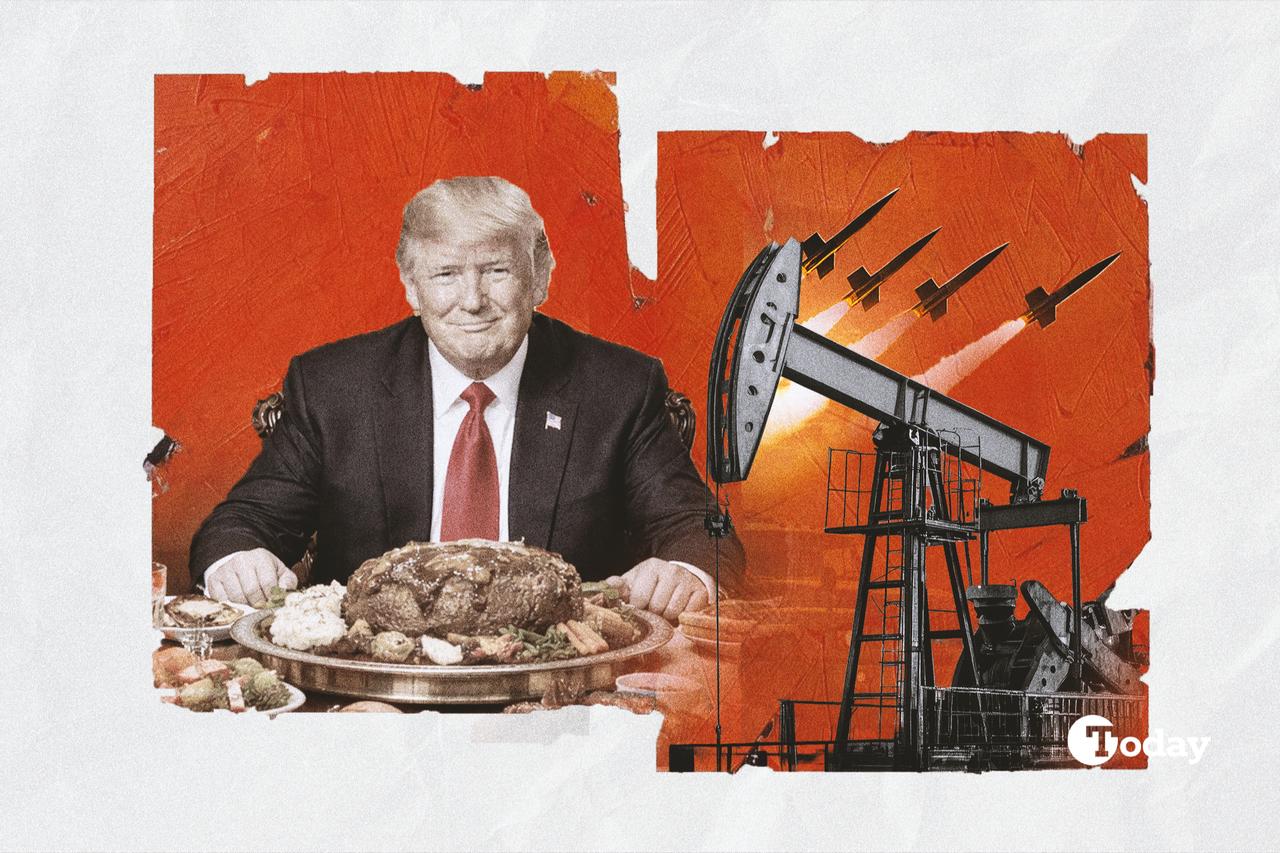


The spring light at the Trump International Golf Club, West Palm Beach, has a way of making everything look like a postcard somebody forgot to mail.
Palm trees lean like they’re listening to gossip. The Atlantic glints on the Mar-a-Lago side of the causeway. And at the golf club dining room—polished stone, loud money, French-speaking servers mostly from Haiti—I had dinner with Donald Trump.
It was just after appetizers and a few words in French with the staff about voodoo that I reckon Trump first enchanted himself into believing Americans would embrace further chaos in the Middle East if hostilities were promoted in concert with the French Resistance.
This was the spring of 2023, before the Trump 2.0 campaign trail got noisy again. The room smelled of lobster, ambition, and overcooked lamb chops. Trump was in a peppy mood. The kind where he leans back, wipes a moist and refreshing sanitary towelette over a can of Diet Coke, and gleefully explains how the planet ought to run.
Trump likes a table with a receptive audience. He enjoys meats that arrive big enough to have their own postal code. And he absolutely demands to be in control of all conversation, which, if not going his way, cuts off by mocking the speaker with reptilian glare and anesthetizing scorn.
The Persian Gulf came up the way storms come up in Florida—sudden and humid.
“Everyone hates Iran,” Trump recoiled, slicing his steak and dividing territory. “The people, they hate them. Tremendous resentment. If they had the right push, the right support, you’d have a resistance movement overnight.”
Trump neglected to point the knife in the air for emphasis. “What do the French think?” he asked, answering his own question: “The French Resistance. Very brave people. Everybody knows that story.”
Trump, who knows little of history, has always liked historical comparisons the way amateur gamblers, who know nothing of mathematical probabilities, like lucky numbers.
“We could have a resistance,” he vamped. “A real one. Armed. Organized. Give them guns and the regime’s in trouble. You’d see French Resistance.”
He chewed thoughtfully, then added, “You know Macron is a friend of mine.”
I wanted to ask, “like Humphrey Bogart and Claude Rains in 'Casablanca'?" But graciousness trumped the urge to carpet-bomb his besotted vision of war and peace and the Middle East.
This is the same kind of war we're now seeing the U.S. and Israel wage against Iran and Lebanon, in which Trump toddles out of a golf club pro shop to hallucinate in front of a receptive gaggle of MAGA television cameras. And now the frenzy has moved from the theater to a real threat. Trump recently warned he might launch more strikes on Iran's Kharg Island oil export hub, claiming the U.S. strikes had "totally demolished" most of the island and that he "may hit it a few more times just for fun."
So I pivoted from years covering the French president and, with speed, told Trump about my father-in-law, a story I’m sure he ultimately ignored, because it wasn’t about him.
Roland Girard was 20 years old in 1943. He came from Le Bouscat, then a quiet village outside Bordeaux. Vineyards, narrow streets, the kind of place where everybody knows the color of your bicycle. Yes, he wore a beret, too.
When the Germans occupied France, young men had choices. None of them clean.
You could keep your head down.
You could cooperate with the Vichy regime and hope the war would pass over you like a dreadful storm.
Or you could vanish into the countryside and join the Maquis. The loose, stubborn bands of resistance fighters who hid in forests and mountains and sabotaged the German machine when they could.
Trump listened with the mild curiosity of a man who likes war stories but prefers them to be told hurriedly and with medals already attached.
“What made him do it?” he asked.
“Good question,” I said.
Because the mythology of resistance is full of noble motives. Patriotism. Freedom. The call of history. All the big words that look good engraved on monuments.
Roland had a simpler explanation.
Years later, when I asked him why he joined the Maquis, he shrugged the way real heroes do when the truth isn’t glamorous.
“I didn’t join the Resistance for a good reason,” Roland said.
Then he grinned.
“The girls were prettier than the girls supporting Vichy.”
Trump laughed at that. A big, unfiltered laugh that echoed off the club’s high ceiling.
Outside, the Florida evening had settled into that soft coastal darkness where everything feels calm and slightly unreal.
Trump’s attention span ended there, but Roland’s did not.
The French Resistance was neither a frivolity nor an episode of “The Apprentice.” Roland said it was cold forests, bad weapons, and the constant knowledge that if the Germans caught you, the best outcome might be prison.
Sometimes it was worse.
Roland told me the resistance networks were thin and fragile. Radios that barely worked. Supply drops that missed their marks. Fighters who had never held a rifle before decided they would ambush German patrols.
They weren’t an army. They were a gamble.
“There wouldn’t be any French wine if it weren’t for me,” Trump blurted out of nowhere. “I told Macron, ‘lower your duties on American goods or no Champagne comes into America.’”
Huh? A mutual acquaintance at the table shot a glance my way that said, "It's best not to ask.”
Anyway, the French Resistance didn’t drink Champagne. The festive celebrations took years to arrive. The liberation parties didn’t happen without Allied coordination, British intelligence networks, weapons drops, code systems, training camps, and the slow-grinding pressure of a world war already underway.
Even then it was messy.
The Maquis sabotaged rail lines. They ambushed convoys. Sometimes they were betrayed. Sometimes, whole cells vanished after a knock on the wrong door.
But when Roland talked about the Maquis, he never sounded like a hero in a history book. He sounded like a young man who had made a choice and then lived with the consequences.
Yet Trump nowadays insists Iranian insurgents are something you order like room service. In his version, Tehran is a stage for a modern underground. Brave dissidents passing messages in koobideh kebabs. Secret weapons arriving in the night. The mullahs’ regime is collapsing like rotten scaffolding.
“Great, proud people of Iran,” Trump said in the opening hours of the U.S.-Israeli attack on the country. “I say tonight that the hour of your freedom is at hand. When we are finished, take over your government. It will be yours to take.”
Trump still likes the picture. The same way many like imagining Paris in black-and-white photographs: trench coats, coded notes, brave men with pistols in their pockets.
In his telling, Iran could turn into Itchycoo Park, where the sun shines, the bad guys lose, and the release of a limited edition $1,500 NFT digital trading card of Trump dressed as Cyrus the Great guarantees the 2026 Nobel Peace Prize.
That’s how Trump rolls.
It’s the only way he rolls.
That spring night, back in the dining room, Trump awarded himself the club’s championship medallion for winning a golf tournament he failed to complete.
“Such a great honor,” Trump said, clutching his prize he bestowed on himself as he boarded a limo for his victory parade through applauding MAGA crowds and back to Mar-a-Lago.
Roland hitched a ride from Toulon to Paris, where President Charles de Gaulle awarded him the "Legion d’Honneur" and the "Medaille de la Resistance Francaise avec Rosette".
After Roland passed away, we found them, and a lodestar of other distinctions, hidden in his sock drawer.


 Set as preferred source
 Set as preferred source


 4 min read