

 Newsletters




There’s a curious silence in the vocabulary of our time.
Cities burn, missiles zip across borders, fleets assemble in narrow seas, and yet the phrase “World War III” remains locked in a drawer that politicians refuse to open. The world is full of wars; the world, however, is not officially at war.
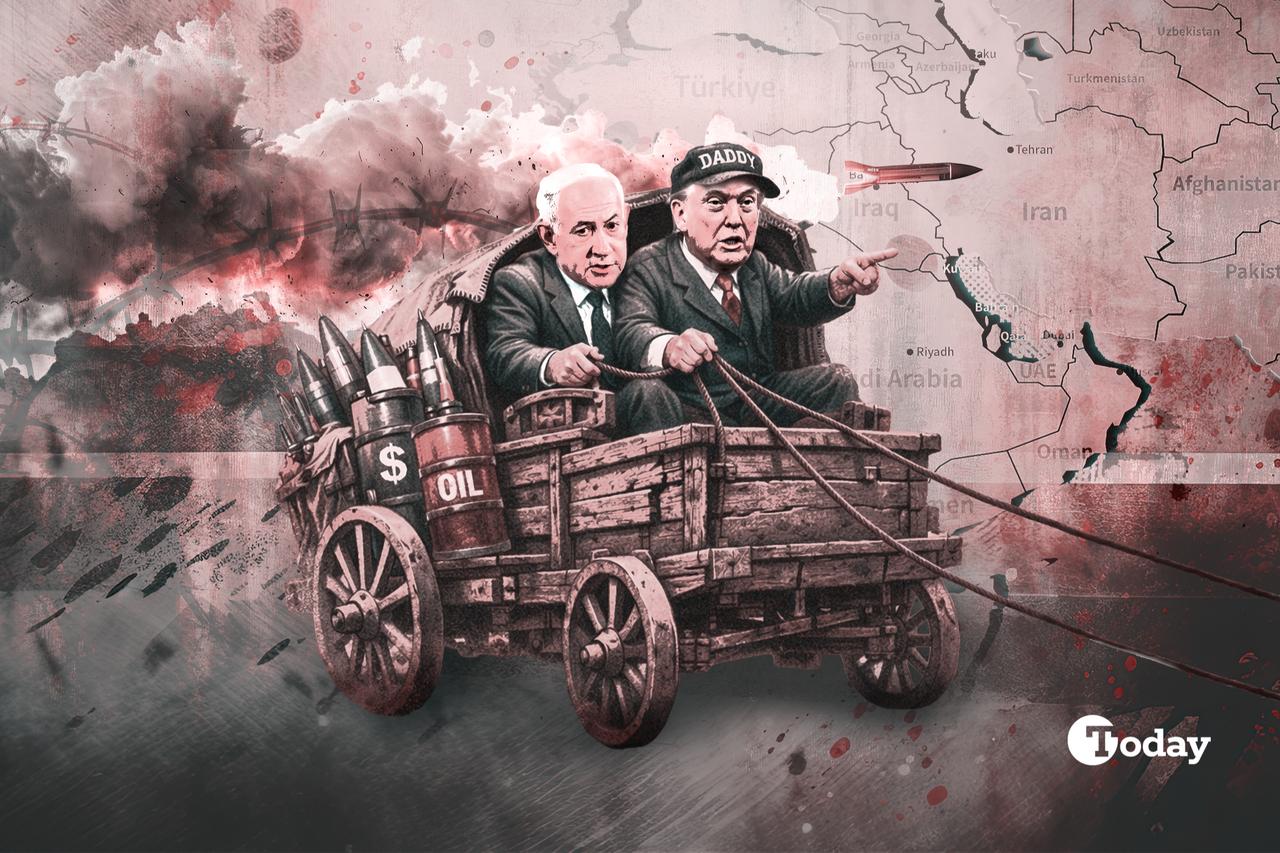
Consider the oil tankers gliding nervously through the Strait of Hormuz, warships circling like patient sharks. Iranian missiles arc over the Persian Gulf; American aircraft streak toward coastal installations; explosions bloom briefly over ports and refineries. The region trembles.
More than a thousand people have already died in Iran in the opening two weeks of the confrontation, while hundreds more have been killed in Lebanon as Israeli and Hezbollah forces exchange fire.
The numbers accumulate quickly, like sand carried by the wind.
But still no one says the words, no one dares mention the integer 3 in Roman numerals.
Elsewhere, the earth is already scarred by war. In Ukraine, a grinding struggle that began with Russia’s invasion continues to chew through soldiers and towns. Nearly 78,000 people were killed in that conflict in 2025 alone, making it the deadliest war on the planet that year.
The front line there resembles an old photograph from 1916, trenches, artillery, mud, except for the drones hovering overhead, silent witnesses with steampunk wings, launched from the “Terminator” film franchise prop table.
In the Middle East, the long war around Gaza has already produced staggering casualties: more than 67,000 people killed, according to research compiled in 2025, with many thousands more wounded and wandering.
Africa, too, is basted with conflicts that rarely reach the front pages of distant news websites. In Sudan, rival generals turned their country into a slop bucket, sending millions fleeing across deserts and borders. In the Democratic Republic of the Congo, militias fight over land and minerals; villages burn in forests the outside world rarely sees. Across the Sahel, from Mali to Niger, insurgencies creep across the map like spreading stains.
In Southeast Asia, Myanmar’s civil war grinds on. Thousands have died there as well, another line in the ledger of violence.
Add these blood-spattered feuds together, and the numbers become almost abstract. One research group estimated that more than 240,000 people worldwide were killed in conflict-related violence in a single recent year.
Two hundred and forty thousand. That’s the population of Vienna, or two Amsterdams, or Bodrum when the vacationers hit the beach. So why do statesmen and their factotums tippy-toe around World War III as the inanimate Voldemort, He-Who-Must-Not-Be-Named?
Part of the answer lies in history’s grammar. World Wars I and II were not merely large conflicts; they were systemic wars, involving nearly all the major powers and transforming the international order itself. They mobilized entire societies. Factories, farms, schools transformed into a single vast engine of destruction.
Today’s wars are defined to be different. They are numerous but fragmented. Ukraine burns, but China is not fighting the Yanks there. The Gulf erupts, but Europe’s armies remain mostly spectators. Sudan collapses inward, largely ignored by the powerful capitals of the world.
As the folks at the think tanks will tell you, what we have here is a patchwork of violence rather than a single global front. That’s their story, and they’re sticking to it.
There’s also a political reason for the silence. To declare a world war is to admit that the international system has already failed. Governments avoid the phrase the way sailors avoid speaking about storms before they arrive. The label itself carries consequences: mass mobilization, emergency powers, alliances hardened into opposing camps.
And perhaps most importantly—fear.
Because when people imagine World War III, they do not picture trenches or drones. They envision the mushroom cloud.
Nuclear weapons hover over the language of war like a ghoulish punctuation mark. Analysts often assume that a true world war among major powers would almost certainly involve these weapons of mass destruction, whose use would dwarf the devastation of previous conflicts.
Thus, the unspoken rule of the Washington think tank remains: until the unthinkable happens, we are living in something less than a world war.
But there is another question, a poetic inquiry more uncomfortable than diplomatic definitions.
How many dead are required to announce World War III?
Is there a number at which politicians will finally stand before the microphones and say the words aloud? Fifty thousand? A million? Ten million? History offers no tidy threshold. World War I killed roughly 20 million people; World War II killed more than 70 million. Those numbers were recognized only after the catastrophe had unfolded, after the smoke cleared, and historians began to count the graves.
Wars rarely announce themselves at the beginning. They reveal their scale only at the end. And lest we forget, only the winners decide what war crimes were.
For now, the world exists in an eccentric twilight. The conflicts are many, their front lines scattered like islands across the map. Ukraine. Gaza. Lebanon. Sudan. Myanmar. The Persian Gulf. Each war has its own logic, its own grievances, its own dead.
Perhaps this is why governments hesitate to pronounce the phrase World War III. Not because the violence is insufficient, but because the name would force a terrible realization; chillingly, the borders between these wars might be thinner than we think.
Turkish President Recep Tayyip Erdogan has never been shy about giving his fellow NATO leaders tutorials on the danger of smoking cigarettes or the realities of walking on thin ice.
“No one can predict where the world will be thrown if this war continues to expand,” Erdogan warned earlier this week, describing the region as being pulled toward disaster by what he described as a “massacre network.”
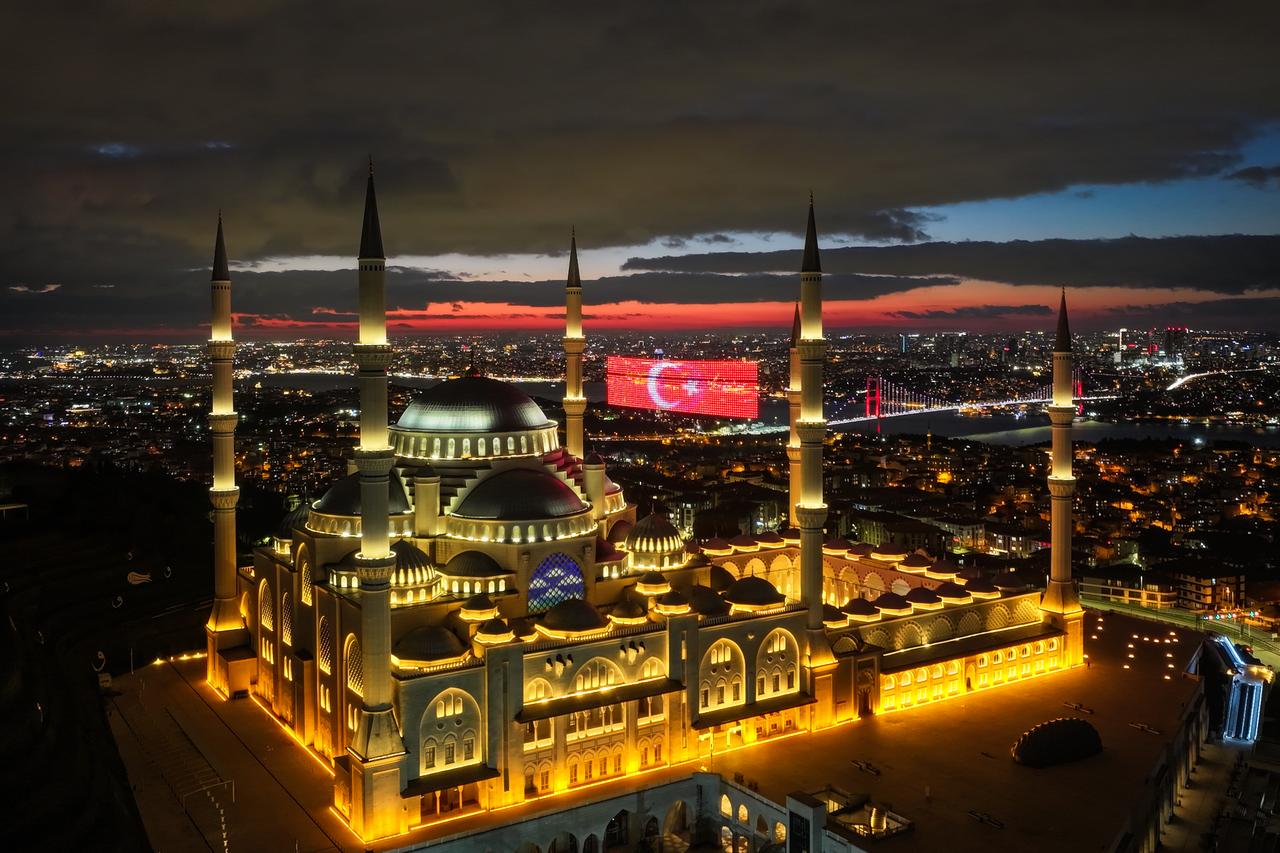
Then, somewhere between the prayer rug and the political podium, Erdogan reached for the old mystic cadence of Anatolia. Not the quiet, low-lit pop mysticism most Westerners imagine while touring the Blue Mosque in Istanbul, but the raw wandering gospel of Yunus Emre, the 13th-century Sufi vagabond who wrote about love, blood, earth, and the fragile madness of the human soul in language so plain it could slice through quartz.
“We’re striving to extinguish the fire before the flames grow any larger, before the ring of fire expands further, before more lives are lost and more blood is spilled,” Erdogan emphasized, part sermon, part warning, part the street poetry of a traveling dervish.
Plain words, heavy with fate, meant to remind politicians of all religions and customs that once the fire of men’s anger escapes the heart, it scorches villages, burns nations, and blackens souls.
Which is a mighty good reason why the most acceptable hypocrisy right now is for those in charge of conventional wisdom to continue labelling the carnage in the Persian Gulf as an American-Israeli escapade that has absolutely nothing to do with the grammar of World War III.


 Set as preferred source
 Set as preferred source


 1 min read
 1 min read


