Newsletters


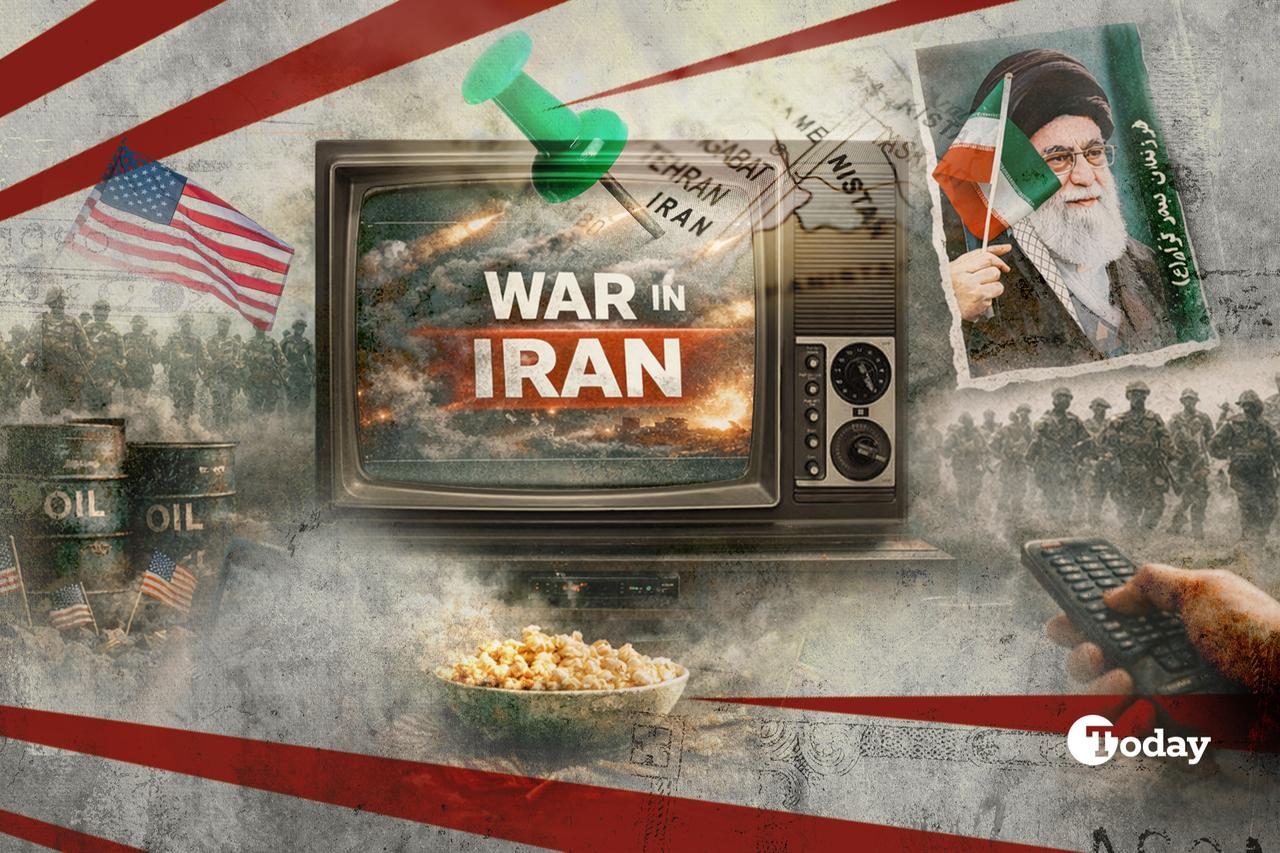


In the good old days, Wall Street regaled investors by telling stories of when the Persian Gulf pumped the lifeblood of the modern world. Oil. Thick, black money sloshing around in steel tankers, squeezing through the narrow Strait of Hormuz on its way to feed the appetites of the Earth’s American century. Cities lit up. Engines roared. Energy traders purred like fat cats on a tuffet.
But that was last month.
Now the real and perhaps only commodity leaving the baked crescent of sand and bad decisions is something stranger. Call it a signal, the electronic narcotic. War transmitted at the speed of light, ricocheting off satellites and crashing straight into American living rooms like a drunk through a car window.
Oil still moves. Tankers still churn along those slender waterways. But the real pipeline now runs from a phone camera in a smoking Iranian suburb to a glowing rectangle on somebody’s couch in Miami, Paris, or Istanbul.
The Persian Gulf exports content.
Missiles streak over desert skylines, and before the smoke clears, some pre-teen with a smartphone has already uploaded it. It’s a world in which a missile strike can trend before the crater cools.
Milliseconds later, the clip is circulating through Instagram faster than a scalded cat. Indeed, Türkiye Today’s remarkable multilingual digital war-coverage crew clocks what’s happening inside Iran with more pace and sophistication than commodity traders once tracked barrels of oil.
This is the upgraded model of the old Living Room War, Vietnam with Wi-Fi and better graphics. The same basic formula, only now it runs 24 hours a day with push notifications and algorithmic panic. The war doesn’t arrive in a nightly broadcast. It streams with the sound and fury of a Taylor Swift playlist.
Now, inside the glass towers of American media empires, executives are hovering around conference tables, staring at Middle East maps the way gamblers rubberneck horse racing forms. What they want—what they need—is the coded acronym that sends ratings into orbit.
BOG.
Boots on the ground.
“I don’t have the yips with respect to boots on the ground—like every president says, ‘There will be no boots on the ground.’ I don’t say it,” President Donald Trump blurted over the weekend.
Airstrikes are fine for the opening act. Missiles give you nice flame footage. But boots on the ground—that's the money shot. Faces in helmets. Reporters whispering into microphones while something explodes conveniently behind them. Dust. Sweat. Drama.
“There will be more casualties,” U.S. Defense Secretary Pete Hegseth promised during an interview with CBS News. “The president’s been right to say there will be casualties. Things like this don’t happen without casualties.”
Television loves war close enough to smell. It turns combat into a Western. The desert is already there. Wide sky. Red sunset. Humvees kicking up rooster tails of sand. Somewhere in a control room, a producer is practically drooling at the idea of streaming it like an old John Wayne cavalry charge.
But the modern media cowboy doesn’t ride a palomino or inhale like Robert Duvall in “Apocalypse Now.”
He comes in shrink-wrapped plastic.
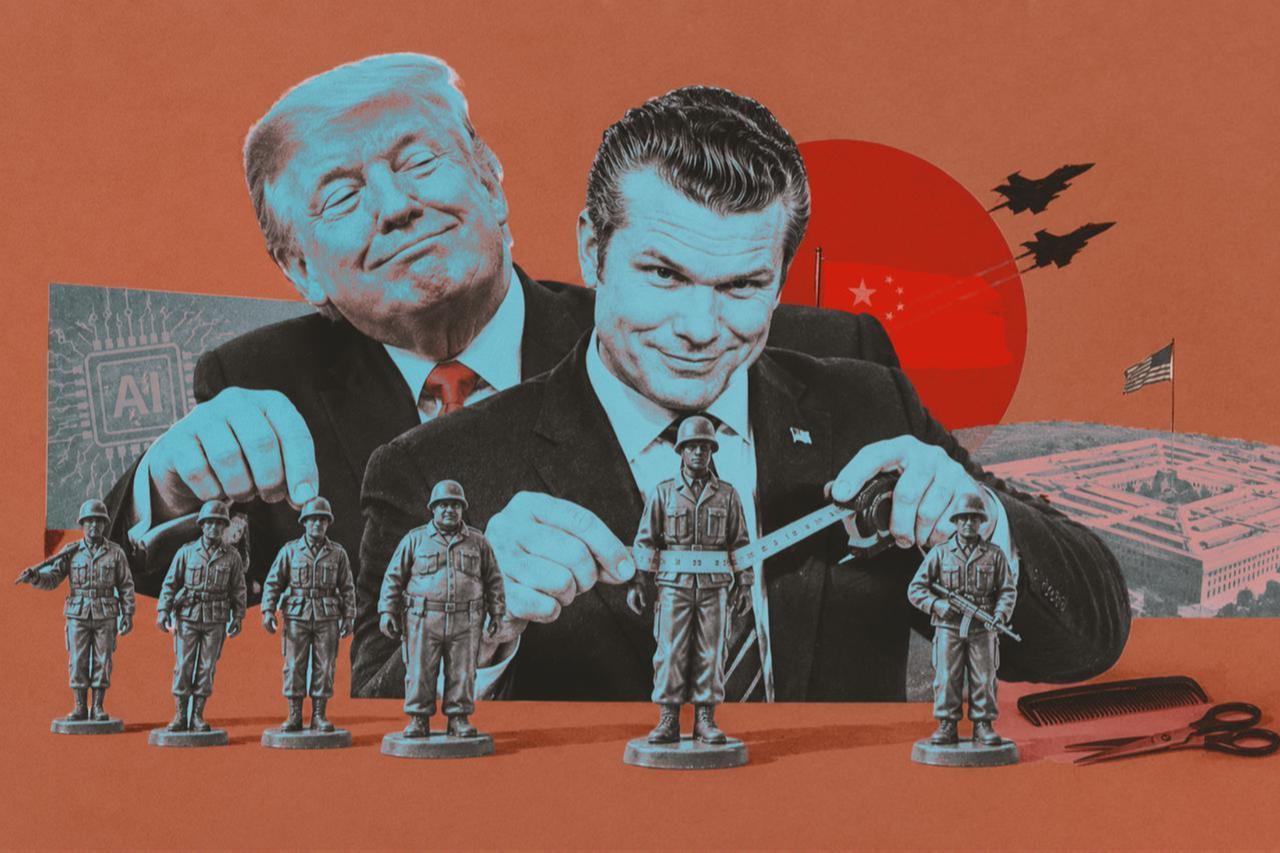
Somewhere in the digital shopping mall of American politics, you can buy combat action cards and porcelain figurines of President Donald Trump, tiny molded boots planted heroically in imaginary sand. G.I. Don marches in with slogans and accessories and the vague promise of victory.
War now comes with merchandise.
There are hats, shirts, commemorative coins, and limited-edition digital junk. I know, because I watch the war on American television, so you don’t have to. The cable networks roll out theme music that reverbs somewhere between Lou Reed’s “Walk on the Wild Side” and George Bizet’s “March of the Toreadors” from the opera “Carmen.”
The battlefield is miles away. The marketing department is right down the hall. But spectacle has a flaw, one ugly statistic that refuses to cooperate with the ratings strategy.
Body bags.
Americans can watch rockets’ red glare arc across foreign skies all night long. They’ll debate strategy between bites of tofu meatloaf and push little flags around maps like armchair generals.
But they don’t like body bags.
Not when they’re served up like dinner mints in quiet rows at Dover Air Force Base. Not when the names inside belong to kids whose friends called them Spud or Stuffy or Red.
Nicknames belong to the living.
Once those flag-draped cases (eight, so far, with several other troops injured) start steamrolling down the cargo ramp, the whole spectacle begins to wobble. The theme music fades. The graphics shrink. The living room gets very quiet.
History shows what happens next.
“When Johnny Comes Marching Home,” a Civil War–era song written in 1863 by Patrick S. Gilmore. (Video via YouTube/@americaviamitchmiller3549)
One bag becomes 10. Ten becomes a hundred. And somewhere in Washington, somebody starts measuring wall space for another monument next to the long black scar of the Vietnam Veterans Memorial.
Because every Living Room War ends the same way. America’s adventures abroad invariably end in the arithmetic of madness. Sooner or later, the signal will carry something heavier than smoke wafting from refinery stacks and tracer fire stitching the night sky.
And when it does, the quiet runway at Dover becomes the only broadcast that matters.


 Set as preferred source
 Set as preferred source


 7 min read