Newsletters


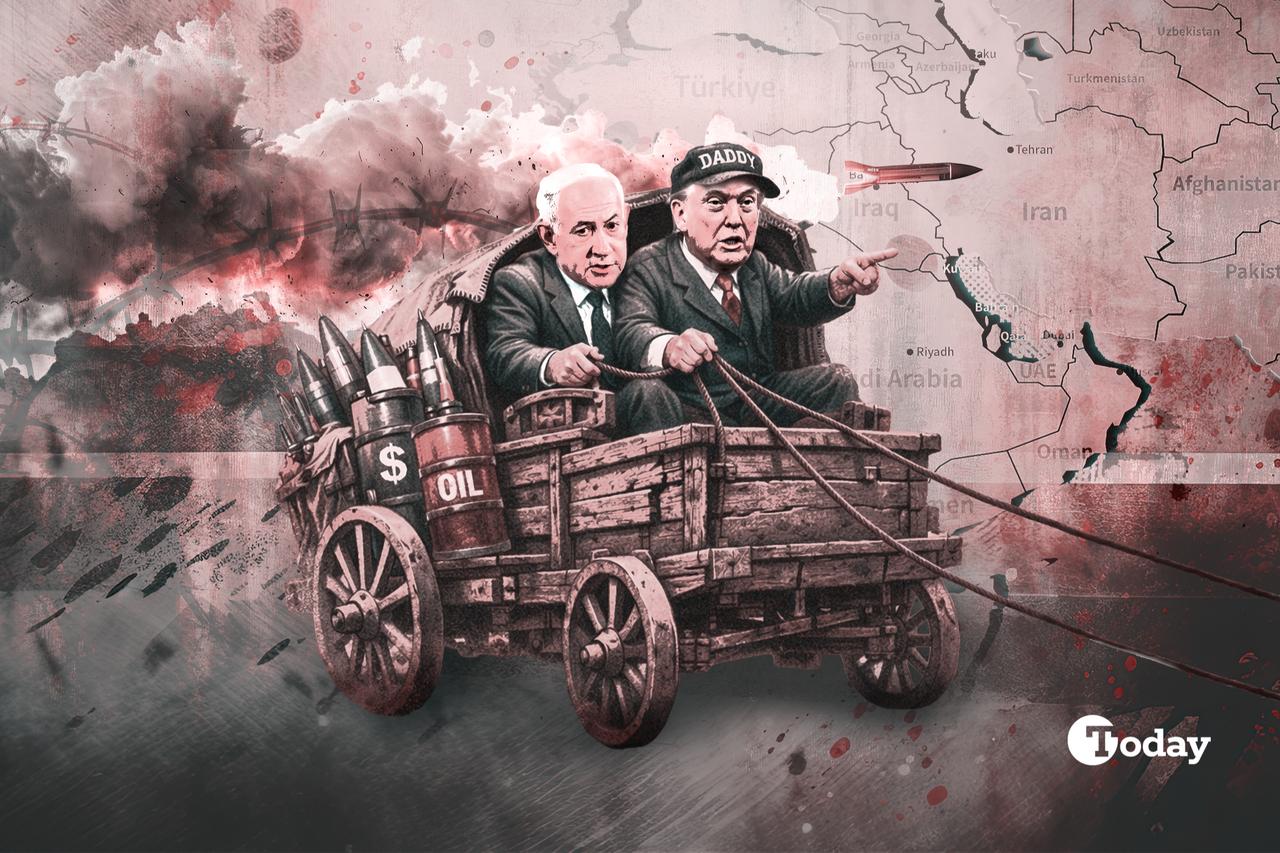


"They called me Daddy" is how U.S. President Donald Trump claims the leaders of NATO’s 32-member military alliance address him.
And "Daddy," NATO Secretary General Mark Rutte explains, "sometimes has to use strong language."
Well, Mommy has something to say about all that.
"War is like love, it always finds a way," says Mother Courage, the principal character in German playwright Bertolt Brecht’s "Mother Courage and Her Children," a storyline that in the throes of the Trump-Netanyahu war with Iran rattles like a loose cartridge in a coffee can.
American singer and actor Bobby Darin performs his iconic song Mack the Knife during a live appearance on The Andy Williams Show in 1970. (Video via YouTube/@shazi52)
Brecht, who also inked the universal hit song "Mack the Knife," meant it as a grim observation about human appetite—how conflict creeps through the cracks of politics, greed, and delusion until it becomes the central business of life.
Watching the conflict in Iran unfold on the glowing stage of ultra-high-definition television, it feels less like prophecy and more like a traffic report.
War, like love, always finds a way. But in the U.S., as revelations in the Epstein Files and during hours of U.S. Congressional hearings on Trump’s deceased bestie have shown in abundance, love often finds the wrong address.
A little over a week into bang-banging Iran, the official story—naturally delivered through a haze of podium speeches, breathless graphics, and twitter twatter—is that this war is about strength.
Resolve. National destiny. It’s the old and gassed-up vocabulary of empire, a jalopy with fresh wax.
But there’s another possibility. Perhaps Dad and Uncle Bibi will not trigger regime change in Tehran so much as accelerate the slow, grinding regime change already rumbling through the U.S.
History is full of wars that reshaped the countries that launched them. Vietnam did it. Iraq did it. Afghanistan stretched the timeline so long that Americans forgot where it started. Wars are supposed to bend the enemy’s government until it snaps. More often, they bend the attacker’s political system into a shape nobody recognizes afterward.
Trump, naturally, appears to be the apotheosis of a very old phenomenon: war hath no fury like a non-combatant.
This is not a new archetype. Every war has produced men who discovered a deep personal enthusiasm for battle, somewhere far away from the actual bullets. But Trump represents the perfected form. He’s the guy whose relationship to war resembles a spectator yelling advice from the cheap seats while someone else gets punched in the face.
The Oval Office pounds a steady drumbeat: decisive strikes, historic strength, tremendous success. Somewhere in the Persian Gulf, sailors and pilots are trying to translate those slogans into physics.
Meanwhile, the American media is performing the same ritual it has rehearsed for decades, a kind of journalistic ouroboros in which the snake eats its own tail and then quotes anonymous officials about the flavor.
The process is elegant in its absurdity.
Trump and his kowtowers tell reporters something wildly optimistic. The reporters dutifully print it. The same officials then read and watch those stories and cite them as confirmation that their claims were accurate.
In Washington, info about Epic Fury moves in a tight circle, like a dog chasing a car in a cul-de-sac. Prussian General Carl von Clausewitz tagged the dynamic "Vom Kriege" (On War).
“The great part of the information obtained in war is contradictory,” Clausewitz wrote in "On War." “A still greater part is false, and by far the greatest part is of doubtful character.”
Which is why, two centuries later, generals the world over still regard the patron saint of organized mayhem with the nervous respect usually reserved for nuclear weapons.
Clausewitz just didn’t describe war. He explained why it refuses to behave.
Somewhere in the middle of this havoc percolates the American public, trying to locate Iran on a map the size of a smartphone screen. If this war accomplishes nothing else—and the betting odds in Washington suggest that “nothing else” is the most likely outcome—it might at least provoke a few million citizens to discover that the Persian Gulf is not a brand of bottled water.
Even that may be optimistic.
Brecht’s Mother Courage tells the story of a woman who drags her wagon of supplies through the Thirty Years’ War, profiting from conflict while it devours her children one by one. She believes the war will sustain her. In the end, the war sustains only itself.
Trump and Netanyahu are partners in a dealership of Mother Courage wagons. Defense contractors, cable news networks, and think tanks with heroic acronyms. It’s an entire economy humming around the machinery of perpetual conflict. Every missile strike creates a press conference, every press conference generates an expert panel, and every panel eventually leads to another missile strike. The wheel spins because everyone standing near it gets paid.
Trump did not invent this system. But Daddy has become its most flamboyant ringmaster.
In another era, a president launching airstrikes against Iran might have sounded solemn, perhaps even burdened by the decision. Trump spins jingles like the casino owner he once was, announcing the opening of a new buffet. Victory is always imminent. The enemy is always weak. The next escalation is always just one more “tremendous” move away.
And yet wars are stubbornly indifferent to marketing.
Iran’s political structure has survived revolutions, sanctions, covert operations, cyberattacks, and a grinding eight-year war with Iraq that chewed up a million lives. It is not obvious that a few weeks of American bombardment—accompanied by press briefings that sound like late-night infomercials—will topple it.
What may topple something, however, is the growing sense inside the U.S. that the entire spectacle is detached from reality.
Mom would recognize the plot. The wagon keeps rolling. The war keeps paying the bills. And the characters at the center of the drama are so committed to the logic of conflict that they cannot imagine stopping.
“War is like love, it always finds a way.”
Or, as Clausewitz defined the pathology of Daddy Warbucks, “savage peoples are ruled by passion, civilized people by the mind.”
If those ghastly Epstein ledgers prove anything at all, it’s that whatever feverish impulse passes for passion in the Trump White House has little kinship with romance, vigor, or even the rough-and-tumble vices that belong to ordinary men.
It’s a degraded reflex, an instinct so far removed from the habits of civilized life that one is tempted to think it arrived from some lawless galaxy where civilization never bothered to land.
Perhaps the regime most endangered by Operation Epic Fury isn’t the one dodging bombs in Tehran. Maybe it’s the one broadcasting shuck-and-jive live from the Oval Office.


 Set as preferred source
 Set as preferred source


 7 min read