Newsletters


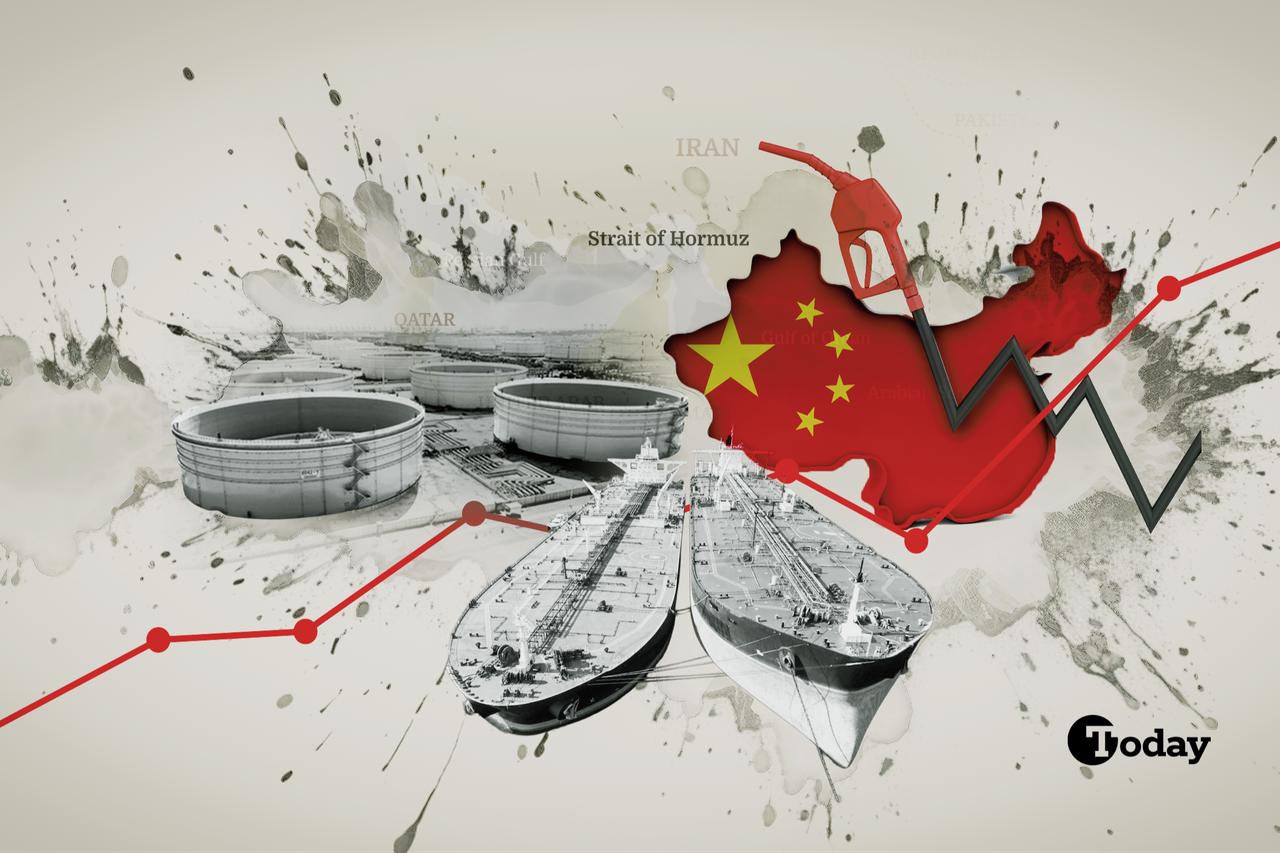


Shandong's teapot refineries built their business model on cheap Iranian oil, a ghost fleet, and paperwork that asked no questions.
The Gulf is on fire, and the invoices are coming due.
In Shouguang, a county-level city under Weifang in Shandong province, a sanctioned refinery is building 44 new crude storage tanks. Together, they will hold around 41 million barrels.
This is not, in itself, unusual. Shandong's independent refiners have spent years converting sanctions risk into local cash flow. What is unusual is the timing. The owner, Shandong Shouguang Luqing Petrochemical, was sanctioned by the U.S. Treasury in March 2025 for buying Iranian crude.
Still, the tanks keep coming. In Shandong, a sanction apparently doubles as planning permission. The province runs on what the industry calls "teapot refineries"—independent processors too small and too numerous for the state oil majors to bother with and too profitable for local governments to discourage.
For years, they have been among the world's most enthusiastic buyers of Iranian crude. Not because they love Iran, but because Iranian heavy sour barrels arrived at a discount of $8 to $10 below Brent before the war changed the arithmetic entirely. These suit their equipment and, on paper, can be made to come from somewhere else.
The crude does not usually reach Shandong as Iranian crude.
It is relabeled as Malaysian, Omani, Indonesian, or, occasionally, "Bitumen Blend"—with the straight face of a customs clerk stamping papers he has already decided not to read—after ship-to-ship transfers off Malaysia and, increasingly, Indonesian waters, often by tankers running dark.
It then heads for Shandong terminals and bonded storage. Or rather, it did until January 2025, when Shandong Port Group barred sanctioned vessels, and the trade quietly reorganized around alternative terminals and inland storage.
Commodity trackers, sanctions officials, and shipping insurers have been watching it for years, publishing their findings with the regularity of those who know they are being ignored. Everyone knows. The crude keeps moving.
The paper trail is not small. Shandong Shengxing Chemical bought more than a billion dollars' worth of Iranian crude through this system, wiring over $800 million to a single Islamic Revolutionary Guard Corps (IRGC) front company, China Oil and Petroleum Company Limited, between 2020 and 2023. A Qingdao-based trader, Lawen Namu Petroleum Trading, received at least 29 shipments of Iranian oil.
These are not rounding errors. After sanctions landed, both reportedly struggled to finance cargoes and sold products under other companies' names. And when Washington sanctioned Luqing in March 2025, it outed a man: Wang Xueqing. In a trade built on blurred origins and borrowed identities, that was as close as the system came to signing its work.
Beijing's position throughout has been one of studied diffidence.
The central government does not instruct refineries to buy sanctioned crude. It issues import quotas that make alternatives expensive, declines to enforce what Washington demands, and when sanctions damage operations badly enough, the market reorganizes itself under new names.
The state wanted order. Local governments wanted employment. Refiners wanted margin. These interests converged without anyone issuing a directive.
What the war has done is make fiction expensive.
China’s official line has now hardened as the war spreads through the Gulf. The Foreign Ministry condemned Iran’s missile and drone strikes on Gulf states as “unacceptable attacks on civilians and non-military targets” and called for an “immediate ceasefire” on March 11.
The language is unusually direct for Beijing, which has spent years balancing its energy dependence on Iranian crude with a broader interest in keeping the Gulf’s shipping lanes open.
Soon, the waterway itself began to close.
In the first week of March, Iran mined the strait, struck tankers with underwater drones, and set Iraqi oil terminals ablaze. By March 8, traffic that had averaged 138 ships a day had fallen to single figures.
Beijing can count barrels on paper, but stockpiles do not help a teapot refiner in Shandong whose cheap feedstock is sitting on the wrong side of a mined waterway, waiting for a shipowner, an insurer, and a terminal manager all to lose their nerve at once.
Ninety days of reserves is a comforting number in the capital. In Shandong, where the feedstock is Iranian, the discount has vanished, and the ship is not coming; it sounds less impressive.
The International Energy Agency (IEA) responded with 400 million barrels from strategic reserves. On paper, that looks formidable. In practice, it does not restore the grubby little chain that kept Shandong fed: the discounted cargo, the renamed bill of lading, the terminal willing to receive it, the storage tank inland, and the refiner prepared to pretend the barrel had always been somebody else's.
The war has disrupted 20% of global oil supply for nine consecutive days—more than double the Suez Crisis of 1956, when the United States held spare capacity equal to 35% of world supply and could bridge the gap. Saudi Arabia and the UAE, which hold most of the world's swing capacity, are themselves locked behind the same bottleneck. The release buys about 20 days.
Ebrahim Zolfaqari, spokesman for the IRGC's military command, told the world to get ready for $200 oil.
Macquarie put it less theatrically: crude will continue to trade like a meme stock until the solution is peace. At that price, the $8–$10 discount on which the teapots were built becomes their model memory.
Beijing's answer was to summon the shipping executives. Maersk and MSC were hauled in as though they could be talked into treating a mined, droned, and burning waterway as a normal trade lane. Somewhere in that conversation, the argument ends in Shandong: a refiner paying more, waiting longer, and discovering that even forged biographies need a ship.
Beijing's deeper complaint was that of a party that spent a decade harvesting the margins of disorder without acquiring any appetite for its costs. It wants the discount without the liability: the empire's spoils without the empire's bill.
By the second week of the war, Hormuz was no longer a shipping lane. The crude that continued to move through the strait was overwhelmingly Iranian and China-bound. The ghost fleet, it turns out, is the only fleet still willing.
The refineries in Shouguang, Zibo, and Dongying are not the main story. They are a symptom of a larger assumption: that the seams of the international order are there to be used.
Sanctions are for the scrupulous; for everyone else, they are a margin. The gap between what the rules say and what the market does was treated as permanent, profitable, and somebody else's problem to close.
When Trump and Xi sit down together, the agenda will be long and the language careful. The ghost fleet threading Hormuz will not be on it, nor the teapot refineries of Shandong, nor the inland tanks waiting for crude with a better passage.
The United States bears the cost of keeping the strait open; China has always been the beneficiary. Both men know it, which is why the meeting is still in the diary.


 Set as preferred source
 Set as preferred source



 4 min read