Newsletters


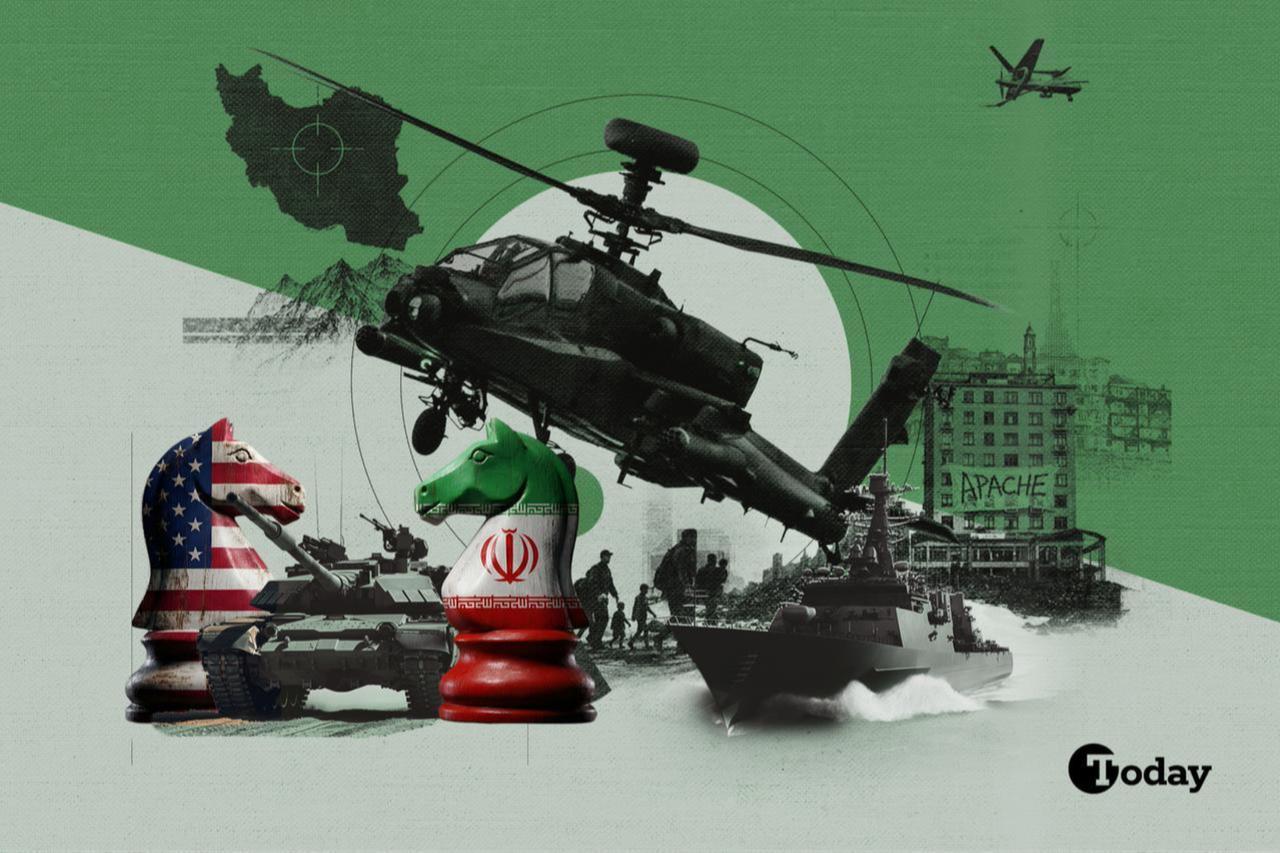


There are machines that arrive in war as tools and leave as legends.
I learned that lesson in Albania in 1999, where faith had become scarce, and Kosovar refugees carried hope the way misers carry coins.
On the potholed streets of Tirana, boys walked about with "Apache" scrawled on their forearms in felt-tip ink. The word appeared on T-shirts, school notebooks, and crumbling walls.
In the Italian-style cafes, men who had never seen combat drank beer beneath cigarette smoke and spoke knowingly of secret Apache missions that NATO insisted had never happened.
The helicopter was everywhere except in the sky.
Local radio stations reported Apache sightings with the cheerful certainty of weather forecasters predicting sunshine during a flood. Every distant rotor became an Apache. Every black silhouette above the mountains was transformed into the airborne avenger of Kosovo.
I remember a professor at the University of Tirana telling me something that has remained lodged in memory longer than any official briefing.
"The Apache is the only faith they have left."
The faith persisted even though the reality was considerably less divine. A fleet of 24 AH-64A Apache gunships had arrived on the muddy flats of Rinas Airport. Two had already crashed during training. Two pilots were dead. Nobody knew why. The helicopters themselves had not yet entered combat.
Yet the myth grew stronger. Years later in Afghanistan, Prince Harry, aka Captain Wales, served as a co-pilot and gunner aboard a British Army Air Corps Apache Longbow. He described the experience as “awesome.”
No warrior, however gifted, is immortal—and that truth returned yesterday over the Strait of Hormuz when an Apache fell from the sky.
U.S. President Donald Trump blamed Iran for shooting down his warbird. “The United States must, of necessity, respond to this attack,” he blustered on social media
The details of Trump’s response are now being debated by analysts, politicians and historians. They always are. Yet the image itself matters more than the technical explanation.
An Apache falling from the sky is not merely an aircraft loss. It is the collapse of a story.
The Apache, after all, was already wrapped in Hollywood’s wild west mythology before it reached the Balkans. The U.S. Army names many of its helicopters after Native American peoples: Apache, Black Hawk, Chinook, Kiowa, Comanche, Lakota. The names evoke warriors, horsemen, scouts and nations that endured conquest while becoming symbols of courage in the American imagination.
The irony is almost too perfect. Machines named after people who understood the limits of power became emblems of technological invincibility.
The Apache itself seemed born for mythmaking. Sleek and black, carrying Hellfire missiles and a chain gun capable of spitting armor-piercing rounds with industrial enthusiasm, it looked less like an aircraft than a dragon that had attended engineering school.
Military brochures promised near-supernatural powers. Newer Apache Longbows could supposedly see through darkness, prioritize targets, communicate digitally and dominate battlefields. Numbers were attached to these claims with scientific confidence: more lethal, more survivable, more precise.
War has always loved arithmetic.
The gods of antiquity counted victories too. But folklore has a way of punishing excessive confidence. The Greeks called it hubris.
The Persians knew it from their own epics. In the Shahnameh, mighty heroes armed with enchanted weapons often discovered that fate could humble strength in a single afternoon. The Norse had similar lessons. So did the Native nations whose names now adorn American helicopters.
For decades, modern militaries have sold a narrative that technology can abolish uncertainty. Each generation receives a new talisman: the battleship, the bomber, the tank, the missile, the stealth fighter, the drone, the cyber weapon. The promise remains remarkably consistent.
This machine will change everything.
And then reality arrives carrying a wrench.
In Albania, even while the Apache was being celebrated as an avenging angel, soldiers quietly worried about maintenance schedules, aging systems, and pilot error. Some officers wondered whether the Army had brought the wrong model. Others questioned why manufacturer specialists had not been called in after crashes. The public relations campaign projected certainty. The mechanics encountered complexity.
One world dealt in myths.
The other dealt in hydraulic fluid.
History suggests the second world usually wins.
The Trojan Horse was once considered ingenious technology. So were the armored knights of medieval Europe. So were the dreadnoughts that dominated naval strategy before submarines made them vulnerable. Every miracle weapon eventually discovers its mortality.
That is not an argument against technology.
It is an argument against adulation.
When Imam Hysni Hysa in Tirana pointed toward a formation of Black Hawks and confidently identified them as Apaches, he was expressing something profoundly human. Refugees wanted salvation. They wanted a machine powerful enough to restore homes, reverse suffering and punish evil.
Who could blame them?
But machines are poor substitutes for faith. Worse, they often become curses when nations begin believing their own advertisements.
The rotor blades spin across the Persian Gulf. The onboard computers calculate. The missiles guide themselves toward Iranian coordinates. And in Washington, inevitably, Trump, for the 37th time since launching Operation Epic Fury on Feb.28, declares that America has won its war against Iran.
That’s the moment mythology becomes dangerous.
The children of Tirana who wrote "Apache" on their arms understood helicopters as symbols. Symbols can inspire courage. They can sustain hope.
The trouble begins when generals, governments and entire societies mistake the symbol for the thing itself. The old myths understood this better than our modern ones.
The gods always punished hubris.
Crackpot wars, like gravity, accomplish the same reckoning with greater efficiency.


 Set as preferred source
 Set as preferred source



 7 min read