Newsletters


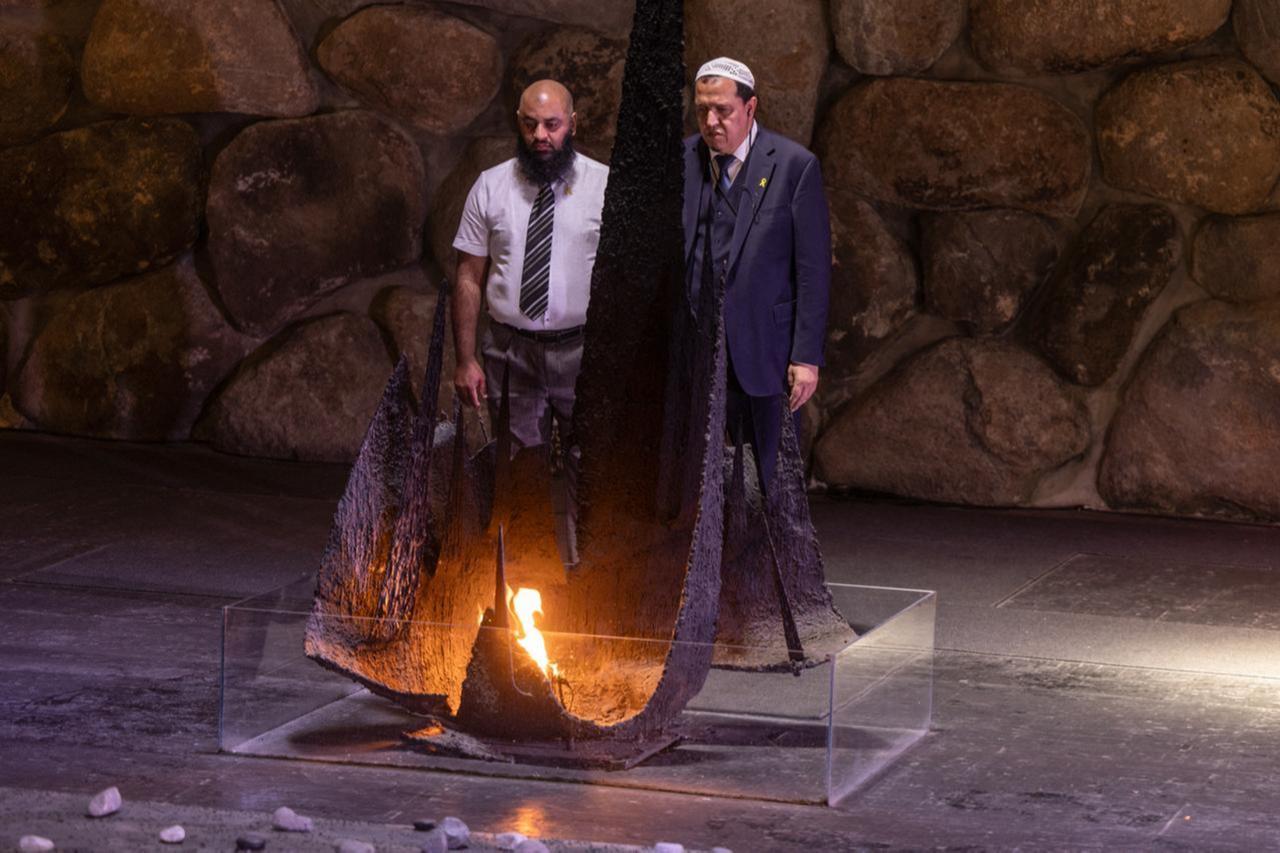


"International Holocaust Remembrance Day" will be observed on Jan. 27, marking the anniversary of the liberation of Auschwitz, the largest Nazi concentration, forced labor and extermination camp. The 81st anniversary of the Holocaust’s end will be commemorated in the shadow of the genocide in Gaza and the extreme instrumentalization of the Holocaust and the weaponization of its main ideological root—antisemitism. These tactics have been employed by Israel, particularly Prime Minister Benjamin Netanyahu, as well as by European countries such as Germany and the United States, largely to deflect criticism of Israel. Across the world, the cost of this weaponization was borne both by supporters of Palestine and, perhaps even more, by Jews, due to the global rise in antisemitism.
Since the start of the war in Gaza in October 2023, there has been a significant increase worldwide in attacks targeting Jews and Israeli citizens. Within two years, 13,339 antisemitic incidents were recorded globally. According to the Anti-Defamation League, antisemitic incidents in the United States rose by 140% in 2023 compared to 2022, and in 2024 alone, 9,354 incidents of antisemitic harassment, vandalism, and assault were recorded in the U.S.
These incidents increased by 316% in Australia within one year after the war began, while in France—home to the world’s third-largest Jewish population after Israel and the United States—they rose by 284% in 2023 alone.
To make these figures more concrete, among the most severe examples in 2025 were the following: in February, a man was stabbed at Berlin’s Holocaust Memorial; in May, a lone gunman killed two Israeli embassy staff members in Washington, D.C.; and in August, an attacker drove into pedestrians and stabbed a security guard at a Manchester synagogue during Yom Kippur, killing at least two people and seriously injuring several others.


According to the working definition of antisemitism of the International Holocaust Remembrance Alliance (IHRA), a 35-member-state intergovernmental organization aiming at promoting Holocaust remembrance, education, and research, antisemitism is “a certain perception of Jews, which may be expressed as hatred toward Jews. Rhetorical and physical manifestations of antisemitism are directed toward Jewish or non-Jewish individuals and/or their property, toward Jewish community institutions and religious facilities.” While this definition is not internally contradictory, the examples provided by the IHRA to explain the definition have led some people and groups to criticize it.
A recent development related to this definition was New York Mayor Zohran Mamdani’s decision, on his first day in office on Jan. 1, 2026, to revoke directives adopted by the previous administration preventing city employees from participating in the pro-Palestinian Boycott, Divestment, and Sanctions (BDS) movement and embracing the IHRA definition of antisemitism, arguing that according to the definition “demonizing Israel and applying double standards to it (were) modern forms of antisemitism.”
Although the IHRA definition of antisemitism itself does not explicitly include these phrases, there are few debated explanatory examples provided by the IHRA. According to the examples provided, “manifestations (of antisemitism) might include the targeting of the state of Israel, conceived as a Jewish collectivity,” while also highlighting that “criticism of Israel similar to that leveled against any other country cannot be regarded as antisemitic.” Because this distinction is difficult to apply in practice, it can be argued that it effectively restricts criticism of Israel.
Another explanatory example concerns “denying the Jewish people their right to self-determination, e.g., by claiming that the existence of a State of Israel is a racist endeavor,” which has fueled debate, as its opponents argued that the definition was equating anti-Zionism with antisemitism. Finally, another controversial explanation of antisemitism manifestation is “applying double standards to Israel by requiring of it a behavior not expected or demanded of any other democratic nation,” a highly subjective formulation that can be interpreted in different ways depending on one’s intent.
Despite containing such controversial examples, efforts to define concepts like this are both necessary and inherently risky. Setting aside the disputed explanations, the IHRA definition remains a valid and useful framework for those seeking to understand what antisemitism is but can become problematic when it becomes a reference for issuing and applying decrees and laws.
Antisemitism also has many manifestations linked to the Holocaust. The only connection between the Holocaust and the Gaza war, should have been that both are examples of genocide. Before Oct. 7, experts in the field widely argued that the Holocaust and the Israel–Palestine struggle—including the Palestinian mass displacement known as the Nakba—are two distinct historical events, and that comparing them or invoking one while discussing the other was a mistake that would weaken any argument, regardless of the subject. And most of these comparisons fall within the category of antisemitism. Because of Israel’s actions, a historical atrocity such as the Holocaust cannot be denied, minimized, or distorted and perceived as fabricated or exaggerated; doing so constitutes antisemitic manifestations.
However, Israel can be accused of instrumentalizing and weaponizing the Holocaust and antisemitism in order to deflect accusations of the massacre and the as-yet-unrecognized “genocide” it is carrying out in Gaza, and such accusations cannot be avoided by branding critics as antisemitic.
Comparing current events to the Holocaust or distorting the Holocaust is itself considered a manifestation of antisemitism under the IHRA definition. Yet today, the person who most distorts and instrumentalizes both the Holocaust and antisemitism is Prime Minister Netanyahu and the Israeli government itself. These include drawing parallels between the Oct. 7 attacks and the Holocaust; mentioning both events in the same sentence; justifying the war launched against Hamas by describing the IDF as fighting Hamas’ “neo-Nazi regime” in Gaza; calling U.S. student protests “antisemitic mobs” and likening them to pro-Nazi student groups at German universities in the 1930s.
It also includes accusing ICC Prosecutor Karim A. A. Khan—who issued arrest warrants against Netanyahu and former Israeli Defense Minister Gallant—of “callously pouring gasoline on the fires of antisemitism that are raging across the world,” describing him as among “the great antisemites in modern times,” and comparing him to German judges who approved anti-Jewish laws while implying that his actions target the entire State of Israel.
Netanyahu has also accused New York Mayor Mamdani of antisemitism for the initiatives mentioned above and described South Africa’s genocide case at the International Court of Justice and the U.N.’s famine warnings for northern Gaza as “blood libel”—in reference to historic antisemitic allegations that Jews ritually murdered Christian children. These are just some of the many examples through which Prime Minister Netanyahu and his government hollow out both the Holocaust and antisemitism, thereby causing the greatest harm to Jews and their memory.
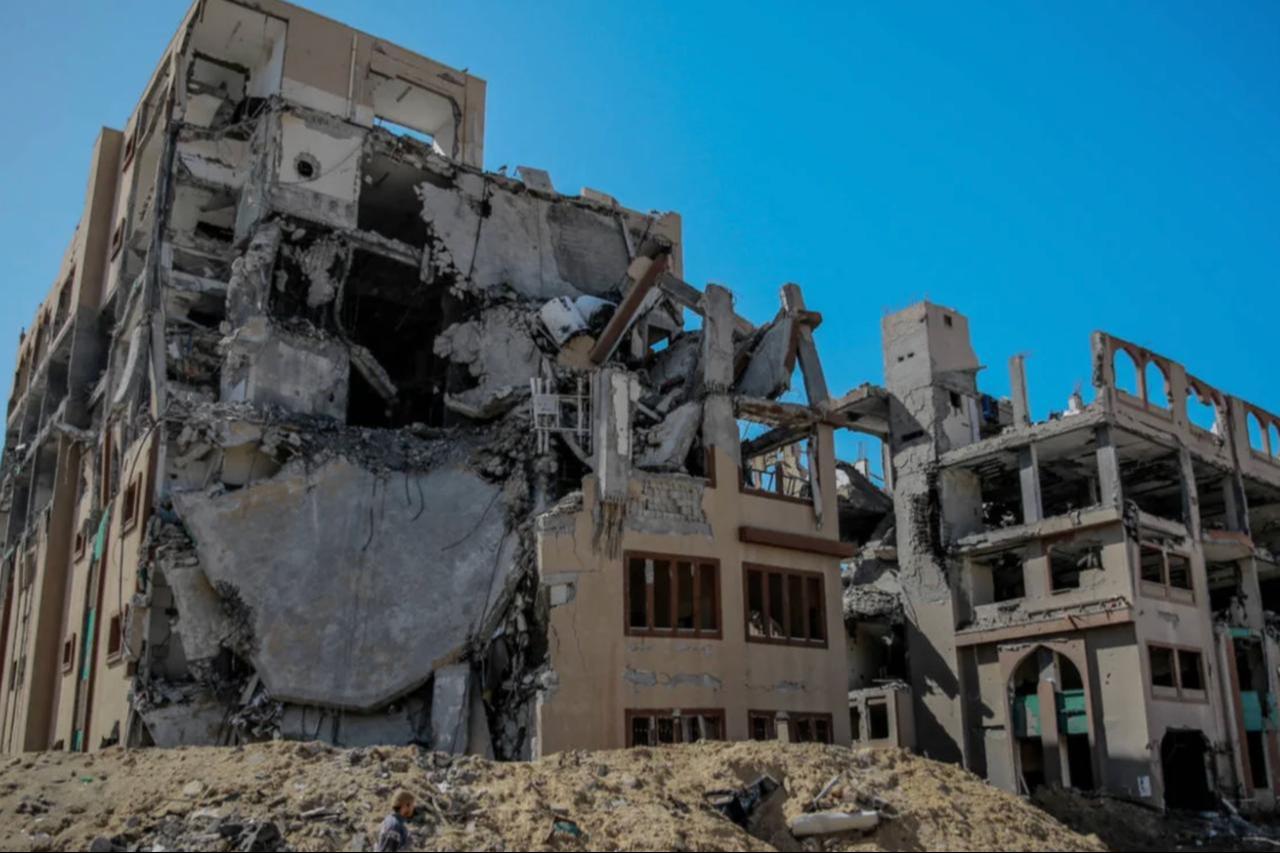
In Europe, the country that most aggressively punishes support for Palestine and criticism of Israel, and that most clearly weaponizes antisemitism, is Germany—a country whose predecessors carried out the Holocaust and which, despite decades of robust genocide and Holocaust education since the 1970s, today appears incapable of showing even slight empathy for what is happening in Gaza.
Since Oct. 7, 2023, Germany has carried out broad repression of Palestinian solidarity through policing practices and institutional pressure, while formally preserving constitutional norms. Through numerous non-binding resolutions based on the IHRA definition, nearly all criticism of Israel is branded as antisemitic. The November 2023 resolution states: “The Bundestag reaffirms its decision to ensure that no organizations or projects that spread antisemitism, question Israel’s right to exist, call for a boycott of Israel, or actively support the Boycott, Divestment, Sanctions (BDS) movement receive financial support.”
Individuals and institutions supporting Palestine are excluded—without judicial oversight—from public funding, education, cultural activities, events, and public life. Schools and universities impose bans on symbols, pro-Palestinian speech, and activities and activists are subjected to mass investigations, protest bans, and police interventions, which U.N. human rights experts have described as the “criminalizing, punishing, and suppressing” of legitimate Palestinian solidarity activism. Amendments to the citizenship law have introduced antisemitism checks as a prerequisite, while cultural institutions and NGOs face censorship and economic sanctions, all of which have led to widespread self-censorship.
Although Germany stands out as the country most forcefully opposing Palestinian solidarity in the name of combating antisemitism, it is not alone: in Italy and the United Kingdom, many demonstrations have also been met with police violence.
In the United States, in the year following the start of the Gaza war, thousands of students across many universities took part in protests criticizing Israel and U.S. support for Israel, occupied campus buildings, and set up tents on university grounds. University administrations often shut down these movements through police force. While these protests have since declined, in the final months of 2025, police began arresting students who had participated in past protests; students were suspended from campuses and fined. President Trump called for the cancellation of student visas for foreign students involved in these events and stated, “Come 2025, we will find you, and we will deport you.”
Ten days after taking office, on Jan. 29, Trump issued an executive order titled “Additional Measures to Combat Anti-Semitism,” stating that after Oct. 7, there had been an “unprecedented wave of vile antisemitic discrimination, vandalism, and violence” in schools and on campuses, and listing a series of measures to combat antisemitism in higher education.
Following the decree, the Federal Task Force to Combat Anti-Semitism under the U.S. Department of Justice announced that it would visit 10 college campuses that had experienced antisemitic incidents. Subsequently, funding cuts were imposed on Columbia University, UCLA, and Brown University over allegations that they had failed to combat antisemitism on campus. In the U.S., criticism is growing that Trump is violating academic freedom and free speech under the pretext of protecting Jewish students. At the same time, many academics at US universities have also lost their jobs for similar reasons.
On the 81st anniversary of the end of the Holocaust, antisemitism has become a more powerful and urgent challenge to confront than ever, exacerbated by Israel’s actions. However, because the concept is being instrumentalized and weaponized for political reasons, this struggle has become more difficult than before. As a possible solution, a think tank has published a declaration arguing that antisemitism and Islamophobia must be fought simultaneously, and international consensus around this idea appears to be growing. If this approach gains sufficient support, it could at least represent a step toward addressing Islamophobia—now a serious problem in Europe—and tackling both forms of hatred together would strengthen these struggles.


 Set as preferred source
 Set as preferred source



 7 min read