Newsletters




This article was originally written for Türkiye Today’s biweekly newsletter, Levant Archaeology Digest, in its Nov. 11, 2026 issue. Please make sure you subscribe to the newsletter by clicking here.
Eight loaves of bread, a handful of wheat and lentil seeds, and the remains of a room destroyed by fire. At first glance, these may seem like modest discoveries compared with the monumental architecture, royal tombs and elaborate objects that usually attract public attention. Yet, as an archaeologist, I find that such evidence can tell us something equally important about the ancient world: how ordinary people lived.
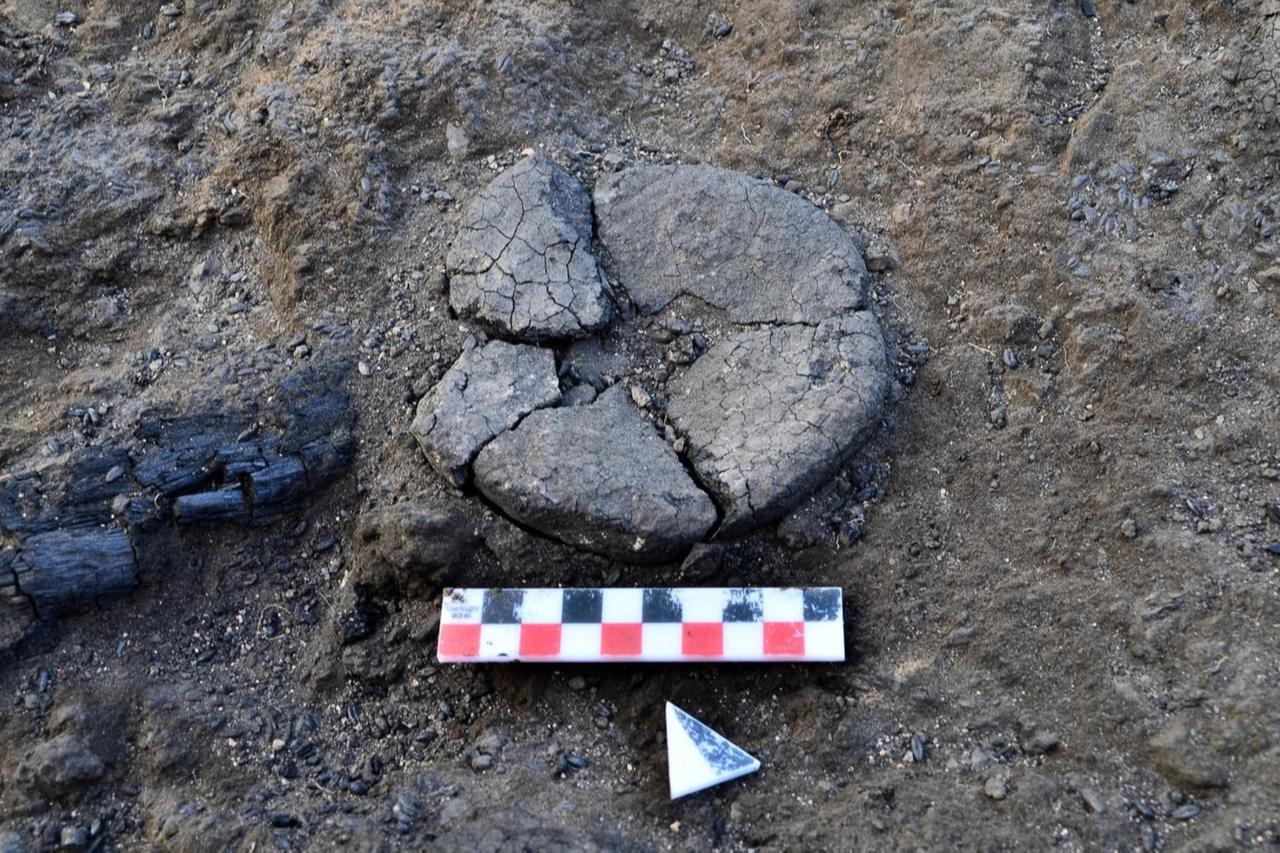
The recent discovery of eight carbonized loaves of bread at Seyitomer Mound in western Türkiye's Kutahya province takes us back some 5,000 years to the Early Bronze Age. The loaves were found near an oven, alongside wheat and lentil remains, in a room where agricultural products appear to have been stored until a fire brought the shelving down.
What interests me most is not simply the bread’s age, but its archaeological context. This is not an isolated object whose original purpose must be reconstructed through distant comparisons. We have bread, agricultural remains, a storage area and evidence of a destructive event, all preserved within the same setting. Together, they let us approach a moment of domestic life with unusual clarity.
Bread is one of the most familiar foods in the world today, but its history reaches far beyond the societies we usually associate with the emergence of cities and states.
At Shubayqa 1, a Natufian site in northeastern Jordan, archaeologists identified charred remains of bread-like products dating to approximately 14,400 years ago. These remains predate the widespread adoption of agriculture in the region by several millennia, suggesting that hunter-gatherer communities were already processing wild cereals and other plants into foods resembling flatbread.
Finds like this have fundamentally changed the way we approach the relationship between bread and agriculture. We often imagine a straightforward sequence: humans began cultivating cereals, settled in villages and subsequently developed breadmaking. The archaeological evidence suggests a messier story: people were experimenting with cereal-based foods long before farming became an established way of life.
Anatolia offers another essential part of this history. At Catalhoyuk, the Neolithic settlement in central Türkiye, archaeobotanical research has documented the importance of cultivated cereals and food preparation in settled communities. Finds from the site include a carbonized, bread-like food remnant reported from a domestic context dating to roughly 8,600 years ago.
Further east, the Neolithic settlements of southeastern Anatolia, including Cayonu, provide evidence for the long transformation of food production, storage and the relationship between communities and cultivated plants. These sites remind us that the history of bread cannot be separated from the broader changes that reshaped human settlement and social organization.
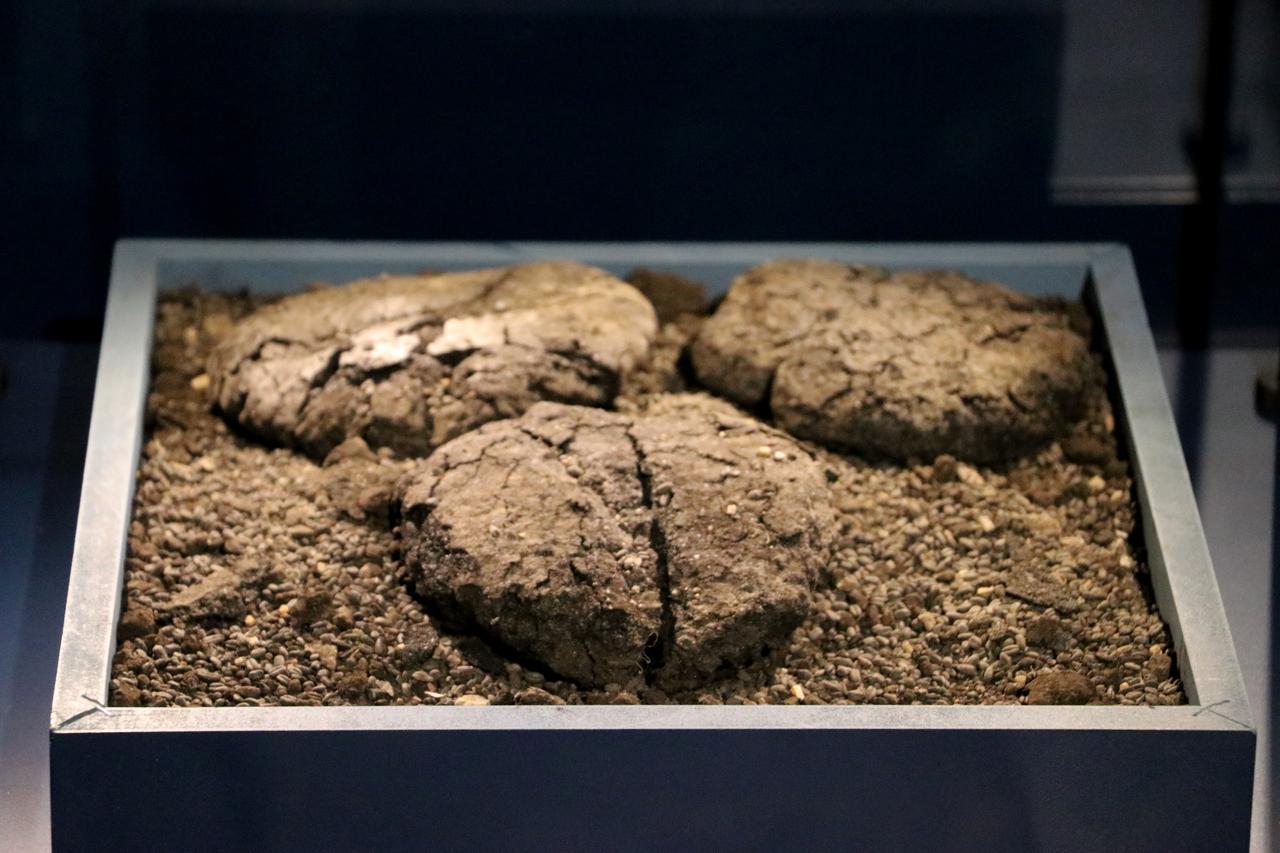

By the time the inhabitants of Seyitomer Hoyuk were storing their bread in the Early Bronze Age, cereal cultivation and food preparation had already undergone thousands of years of development. The discovery therefore does not mark the beginning of breadmaking. Instead, it offers a rare opportunity to examine how an established food tradition operated within the domestic and economic life of an Anatolian community.
Comparisons with ancient Egypt are equally revealing. Egyptian tomb paintings, models and archaeological remains document bread production as a central part of everyday life, religious offerings and systems of food distribution. Bread was not merely something people ate; it was also embedded in economic relationships and ritual practices.
In Mesopotamia, cuneiform records provide another perspective, documenting cereals, food allocations and the administration of resources within complex urban societies. These written sources allow us to examine food through institutions and systems of distribution, whereas the remains from Seyitomer bring us much closer to the physical environment in which food was kept.
This distinction matters. Written records can tell us what was distributed, counted or required, but archaeological remains can reveal how food was handled and stored, sometimes preserving details that no administrator considered worth recording.
There is also an irony in the Seyitomer discovery. The fire that destroyed part of the settlement was also responsible for preserving its bread. In archaeology, destruction can sometimes create extraordinary conditions for survival. Organic materials that would ordinarily decay may be transformed through carbonization, leaving behind evidence that survives for millennia.
But we should not confuse preservation with a complete picture of the past. Eight surviving loaves do not tell us what an entire settlement ate, how often bread was consumed or who had access to it. Answering those questions requires further study of plant remains, food-processing equipment, architecture and other archaeological evidence.
This is where I believe the significance of Seyitomer lies. Its importance is not in claiming that Anatolia invented bread, nor in competing with other regions over which produced the earliest example. Archaeology is far more interesting when we move beyond such rankings.
Instead, the discovery allows us to connect an ordinary activity in western Anatolia with a much longer history stretching from prehistoric communities in the Levant to Neolithic settlements in central and southeastern Anatolia, and onward to the urban societies of Egypt and Mesopotamia.
As an archaeologist who has spent years working in Anatolia, I am particularly interested in discoveries that bring us closer to the people who rarely appear in written history. We know the names of kings, rulers and military commanders from the Bronze Age, but we know far less about the individuals who prepared meals, stored grain or maintained the households that supported those societies.
The bread from Seyitomer cannot tell us their names. It cannot reveal who baked those loaves or who was expected to eat them. What it can do is preserve evidence of their activities in a way that monumental remains rarely achieve.


 Set as preferred source
 Set as preferred source



 11 min read