Newsletters




This article was originally written for Türkiye Today’s weekly newsletter, Saturday's Wrap-up, in its July 11, 2026, issue. Please make sure you subscribe to the newsletter by clicking here.
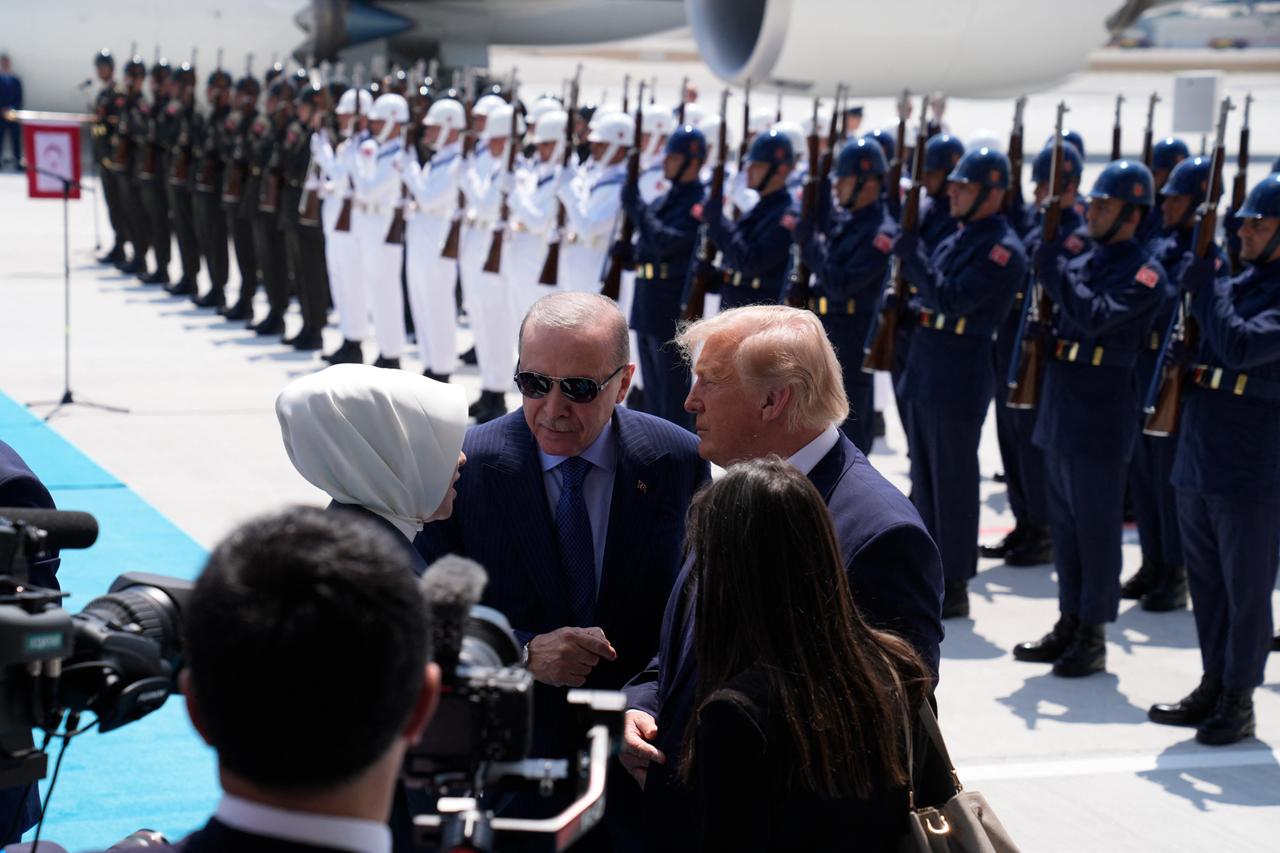
“Watching Trump live in the press room felt strange. You can’t just change the TV channel like you do at home,” said an experienced Turkish journalist after Trump ended his press conference in Ankara.
During the presser, Trump called a journalist insecure for eagerly waiting for the microphone and told a female reporter she was working for a failing network. Witnessing it all live feels different. Trump showed little empathy in how he handled both exchanges, a pattern some argue is better for a therapist’s couch than a press briefing.
The foreign policy subjects he touched on are difficult to analyze with any certainty, given how quickly he can change his mind overnight. Some people call it strategic ambiguity, but there might be some simpler explanations for it.
Overall, NATO Secretary-General Mark Rutte designed the summit to please Trump. The steps he took and called revolutionary were not really that. They replaced American equipment with European alternatives rather than genuinely strengthening NATO’s defense capabilities. This was about keeping Trump happy, not about advancing NATO’s defense capabilities.
Almost 20 minutes after Trump concluded his remarks on the second day of the NATO summit, President Erdogan stepped before the press in the same room, and his mood was notably upbeat. He cracked jokes, made fun of a Greek reporter, and he was pleased because all the questions were too repetitive to tire him. He dodged two questions, including a straight, yes-or-no question on the “casus belli” issue with Greece.
Erdogan sounded intent on avoiding escalation, inviting the Greek side to the table rather than entertaining any sort of military tension. He was careful not to disturb the mood that the NATO summit had created, one that arguably cemented Türkiye’s role as a strong peace advocate, and a nation that deters but leads with diplomacy.
Erdogan certainly enjoys the current geopolitics. Foreign leaders who were once vocal about “democratic backsliding” and “Türkiye’s aggressive foreign policy steps” are not so concerned anymore. Rutte is not very much concerned either, he dodged a question on that quickly. But the question that visibly unsettled him was more pointed: whether he was losing “self-respect” by staying silent when Trump attacked every NATO ally sitting next to him. His face said what his words did not.
Yet, there is a bigger aspect. If you think Erdogan is politically cornered and will be beaten easily in the next presidential elections, consider changing your friend circle. Sitting too much in Beyoglu cafe or attending an international conference in Istanbul will not really teach you much about Turkish domestic politics.
Erdogan still enjoys broad support among his traditional voter base, and the fact that he kept the country safe while the south and the north were a fireball boosts his chances. And this is all despite the economic crisis, and imprisonment of major political figures. Erdogan does not need Trump’s support for international legitimacy or to take steps he wants in Turkish politics. I can mention countless examples where he did not care about international reactions in both cases. However, the international support, especially what he sees from Trump, is a game changer in Türkiye's regional rivalry with Israel which Türkiye started to deem existential.
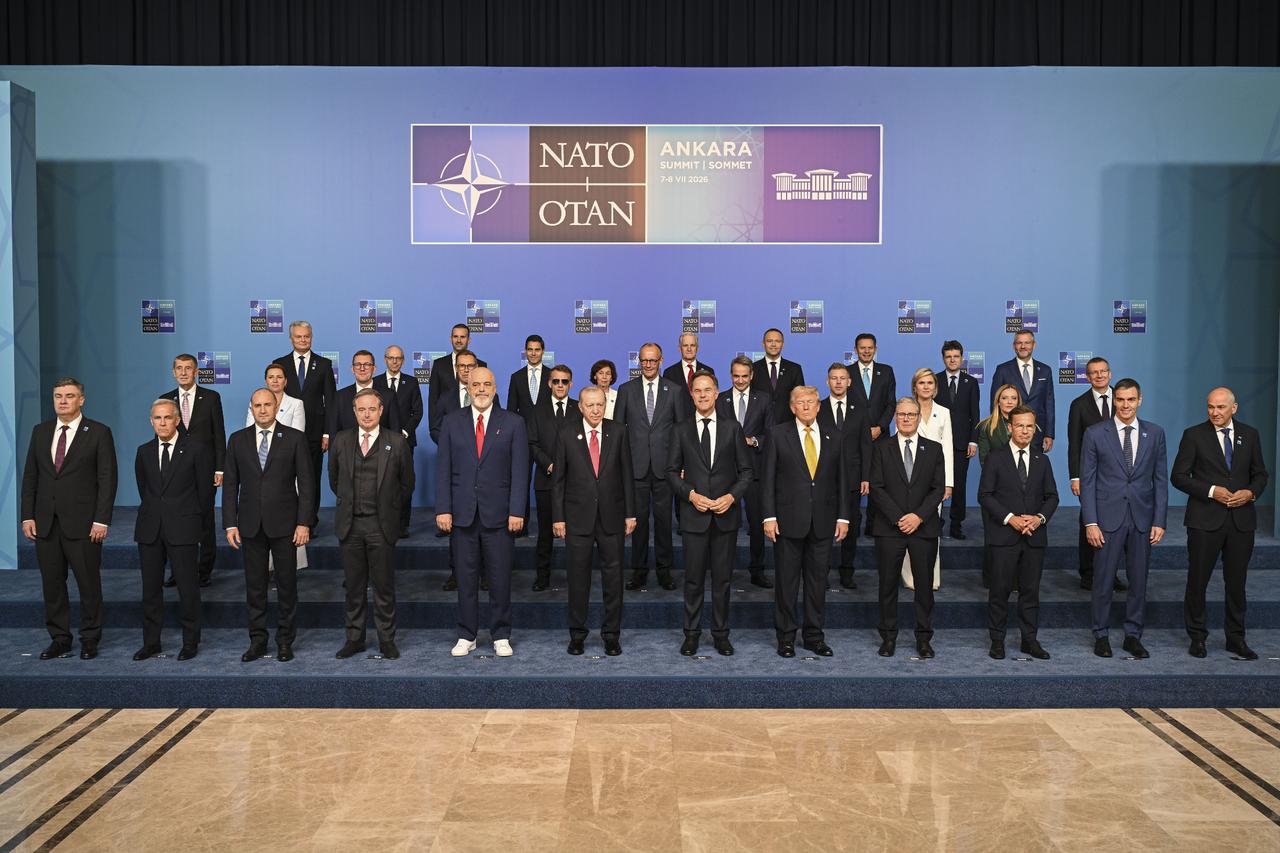

While Erdogan’s domestic standing is largely insulated, his military and diplomatic wishlist is very real—and sitting at the top is the unresolved F-35 fighter jet issue. So, what did Trump actually say on the matter before leaving Ankara? True to form, he didn't offer a signed contract, but he left the door wide open. During the summit, Trump stopped short of explicitly overriding congressional opposition but publicly acknowledged that selling the stealth jets to Türkiye "made sense." He openly mused to the press, "Why wouldn't we do that?" and stated it was "certainly something we will consider." For a highly transactional leader like Trump, framing the potential sale as a logical move rather than a geopolitical concession is a massive rhetorical shift.
I briefly interviewed U.S. Sen. Lindsay Graham in Ankara who said he is open to such a sale, but he recognized that there might be some difficulties in the Congress. He kept praising Türkiye as being the only Muslim nation in NATO, but he ignored my last question when I asked why Türkiye’s Muslim identity would be an important factor in a defense alliance.
Erdogan expertly played with Trump's ego, implying that “Mr. Trump always keeps his word.” There are five Turkish F-35s rotting in U.S. military bases, and Erdogan requires a quick solution on them to break the ice to acquire more in the future. Even if the F-35s remain stuck in bureaucratic limbo for now, the prospect of lifting sanctions or securing U.S.-made engines for Türkiye’s indigenous KAAN fighter aircraft serves as a significant diplomatic victory. It signals to domestic audiences and regional rivals alike that Ankara is back in Washington’s good graces through direct leader-to-leader chemistry.
Beyond bilateral hardware deals, the broader takeaway from the Ankara summit was how the alliance handled the most explosive issue on the table: the ongoing war in Iran. For the first time, NATO managed to declare a joint position on Iran, presenting a united front despite severe internal fractures. However, the joint position did not offer anything groundbreaking.
Trump arrived in Türkiye deeply frustrated, publicly bashing European allies for not adequately supporting the U.S. during the initial strikes. Yet, the final communiques managed to paper over these transatlantic cracks, delivering a unified statement on collective defense. However, the most fascinating aspect of this joint position wasn't what was included but what was left out: there was absolutely no mention of China. I witnessed an Aussie journalist being frustrated about that. Ultimately, the Ankara summit proved that while NATO can still choreograph a display of unity against a regional adversary, it remains slightly paralyzed on how to address the global elephant in the room.


 Set as preferred source
 Set as preferred source


 7 min read