

 Newsletters


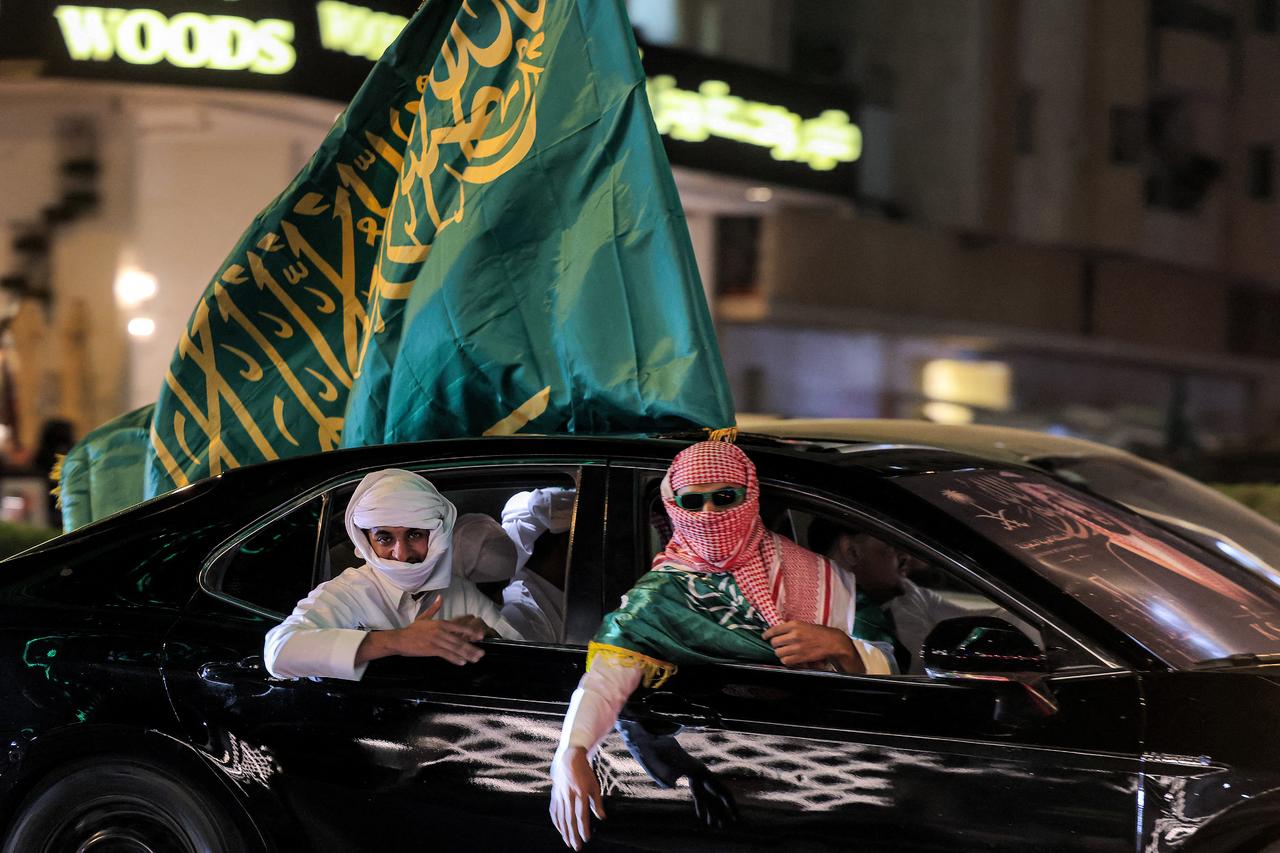


Pressured on multiple fronts and grappling with security issues unseen since its founding, Saudi Arabia seeks a remedy in an F-35 deal with the United States, a pact with clear positive outcomes.
That Saudi Arabia will acquire 48 F-35s from the United States is not a surprise.
The kingdom has sought the advanced fifth-generation fighter jet for some time, and with the region becoming more dangerous thanks to Iran, Israel, and the Houthis, it makes sense for Saudi Arabia to obtain the best combat aircraft that money can buy.
What remains a mystery is whether Saudi Arabia will have to concede too much in exchange for a massive defense deal that would undoubtedly boost its military capabilities.
The U.S. State Department announcement on Sept. 17 stated that the F-35 sale "will support the foreign policy and national security objectives of the United States by improving the security of a major non-NATO ally that is a force for political stability and economic progress in the Gulf region."
The State Department listed training, spare parts, and advanced systems that will come as part of the sale.
Not everyone is on board, however.
Representative Raja Krishnamoorthi, a Democrat from Illinois who sits on two critical House committees—on Intelligence and "Strategic Competition between the United States and the Chinese Communist Party," took to the social media network X to oppose the deal, citing Riyadh's close ties with Beijing and possible Chinese access to critical U.S. defense technology.
"The Trump Administration should not move forward with its proposed sale of F-35 fighter jets to Saudi Arabia when our own intelligence community is warning that it could put the crown jewels of American military technology within reach of the Chinese Communist Party," Krishnamoorthi argued.
That was, of course, before Politico reported on Saturday that a cargo aircraft carrying F-35 parts from Australia to the United States made a surprising stopover in Hong Kong, potentially allowing the Chinese government to help itself to the "goodies."
Putting aside that Monty Python-esque scene in Hong Kong, what are the trade-offs facing Saudi Arabia with the F-35 deal? What does $24 billion buy, what else will the Kingdom potentially give up acquiring the F-35, and what will be the broader regional implications?
For President Donald J. Trump, selling F-35s to Saudi Arabia is good business. Since his first term, Trump has used the promise of Saudi investments into the U.S. economy to burnish his credentials as a “deal-making artist.” At the beginning of Trump’s second term last year, the White House announced that Saudi Arabia, the world’s petro-superpower, planned to invest $600 billion in the United States.
The F-35 sale, as well as the recent deal to sell civilian nuclear technology to the kingdom, is the price America would have to pay to keep the Saudis happy.
But something is rotten about what the Saudis are being sold.
Following the renewed attacks by Yemen’s Houthis, despite Saudi requests, Trump has decided not to violate last year’s precarious ceasefire deal he had struck with the Iran-backed Yemeni group that has put great pressure on maritime shipping in the Red Sea and the Bab el-Mandeb Strait.
Add to that Israel trying to pressure Riyadh through the Americans to join the Abraham Accords—an offer that was renewed after the Houthi attacks on the kingdom earlier this month—and Iran-allied militias in Iraq also launching strikes against critical Saudi energy infrastructure, one cannot help but wonder if the F-35s are a carrot in a situation where the Saudis are shown a bunch of sticks by the Americans, Iranians, and Israelis.
Another "quid pro quo" that might be brought before the Saudis in exchange for the F-35 sale is reviving the India-Middle East-Europe Economic Corridor (IMEC), an idea that would connect India to markets in Europe through a series of seaports, rail and road networks passing from the Persian Gulf through Saudi Arabia to Israel’s Mediterranean ports.
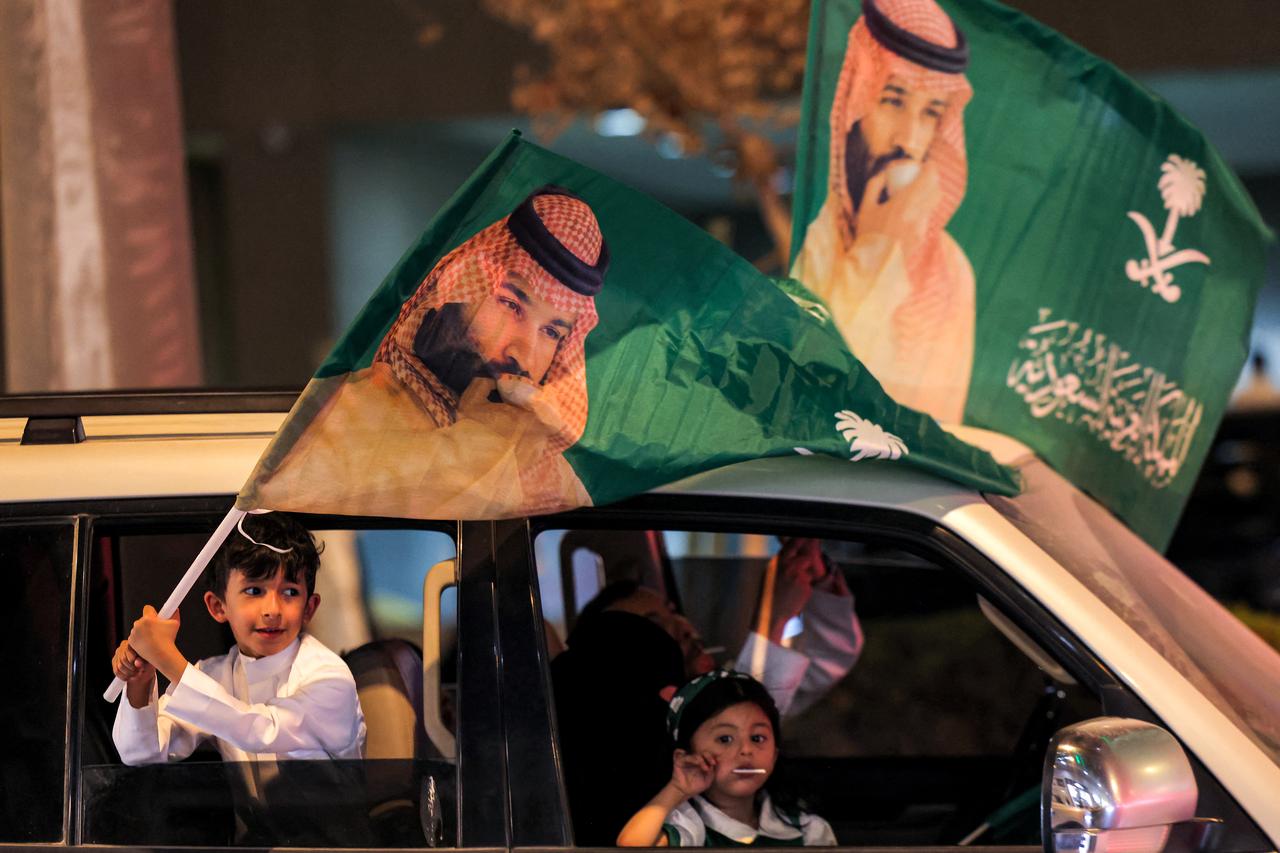

Given that U.S. law stipulates that every U.S. administration must ensure that Israel maintains a qualitative military edge (QME) over its neighbors, the Saudi F-35 deal would enable Israel to request even bigger military sales and aid packages coming from that great house of Israel worship, the U.S. Congress, which will almost certainly upend the regional balance of power in the Jewish state’s favor.
That is likely going to include more air and missile defense batteries, naval vessels, and of course, fighter jets.
The F-35As (conventional take-off and landing version) are an obvious choice. Israel’s 50 F-35s have given it a considerable advantage over regional adversaries, especially Iran. Tel Aviv probably used the F-35s to strike the Houthis in 2024 as well as the Hamas political committee in Qatar in September 2025 while the Palestinian group was negotiating the Trump-sponsored Gaza ceasefire.
According to the Jerusalem Post, Israel’s F-35 fleet will increase to 100 and be bolstered by another 25 F-15IAs, the newest version of the twin-engine powerhouse formerly produced by McDonnell Douglas and now by Boeing. Israel has been operating older versions of the F-15 since the 1980s.
For Türkiye, much of the above is a cause for concern.
That Washington and Tel Aviv may be pressuring Riyadh to opt for the Abraham Accords instead of the Mecca Joint Defense Agreement that was signed on Aug. 7 would jeopardize a plan that aims to create a deterrent against regional spoilers such as Iran and Israel.
In addition, if the sale of F-35s is coupled with other “carrot or stick” sales to Riyadh, then the rumored talks between Türkiye and Saudi Arabia for the joint production of Turkish Aerospace Industries’ fifth-generation stealth fighter, National Combat Aircraft (MMU) “Kaan,” will be jeopardized.
Of course, some of that could prove to be needless alarmism. After all, since the mid-2010s Riyadh has been charting a much more independent course for its domestic affairs and foreign policy, so perhaps the worry that the Mecca pact or Turkish-Saudi defense industrial cooperation is overblown.
After all, buying MMU Kaan would still make sense for Saudi Arabia when it will need to conduct operations much more independently from the United States or over Israeli protests in Washington. A sovereign platform free of end-user monitoring or Washington’s long-rumored-but-never-proven “kill-switches” ensures Riyadh is not left grounded whenever its operational priorities diverge from U.S. or Israeli red lines.
Similarly, with Saudi Arabia unlikely to join the British-led Global Combat Air Program (GCAP) anytime soon (at least not on terms that Riyadh might like), it might be far more prudent for the kingdom to invest in a joint next-generation fighter initiative alongside Türkiye and Pakistan—anchoring its long-term defense posture within a coalition that genuinely treats Riyadh as an equal partner rather than a transactional customer.
Ultimately, $24 billion for 48 F-35s may buy Saudi Arabia the most advanced combat aircraft in the skies, but it also purchases a web of geopolitical entanglements designed to keep Riyadh in a tight American (and Israeli) straitjacket. Between shoring up Israel's QME, absorbing Iranian and Houthi threats without guaranteed U.S. retribution, and sidelining sovereign regional pacts like the Mecca defense agreement, the true cost of the F-35 dwarfs its sticker price.
If Saudi Arabia trades away its strategic autonomy for fifth-generation prestige, it may discover too late that the real price of the F-35 was the very strategic independence it spent the last decade trying to build. That is a much bigger risk than anything that the Houthis or Iran could throw at Saudi Arabia.


 Set as preferred source
 Set as preferred source


 1 min read
 1 min read


