

 Newsletters




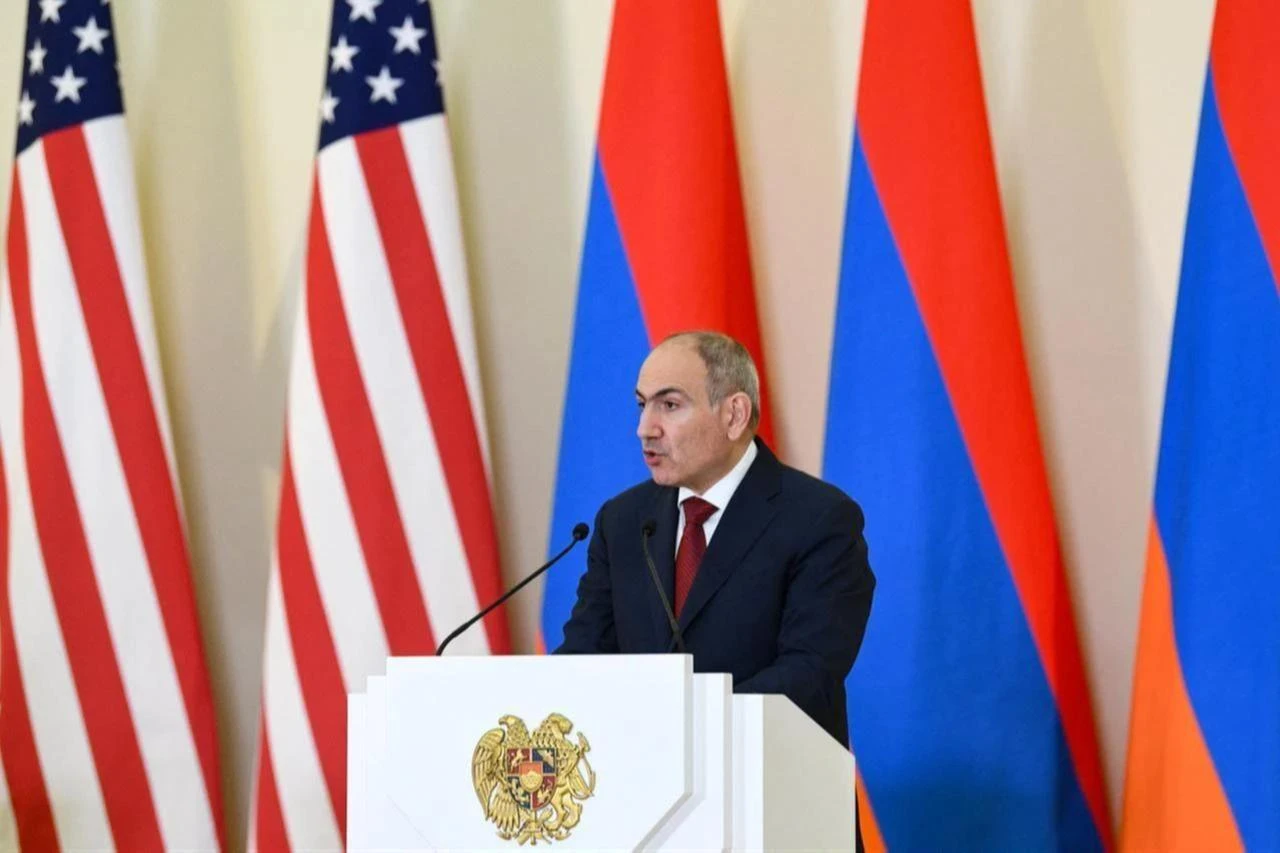
I was in Yerevan in early May for the European Political Community Summit when the news broke on the sidelines: Armenia's special representative for the normalization process, Ruben Rubinyan, and Türkiye's special envoy, Serdar Kilic, had signed a memorandum on the joint restoration of the Ani Bridge. Armenian Prime Minister Nikol Pashinyan called it, in a post from the summit floor, the welcome result of a "productive exchange" with Turkish Vice President Cevdet Yilmaz.
Yilmaz, for his part, said the bridge's restoration would help build "a solid environment for peace and security" in the region.
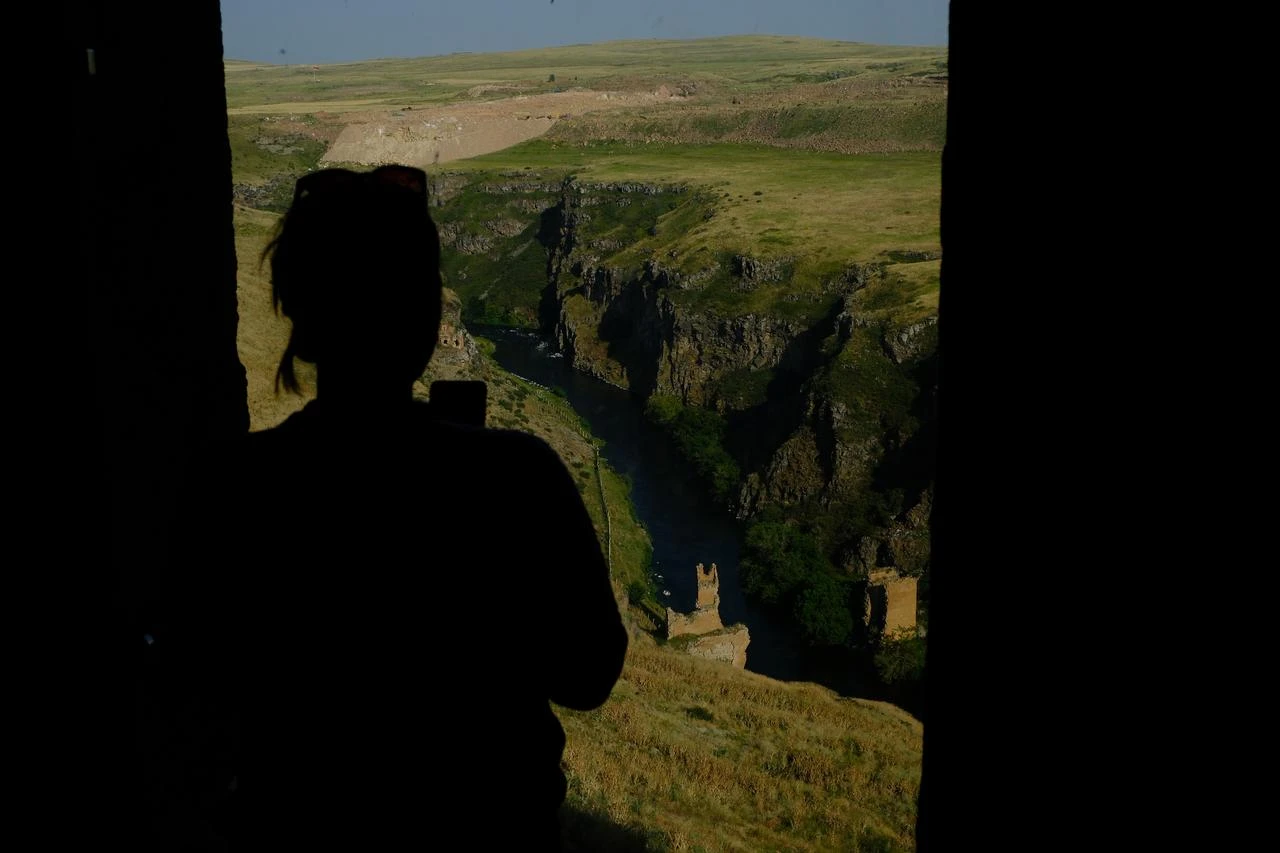
At the time, that was a paragraph in my notebook and a photograph of two men signing paper in a conference room. Three months later, in late July, I finally stood at the thing itself: the edge of the Akhuryan gorge at Ani, looking straight down at the bridge the protocol is meant to rebuild.
Its two towers still lean toward each other from opposite banks, one in Türkiye, one in Armenia, with nothing but river and open air between them. It is a strange thing, watching a diplomatic abstraction turn into a specific pile of stone you can point a camera at.
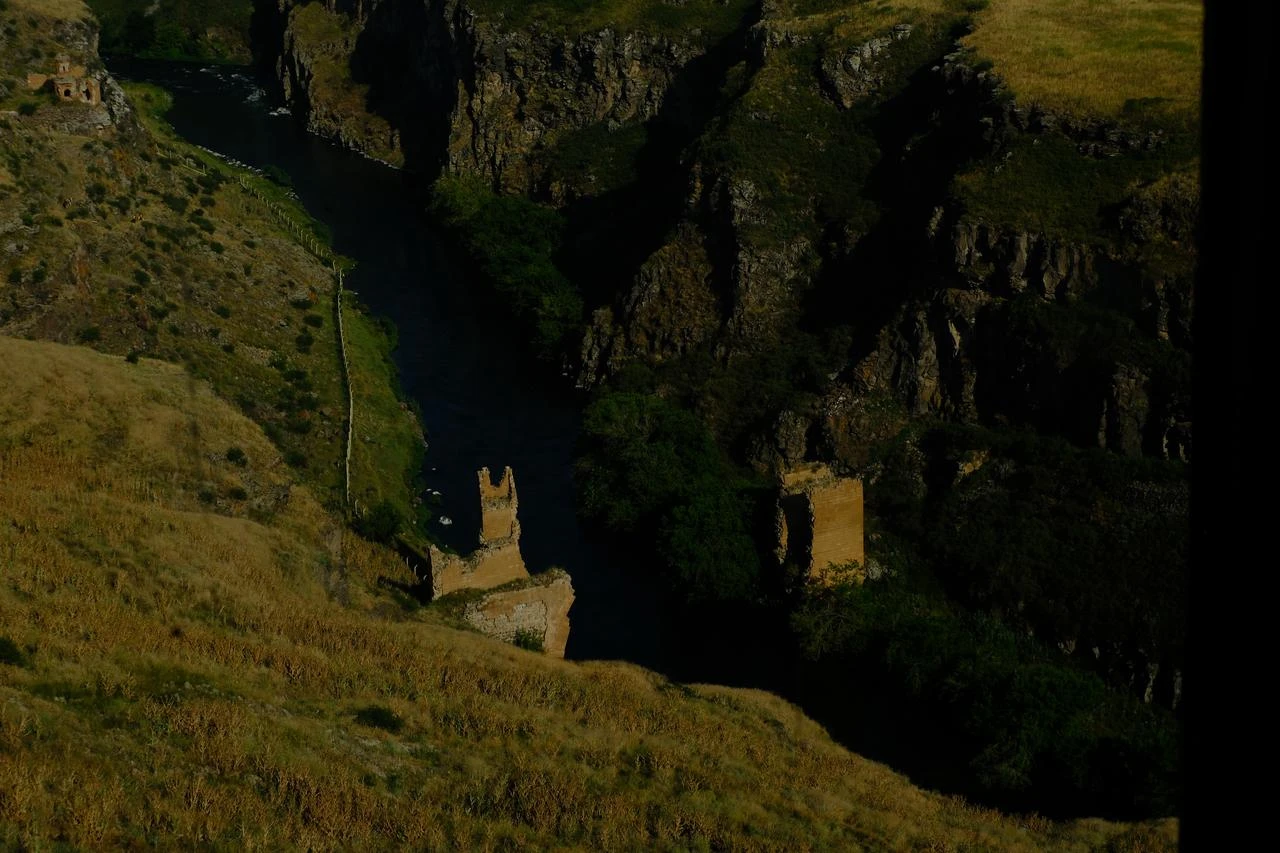

I put the obvious question to Vedat Akcayoz, a local researcher who has spent years documenting Ani: Can a restoration really stay faithful to the original, or is "original architecture" mostly guesswork at this point? His answer was more confident than I expected. French scholars, he told me, produced detailed engravings and drawings of the bridge and its frescoes long before it collapsed, and that archive is precise enough to guide an authentic reconstruction.
From those records and his own research, Akcayoz described a structure more elaborate than a simple river crossing: a two-tiered bridge, with an arched foundation supporting a flat deck above it, customs buildings on both banks, and a covered corridor climbing up past the Convent of the Virgins that let horses and carts move through year-round.
It carried camel caravans arriving from China, India, Iran, and Armenia, feeding into trade routes that ran on toward Trabzon and international markets beyond. The crossing was formalized and secured under the Bagratuni dynasty around 1204, which Akcayoz calls its peak, a high point Ani never fully recovered even during its brief second flowering that same century under Pontic Greek rule.
The bridge itself, he said, dates to the 10th century, and it stood for centuries before Russian authorities, consolidating control of the region after the 1877–78 war, tore it down to cut off crossings they didn't want open.
For Akcayoz, the moment carries some personal history too. He first raised the idea of restoring the bridge back in 2008, inside Armenia's Ministry of Foreign Affairs, as part of a joint program with the United Nations that brought a small delegation of Turkish journalists to Yerevan. “How lucky for me,” he said, if it happens now, adding that he hopes to have a hand in it, even a small one.
But he was just as clear that this isn't purely a heritage question anymore. The Akhuryan river has been eating into the bridge's foundations for years, and he warned that without a swift start to the work, the structure could face a further, more serious collapse within the next few years. Feasibility and infrastructure studies are underway on both sides, he said, but the process is likely to run long, which is exactly his argument for starting now rather than waiting.
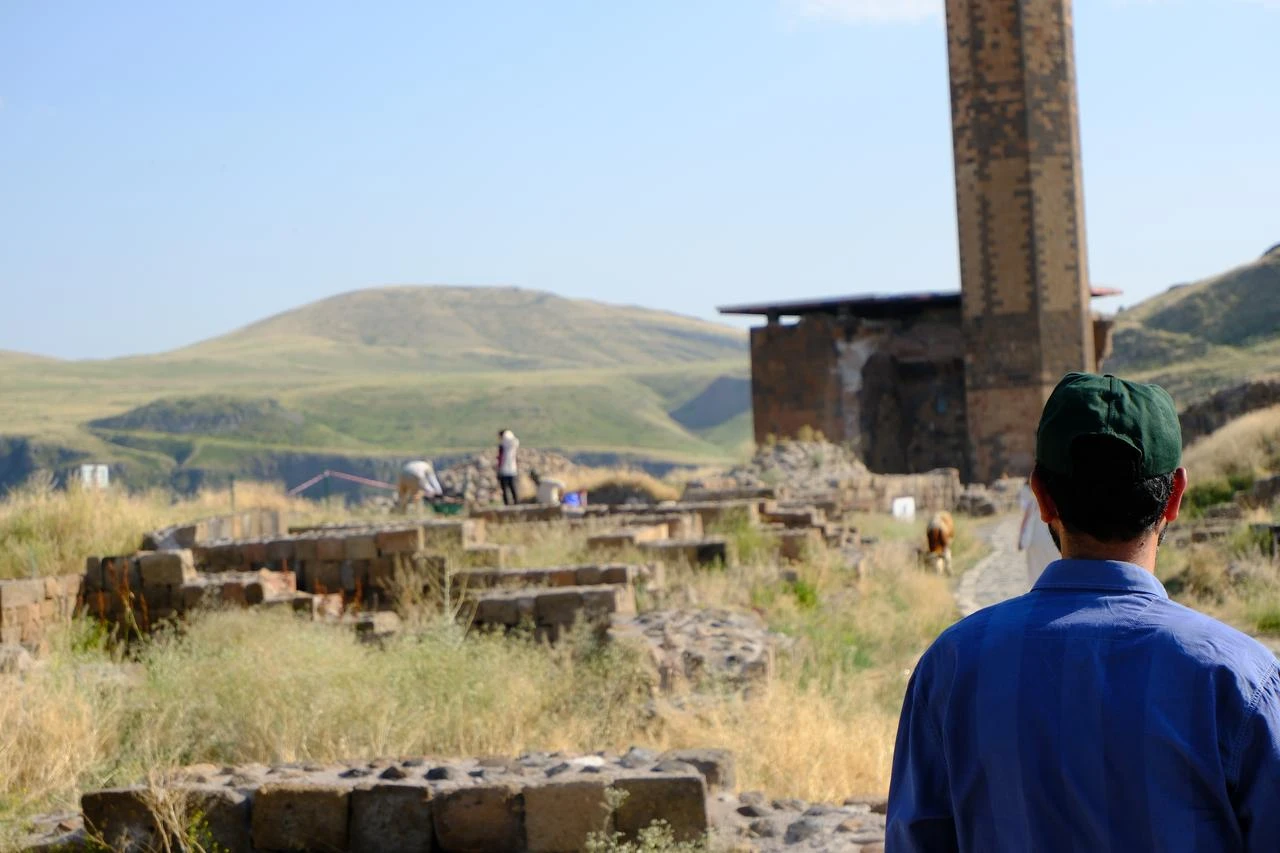
Restoration talk aside, Ani itself is still, quite literally, being unearthed. According to local reporting, excavation teams working this season under Kafkas University's scientific supervision, and coordinated by Türkiye's Ministry of Culture and Tourism, recently uncovered a Seljuk-era storage depot in Ani's old marketplace: five large ceramic jars, each over a meter tall with roughly 50-centimeter mouths, decorated with applique motifs typical of the period.
Excavation director Muhammet Arslan said the jars were likely used to store legumes and other dry goods, and that this season's work is proceeding simultaneously at six different points across the site, including Seljuk-era housing, a cemetery and the Bezirhane (historical linseed oil presses) with a team of roughly 100 archaeologists, art historians, architects and restorers. The season runs through Dec. 31, and Arslan expects more finds before it wraps.
It's a useful thing to hold in mind standing at the bridge: Ani isn't a static backdrop to the diplomacy happening around it.
It's an active dig, still surfacing new evidence of the exact trade and daily life the bridge itself was built to carry.
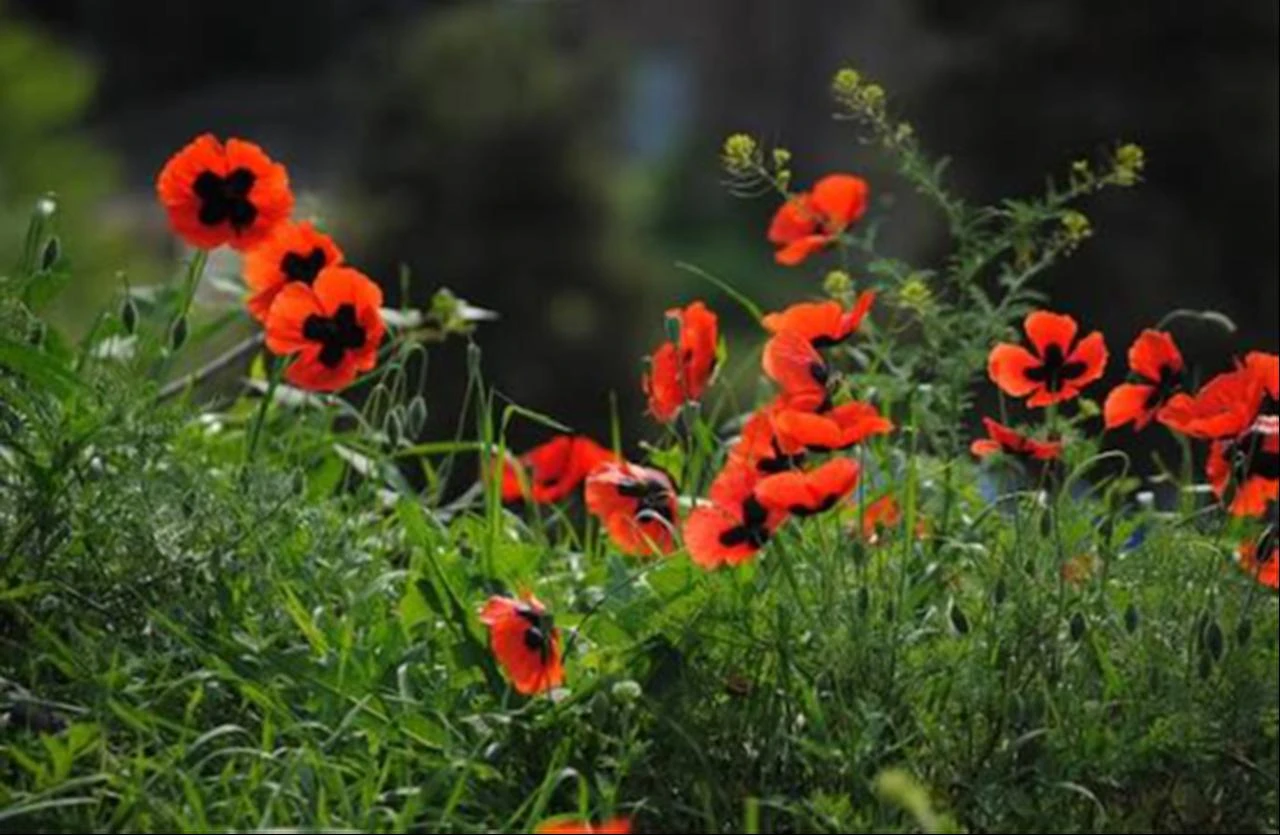
The bridge is the symbolic story. The more immediate economic one, oddly, might be flowers.
Russia, which had been buying about 90% of Armenia's rose crop, some 100 million stems in 2025, abruptly banned Armenian flower imports in June, citing phytosanitary concerns. Armenian officials and analysts described the move as pressure timed to the country's parliamentary election season, according to the Financial Times.
Bans on Armenian mineral water, wine, brandy, fruit and fish followed in quick succession. Yerevan-based greenhouse owners were left holding stock they couldn't move, and Brussels stepped in with emergency support, including a pledge of over €50 million and the purchase of thousands of stems that would otherwise have gone to Russia.
The European Commission has since been drawing up longer-term trade measures to lower tariffs on Armenian agricultural exports, though EU officials themselves have cautioned that the relief will only be partial given how dominant Russia remains in Armenia's trade.
Which is where Kars enters the picture—unexpectedly. When I asked Kadir Bozan, president of the Kars Chamber of Commerce and Industry, about the flower trade during our interview, he confirmed that Türkiye's largest flower exporter attended the June 2 Türkiye-Armenia business forum in Kars, met with Armenian producers, and took samples back with them.
Talks, he said, are continuing. Kars has its own smaller flower producers too, and Bozan believes the region could absorb a meaningful share of Armenia's redirected roses if the logistics can be worked out.
That "if" is doing real work, though. Bozan was careful not to oversell it: flowers have a very short window between cutting and delivery, he said, and a single day's delay at customs is enough to kill the product.
Without clear procedures for storage and transport, he argued, rushing the trade would do more harm than good. He said that he is in regular contact with Türkiye's deputy director for the Caucasus, Ayse Uzer, and with Special Representative Serdar Kilic. Basic questions such as which routes Armenian trucks would use and what rates would apply were still being worked out rather than resolved.
It's a small, unglamorous amplification of the same pattern the bridge shows but at a larger scale: a Russian squeeze creating an opening, a Turkish neighbor positioned to fill part of it, and a set of very mundane technical details, customs codes, cold-chain logistics, which crossing a truck uses, standing between the opportunity and anything actually crossing the border.
 1 min read
Not everyone in the room let the trust-building framing pass unchallenged. During our interview, a local Turkish reporter, who has made the trip to Armenia repeatedly for work, raised something more uncomfortable than logistics.
He described the quiet anxiety of crossing with the "wrong" stamp in your passport: an Armenian entry stamp can complicate a later trip to Azerbaijan, and the reverse holds too, with border officials on both sides treating a visit to the other as grounds for suspicion.
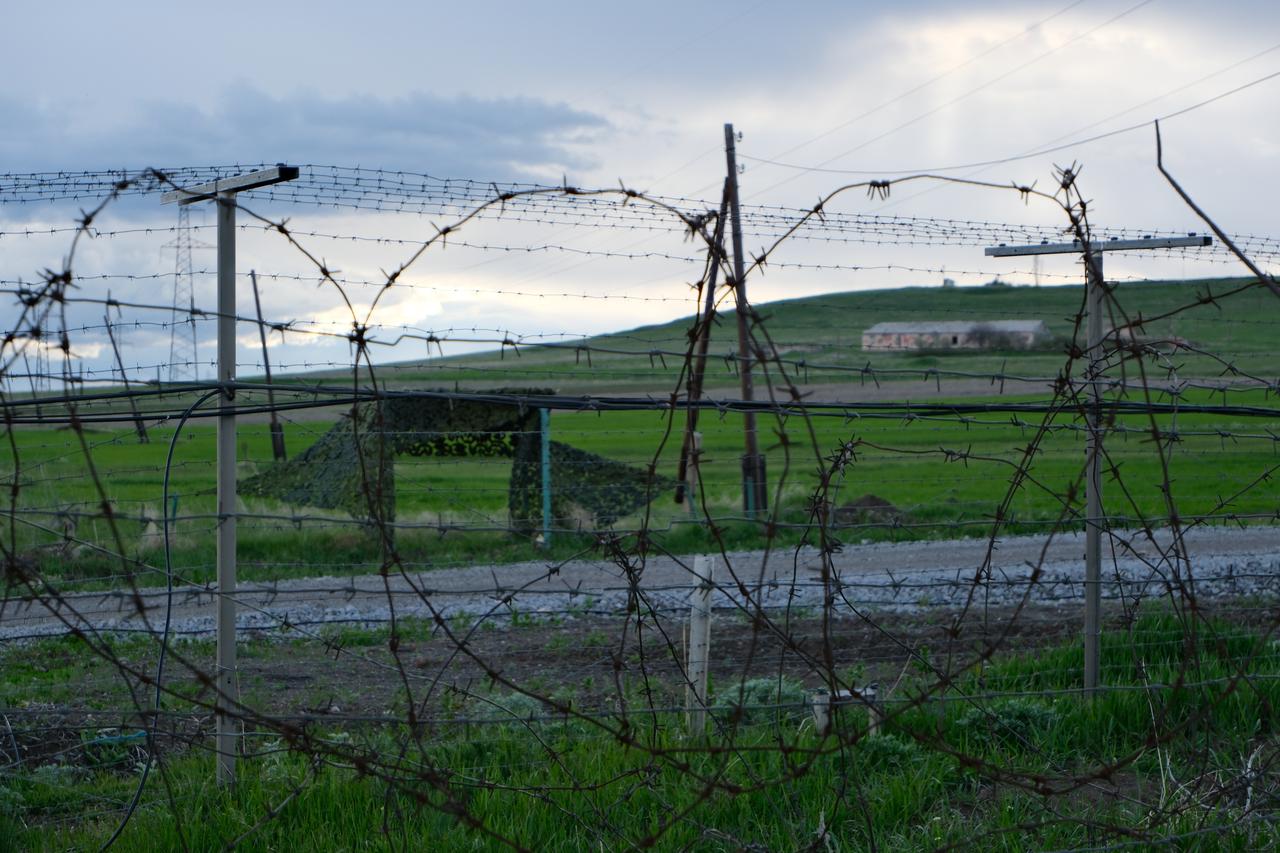
He also brought up the lingering Russian shadow over the frontier: the Türkiye-Armenia border was patrolled by Russian guards for years, he noted, and Russian and Armenian flags reportedly still fly together on the other side of the fence.
Then he told a more personal story. On a previous trip to Armenia, traveling in a Turkish-plated car, a friend's father in Gyumri called ahead and told him to leave the vehicle at the border, saying he'd send his own son to drive them in instead.
The reason, as the local reporter relayed it, was blunt: relatives of Armenian soldiers killed in the Karabakh war still lived nearby, and hearing Turkish spoken near a Turkish license plate could provoke a reaction nobody wanted to risk. “I wouldn't be at ease,” the father had said.
The reporter’s point wasn't that the normalization process is a mistake. It was that people from Kars feel this unease on more than one side of more than one border, and that journalists and civil society, not just diplomats, have a responsibility to carry that discomfort back up the chain before officials mistake paperwork progress for something people actually feel yet.
Bozan didn't wave the story off. He acknowledged plainly that both countries carry incidents from the past neither side wanted, and that changing how ordinary people see each other won't happen overnight. It will take time, and it will take both societies, not just governments, doing their part.
But he came back, as he often did in our conversation, to the concrete and the near-term.
Asked what a reciprocal visit to Armenia might look like, he confirmed that Kars businesspeople are already expected in Yerevan this September, for a forum mirroring the one Kars hosted in June, and that he has set two conditions for it, both of which he says he has already passed on to Türkiye's Foreign Ministry.
First, no cap on numbers: anyone from Kars who wants to travel for the forum should be able to go.
Second, and more pointed: the delegation crosses specifically through Dogukapi, the Akhurik border post near Kars, rather than the Alican-Margara crossing in Igdır that has handled most of the diplomatic traffic so far.
It's a deliberately symbolic routing choice; Bozan wants the attention, and eventually the traffic, to land on the crossing closest to home, and closest to Ani.
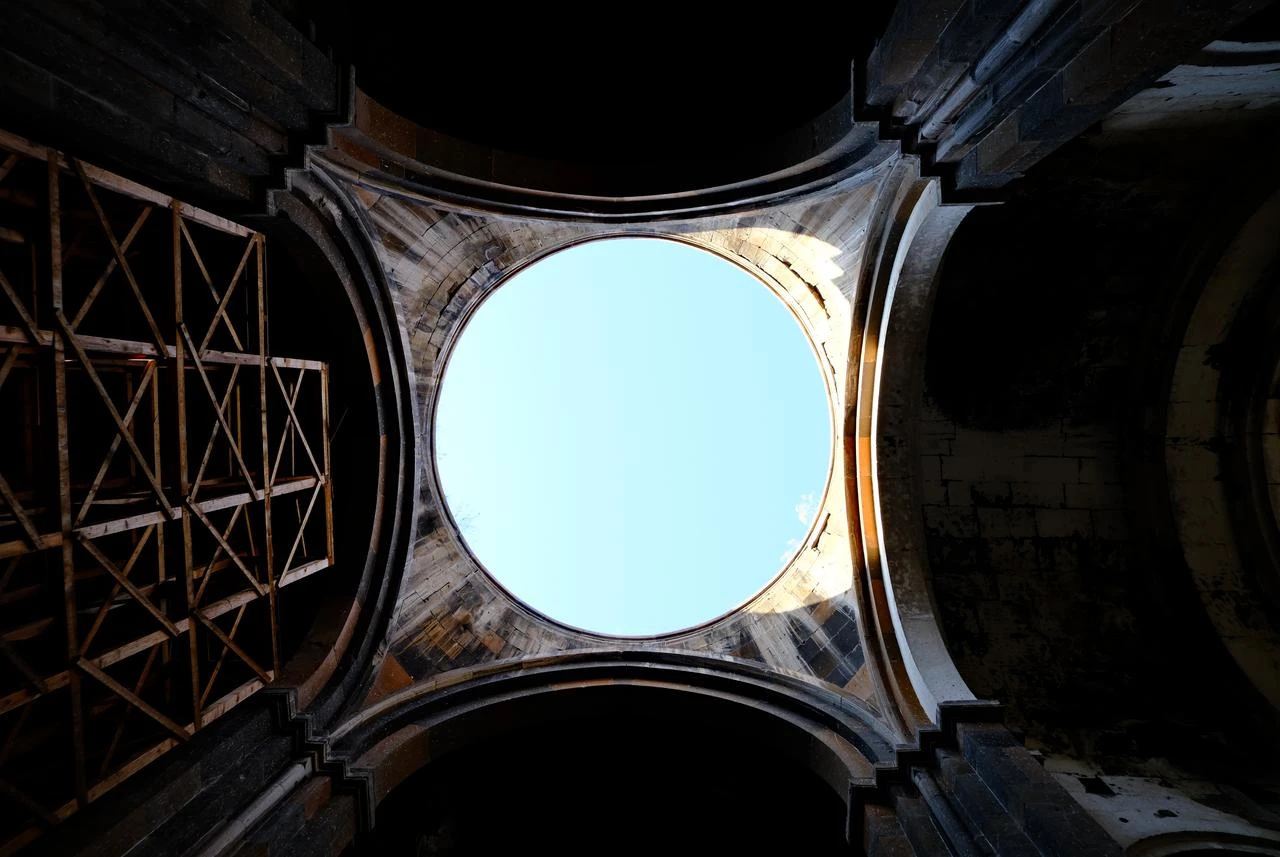
Standing at the gorge, the two towers of the Ani Bridge are still farther apart than the deck between them ever was. Whether that gap closes on the timeline anyone here expects is an open question. Akcayoz's warnings about the eroding foundation remain unresolved, and the border crossings nearest the bridge remain closed, awaiting the same political sign-off that has shadowed this whole process since 2021.
But something has shifted since I watched that signature happen in Yerevan in May.
A protocol exists. A local researcher who raised this idea in an Armenian ministry building in 2008 is now being asked, by name, how to rebuild it properly.
An excavation crew keeps finding proof that this ground has always been a place through which things passed. And a chamber of commerce in a border city is trying, in its own limited way, to turn a Russian trade ban on the other side of the mountains into a reason for Armenian roses to start arriving here instead.
None of it adds up to an open border yet.
But for the first time in decades, both banks of that river are named in the same documents, looking at the same old drawings, working toward the same water.


 Set as preferred source
 Set as preferred source


 1 min read


