Newsletters




There are some particular office buildings where ownership of the conference room is a mystery.
The signage is official, the reception desk nominally staffed, but unauthorized tenants hold meetings behind frosted glass, bringing their own furniture, security and flags. Rent, in such places, is more of a suggestion than a mandatory payment.
Iraq, increasingly, resembles such a building.
While attention drifts toward the Strait of Hormuz, Iraq has been quietly reconfigured into something more ambiguous than a sovereign state.
In the span of a single week, armed factions occupied an Iraqi Army hospital, Iranian commanders were killed in a Baghdad neighborhood, and the government, without ceremony, ceded operational space to actors it neither fully commands nor decisively confronts.
The convoy’s arrival shifted the stakes.
As Iraqis crossed into Iran, it became clear the country risked becoming more than a battleground; it might serve as a strategic recruitment corridor. While the Trump administration’s endgame for Iran remains unclear, the calculation for Iraq is more complex, where entrenched paramilitary networks have evolved from auxiliary forces into parallel authorities.
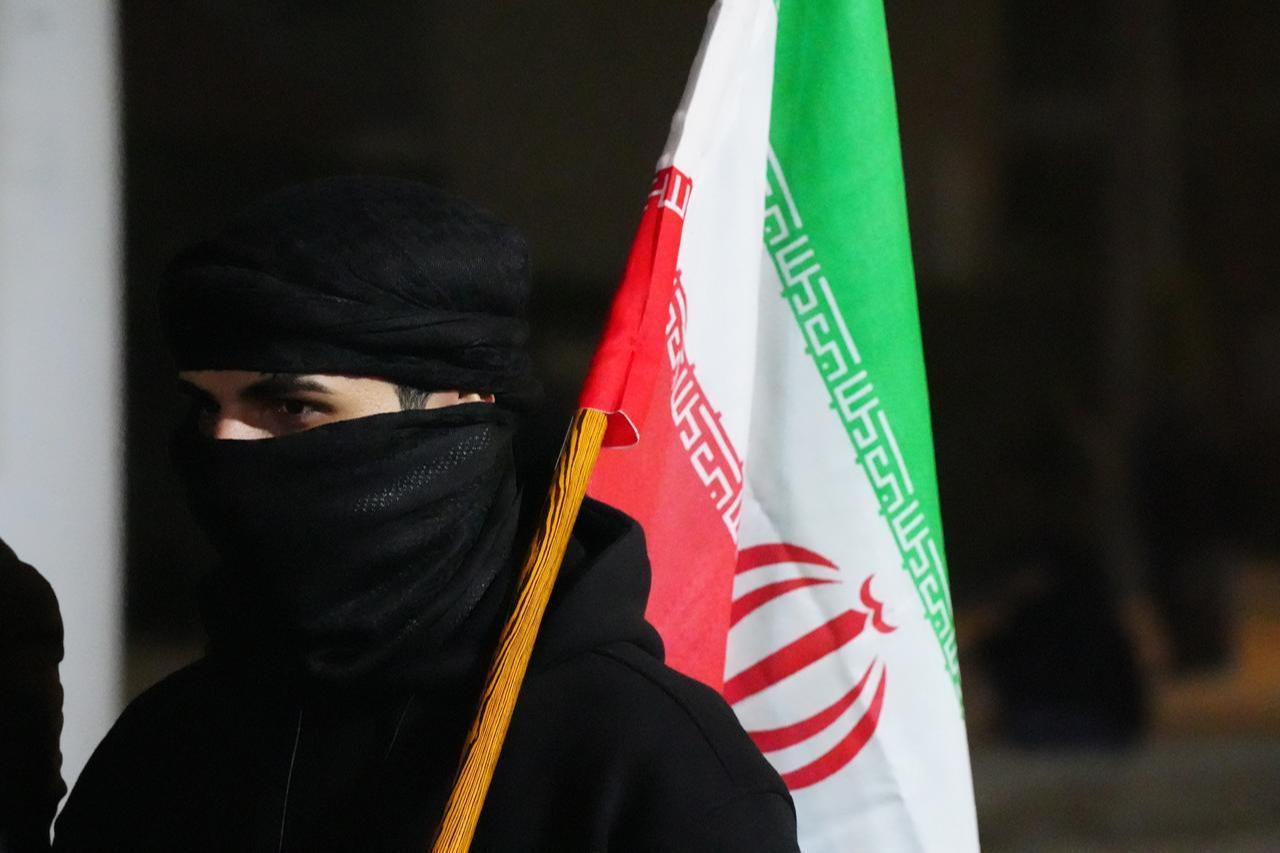

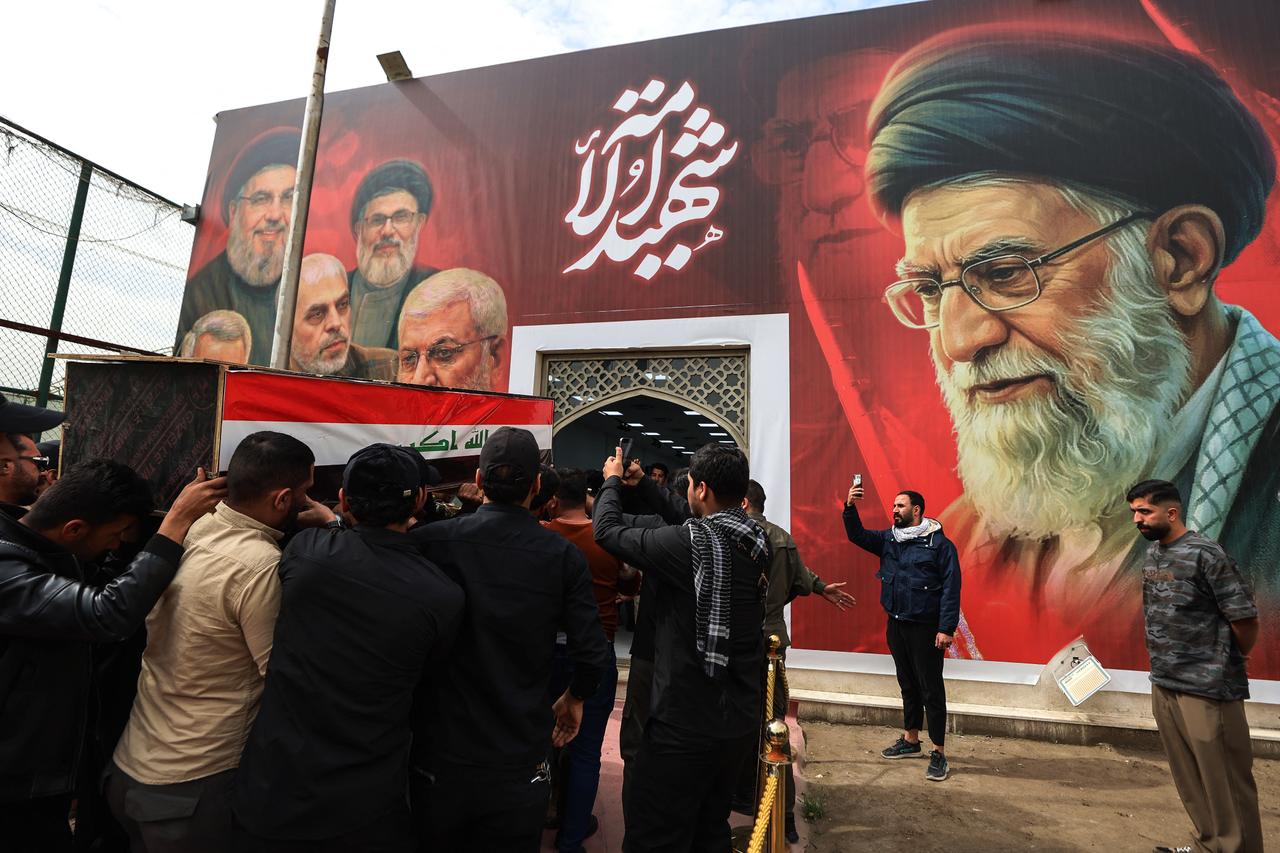
At the center of this architecture stands the Popular Mobilization Forces (PMF), a formation of roughly 238,000 fighters. Created in 2014 to combat the Daesh, the PMF has since been absorbed into the formal security structure, its members salaried by the state, its political wings embedded in the parliament.
Integration, however, has not produced consolidation. It has produced something closer to federation, without the consent of the center.
Within the PMF, distinctions matter.
Some factions have adapted to the rhythms of governance, limiting overt violence while consolidating political and economic influence. Others remain ideologically tethered to Tehran, treating Iraq less as a state than as strategic depth.
These latter groups, among them Kataib Hezbollah, Harakat al-Nujaba and Kataib Sayyid al-Shuhada, have demonstrated both capacity and intent. They were responsible for over 180 attacks on U.S. personnel and installations following the October 2023 Hamas attacks on Israel. Recently, their operations have expanded inward, targeting not only foreign actors but Iraqi institutions as well.
Drone and rocket strikes have hit oil and gas infrastructure, airports in Baghdad and Erbil, hotels, and military sites. A French officer participating in a counterterrorism mission was killed in one such attack; a Kurdish security officer in another.
On March 21, a strike on the headquarters of Iraq’s National Intelligence Service killed an officer and disrupted communications, in an escalation that blurred the already thin line between insurgency and internal contestation.
Most revealingly, it was Iran’s Revolutionary Guard Corps, not Baghdad, that condemned the attack on the Kurdistan Regional Government president’s home in Dohuk. Even the building’s most assertive external patron, it seems, has begun to worry about structural integrity.
 1 min read
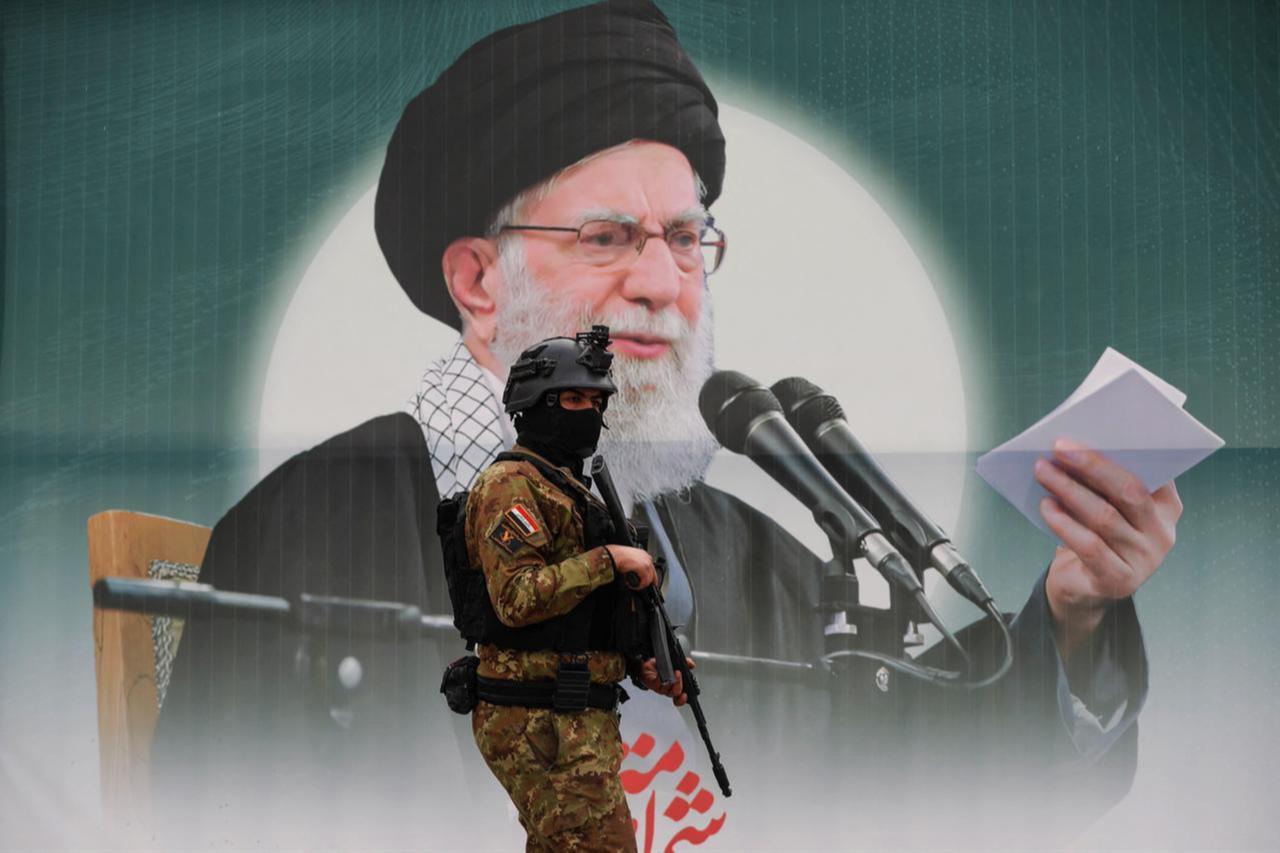
The Iraqi government’s approach has long been one of managed accommodation. Successive administrations have permitted militias to integrate into state institutions, wagering that inclusion would curb their autonomy.
In some cases, it has.
Groups such as the Badr Organization and Asaib Ahl al-Haq have reduced overt hostilities, redirecting efforts toward political entrenchment and economic influence.
But moderation has proven selective.
The more ideologically driven factions have retained both their arsenals and their strategic orientation, aligning less with Baghdad than with Tehran. Prime Minister Mohammed al-Sudani’s description of these groups as “outlaws” carries an unintended irony: they operate beyond the law, yet within the state.
The result is a government that governs in parts. Authority is exercised unevenly, negotiated in practice, and occasionally ignored altogether.
The kidnapping of American journalist Shelly Kittleson on March 31, offered a more personal illustration of this fragmentation. It is one thing for a state to lose control of its periphery; another to lose control of its capital.
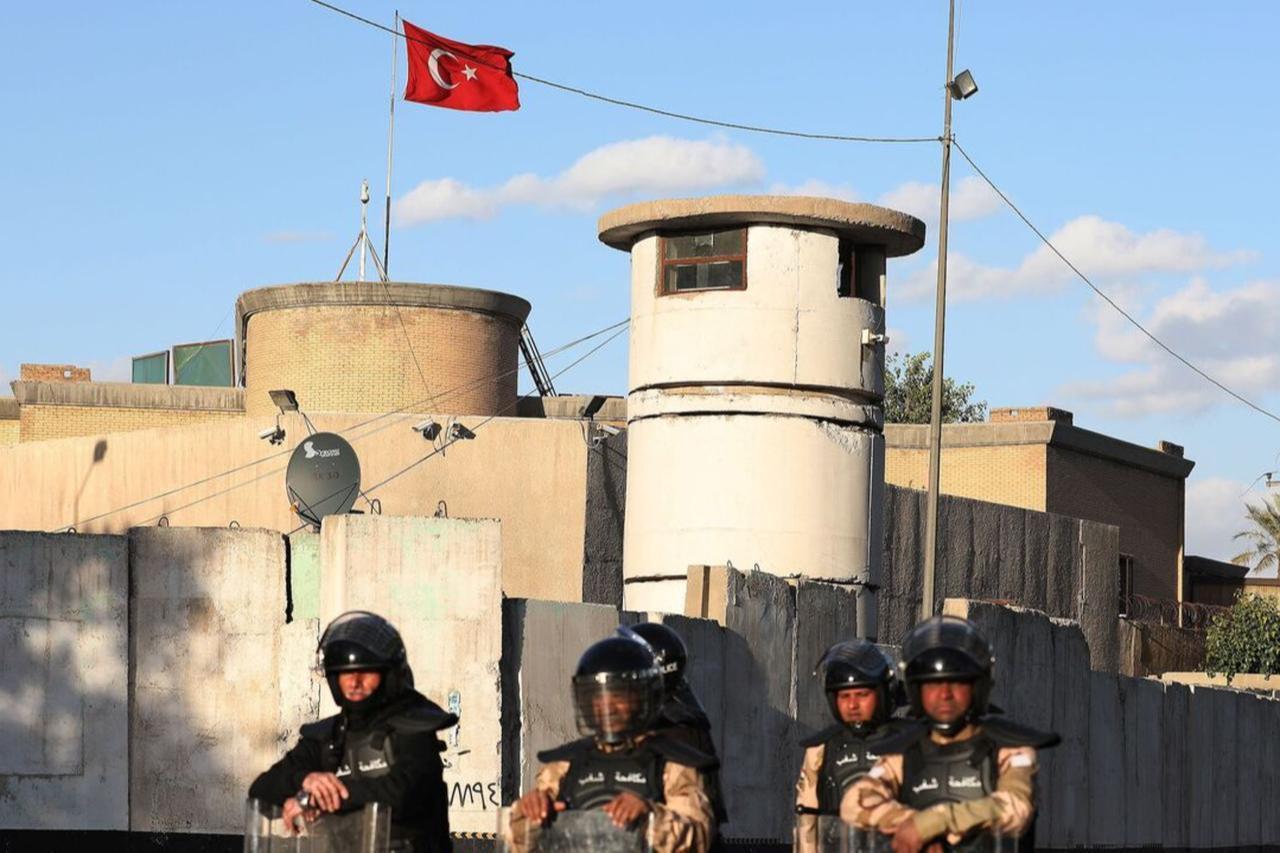
For Türkiye, the Iraqi theater is not only a security concern but an economic one, particularly as regional energy routes adjust under pressure.
“After the closure of the Strait of Hormuz, the Kirkuk-Ceyhan oil pipeline was reactivated,” Aylin Unver Noi, professor at Beykoz University and senior fellow of CASSIS, noted.
But the logic of rerouting comes with its own conditions.
“The security of this pipeline depends on Iraq remaining stable,” she added, speaking to Türkiye Today.
Energy dependency further complicates the picture. Iraq’s reliance on Iranian electricity creates a vulnerability that external strikes can easily exploit.
“U.S. strikes on energy infrastructure could have much more negative consequences for Iraq,” she explained, emphasizing that such disruptions would not merely damage facilities, but “further destabilize the country internally.”
Against this backdrop, even institutional commitments are being reconsidered.
“Türkiye wants to stay out of the war,” she said.
Ünver Noi also shared that Ankara, along with other NATO allies, has withdrawn from the alliance’s mission in Iraq.
What emerges is not merely a security crisis, but a question of political architecture. Iraq is no longer simply balancing internal factions; it is hosting them.
Some pay lip service to the state. Others do not bother.
The risks are cumulative. Each accommodation deepens dependency. Each external strike tests sovereignty. Each internal escalation redraws the boundaries of authority.
“Türkiye’s role in preventing the spread and escalation of the Iran war is therefore critical,” Unver Noi concluded, situating Ankara’s diplomacy within a broader effort to contain systemic risk.
In the office building without a clear landlord, such aspirations sound less like policy and more like maintenance requests, filed regularly, acknowledged politely, and rarely resolved.
The lights remain on. The doors remain open. But the tenants, increasingly, are setting the terms of occupancy. If the plan for a war against Iran does not result in regime change, the United States will also have an Iraq problem to consider before taking action against Iran.


 Set as preferred source
 Set as preferred source


 1 min read