Newsletters


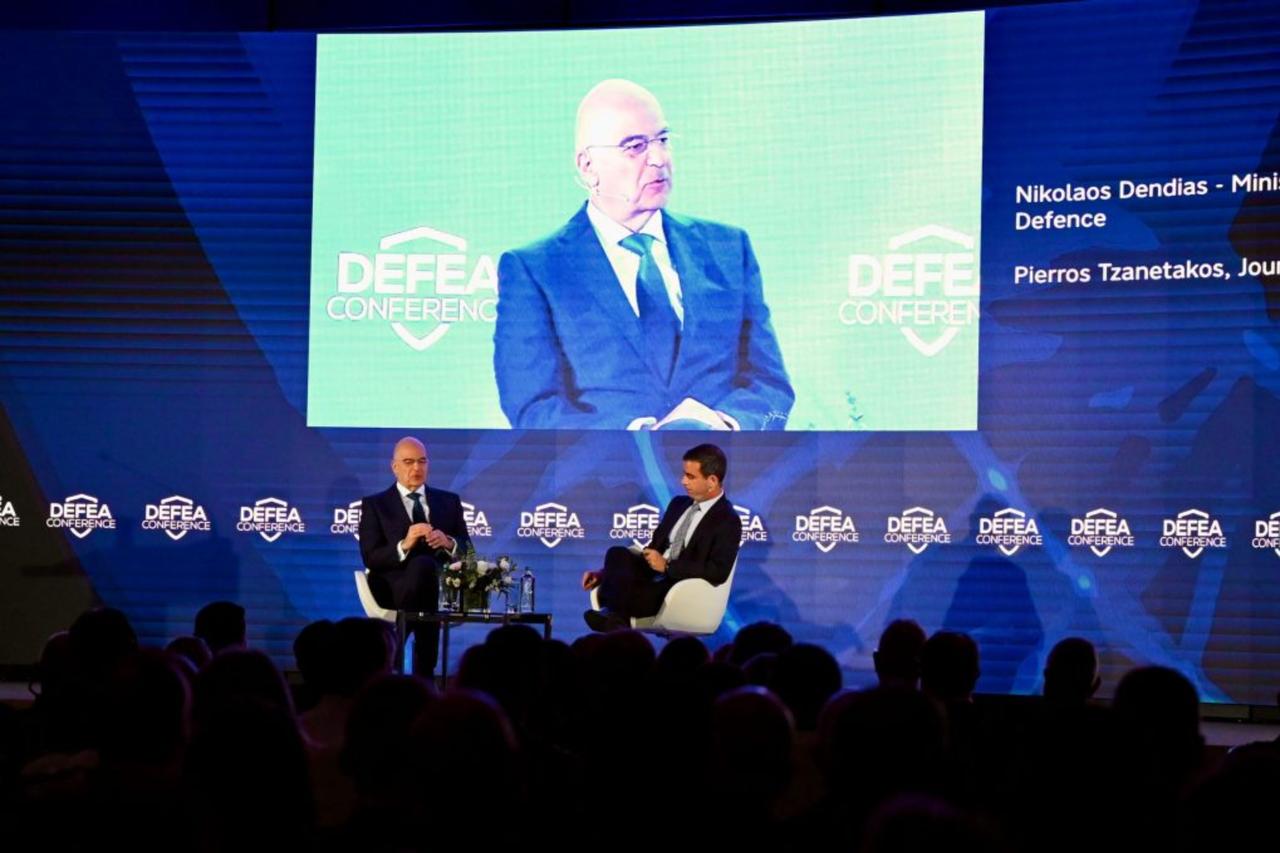


Greek Defense Minister Nikos Dendias said at the DEFEA Conference 2026 in Athens that the Greece-Türkiye dispute "can be solved easily, and with mutual benefit for both sides."
He firmly rejected Ankara's framing of Greece's military deployment in the Greek Cyprus Administration (GCA) as an anti-Turkish move. He warned that alleged rhetoric such as "we will come one night" is incompatible with any path to resolution.
Asked about the lingering characterization of him in Ankara as the "hardest-line" minister in the Mitsotakis government, Dendias was dismissive.
"Sometimes the only one who calls me inflexible is my wife," he said.
"I will always declare that there is a window, a door, a road, a boulevard for resolving the Greek-Turkish dispute. Because Greece is not seeking anything of Türkiye's, nothing Turkish, according to international law or any reasonable legal analysis on this planet," Dendias added.
He placed responsibility for progress squarely on Ankara by saying, "It is up to the Turkish government to understand that the framework for operating in the 21st century cannot be anything other than a framework with reference to international law and the law of the sea."
He said an "explosion of development" would follow from resolving the dispute, but added, "This cannot happen when views of the type 'we will come one night' are being expressed."
He closed with a quote from UAE President Mohamed bin Zayed: "Let our enemies be careful; we have very tough skin and very bitter flesh if they bite us."
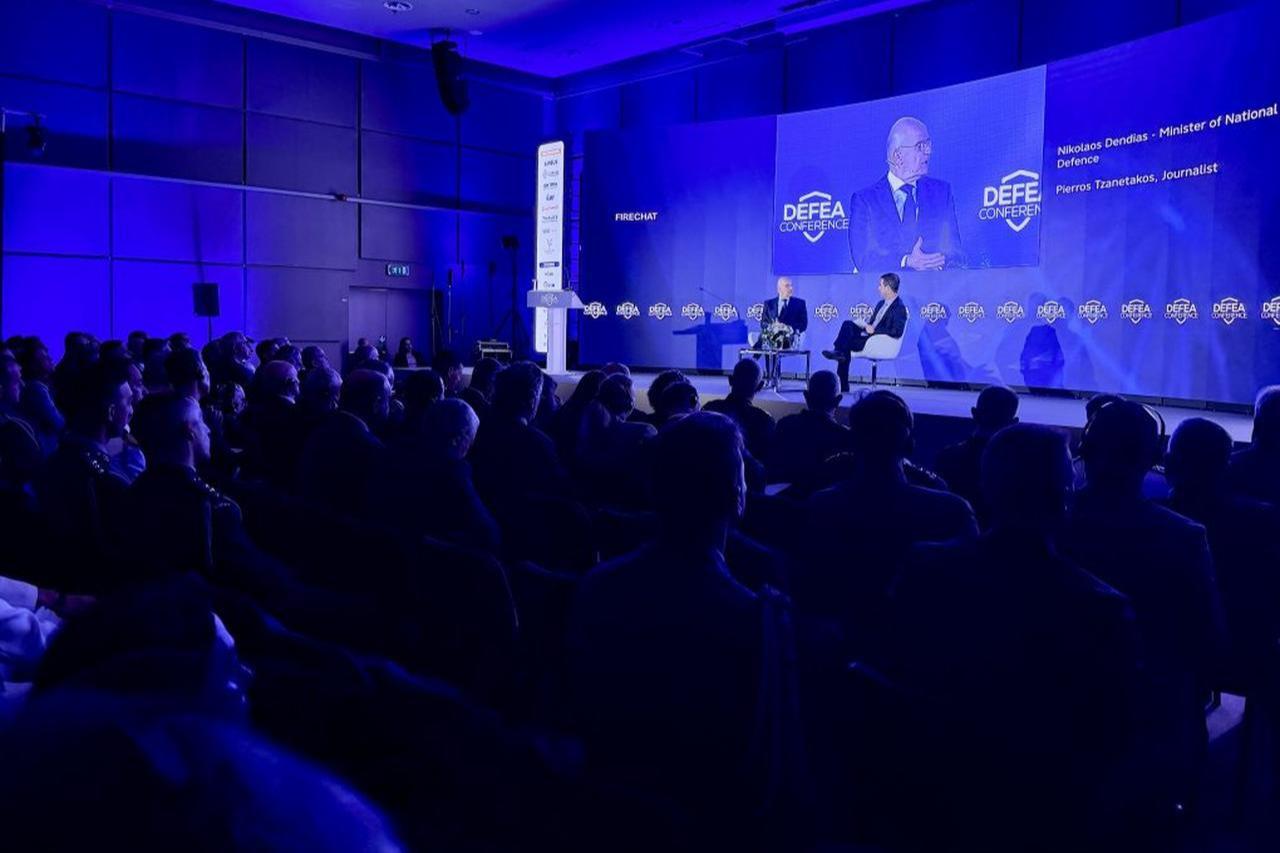

Dendias claimed that Greece's rapid deployment of aircraft and frigates to Greek Cyprus during the Iran war threat was carried out under Article 42.7 of the EU Treaty, the mutual defense clause, rather than as a targeted anti-Turkish move.
"We do not form ad hoc anti-Turkish coalitions. We do not conduct Türkiye-centric policy, for God's sake," he said.
"We do not define ourselves by Türkiye. Türkiye can say whatever it wants; that concerns Türkiye," he said when pressed on Turkish F-16s being deployed to the Turkish Republic of Northern Cyprus (TRNC) in response.
"I do not intend to take a purely European response to a provocation from Iran and Hezbollah and transfer it, as Türkiye would like, into the framework of other disputes," he added.
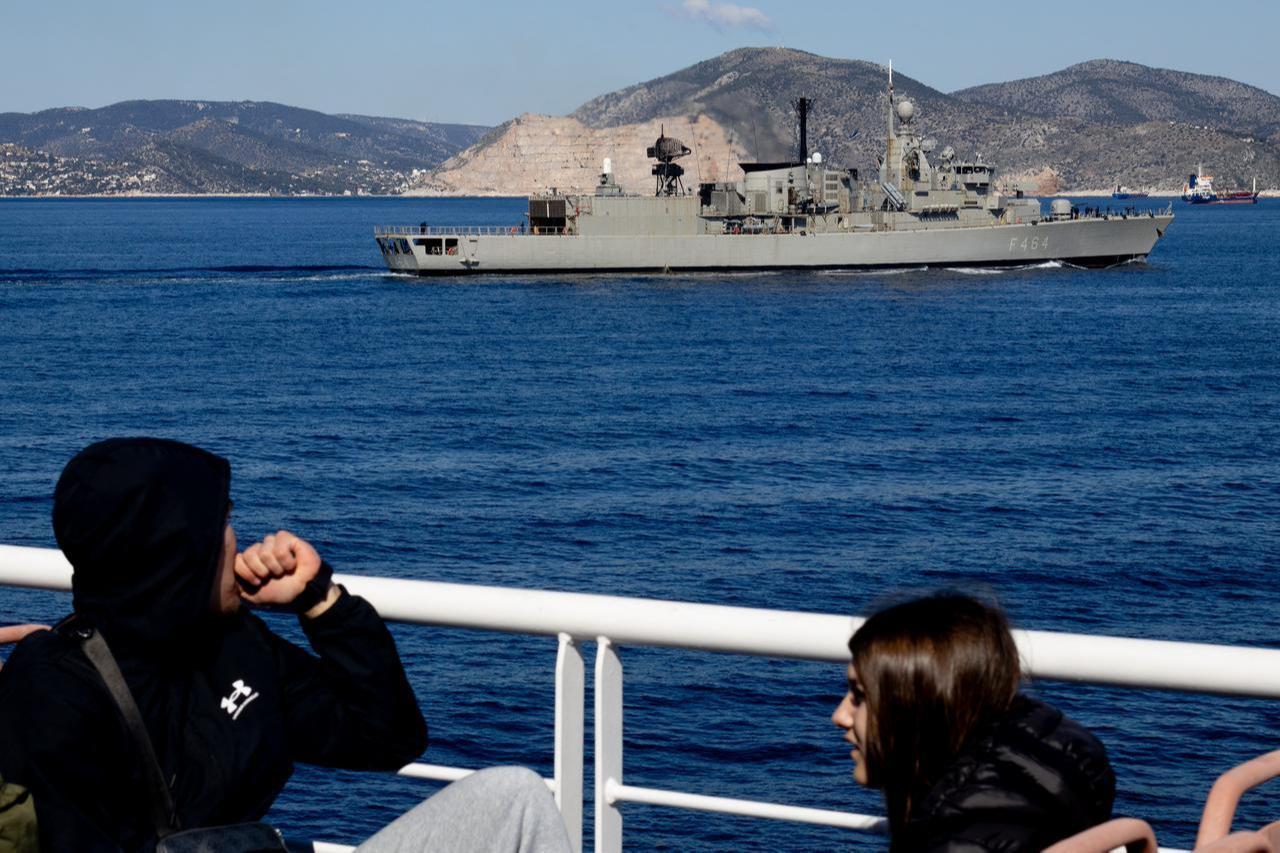
On a possible Greek contribution to a Hormuz naval coalition, Dendias said Greece was "well-positioned" operationally, already deploying from Djibouti, with frigates allegedly experienced in drone interceptions.
Still, they insisted any deployment required a clear mandate, EU and U.S. allied coordination, a Government Council for National Security (KYSEA) decision, and full parliamentary consultation.
"We no longer live in the era of impulsive charges," he added.
On Greece's defense innovation ecosystem, Dendias said the Greek Center for Defense Innovation (ELKAK) defense innovation hub had structurally changed how the armed forces engage with industry, shifting from "I want to buy this product" to "I want this problem solved."
He acknowledged a core unresolved tension between public procurement bureaucracy and fast-moving technological reality.
He said Greece's target was for over €10 billion of the 30 billion euro Agenda 2030 procurement program, approaching 30-33%, to be absorbed by Greek defense companies and expressed confidence that Greek SMEs had an inherent advantage in a battlefield environment that increasingly favors agility over legacy industrial capacity.


 Set as preferred source
 Set as preferred source


 2 min read