Newsletters


Iraqi officials have accused the United States of providing cover for a secret Israeli military base in Iraq's Najaf desert during the war with Iran.
Satellite imagery analysis published by various open-source intelligence (OSINT) fellows on social media, video footage and multiple Iraqi official and security sources have detailed what appears to have been a temporary forward arming and refueling point built on a dry lakebed in the Anbar province of Iraq.
Separately, a senior Iraqi security official told Türkiye's state-run Anadolu Agency (AA) that the base reports were "false."
A senior Iraqi official in the office of outgoing Prime Minister Mohammed Shia al-Sudani told The New Arab the operation had taken place "with American assistance and under American cover," describing it as "an American deception" rather than an Israeli intelligence success.
"Iraq was subjected to an American deception, and this cannot be considered an intelligence superiority by the Israeli occupation forces or even military progress," the official said.
The official claimed Iraqi forces were told through unofficial channels that they could not acquire advanced air defense systems, alleging both Washington and Israel were behind those limits, and said U.S. forces had used the cover of the international coalition presence in Iraq to enable the Israeli activity, accusing Washington of "exploiting agreements with Baghdad to serve another party."
A separate Iraqi security source cited by Al-Hadath TV said the U.S. had informed the Iraqi government of "the necessity of not approaching the Najaf desert for security reasons" during the Iran war, adding that Iraq was unable to identify the force it detected in western Iraq's desert.
The source described it as a "temporary air landing operation."
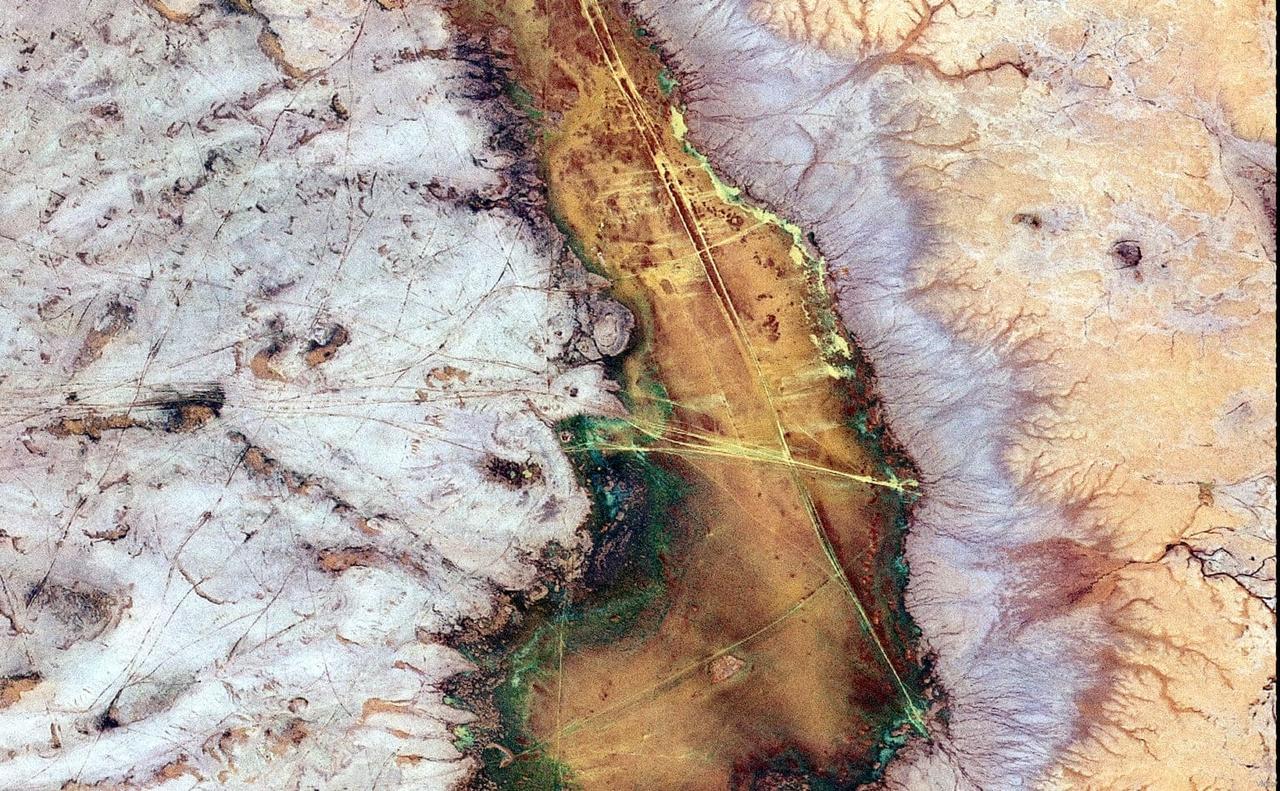
Intelligence and geolocation analysts at Faytuks Network assessed that Israeli forces built a makeshift airstrip overnight on March 1-2 on a dry lakebed near al-Nukhayb in Anbar province, approximately 180 kilometers (111.8 miles) southwest of Najaf and Karbala, at approximate coordinates 31.6638, 42.4537.
Satellite imagery from March 2 showed a marked runway, a cluster of objects consistent with tents or light shelters, support vehicles, and seven objects consistent with helicopter airframes. A dirt road appeared running toward the airstrip, absent the day prior.
On March 5, a large formation of aircraft entered the base; on March 6, two more Chinook helicopters were observed.
By March 20, heavy rainfall had effectively erased the site.
The analysis characterized the site as "a temporary forward arming and refueling point" that allowed Israeli aircraft to stage closer to Iran and extend operational reach without relying as heavily on U.S. refueling aircraft.

According to Iraqi officials, on the night of March 4, local authorities received a report from a shepherd from the al-Zakareet tribe of helicopter landings and suspicious movements.
Iraqi forces, approximately 30 Humvees from the Karbala Operations Command, were dispatched and came under heavy aerial fire approximately four to 15 kilometers from the site, killing one soldier and wounding two others, according to the Faytuks Network.
Two vehicles were damaged.
Lt. Gen. Qais al-Muhammadawi, deputy commander of Iraq's Joint Operations Command, confirmed at the time that reinforcements searched the area and found nothing, concluding that "a certain force had been on the ground and received air support."
Iraq subsequently submitted a complaint to the United States, accusing foreign forces of involvement. Washington never responded, the Iraqi official said.
U.S. Central Command denied carrying out an airdrop operation in Najaf province.
A senior Iraqi security official told AA separately on Sunday that the Wall Street Journal (WSJ) reports about an Israeli base were "false," saying the al-Nukhaib incident "was handled at the time."
Iraqi Security Media Cell chief Saad Maan confirmed Iraqi forces had clashed with "unknown unauthorized groups" but said subsequent searches found no evidence of remaining foreign presence or equipment.
Iraq's parliamentary security and defense committee announced plans to summon senior security commanders for questioning.
MP Mohammed al-Shammari described the incident as a "security breach" and said the operation could have occurred only under American cover.
MP Raed al-Maliki accused Washington of handing Iraqi airspace to Israel during the war and alleged Iraqi radar systems had been ordered shut down.
Security analyst Ahmed al-Hamdani called for a major review of Iraq's security and intelligence systems and reduced reliance on the United States.
The Iraqi official who spoke to The New Arab downplayed the military significance of the operation, noting the base was temporary and operated under full U.S. protection: "It would have been possible to bury them in the Najaf desert."
He said Iraqi officials believed the force entered via Syrian airspace before crossing the western Anbar desert.


 Set as preferred source
 Set as preferred source


 1 min read