

 Newsletters


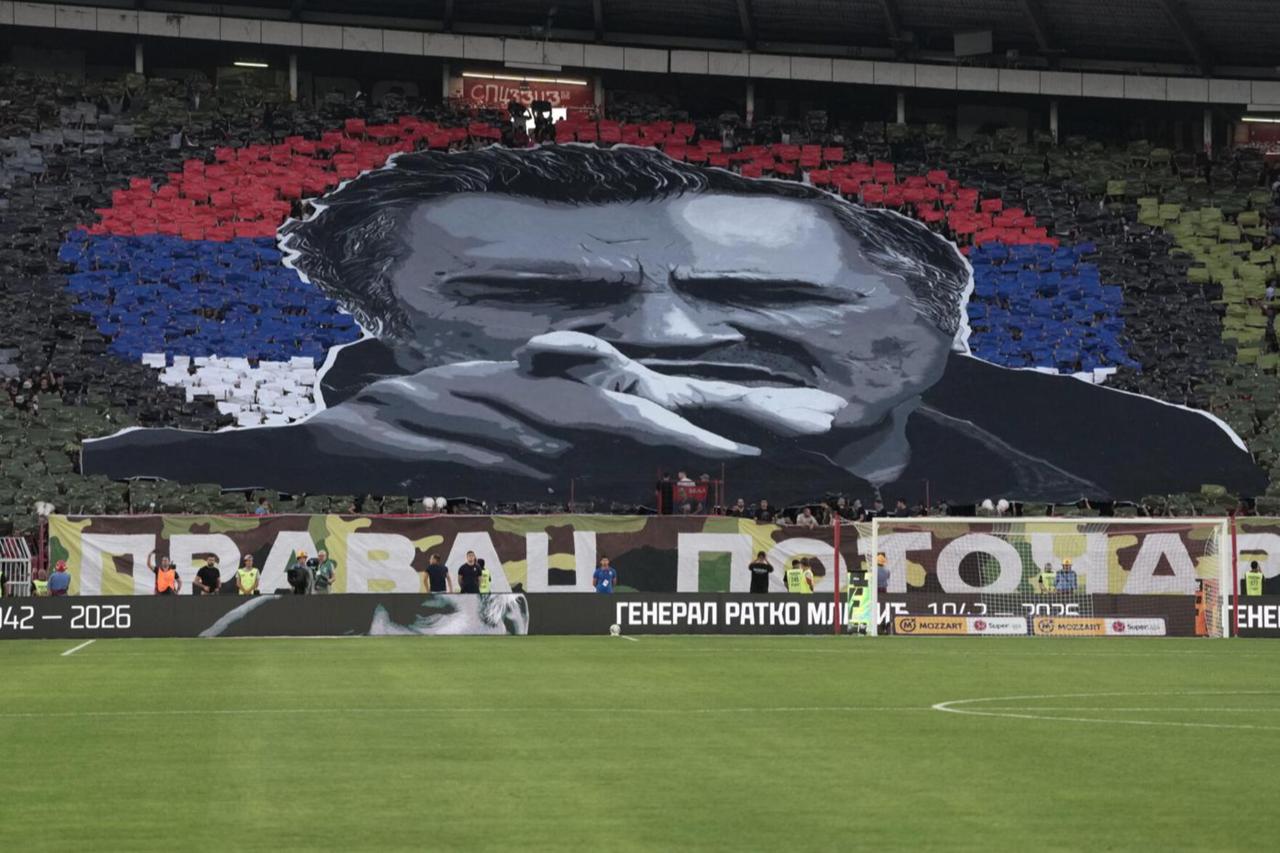
Thousands gathered in Belgrade on Monday for the funeral of convicted Bosnian Serb war criminal Ratko Mladic, as the European Union condemned "the glorification of a man" convicted of genocide during the 1990s war in Bosnia.
Mladic, who died at the age of 84, spent his final years serving a life sentence in The Hague for genocide, war crimes and crimes against humanity committed during the Bosnian War.
The tribunal in The Hague said the crimes were “amongst the most heinous known to humankind.”
They included the massacre of around 8,000 Bosniak Muslim men and boys in Srebrenica in 1995, one of Europe’s worst atrocities since World War II. The court found that the genocide was orchestrated by Mladic and Bosnian Serb political leader Radovan Karadzic.
Former U.N. rights chief Zeid Ra’ad al-Hussein described Mladic as the “epitome of evil” after his conviction.
But in Serbia and the Serb-majority entity in Bosnia, Republika Srpska, his legacy remains deeply divisive, with many Serb nationalists still viewing him as a hero.

Mladic’s casket arrived in Serbia last week aboard a government plane. It was carried from the plane by soldiers and draped in flags.
As it was driven from the airport in a motorcade, groups of young men held banners praising the former general, while some police officers were seen saluting as it passed.
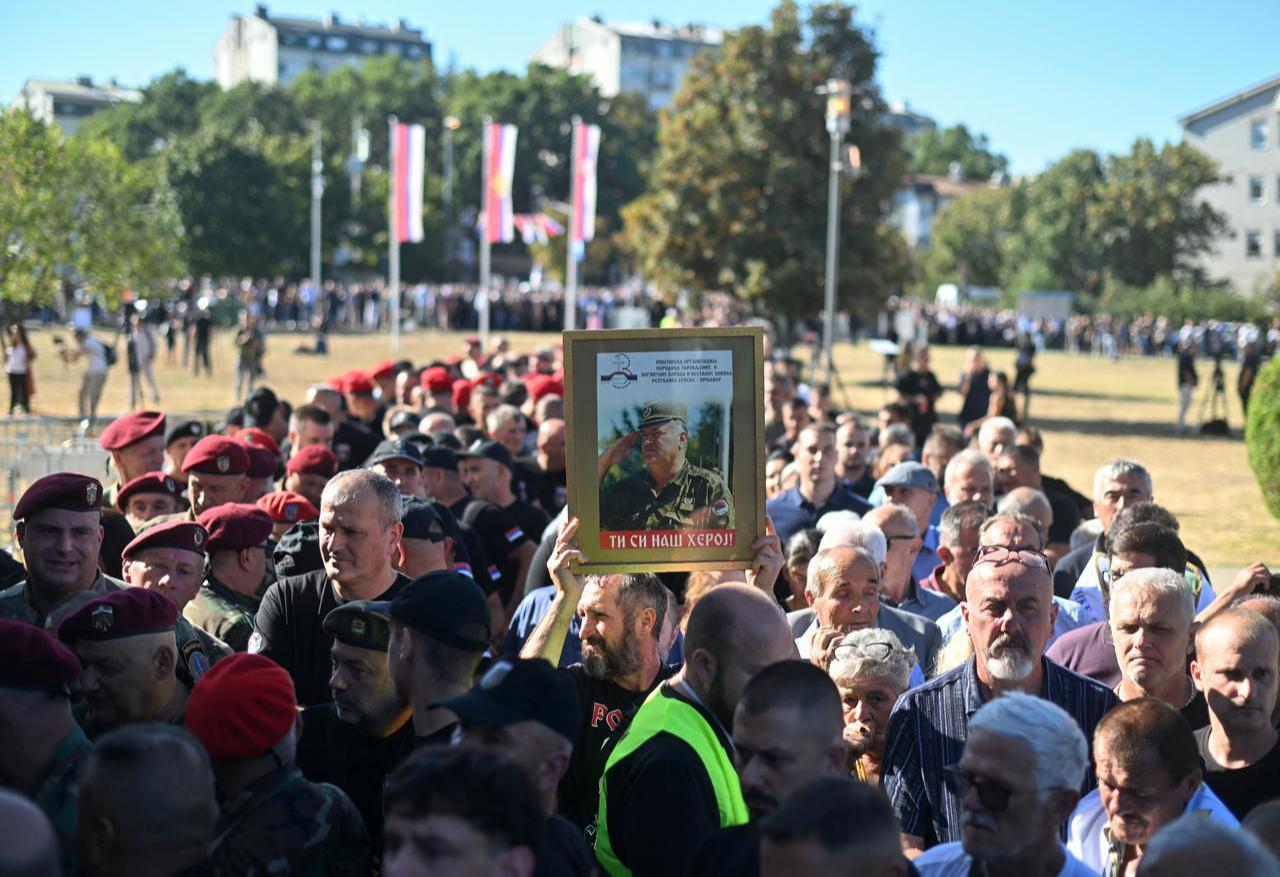
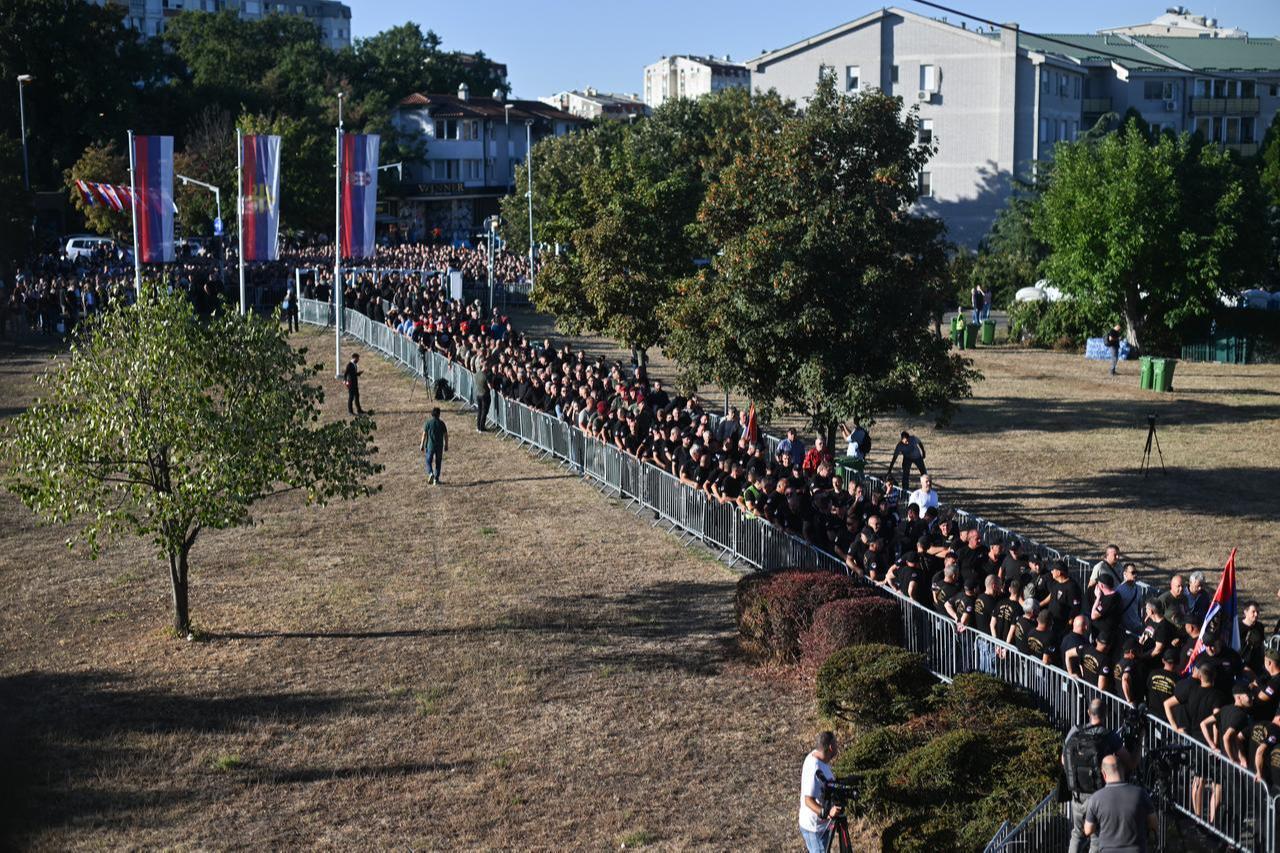
At his funeral Monday, large queues formed outside St. Luka Church, where his coffin was displayed.
A banner hung outside the church read: “Welcome, General, thanks be to your mother for bearing a hero, so that Serbdom’s glory may return.”
Crowds appeared to be in the thousands by midmorning, according to AFP journalists at the ceremony. The funeral was held at the small St. Luka Church rather than the grand Temple of Saint Sava, where state funerals are normally held.
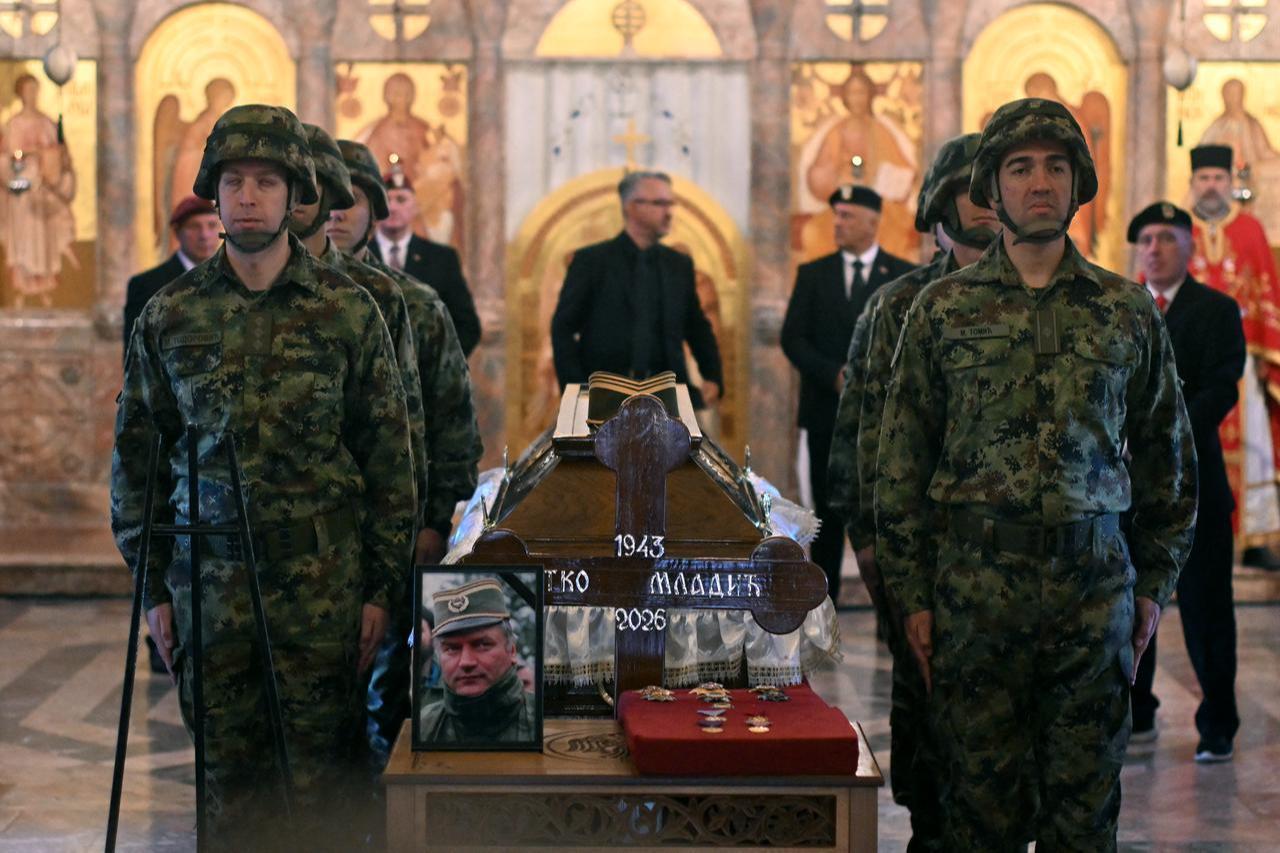
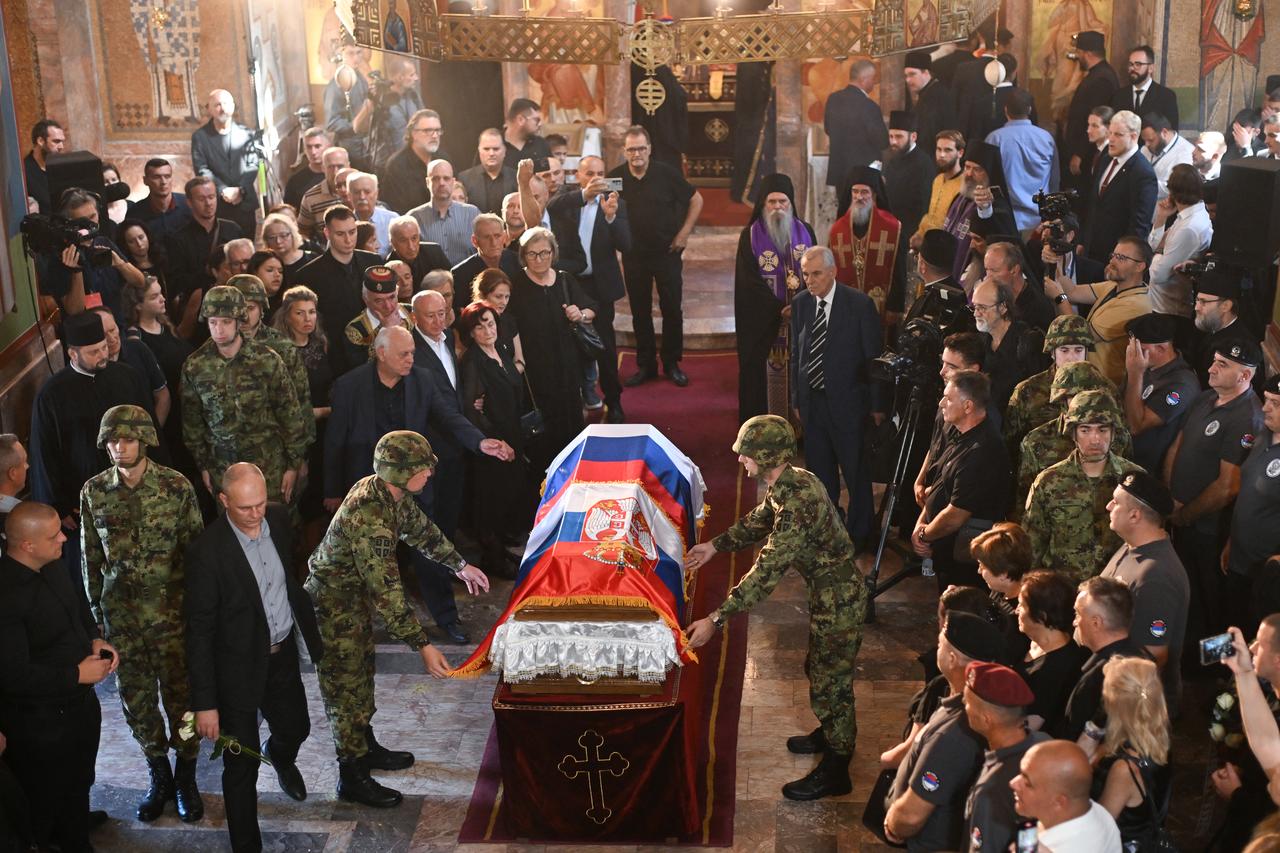
As people entered the church, Mladic’s son Darko, who was officially organizing the event, stood at the front. The casket was placed at the center of the church and surrounded by a rotating guard of soldiers and veterans.
“I say before the whole world that I am proud of the role of my father,” Darko Mladic said during a press conference alongside Serbia’s justice minister on Friday.
Serbian Justice Minister Nenad Vujic initially announced “military and state honors” for Mladic, sparking international outrage, before Serbian President Aleksandar Vucic tempered the decision.
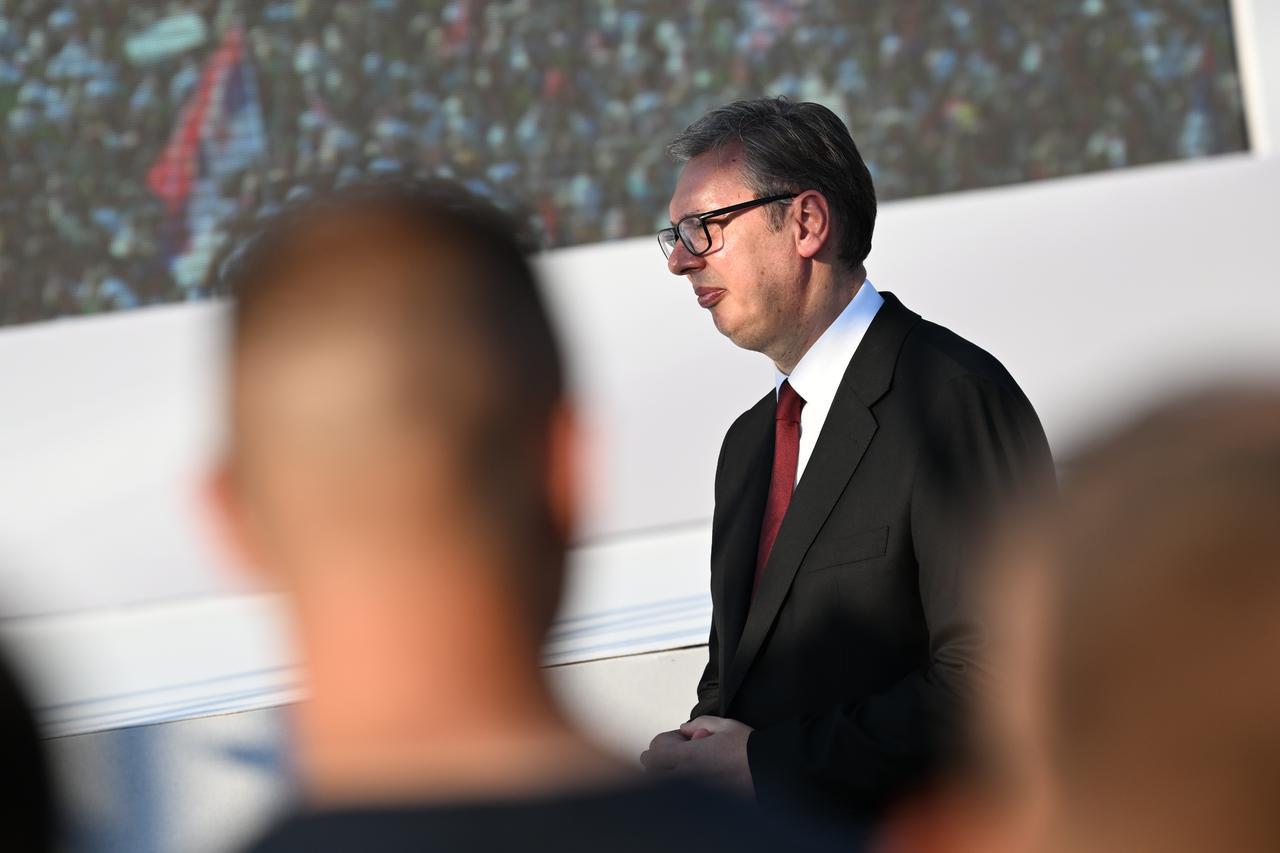
Vucic rejected accusations that Serbia was glorifying the former general, saying the service was being held in line with the family’s wishes.
He said tens of thousands of people were expected to attend the funeral and that the state would ensure the event passed “safely.”
Vucic said he would not attend in person because of a prior engagement. His son Danilo Vucic attended the funeral ceremony.
Attendees at the church included Russia’s ambassador to Serbia, Serbia’s justice minister and its defense minister.
Police closed off streets in the surrounding area as buses carrying people from outside the capital, including from Republika Srpska, arrived nearby.
Milorad Dodik, the former president of Republika Srpska and a Moscow ally, who was removed from office, was also seen attending the ceremony, local media reported.
Among those waiting outside the church were war veterans wearing army berets and others in shirts praising Mladic.
“I am here to see off the general, a national hero,” pensioner Radojka Visic, who traveled from Banja Luka, the capital of Republika Srpska, told AFP.
“They couldn’t defeat us on the battlefield, so they sent him to prison and tortured him there instead,” she said, referring to the international community.
Another attendee, Rade Bajic, described Mladic as a “great man and a great fighter.”
The European Union on Monday denounced any “glorification” of Mladic in Serbia.
“Any glorification of war criminals, genocide denial and revisionism contradict the most fundamental European values and have no place in the EU or in EU candidate countries,” an EU spokesperson said.
European Commissioner for Enlargement Marta Kos canceled a planned visit to Serbia on Friday, saying the “glorification surrounding his death is incompatible with the values on which the EU path is built.”
Denis Becirovic, chairman of Bosnia and Herzegovina’s tripartite presidency, called the honoring of Mladic “an act of identification by Serbia’s leadership with one of the worst killers in European history.”
The 1992-1995 Bosnian War left around 100,000 people dead and displaced 2.2 million.
Mladic was the military figurehead of the Bosnian Serb leadership alongside former Yugoslav President Slobodan Milosevic and Bosnian Serb leader Radovan Karadzic.
He was convicted of genocide over the 1995 Srebrenica genocide, in which Bosnian Serb forces killed around 8,000 Bosniak Muslim men and boys in a U.N.-protected safe zone.
Mladic was also convicted of persecuting and forcibly expelling Bosnian Muslims and Croats, terrorizing civilians during the siege of Sarajevo and taking U.N. peacekeepers hostage during NATO airstrikes in 1995.
Mladic was born in Kalinovik in eastern Bosnia during World War II. Most accounts say he was born in 1942, though Mladic told the tribunal he was born in 1943.
He trained in Belgrade in the early 1960s, became an officer by age 22 and later rose to commander of Bosnian Serb forces during the war.
Mladic presented himself as a soldier chosen to defend Serbs.
“Fate put me in a position to defend my country that you Western powers had devastated with the help of the Vatican and the Western mafia,” he told his appeal hearing in 2020.
But prosecutors said he oversaw the siege of Sarajevo for more than three years, during which snipers and artillery killed thousands of civilians.
Video footage from Srebrenica showed Mladic reassuring a 12-year-old Muslim boy shortly before his forces massacred thousands of civilians. Around the same time, he was filmed in a deserted Srebrenica saying: “We give this town to the Serb people as a gift.”
Mladic was dismissed after being indicted in 1995 but evaded capture for 16 years.
He was arrested in May 2011 at his cousin’s house in northern Serbia and sentenced to life in prison in 2021 after a nine-year trial.
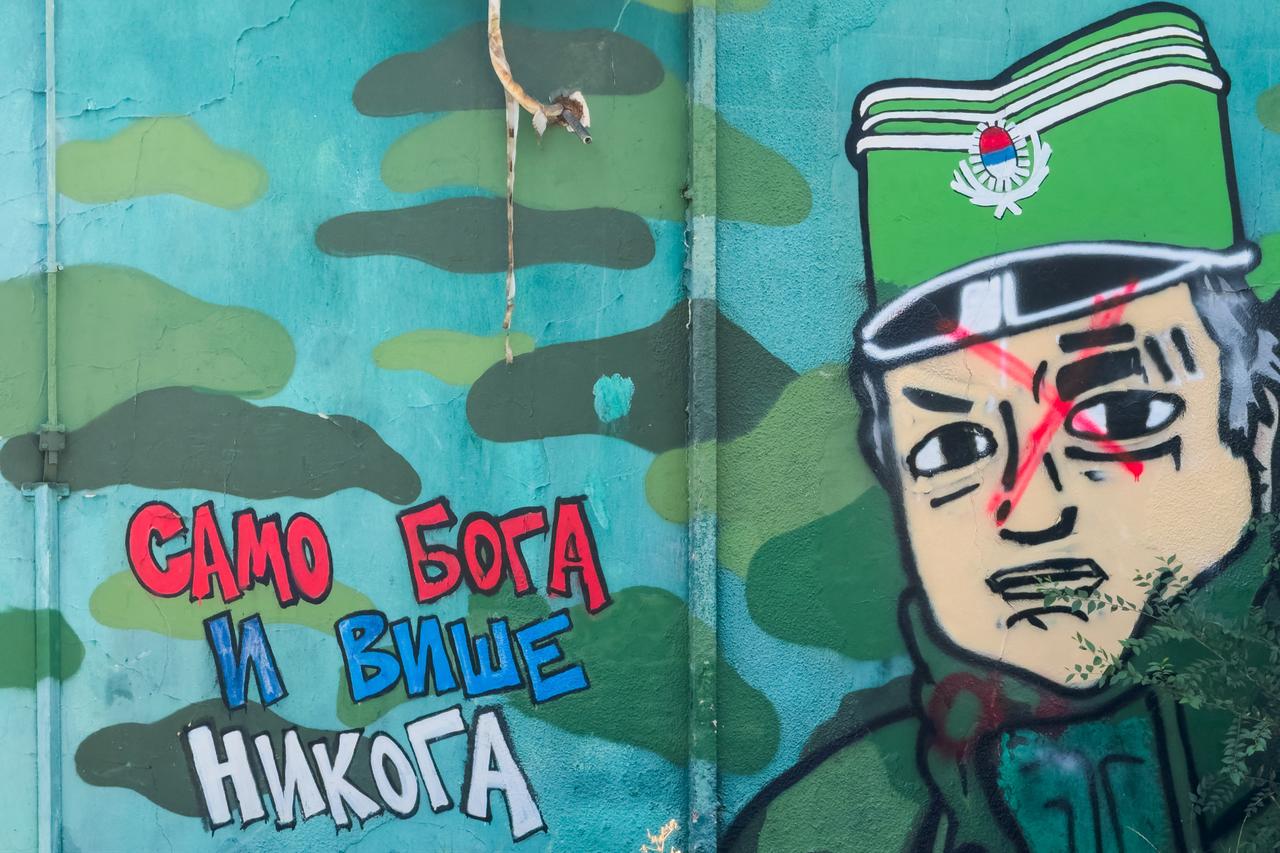
During his years in hiding, his image was preserved in murals across Republika Srpska.
In Banja Luka, Mladic’s death drew thousands to vigils honoring him, with participants marching behind a banner reading: “Commander, thank you for everything.”
But in Srebrenica, where thousands of marble headstones mark his victims, survivors said his legacy had already been defined.
“History will undoubtedly remember him as one of its great negatives, a war criminal,” said Sehida Abdurahmanovic, who lost her brother in the massacre.


 Set as preferred source
 Set as preferred source


 1 min read
 1 min read


