Newsletters


Joe Kent, a former top U.S. counterterrorism official who resigned over the war on Iran, accused U.S. Central Command (CENTCOM) on Saturday of undermining diplomacy by extending the blockade on Iran to its land borders, calling the move a “brash provocation.”
"This is CENTCOM inviting Iran to escalate while the Vice President is attempting to negotiate with the Iranians," Kent, former director of the National Counterterrorism Center, wrote on X.
"This is, as CENTCOM calls it, ‘policy by CONOP,’ when the military finds a way to subvert the White House without blatantly disobeying the President, by taking actions that will ensure a war escalates or perpetuates," he said.
"This tactic was implemented over & over again in the War on Terror in Iraq, Syria, Afghanistan, etc. Many Americans died, needlessly," the former U.S. official added.
"Imposing more sanctions, & publicly broadcasting that we’re imposing more sanctions, is brash provocation," Kent wrote, noting, "CENTCOM announcing this escalation is the military working directly against what President Trump is attempting to accomplish. If the President had any desire to escalate, he’d simply do it."
"The midterm results sent a message that the President should find impossible to ignore: the American people do not support this war. We want out," he said, adding that the president "needs to install a new national security team, one that’s not tied to starting the war and that can instead end it."
Kent said the debate between maintaining the blockade or resuming airstrikes, which he called a proposed "Mini Epic Fury," was "an illusion of choice."
"Enforcing the blockade keeps our troops in harm’s way & risks a shoot down that would inevitably launch us back into kinetic war," he wrote, adding, "Walking away is what the American people voted for."
CENTCOM commander Adm. Brad Cooper ordered the creation of Task Force Iron Gate, a team of about 20 civilian and military personnel based in Tampa, Florida, to prevent the movement of weapons, dual-use technology, sanctioned materials and "illegal revenue streams" across Iran’s land borders and the Caspian Sea.
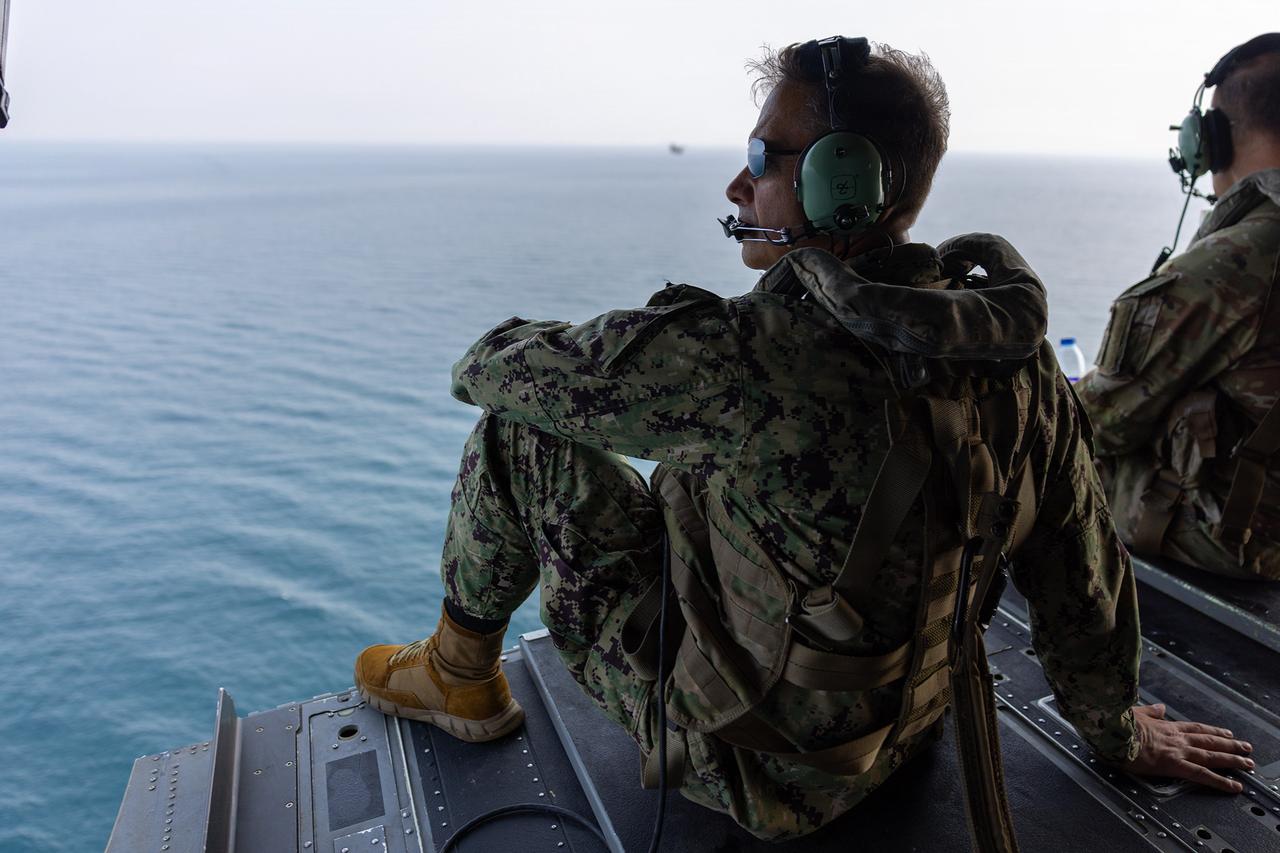

A U.S. military aircraft fired precision munitions at the stern of the St. Kitts-flagged cargo ship M/V Huda in the Gulf of Oman on Saturday, disabling it after the crew ignored repeated warnings and tried to leave regional waters after visiting an Iranian port, CENTCOM announced in a statement.
Since July, U.S. forces have redirected 147 commercial vessels and disabled five that refused to comply, and previously destroyed 10 Iranian tankers it said belonged to an IRGC shadow network, the command said.
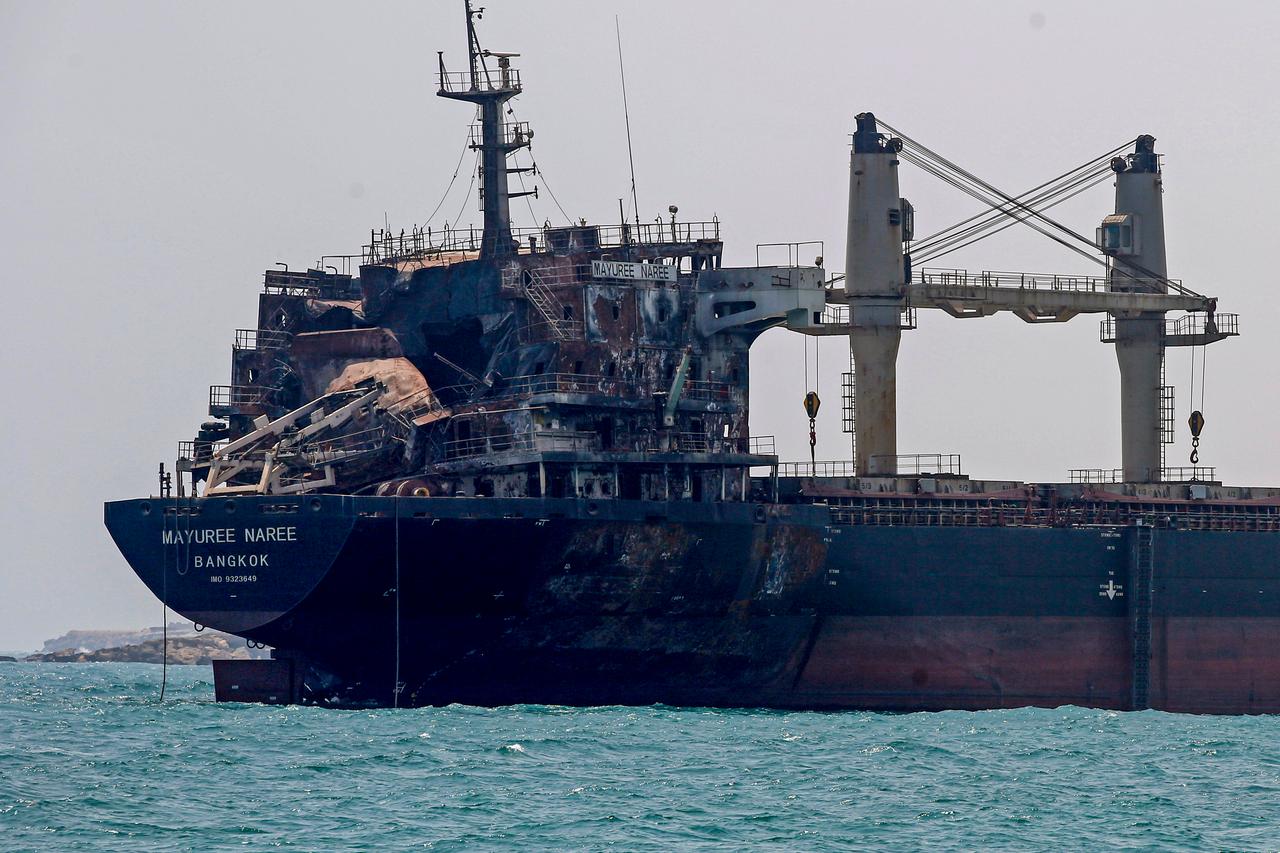
Iran's Islamic Revolutionary Guard Corps (IRGC) said early Sunday that two oil tankers caught fire after striking naval mines, one east of the Strait of Hormuz and one inside it, while trying to use "unauthorized routes" with navigation systems switched off.
The IRGC did not name the vessels.
CENTCOM has said all mines have been cleared from the waterway.
"The cost of any aggression against Iran must be raised to such an extent that the enemy will no longer dare attack the country again," Iranian Northern Fleet commander Rear Adm. Mohsen Razzaqi said.
Security chief Mohsen Rezaei wrote: "Start a war, and you’ll face a devastating response."
Iraqi Foreign Minister Fuad Hussein told Al Jazeera that the U.S. formally requested the closure of all but two border crossings with Iran. He did not say how Baghdad responded, but said Iraq welcomed friendship and an alliance with Tehran while rejecting interference in its internal affairs.
Iraq earlier closed the Sheeb crossing in Maysan and temporarily shut the Shalamcheh and Mandali crossings.
Hussein warned of potential renewed regional war, said external parties had used Iraqi soil to attack neighbors, and noted that Iraq lost about $60 billion from halted Hormuz exports.
He said Iraq, Syria, Jordan and Türkiye have formed a committee to fight Daesh in Syria.


 Set as preferred source
 Set as preferred source


 4 min read